English

Isaac Asimov
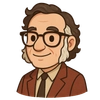
Isaac Asimov was a prolific American writer and professor of biochemistry…
Reads at Grades 6–8 Listens at Grades 4–8
Print & create
Answer keys·No prep·Free with an account
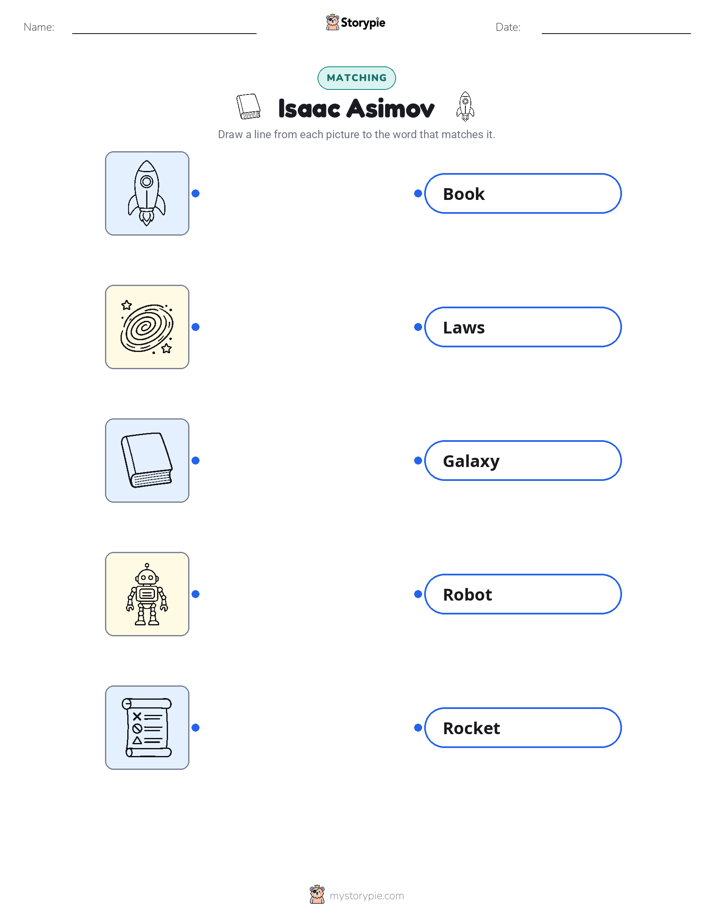
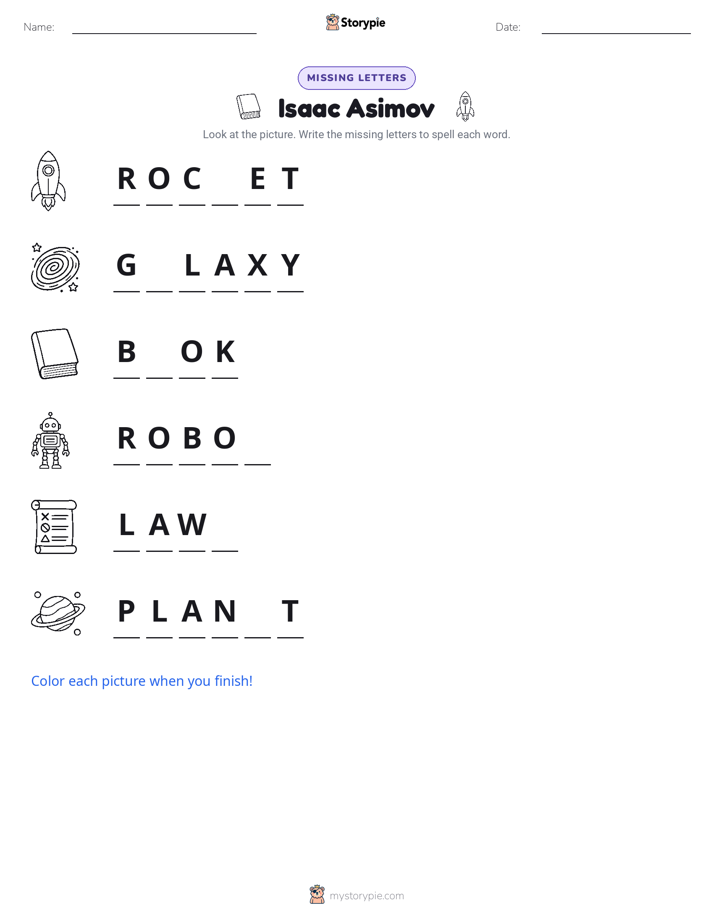
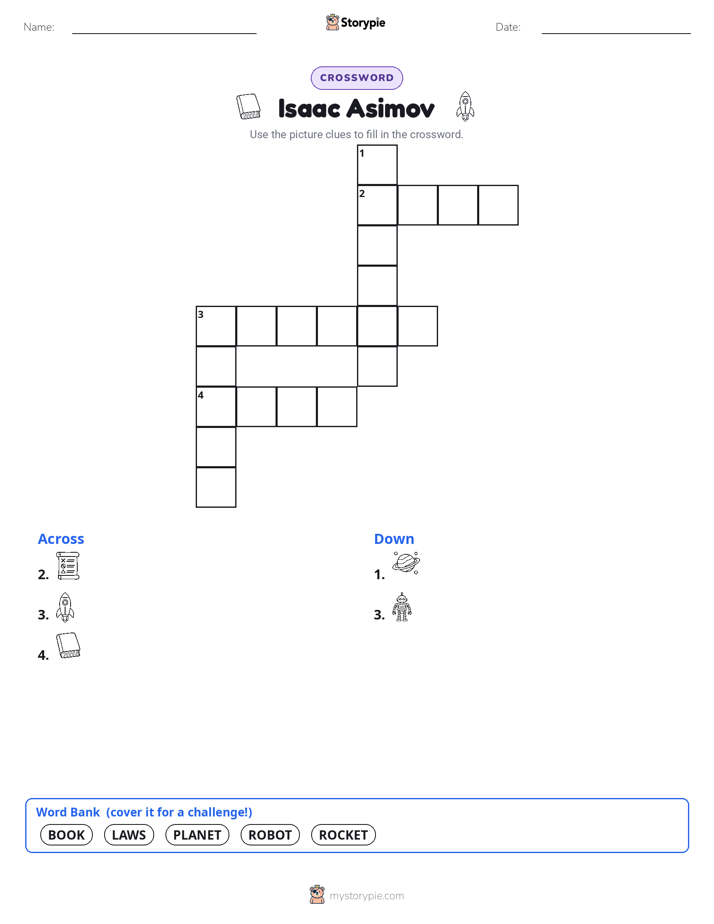
28 worksheets · answer keys · full story · quiz · Ages 10-12 · CEFR B2
Plus adds 279,000+ more stories in 27 languages, audio for every one, and printables for all of them.
Just want Isaac Asimov?
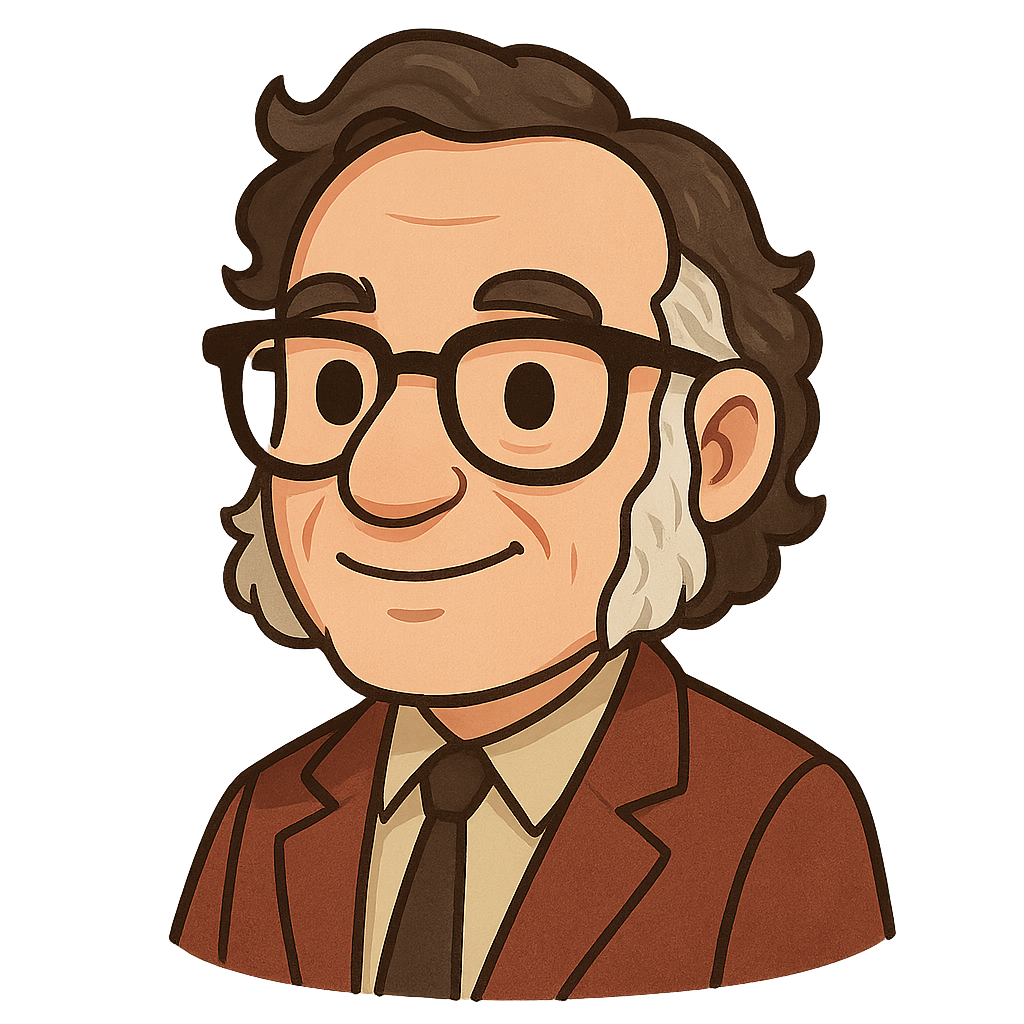
Hello, my name is Isaac Asimov, and I spent my life exploring the future through stories. My journey began in a small town called Petrovichi, in Russia, where I was born on January 2nd, 1920. The world was changing rapidly, and my family sought new opportunities across the ocean. In 1923, we moved to Brooklyn, New York, a bustling city that felt like a different universe. My parents opened a candy store, and it became my whole world. It was there, surrounded by shelves of sweets and newspapers, that I discovered my greatest love: science fiction magazines. I was so eager to dive into their worlds of rockets, robots, and distant galaxies that I taught myself to read at a very young age. Every spare moment I had was spent sitting in a corner of the store, my mind lost in tales of what could be. Those stories sparked a curiosity in me that would last a lifetime, planting the seeds for the thousands of questions I would one day try to answer with my own writing.
That early love for reading soon turned into a passion for writing. As a boy, I was always scribbling down my own tales, imagining strange new planets and futuristic societies. While my imagination soared, I also had a deep interest in the real world and how it worked. I decided to study science and attended Columbia University, focusing on chemistry. It was a fascinating subject, and in 1939, I graduated with my degree. But even as I pursued my scientific education, I never stopped writing. I submitted my stories to the very magazines I grew up reading, and I felt a huge sense of accomplishment when my first story, 'Marooned Off Vesta,' was published in 1938. A few years later, in 1941, I wrote a story called 'Nightfall,' which became incredibly popular. Its success was a turning point. It gave me the confidence to believe that I could truly be a writer and that others were just as excited about the future as I was. I knew then that I wanted to dedicate my life to both science and storytelling.
Isaac Asimov: A Journey Through Stars and Stories
Hello, my name is Isaac Asimov, and I spent my life exploring the future through stories. My journey began in a small town called Petrovichi, in Russia, where I was born on January 2nd, 1920. The world was changing rapidly, and my family sought new opportunities across the ocean. In 1923, we moved to Brooklyn, New York, a bustling city that felt like a different universe. My parents opened a candy store, and it became my whole world. It was there, surrounded by shelves of sweets and newspapers, that I discovered my greatest love: science fiction magazines. I was so eager to dive into their worlds of rockets, robots, and distant galaxies that I taught myself to read at a very young age. Every spare moment I had was spent sitting in a corner of the store, my mind lost in tales of what could be. Those stories sparked a curiosity in me that would last a lifetime, planting the seeds for the thousands of questions I would one day try to answer with my own writing.
That early love for reading soon turned into a passion for writing. As a boy, I was always scribbling down my own tales, imagining strange new planets and futuristic societies. While my imagination soared, I also had a deep interest in the real world and how it worked. I decided to study science and attended Columbia University, focusing on chemistry. It was a fascinating subject, and in 1939, I graduated with my degree. But even as I pursued my scientific education, I never stopped writing. I submitted my stories to the very magazines I grew up reading, and I felt a huge sense of accomplishment when my first story, 'Marooned Off Vesta,' was published in 1938. A few years later, in 1941, I wrote a story called 'Nightfall,' which became incredibly popular. Its success was a turning point. It gave me the confidence to believe that I could truly be a writer and that others were just as excited about the future as I was. I knew then that I wanted to dedicate my life to both science and storytelling.
As I wrote more, I began to think deeply about the future of humanity, especially our relationship with technology. At the time, many stories showed robots as evil monsters that would turn against their creators. I saw things differently. I imagined robots as helpful partners, designed to make our lives better and safer. To make this idea clear, I created a set of rules for them called the Three Laws of Robotics. The first law was that a robot could not injure a human being. The second was that a robot must obey orders given by humans, unless it conflicted with the first law. And the third was that a robot must protect its own existence, as long as that protection didn't conflict with the first or second laws. I explored these ideas in my 1950 book, 'I, Robot,' which was a collection of stories about how these laws would work in the real world. A year later, in 1951, I started another ambitious project called the 'Foundation' series. I wanted to explore what history might look like thousands of years from now, on a massive galactic scale. It was my way of using science fiction to think about big ideas like politics, society, and the rise and fall of civilizations.
Even as my writing career took off, my love for science never faded. I believed that being a scientist made me a better writer, and being a writer helped me explain science to others. In 1955, I became a professor of biochemistry at Boston University. I loved teaching and found great joy in making complex subjects easy to understand. I didn't want knowledge to be something that only experts could access; I wanted everyone to feel the wonder of discovery. This passion drove me to write about much more than just science fiction. I wrote books on chemistry, physics, and astronomy. I wrote about ancient history, the Roman Empire, and even Shakespeare. In total, I wrote or edited over 500 books. It didn't matter if the topic was the stars in the sky or the history of our world—I just wanted to share the thrill of learning with as many people as possible. My goal was to build a bridge between the world of science and the world of everyday people.
I lived a very full life for 72 years, and my story came to a peaceful close on April 6th, 1992. My life's work was always about sparking curiosity and encouraging people to look at the universe with a sense of wonder. Today, my books are still read all over the world, and my ideas about robots and the future continue to influence new writers and scientists. I hope my stories inspire you to ask big questions, to imagine what the future could hold, and most importantly, to never, ever stop learning.
Wow facts
About
Isaac Asimov was a prolific American writer and professor of biochemistry, best known for his influential works of science fiction and popular science. He wrote or edited more than 500 books, including the 'Foundation' series and 'I, Robot.'
Take a Quiz
Question 1 of 5
What is the main idea of Isaac Asimov's story?
Explore next





Want to do even more?
Go beyond exploring. Unlock tools that turn every story into real learning.

Storypie Plus for families
Full stories, quizzes, and printables. Nights and car rides, sorted.
- Unlimited audio stories
- Create Mode: your child stars in the story
- Offline downloads
- Printable worksheets & coloring pages

Why Storypie for Schools
Students engaged. Prep in seconds. Evenings back to you.
- Worksheets & Quizzes
- Classroom Management
- Formative Assessment
- Custom Curriculum & Lesson Plans
- 27 Languages

Why Storypie for Homeschool
Curriculum done. They'll ask for more. Hours back in your day.
- Worksheet Generator
- First-Person Audio Stories
- Built-in Comprehension Quizzes
- Custom Curriculum & Lesson Plans
- Print & Go Activities