English

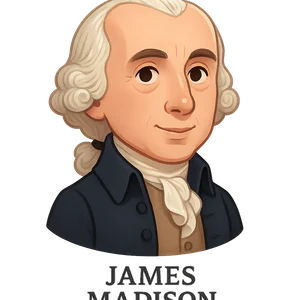
James Madison
James Madison was the fourth President of the United States…
Reads at Grades 6–8 Listens at Grades 4–8
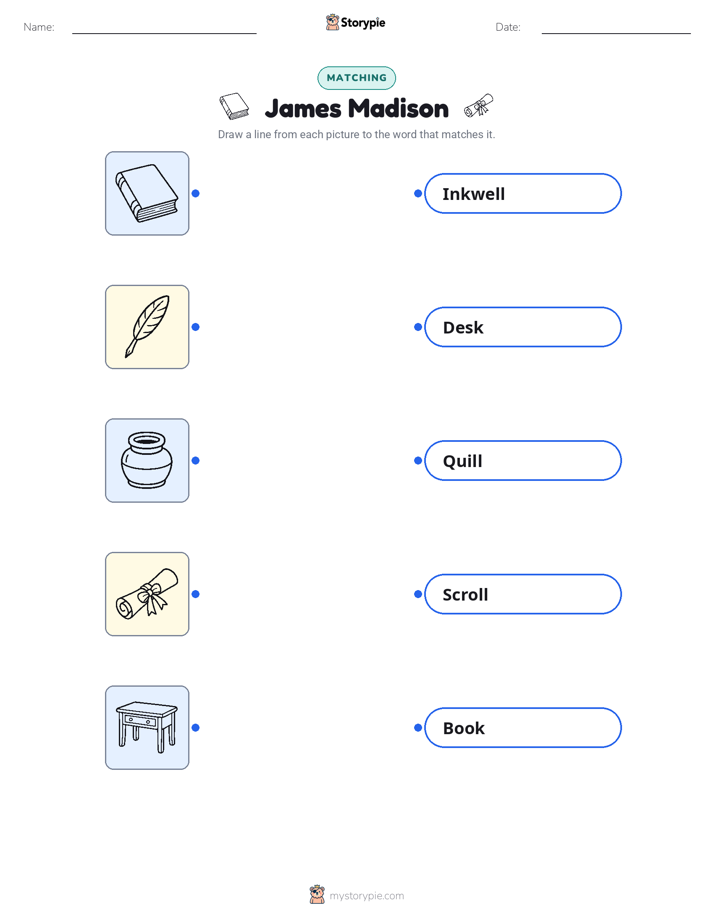
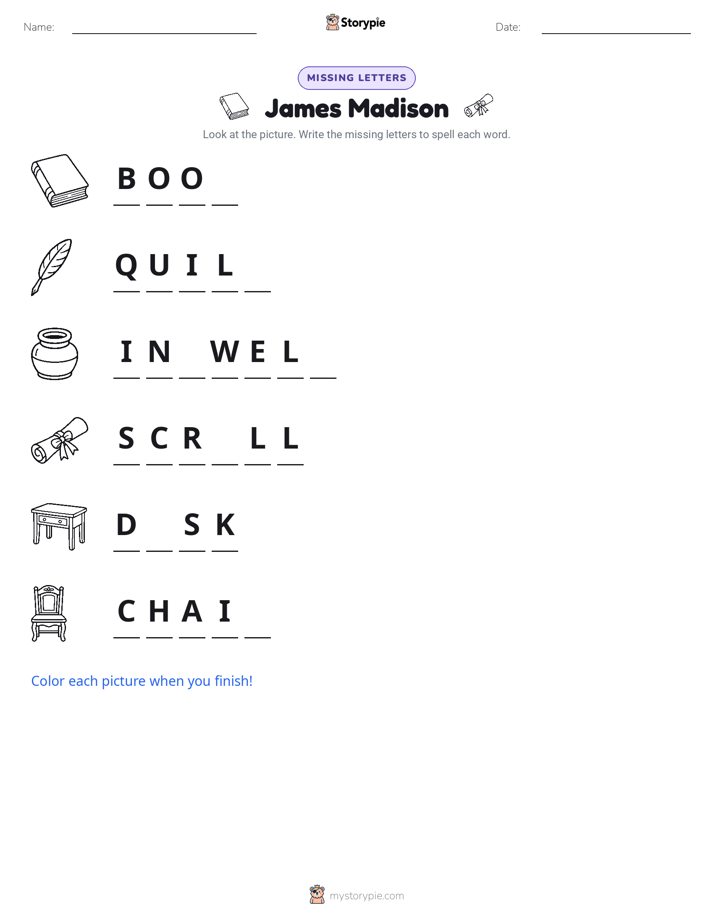
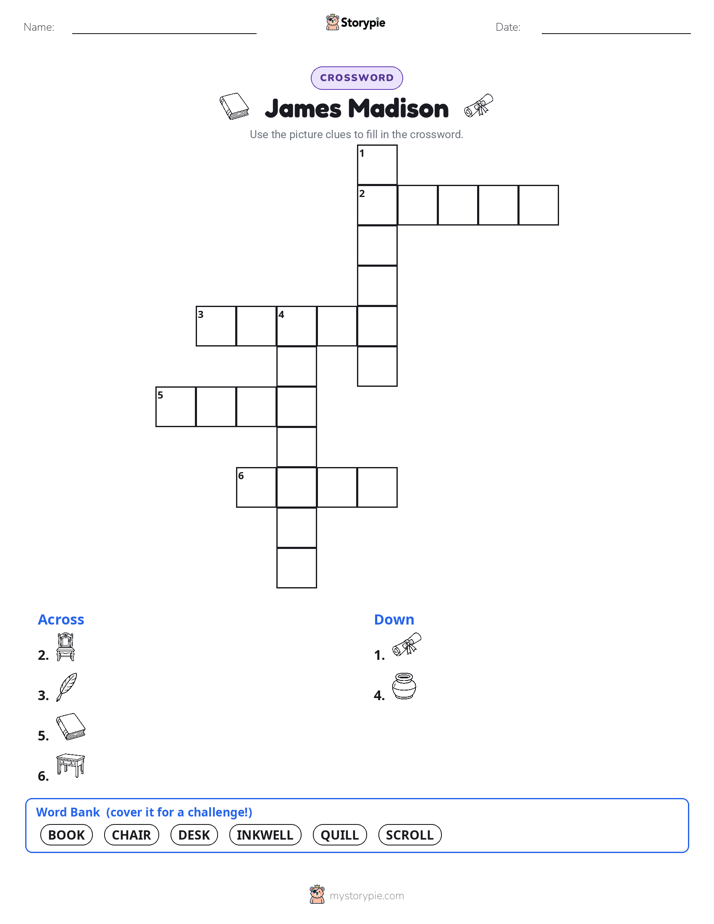
Print & create
Answer keys·No prep·Free with an account
28 worksheets · answer keys · full story · quiz · Ages 10-12 · CEFR B2
Plus adds 102,000+ more stories in 27 languages, audio for every one, and printables for all of them.
Just want James Madison?
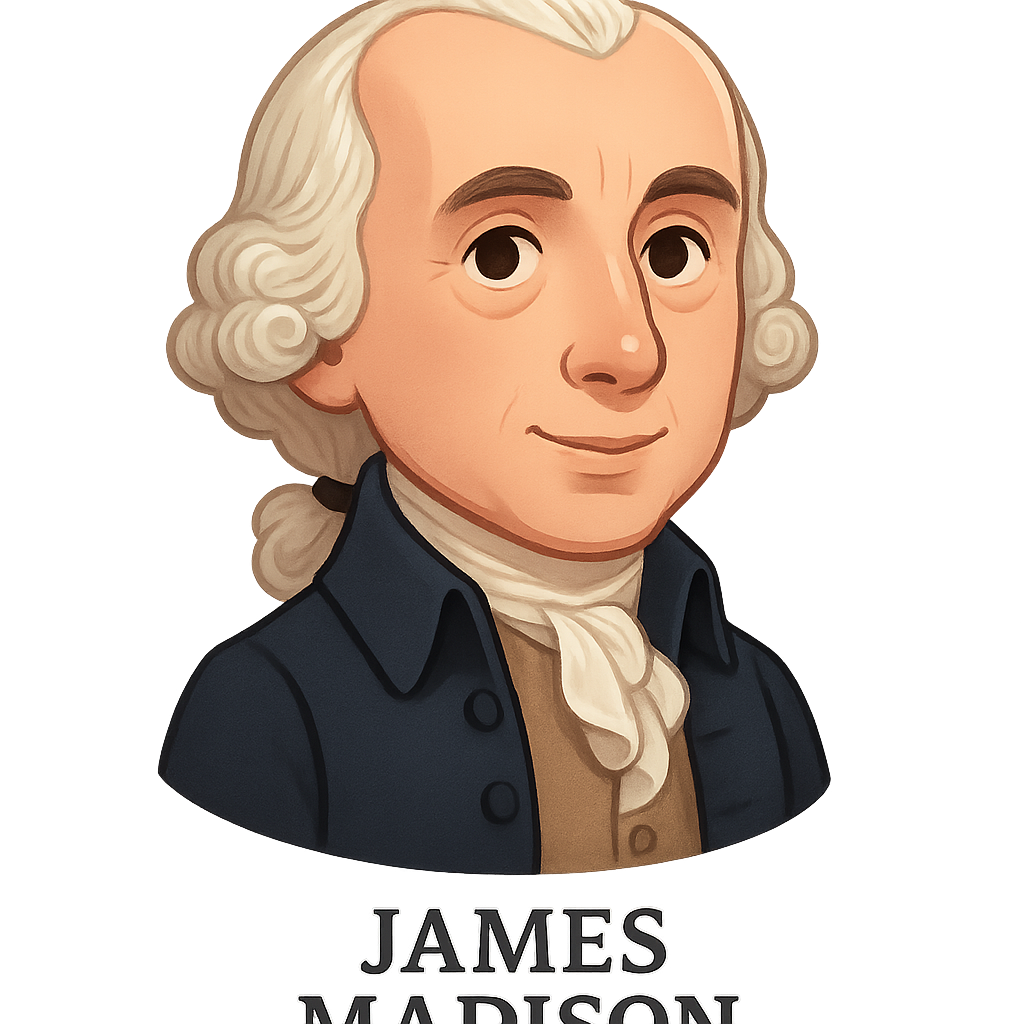
Hello. My name is James Madison, and I am known as the “Father of the Constitution.” I was born on March 16th, 1751, in Virginia, during a time when America was still a collection of British colonies. As a child, I was often sick and spent much of my time indoors. While other children might have been playing outside, I found my greatest friends within the pages of books. I read everything I could, especially stories about history and how different governments worked throughout time. This love of learning stayed with me, and in 1769, I traveled to the College of New Jersey, which you now know as Princeton University. I was so dedicated to my studies that I completed my courses in just two years, finishing in 1771. The knowledge I gained there about law, history, and government would prove to be the most important foundation for my life’s work.
After the American Revolution, our new nation was united, but we faced a great challenge. The government we created under a document called the Articles of Confederation was simply too weak to solve the country's problems. States argued with each other, and it felt as though our new country might fall apart. To find a solution, leaders from across the states gathered in Philadelphia in the summer of 1787 for what became known as the Constitutional Convention. I arrived fully prepared. I had spent months studying other governments and had developed a framework for a new, stronger national government. This idea, which I called the Virginia Plan, proposed a system with three distinct branches: one to make laws, one to enforce them, and one to interpret them. We debated my plan and many other ideas all summer long. I made sure to take detailed notes of every speech and argument, so future generations would always have a record of how our government was formed. Because my Virginia Plan became the blueprint for the U.S. Constitution, people have given me the title, the “Father of the Constitution.”
James Madison
Hello. My name is James Madison, and I am known as the “Father of the Constitution.” I was born on March 16th, 1751, in Virginia, during a time when America was still a collection of British colonies. As a child, I was often sick and spent much of my time indoors. While other children might have been playing outside, I found my greatest friends within the pages of books. I read everything I could, especially stories about history and how different governments worked throughout time. This love of learning stayed with me, and in 1769, I traveled to the College of New Jersey, which you now know as Princeton University. I was so dedicated to my studies that I completed my courses in just two years, finishing in 1771. The knowledge I gained there about law, history, and government would prove to be the most important foundation for my life’s work.
After the American Revolution, our new nation was united, but we faced a great challenge. The government we created under a document called the Articles of Confederation was simply too weak to solve the country's problems. States argued with each other, and it felt as though our new country might fall apart. To find a solution, leaders from across the states gathered in Philadelphia in the summer of 1787 for what became known as the Constitutional Convention. I arrived fully prepared. I had spent months studying other governments and had developed a framework for a new, stronger national government. This idea, which I called the Virginia Plan, proposed a system with three distinct branches: one to make laws, one to enforce them, and one to interpret them. We debated my plan and many other ideas all summer long. I made sure to take detailed notes of every speech and argument, so future generations would always have a record of how our government was formed. Because my Virginia Plan became the blueprint for the U.S. Constitution, people have given me the title, the “Father of the Constitution.”
Creating the Constitution was a major achievement, but our work was not finished. For the Constitution to become law, the states had to approve it, and many people were hesitant. They worried that a strong central government might take away their freedoms, just as the British king had. To help persuade them, I joined forces with two other leaders, Alexander Hamilton and John Jay. In 1788, we wrote a series of essays called The Federalist Papers, which explained why the Constitution was necessary and how it would work. To address the people's fears directly, I made a crucial promise. I assured everyone that if the Constitution was approved, I would work to add a specific list of rights that the government could never take away. I kept my word. In 1789, after being elected to the new U.S. Congress, I drafted and introduced the first ten amendments to the Constitution. These amendments are now famously known as the Bill of Rights, and they protect some of our most important freedoms.
My work in public service continued for many years. I had the honor of serving as Secretary of State for my dear friend, President Thomas Jefferson. Following his presidency, the American people elected me as the fourth president of the United States in 1809. My time in office was marked by significant challenges, the greatest of which was the War of 1812 against Great Britain. It was an incredibly difficult period for our young nation. The war reached a dramatic point in 1814 when British forces captured Washington, D.C., and set fire to the President's House, which we now call the White House. During this crisis, my wife, Dolley, showed immense courage. Just before the British troops arrived, she made sure that a famous portrait of George Washington was saved from the flames, preserving a symbol of our nation's history.
When my second term as president ended in 1817, I retired from public life and returned to my home in Virginia, which I called Montpelier. I spent my final years carefully organizing the extensive notes I had taken during the Constitutional Convention. It was important to me that the story of our nation's founding be preserved for all who would come after me. I lived to be 85 years old and passed away on June 28th, 1836. My greatest legacy is the framework of government I helped create. The Constitution and the Bill of Rights have guided the United States for more than two centuries and continue to be a model of freedom and democracy for people all over the world.
Wow facts
About
James Madison was the fourth President of the United States, hailed as the 'Father of the Constitution' for his crucial role in drafting the U.S. Constitution and authoring the Bill of Rights.
Take a Quiz
Question 1 of 5
What is the main reason James Madison is often called the 'Father of the Constitution'?
Explore next



Want to do even more?
Go beyond exploring. Unlock tools that turn every story into real learning.

Storypie Plus for families
Full stories, quizzes, and printables. Nights and car rides, sorted.
- Unlimited audio stories
- Create Mode: your child stars in the story
- Offline downloads
- Printable worksheets & coloring pages

Why Storypie for Schools
Students engaged. Prep in seconds. Evenings back to you.
- Worksheets & Quizzes
- Classroom Management
- Formative Assessment
- Custom Curriculum & Lesson Plans
- 27 Languages

Why Storypie for Homeschool
Curriculum done. They'll ask for more. Hours back in your day.
- Worksheet Generator
- First-Person Audio Stories
- Built-in Comprehension Quizzes
- Custom Curriculum & Lesson Plans
- Print & Go Activities