English


Jan Ingenhousz
Jan Ingenhousz was a Dutch physician, biologist, and chemist…
Reads at Grades 6–8 Listens at Grades 4–8
Print & create
Answer keys·No prep·Free with an account
28 worksheets · answer keys · full story · quiz · Ages 10-12 · CEFR B2
Plus adds 244,000+ more stories in 27 languages, audio for every one, and printables for all of them.
Just want Jan Ingenhousz?
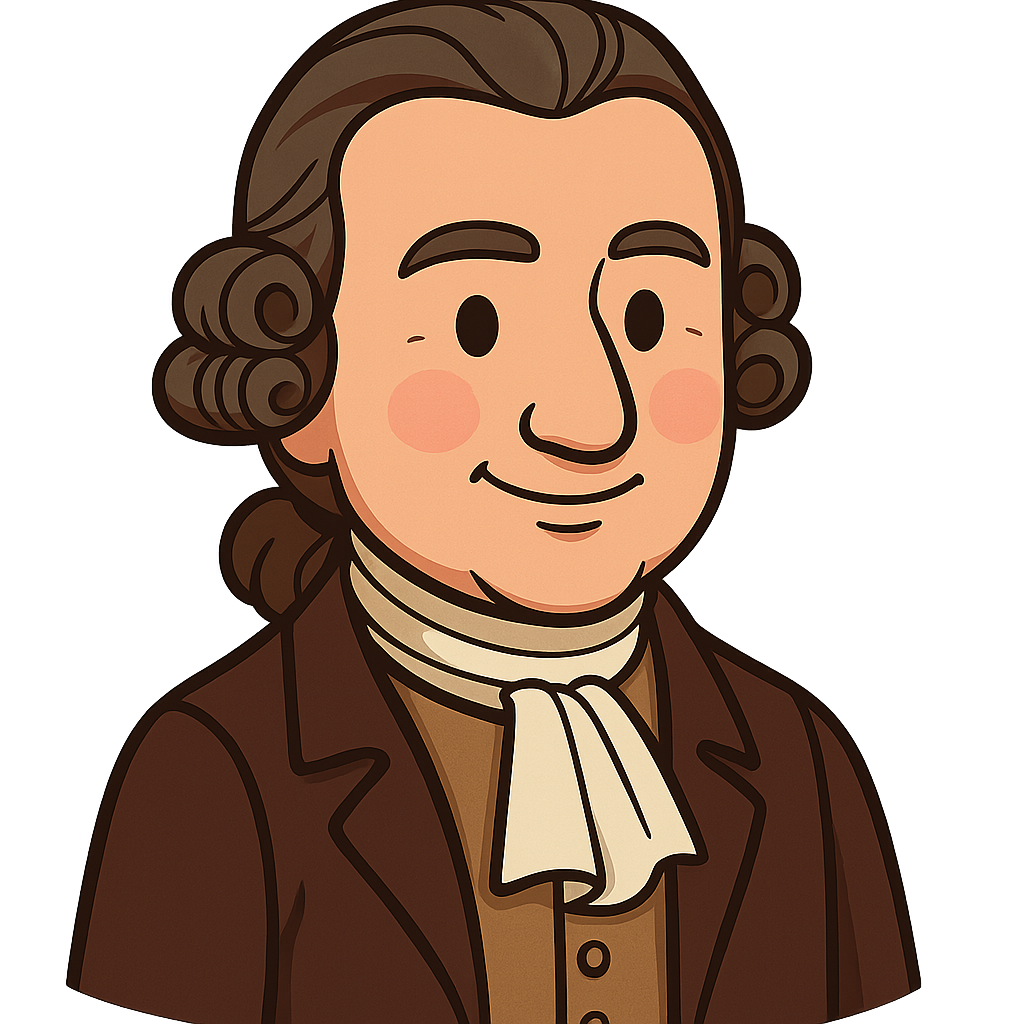
Hello, my name is Jan Ingenhousz. My story begins on December 8th, 1730, in a town called Breda in the Netherlands. Even as a boy, I was filled with a deep curiosity about the world around me. I loved learning how things worked, from the smallest insect to the largest tree. This passion for understanding led me to study medicine at the University of Leuven. In 1753, I earned my medical degree, and with it, a powerful desire to use science not just for knowledge, but to actively help people and improve their lives. I believed that through careful study and experimentation, we could solve some of humanity's most serious problems.
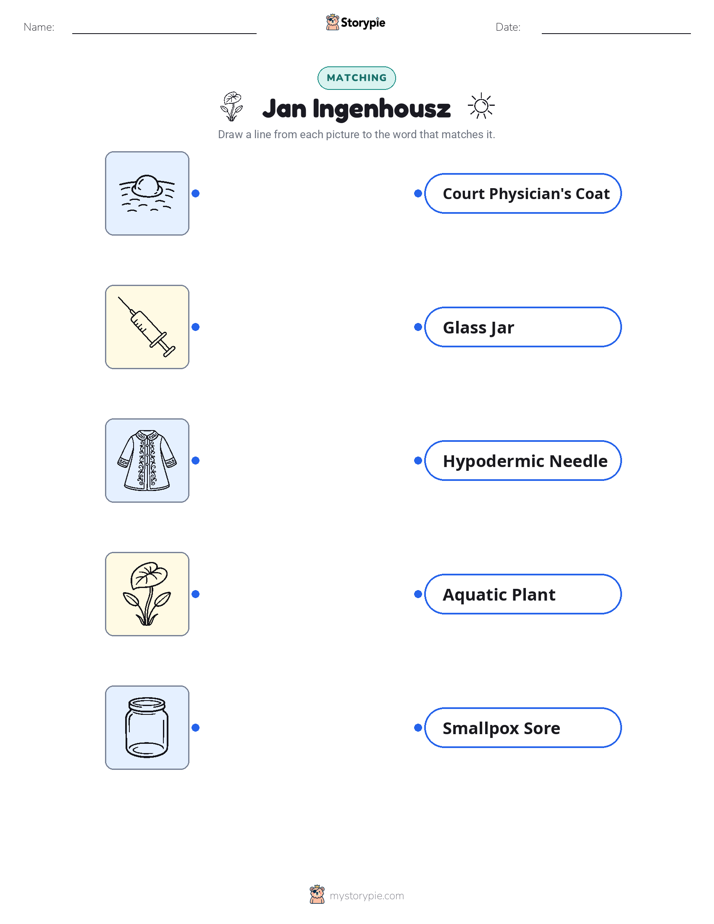
Around the year 1765, I moved to London, England, which was a bustling center for scientific thought. At that time, one of the most feared diseases was smallpox. It was a terrible illness that affected people of all ages, and many did not survive it. A new and rather daring technique was being discussed, called inoculation. The idea was to introduce a tiny amount of matter from a smallpox sore into a healthy person to build up their body's defenses. Many people were frightened of this method, but I saw its potential. I became a champion for inoculation, believing it could save countless lives. In 1768, I traveled to Hertfordshire and successfully inoculated hundreds of people, proving to a skeptical public that it was a safe and effective way to fight the disease. My work showed that science could be a powerful shield against illness.
My success with inoculation in England did not go unnoticed. In 1768, I received an invitation that would change my life. It came from Empress Maria Theresa of Austria, one of the most powerful rulers in Europe. She wanted me to travel to Vienna to protect her family from smallpox. This was an immense responsibility; the health of the imperial family rested in my hands. I journeyed to the grand city of Vienna and carefully performed the inoculations. I am happy to say the procedure was a complete success, and the royal family remained safe from the disease. As a reward for my service, the Empress appointed me as her court physician. This was a great honor, and it came with a generous salary that gave me the financial freedom and time to explore other scientific questions that fascinated me.
Jan Ingenhousz: A Life of Discovery
Hello, my name is Jan Ingenhousz. My story begins on December 8th, 1730, in a town called Breda in the Netherlands. Even as a boy, I was filled with a deep curiosity about the world around me. I loved learning how things worked, from the smallest insect to the largest tree. This passion for understanding led me to study medicine at the University of Leuven. In 1753, I earned my medical degree, and with it, a powerful desire to use science not just for knowledge, but to actively help people and improve their lives. I believed that through careful study and experimentation, we could solve some of humanity's most serious problems.
Around the year 1765, I moved to London, England, which was a bustling center for scientific thought. At that time, one of the most feared diseases was smallpox. It was a terrible illness that affected people of all ages, and many did not survive it. A new and rather daring technique was being discussed, called inoculation. The idea was to introduce a tiny amount of matter from a smallpox sore into a healthy person to build up their body's defenses. Many people were frightened of this method, but I saw its potential. I became a champion for inoculation, believing it could save countless lives. In 1768, I traveled to Hertfordshire and successfully inoculated hundreds of people, proving to a skeptical public that it was a safe and effective way to fight the disease. My work showed that science could be a powerful shield against illness.
My success with inoculation in England did not go unnoticed. In 1768, I received an invitation that would change my life. It came from Empress Maria Theresa of Austria, one of the most powerful rulers in Europe. She wanted me to travel to Vienna to protect her family from smallpox. This was an immense responsibility; the health of the imperial family rested in my hands. I journeyed to the grand city of Vienna and carefully performed the inoculations. I am happy to say the procedure was a complete success, and the royal family remained safe from the disease. As a reward for my service, the Empress appointed me as her court physician. This was a great honor, and it came with a generous salary that gave me the financial freedom and time to explore other scientific questions that fascinated me.
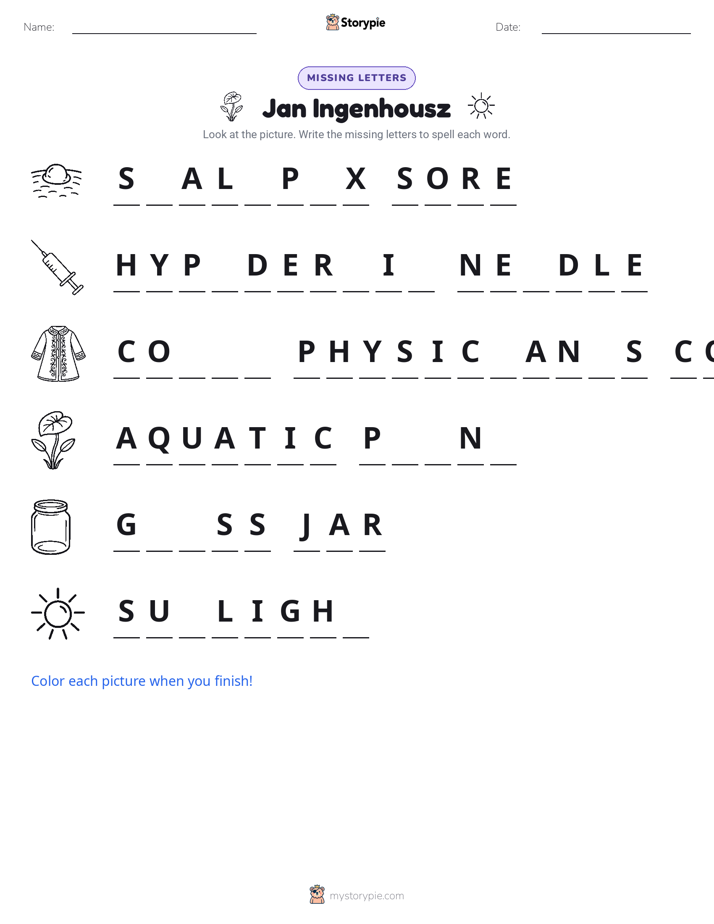
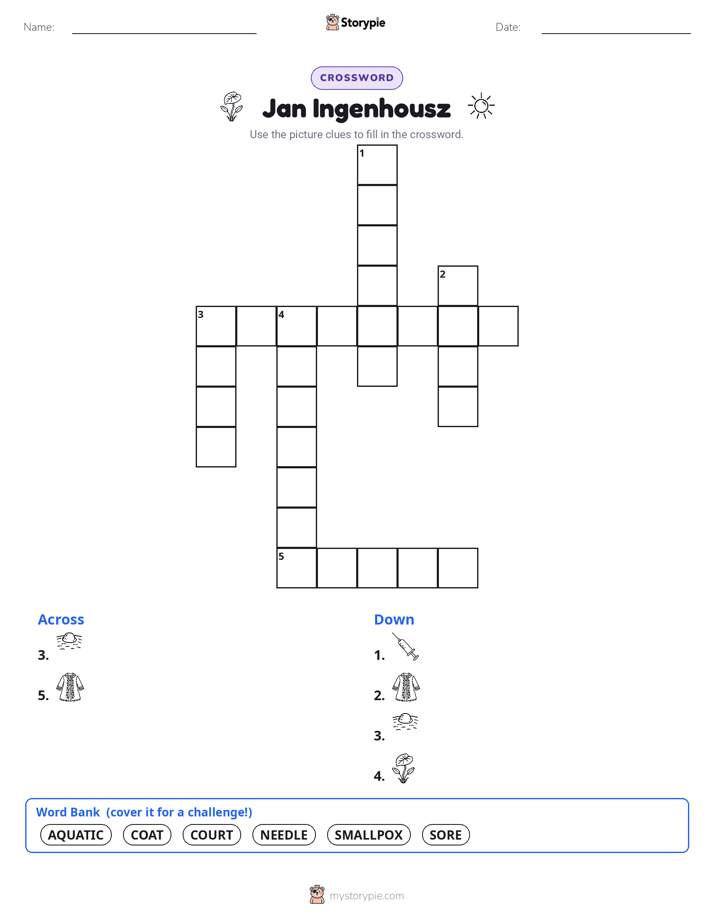
With my new position in Vienna, I was able to turn my attention to a different mystery, one that involved the green world of plants. I was inspired by the work of another scientist, Joseph Priestley, who had discovered that plants could somehow change the air around them. I wanted to understand exactly how they did this. During the summer of 1779, I spent countless hours conducting careful experiments. I would place aquatic plants in jars of water and set them in different conditions. I soon noticed something amazing. When the jars were in direct sunlight, tiny bubbles of gas would form on the surface of the leaves. But when I moved the jars into the dark, the bubbles stopped. I realized I was witnessing the secret breathing of plants. My conclusion was that in the presence of light, plants release a type of air that animals need to survive, which we now call oxygen. In the dark, however, they release a different kind of air, carbon dioxide. I published these findings in my 1779 book, 'Experiments upon Vegetables', sharing the incredible process of photosynthesis with the world.
My curiosity was not limited to medicine or plants. I was fascinated by many areas of the natural world, including the invisible forces of electricity and how different materials conduct heat. My mind was always searching for the next puzzle to solve. In 1785, while working with alcohol, I noticed something peculiar. I saw tiny, dust-sized particles of charcoal jiggling and dancing about on the surface of the liquid. I could not explain why they moved so randomly, without anything pushing them. Though I didn't know it at the time, I was one of the first people to observe what would later be understood as the constant, invisible motion of molecules, a phenomenon eventually named Brownian motion.
I lived a long life filled with questions and discoveries. I continued my research and experiments for many years, always eager to learn more about the world. I lived to be 68 years old, and my life's journey came to a peaceful end in England in 1799. My work helped people in many ways, but my greatest discovery was uncovering the secret of photosynthesis. This process is the foundation of nearly all life on our planet. Every time you breathe fresh air or see a green leaf turning sunlight into energy, you can remember my work and the beautiful, complex way that plants sustain the world.
Wow facts
About
Jan Ingenhousz was a Dutch physician, biologist, and chemist, best known for discovering the essential role of light in photosynthesis and for his pioneering work in smallpox inoculation.
Take a Quiz
Question 1 of 5
What was the scientific mystery about plants that Jan Ingenhousz wanted to solve, and what was his conclusion?
Explore next





Want to do even more?
Go beyond exploring. Unlock tools that turn every story into real learning.

Storypie Plus for families
Full stories, quizzes, and printables. Nights and car rides, sorted.
- Unlimited audio stories
- Create Mode: your child stars in the story
- Offline downloads
- Printable worksheets & coloring pages

Why Storypie for Schools
Students engaged. Prep in seconds. Evenings back to you.
- Worksheets & Quizzes
- Classroom Management
- Formative Assessment
- Custom Curriculum & Lesson Plans
- 27 Languages

Why Storypie for Homeschool
Curriculum done. They'll ask for more. Hours back in your day.
- Worksheet Generator
- First-Person Audio Stories
- Built-in Comprehension Quizzes
- Custom Curriculum & Lesson Plans
- Print & Go Activities