English

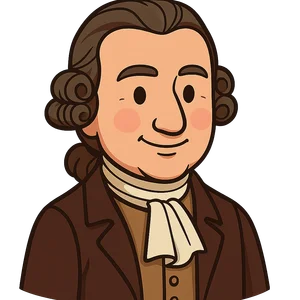
Jan Ingenhousz
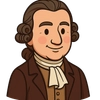
Jan Ingenhousz was a Dutch physician, biologist, and chemist…
Reads at Grades 3–5 Listens at Grades 1–5
Print & create
Answer keys·No prep·Free with an account
28 worksheets · answer keys · full story · quiz · Ages 8-10 · CEFR B1
Plus adds 244,000+ more stories in 27 languages, audio for every one, and printables for all of them.
Just want Jan Ingenhousz?
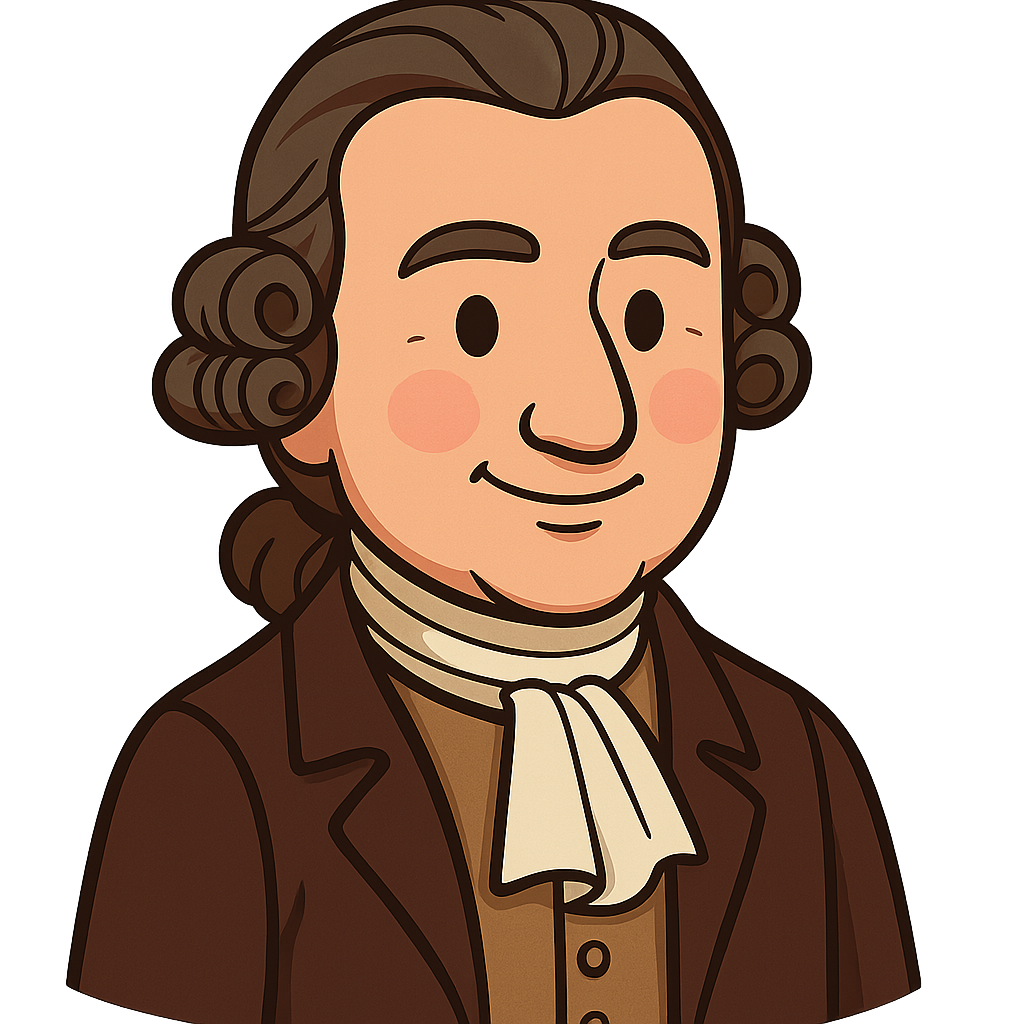
Hello there. My name is Jan Ingenhousz, and I want to tell you the story of my life as a scientist and a doctor. My journey began on December 8th, 1730, in a town called Breda in the Dutch Republic. My father was a pharmacist, and growing up in his shop, I was surrounded by strange bottles, powders, and the fascinating world of medicine. Watching him help people made me very curious about how the human body and the world around us worked. I knew from a young age that I wanted to learn as much as I could. This curiosity led me to the University of Leuven in 1746, when I was just 16 years old, to begin my studies in medicine.
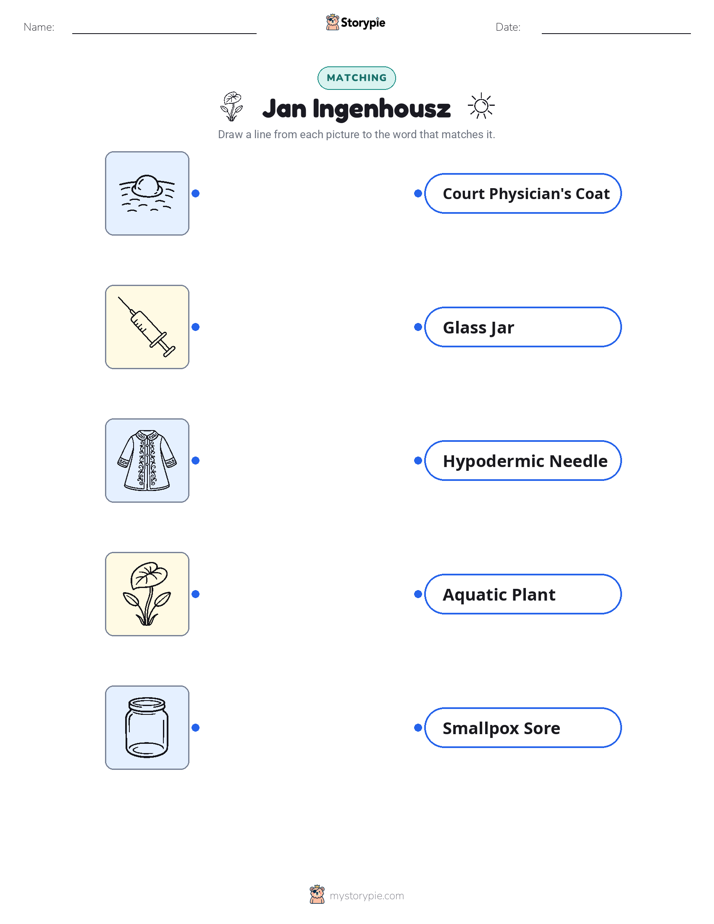
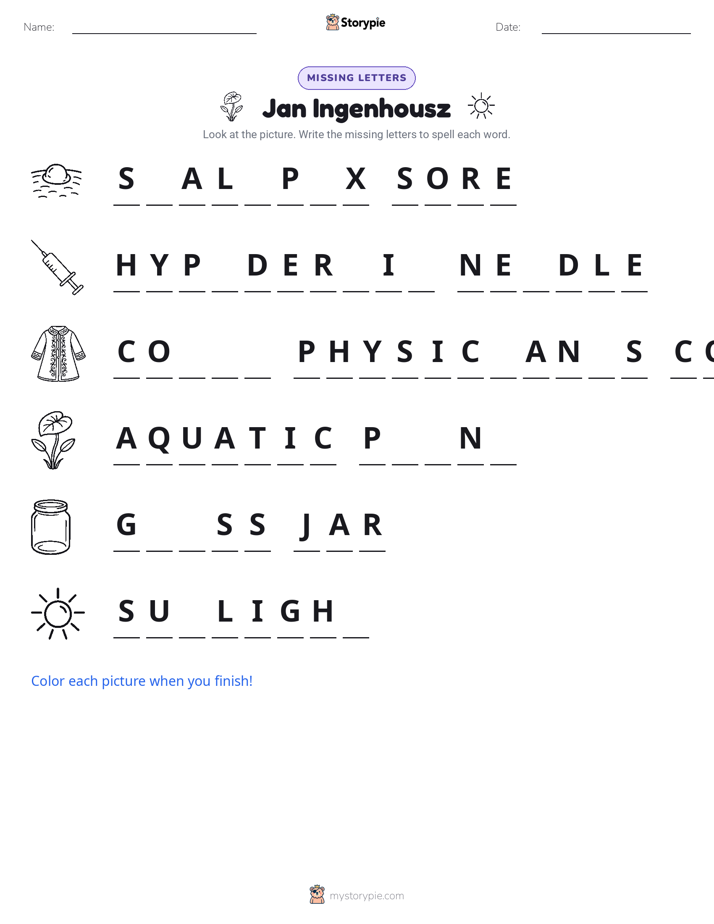
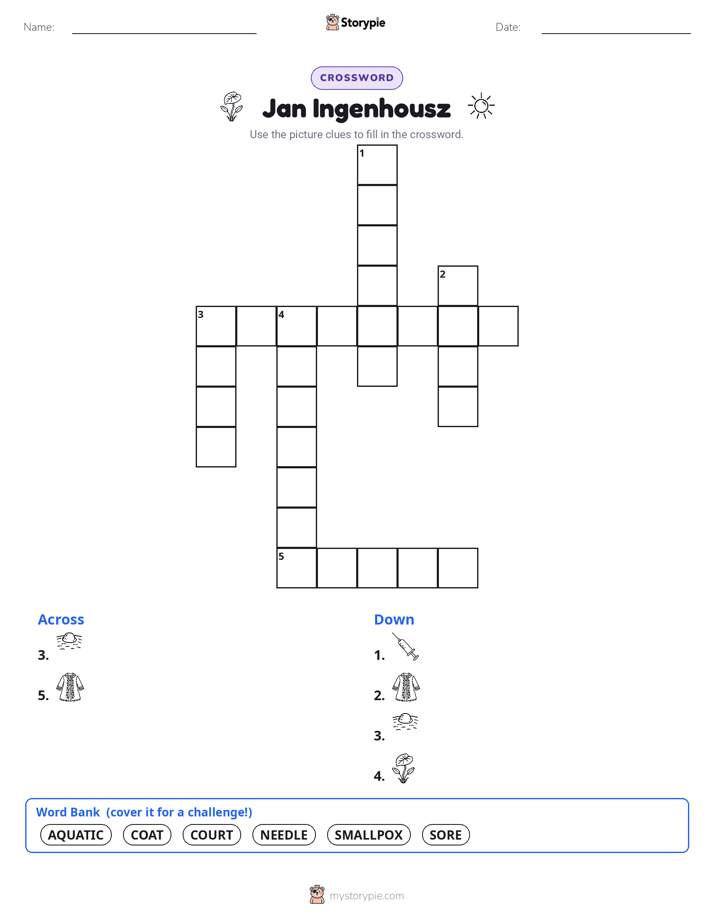
After finishing my studies, my adventures took me to London in 1765. There, I became fascinated by a new medical technique called inoculation. It was a way to protect people from a dangerous disease called smallpox by giving them a very mild form of it. I studied it carefully and became an expert. My reputation grew, and in 1768, I received a very important invitation. Empress Maria Theresa of Austria asked me to come to Vienna. She wanted me to inoculate the entire royal family to keep them safe. It was a great responsibility, but the procedure was a success! The Empress was so grateful that she made me her court physician, and I became quite famous throughout Europe for my medical skills.
Even though I was a busy doctor, my curiosity never rested. I became very interested in the work of another scientist, Joseph Priestley, who had discovered that plants could somehow change the air around them. I wanted to know how they did it. So, during the summer of 1779, I spent all my time conducting experiments. I put plants in water, both in the dark and in the light, and watched them closely. I performed hundreds of tests and finally made a groundbreaking discovery. I realized that plants only release bubbles of oxygen, the very air we need to breathe, when they are in sunlight. In the dark, they didn't. This was the secret of photosynthesis! I was so excited that I immediately wrote about my findings in a book called *Experiments upon Vegetables*, sharing this amazing secret with the world.
Jan Ingenhousz: Uncovering the Secrets of Sunlight
Hello there. My name is Jan Ingenhousz, and I want to tell you the story of my life as a scientist and a doctor. My journey began on December 8th, 1730, in a town called Breda in the Dutch Republic. My father was a pharmacist, and growing up in his shop, I was surrounded by strange bottles, powders, and the fascinating world of medicine. Watching him help people made me very curious about how the human body and the world around us worked. I knew from a young age that I wanted to learn as much as I could. This curiosity led me to the University of Leuven in 1746, when I was just 16 years old, to begin my studies in medicine.
After finishing my studies, my adventures took me to London in 1765. There, I became fascinated by a new medical technique called inoculation. It was a way to protect people from a dangerous disease called smallpox by giving them a very mild form of it. I studied it carefully and became an expert. My reputation grew, and in 1768, I received a very important invitation. Empress Maria Theresa of Austria asked me to come to Vienna. She wanted me to inoculate the entire royal family to keep them safe. It was a great responsibility, but the procedure was a success! The Empress was so grateful that she made me her court physician, and I became quite famous throughout Europe for my medical skills.
Even though I was a busy doctor, my curiosity never rested. I became very interested in the work of another scientist, Joseph Priestley, who had discovered that plants could somehow change the air around them. I wanted to know how they did it. So, during the summer of 1779, I spent all my time conducting experiments. I put plants in water, both in the dark and in the light, and watched them closely. I performed hundreds of tests and finally made a groundbreaking discovery. I realized that plants only release bubbles of oxygen, the very air we need to breathe, when they are in sunlight. In the dark, they didn't. This was the secret of photosynthesis! I was so excited that I immediately wrote about my findings in a book called Experiments upon Vegetables, sharing this amazing secret with the world.
My mind was always full of questions about everything, not just plants. I was interested in electricity and how heat travels from one object to another. One day in 1785, I was working with alcohol and noticed something peculiar. Tiny, leftover particles of charcoal dust on the surface of the liquid were jiggling and dancing all by themselves, as if they were alive. I couldn't explain why it was happening, but I wrote down exactly what I saw. Years later, scientists would understand that this was caused by invisible molecules bumping into the dust. My observation was one of the very first descriptions of what is now called 'Brownian motion.'
I lived a long and adventurous life, always following my curiosity wherever it led me. I lived to be 68 years old, passing away in 1799. Looking back, I am proud of the discoveries I made. I am remembered for finding the crucial role light plays in photosynthesis, the process that fills our air with the oxygen we all breathe. It brings me joy to know that my work helped uncover one of nature’s most important and life-giving secrets.
Wow facts
About
Jan Ingenhousz was a Dutch physician, biologist, and chemist, best known for discovering the essential role of light in photosynthesis and for his pioneering work in smallpox inoculation.
Take a Quiz
Question 1 of 5
What important job was I invited to do for Empress Maria Theresa in Vienna in 1768?
Explore next




Want to do even more?
Go beyond exploring. Unlock tools that turn every story into real learning.

Storypie Plus for families
Full stories, quizzes, and printables. Nights and car rides, sorted.
- Unlimited audio stories
- Create Mode: your child stars in the story
- Offline downloads
- Printable worksheets & coloring pages

Why Storypie for Schools
Students engaged. Prep in seconds. Evenings back to you.
- Worksheets & Quizzes
- Classroom Management
- Formative Assessment
- Custom Curriculum & Lesson Plans
- 27 Languages

Why Storypie for Homeschool
Curriculum done. They'll ask for more. Hours back in your day.
- Worksheet Generator
- First-Person Audio Stories
- Built-in Comprehension Quizzes
- Custom Curriculum & Lesson Plans
- Print & Go Activities