English

Johann Sebastian Bach
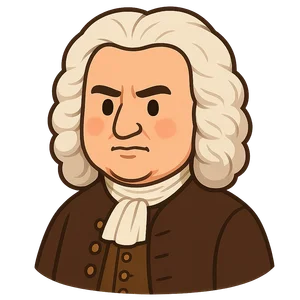
Johann Sebastian Bach was a German composer and musician of the Baroque period.
Reads at Grades 6–8 Listens at Grades 4–8
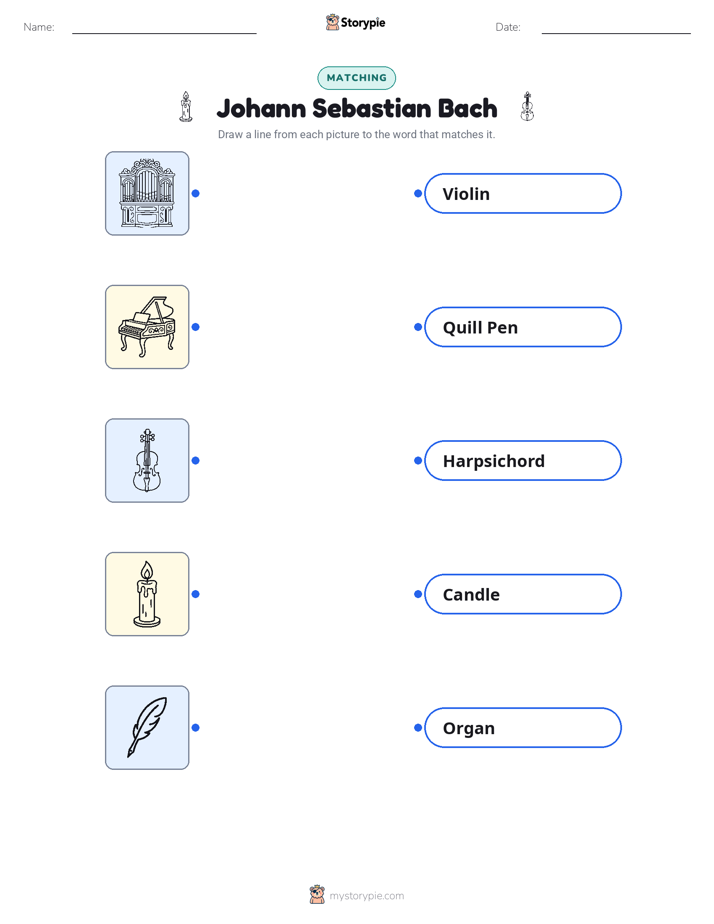
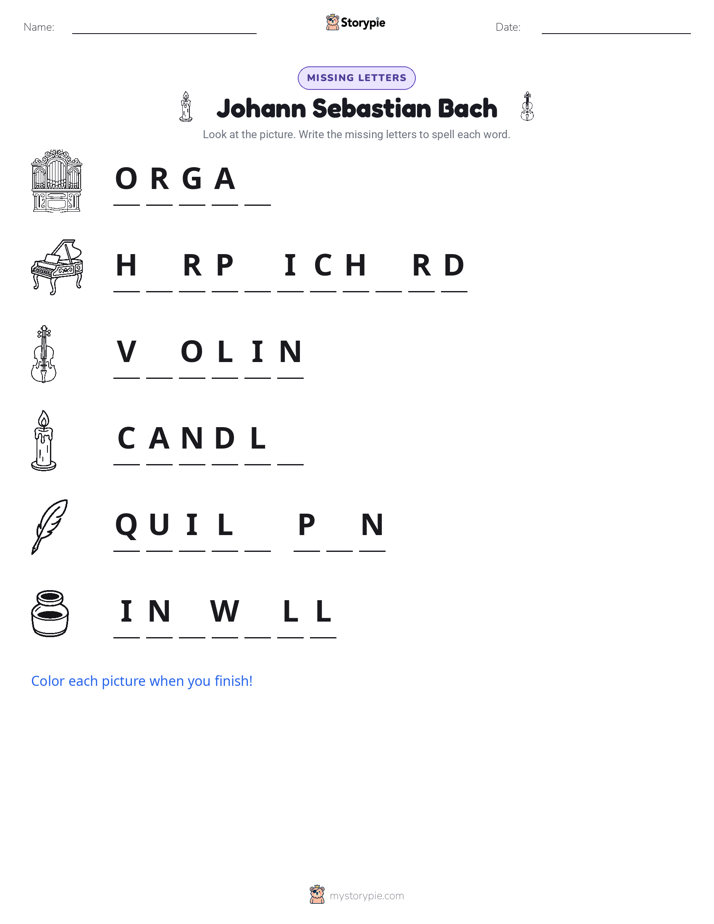
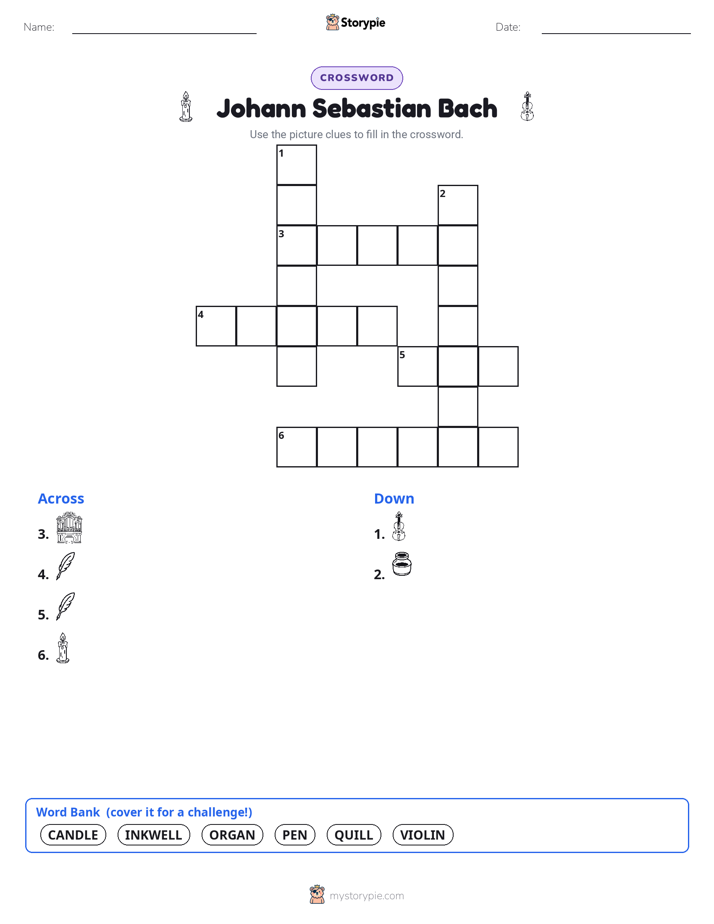
Print & create
Answer keys·No prep·Free with an account
28 worksheets · answer keys · full story · quiz · Ages 10-12 · CEFR B2
Plus adds 164,000+ more stories in 27 languages, audio for every one, and printables for all of them.
Just want Johann Sebastian Bach?
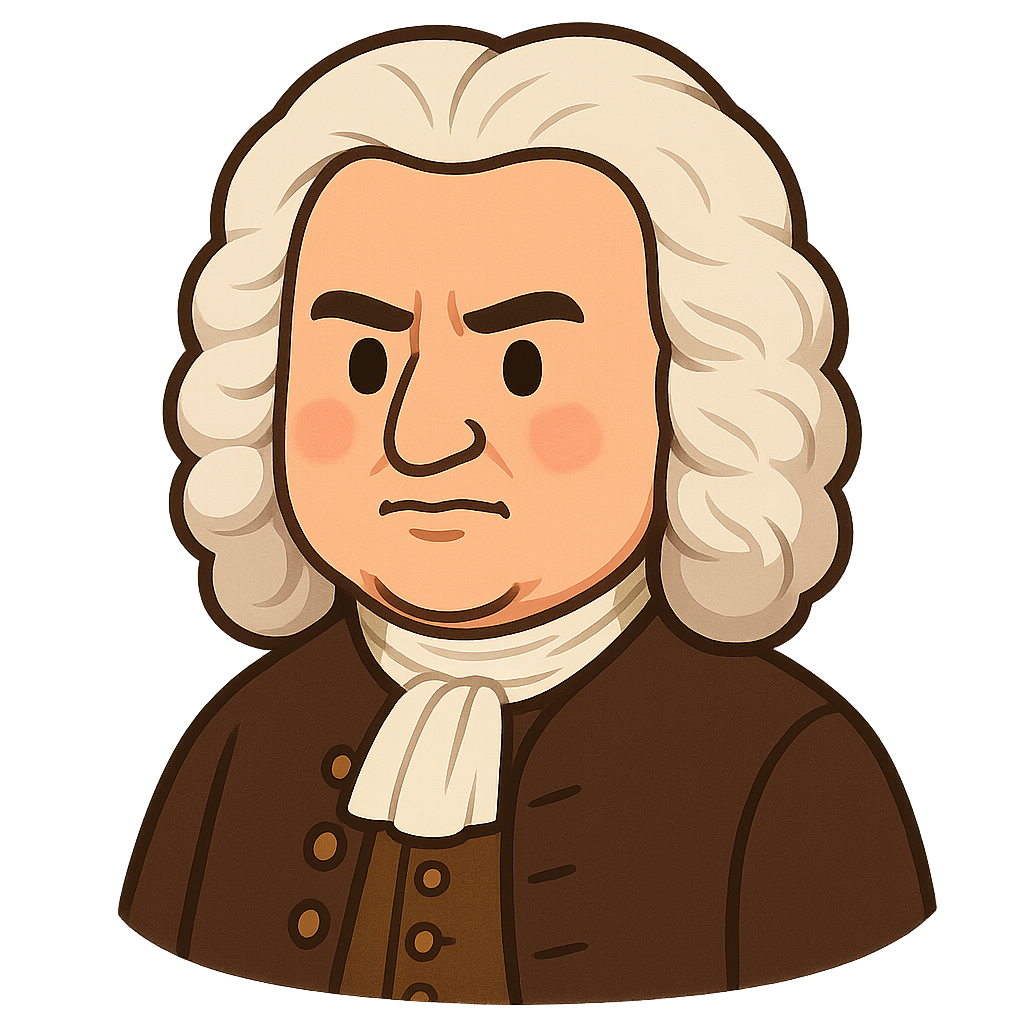
Hello, my name is Johann Sebastian Bach, and I am a composer. My story begins in the town of Eisenach, Germany, where I was born on March 31st, 1685. Music was the air my family breathed; my father, my uncles, and my cousins were all musicians. From my earliest days, I was surrounded by the sounds of organs, violins, and choirs. Music was not just a profession in my family, it was our way of life, and I learned to read notes almost as soon as I learned to read words. However, a deep sadness fell over my childhood when I was still very young. My mother passed away, and my father followed soon after. By 1695, at the age of 10, I was an orphan. I went to live with my older brother, Johann Christoph, who was a church organist. He took me under his wing and became my first formal music teacher, showing me how to play the keyboard. He had a collection of music from the great composers of the time, which I was not always allowed to see. But my curiosity was too strong. I would often sneak downstairs late at night to copy the music scores by moonlight, determined to understand every note and every harmony.
As I grew older, my hunger to learn music only intensified. In the year 1700, I left my brother's home to attend a prestigious school in Lüneburg, where I could sing in the choir and continue my studies. It was a time of great growth and exploration for me. I was so determined to learn from the masters that I once walked over 250 miles just to hear a legendary organist named Dietrich Buxtehude play. Listening to him was like hearing a new language, and it inspired me to push the boundaries of my own abilities. My professional career began soon after. In 1703, I accepted my first significant position as an organist in the town of Arnstadt. I later moved to Mühlhausen, and it was there, in 1707, that I married my first wife, Maria Barbara. The following year, in 1708, I was offered a wonderful opportunity to work as a court organist and musician in Weimar. This position gave me the chance to compose many pieces for the organ and explore the full range of the instrument I loved so dearly.
Johann Sebastian Bach: A Life in Music
Hello, my name is Johann Sebastian Bach, and I am a composer. My story begins in the town of Eisenach, Germany, where I was born on March 31st, 1685. Music was the air my family breathed; my father, my uncles, and my cousins were all musicians. From my earliest days, I was surrounded by the sounds of organs, violins, and choirs. Music was not just a profession in my family, it was our way of life, and I learned to read notes almost as soon as I learned to read words. However, a deep sadness fell over my childhood when I was still very young. My mother passed away, and my father followed soon after. By 1695, at the age of 10, I was an orphan. I went to live with my older brother, Johann Christoph, who was a church organist. He took me under his wing and became my first formal music teacher, showing me how to play the keyboard. He had a collection of music from the great composers of the time, which I was not always allowed to see. But my curiosity was too strong. I would often sneak downstairs late at night to copy the music scores by moonlight, determined to understand every note and every harmony.
As I grew older, my hunger to learn music only intensified. In the year 1700, I left my brother's home to attend a prestigious school in Lüneburg, where I could sing in the choir and continue my studies. It was a time of great growth and exploration for me. I was so determined to learn from the masters that I once walked over 250 miles just to hear a legendary organist named Dietrich Buxtehude play. Listening to him was like hearing a new language, and it inspired me to push the boundaries of my own abilities. My professional career began soon after. In 1703, I accepted my first significant position as an organist in the town of Arnstadt. I later moved to Mühlhausen, and it was there, in 1707, that I married my first wife, Maria Barbara. The following year, in 1708, I was offered a wonderful opportunity to work as a court organist and musician in Weimar. This position gave me the chance to compose many pieces for the organ and explore the full range of the instrument I loved so dearly.
My journey took an exciting turn in 1717 when I was hired by Prince Leopold of Anhalt-Köthen. The prince was a passionate music lover, but his church followed a tradition that did not use elaborate music in its services. Therefore, his interest was almost entirely in instrumental music—music without words. This period was a gift, as it allowed me to focus on composing for orchestras and solo instruments. It was during my time in Köthen that I created some of my most celebrated instrumental works. Around 1721, I completed a set of six pieces that would later become known as the 'Brandenburg Concertos', each one written for a different combination of instruments. While this time was filled with creative energy, it was also marked by personal tragedy. In 1720, while I was traveling with the prince, my dear wife Maria Barbara fell ill and passed away unexpectedly. I returned home to discover I was a widower. My heart was heavy, but a year later, in 1721, I found happiness again when I married a talented singer named Anna Magdalena, who became a loving partner and a great support in my life and work.
In 1723, I accepted what would become the most significant and demanding position of my entire career. I moved to the bustling city of Leipzig to become the Cantor of St. Thomas School. This was an enormous responsibility. I was not only a teacher, but I was also in charge of the music for the city’s four main churches. This meant I had to compose, rehearse, and perform a new piece of church music, called a cantata, nearly every week. The pace was relentless, and the work required immense dedication. I composed hundreds of cantatas, each one a complex work for singers and instrumentalists. It was during this incredibly productive period that I wrote some of my most profound and enduring sacred music. For example, in 1727, I composed the 'St. Matthew Passion,' a powerful musical telling of a sacred story. Though the demands of the job were great, the opportunity to create music that could touch the hearts and souls of the congregation brought me a deep and lasting satisfaction.
I lived to be 65 years old, and my life came to an end on July 28th, 1750. For a long time after I was gone, my music was not widely performed, and my name was known mostly to other musicians and scholars. It seemed as if my compositions might be forgotten by the wider world. However, decades later, a young and brilliant composer named Felix Mendelssohn discovered my work and was determined to share its beauty. In 1829, he conducted a performance of my 'St. Matthew Passion,' and it was a tremendous success that sparked a renewed interest in my music. It fills me with joy to know that the notes I wrote so long ago did not fade away. Today, my music is played in concert halls, churches, and homes all over the world, bringing inspiration to musicians and comfort to listeners centuries after my time.
Wow facts
About
Johann Sebastian Bach was a German composer and musician of the Baroque period. He is now regarded as one of the greatest composers of all time, known for works like the Brandenburg Concertos and The Well-Tempered Clavier.
Take a Quiz
Question 1 of 5
In the story, I mention that as the Cantor of Leipzig, I had to compose a new cantata almost every week. What does this tell you about my work ethic?
Explore next





Want to do even more?
Go beyond exploring. Unlock tools that turn every story into real learning.

Storypie Plus for families
Full stories, quizzes, and printables. Nights and car rides, sorted.
- Unlimited audio stories
- Create Mode: your child stars in the story
- Offline downloads
- Printable worksheets & coloring pages

Why Storypie for Schools
Students engaged. Prep in seconds. Evenings back to you.
- Worksheets & Quizzes
- Classroom Management
- Formative Assessment
- Custom Curriculum & Lesson Plans
- 27 Languages

Why Storypie for Homeschool
Curriculum done. They'll ask for more. Hours back in your day.
- Worksheet Generator
- First-Person Audio Stories
- Built-in Comprehension Quizzes
- Custom Curriculum & Lesson Plans
- Print & Go Activities