English

Johannes Gutenberg
German inventor and craftsman who significantly advanced printing technology in Europe with his invention of…
Reads at Grades 6–8 Listens at Grades 4–8
Print & create
Answer keys·No prep·Free with an account
28 worksheets · answer keys · full story · quiz · Ages 10-12 · CEFR B2
Plus adds 244,000+ more stories in 27 languages, audio for every one, and printables for all of them.
Just want Johannes Gutenberg?
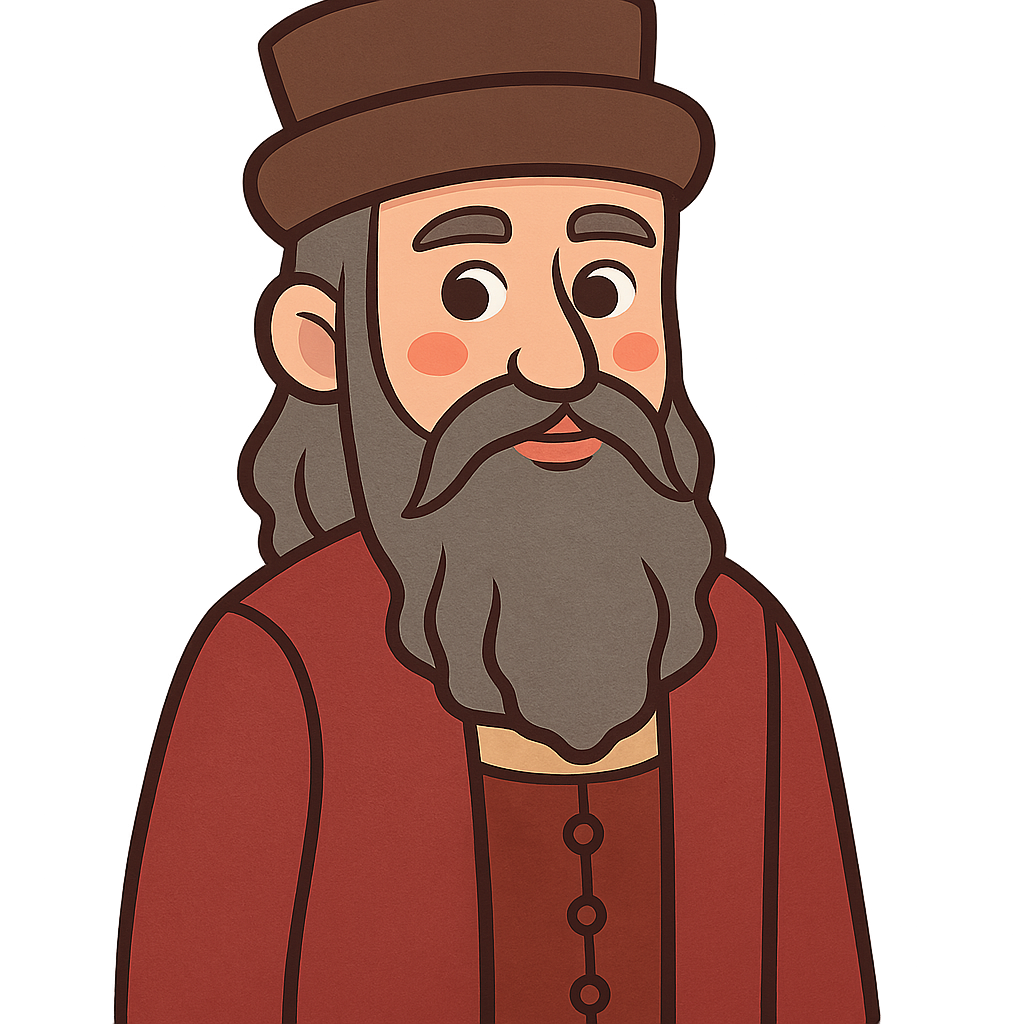
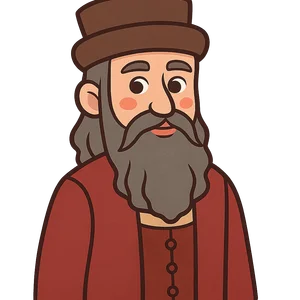
Hello! My name is Johannes Gutenberg. I was born in a busy city called Mainz, in what is now Germany, around the year 1400. In my time, books were not like the ones you see today. They were rare and precious treasures because each one had to be copied by hand by a special writer called a scribe. This process could take months or even years for a single book. My family worked with metals, and from a young age, I became a skilled goldsmith, learning how to carve and shape metal with great precision. I was fascinated by making things, but I was even more interested in books and the ideas they contained. I often looked at the slow work of the scribes and thought, 'There must be a faster way to share stories and knowledge than copying them one letter at a time.'
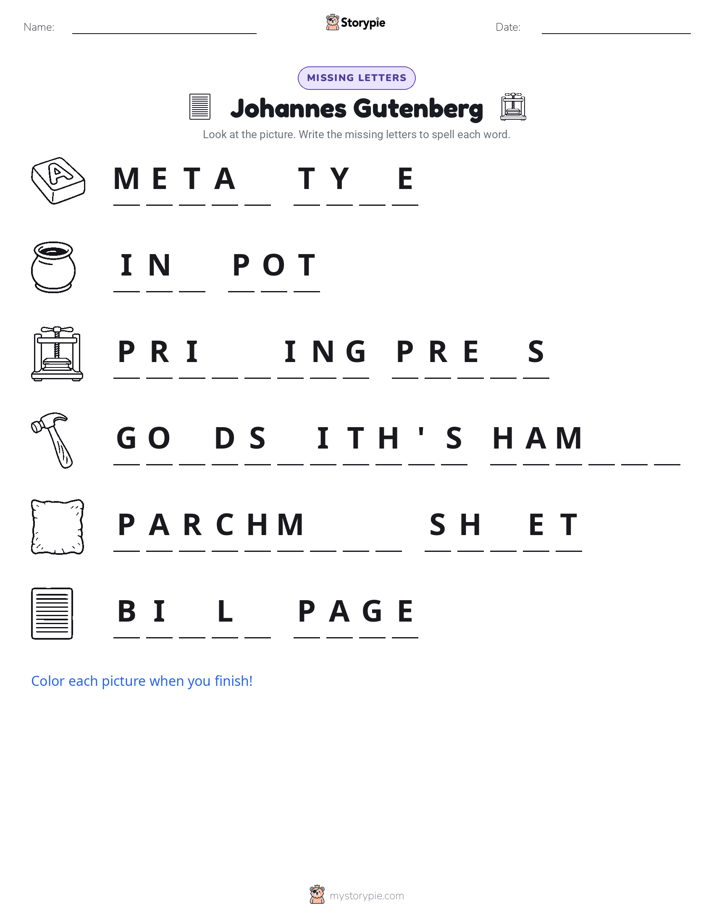
Around 1430, I moved to the city of Strasbourg, and my mind was always buzzing with ideas. My training as a goldsmith was crucial because it taught me everything about working with metal, especially how to create precise, identical shapes. This is where my big idea began to form. I wondered, what if instead of carving an entire page onto a single block of wood, I created a tiny, separate metal stamp for each letter of the alphabet? I could arrange these little metal letters, which I called 'movable type,' to spell out any word, line, or page I wanted. After arranging them, I could cover them in ink, press them onto a sheet of paper, and create a perfect copy. The best part was that when I was done, I could take the letters apart and rearrange them to make a completely new page. It seemed like a brilliant solution to make many copies of a book quickly and efficiently.
Johannes Gutenberg
Hello! My name is Johannes Gutenberg. I was born in a busy city called Mainz, in what is now Germany, around the year 1400. In my time, books were not like the ones you see today. They were rare and precious treasures because each one had to be copied by hand by a special writer called a scribe. This process could take months or even years for a single book. My family worked with metals, and from a young age, I became a skilled goldsmith, learning how to carve and shape metal with great precision. I was fascinated by making things, but I was even more interested in books and the ideas they contained. I often looked at the slow work of the scribes and thought, 'There must be a faster way to share stories and knowledge than copying them one letter at a time.'
Around 1430, I moved to the city of Strasbourg, and my mind was always buzzing with ideas. My training as a goldsmith was crucial because it taught me everything about working with metal, especially how to create precise, identical shapes. This is where my big idea began to form. I wondered, what if instead of carving an entire page onto a single block of wood, I created a tiny, separate metal stamp for each letter of the alphabet? I could arrange these little metal letters, which I called 'movable type,' to spell out any word, line, or page I wanted. After arranging them, I could cover them in ink, press them onto a sheet of paper, and create a perfect copy. The best part was that when I was done, I could take the letters apart and rearrange them to make a completely new page. It seemed like a brilliant solution to make many copies of a book quickly and efficiently.
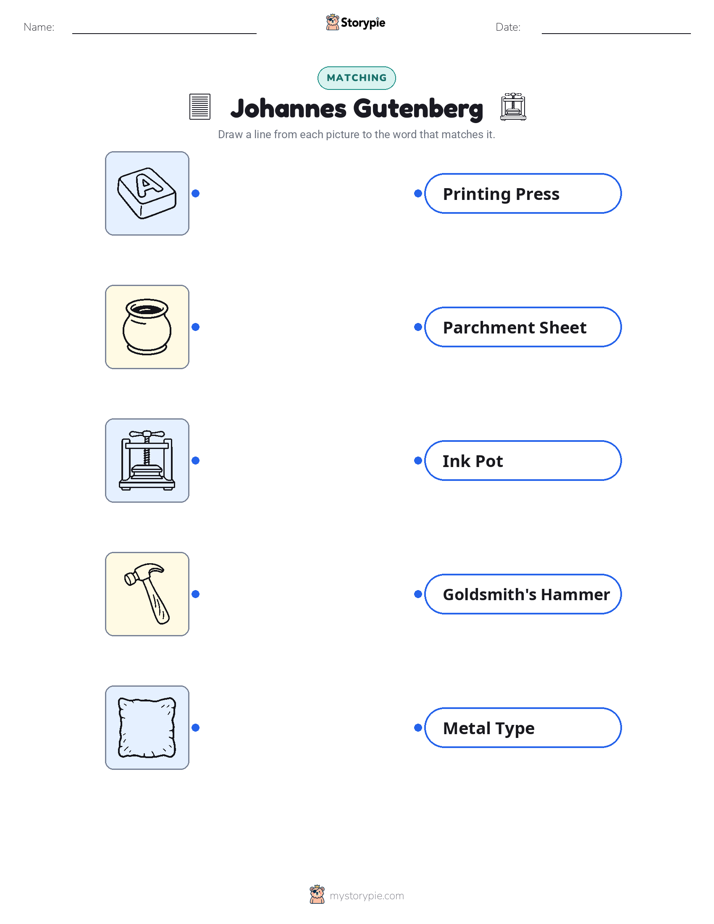
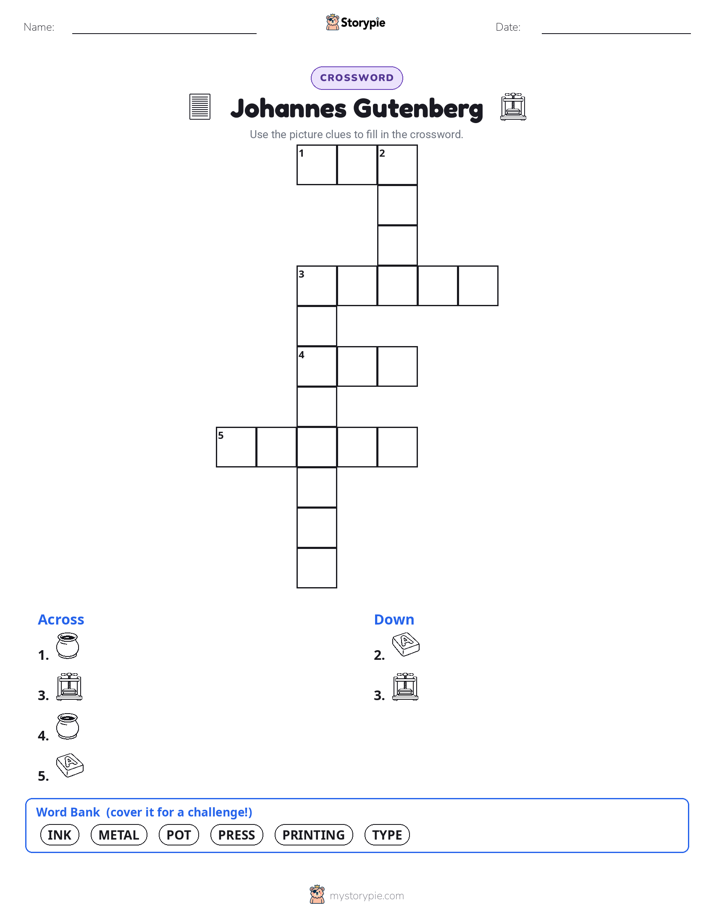
Having an idea is one thing, but making it a reality is another challenge altogether. My work required years of hard work, experimentation, and secrecy. I had to invent everything from scratch. First, I needed to create the movable type itself. I experimented for a long time to find the perfect metal mixture, one that was soft enough to be poured into molds but strong enough to withstand being pressed over and over again. Then, I needed a new kind of ink. The watery ink used by scribes would just run off the metal letters, so I developed a thick, oily ink that would stick to the type. Finally, I needed a machine that could press the paper evenly and firmly onto the inked letters. I adapted a large screw press, like those used for making wine and paper, and turned it into my very own printing press. I returned to my hometown of Mainz around 1448, feeling confident in my inventions but knowing I needed money to build a full workshop and start a business.
To prove that my invention was truly remarkable, I knew I needed to print something ambitious and beautiful—a project so impressive that everyone would recognize the power of printing. I chose the most important and respected book in Europe at the time: the Bible. Printing such a large book would require a lot of money for paper, ink, and workers. I found a wealthy businessman named Johann Fust who saw the potential in my idea and agreed to lend me the money I needed. Around 1452, my team and I began the enormous task of printing what is now famously called the Gutenberg Bible. Each page was designed with 42 lines of text, perfectly spaced and beautifully clear. We worked tirelessly, and by 1455, we had printed about 180 magnificent copies. It was a masterpiece, and its quality rivaled that of the most beautiful books copied by hand.
My invention was a technical success, but my business partnership was not. Unfortunately, I had a serious disagreement with my partner, Johann Fust, over the money he had loaned me. He believed I owed him more than I could repay, so we went to court in 1456. The court ruled in his favor, and as a result, I lost my workshop and all of my printing equipment to him. It was a deeply difficult and heartbreaking time for me personally. But my idea was too powerful to be stopped by one person's misfortune. Soon, other printers learned my methods, and printing presses like mine began to appear in cities all over Europe. For the first time in history, books became affordable and accessible to people beyond the wealthy elite. Knowledge, ideas, and stories could now travel farther and faster than ever before, changing the world in ways I could have only dreamed of.
I continued to print in my later years and lived until February 3rd, 1468, to be about 68 years old. Though I did not become rich from my invention, I am remembered for giving the world the gift of printed books. My printing press helped launch a new age of learning and discovery, sparking huge changes in science, art, and the way people thought, which historians now call the Renaissance and the Reformation. Today, when you pick up a printed book, you are holding a piece of a revolution that I helped start, all those years ago, with tiny pieces of metal and one very big idea.
Wow facts
About
German inventor and craftsman who significantly advanced printing technology in Europe with his invention of the movable-type printing press, sparking the Printing Revolution.
Take a Quiz
Question 1 of 5
What was the main problem Johannes Gutenberg wanted to solve with his invention?
Explore next





Want to do even more?
Go beyond exploring. Unlock tools that turn every story into real learning.

Storypie Plus for families
Full stories, quizzes, and printables. Nights and car rides, sorted.
- Unlimited audio stories
- Create Mode: your child stars in the story
- Offline downloads
- Printable worksheets & coloring pages

Why Storypie for Schools
Students engaged. Prep in seconds. Evenings back to you.
- Worksheets & Quizzes
- Classroom Management
- Formative Assessment
- Custom Curriculum & Lesson Plans
- 27 Languages

Why Storypie for Homeschool
Curriculum done. They'll ask for more. Hours back in your day.
- Worksheet Generator
- First-Person Audio Stories
- Built-in Comprehension Quizzes
- Custom Curriculum & Lesson Plans
- Print & Go Activities