English

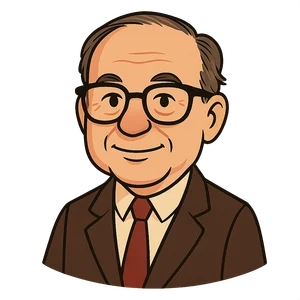
John Bardeen
John Bardeen was an American physicist and electrical engineer.
Reads at Grades 6–8 Listens at Grades 4–8
Print & create
Answer keys·No prep·Free with an account
28 worksheets · answer keys · full story · quiz · Ages 10-12 · CEFR B2
Plus adds 244,000+ more stories in 27 languages, audio for every one, and printables for all of them.
Just want John Bardeen?
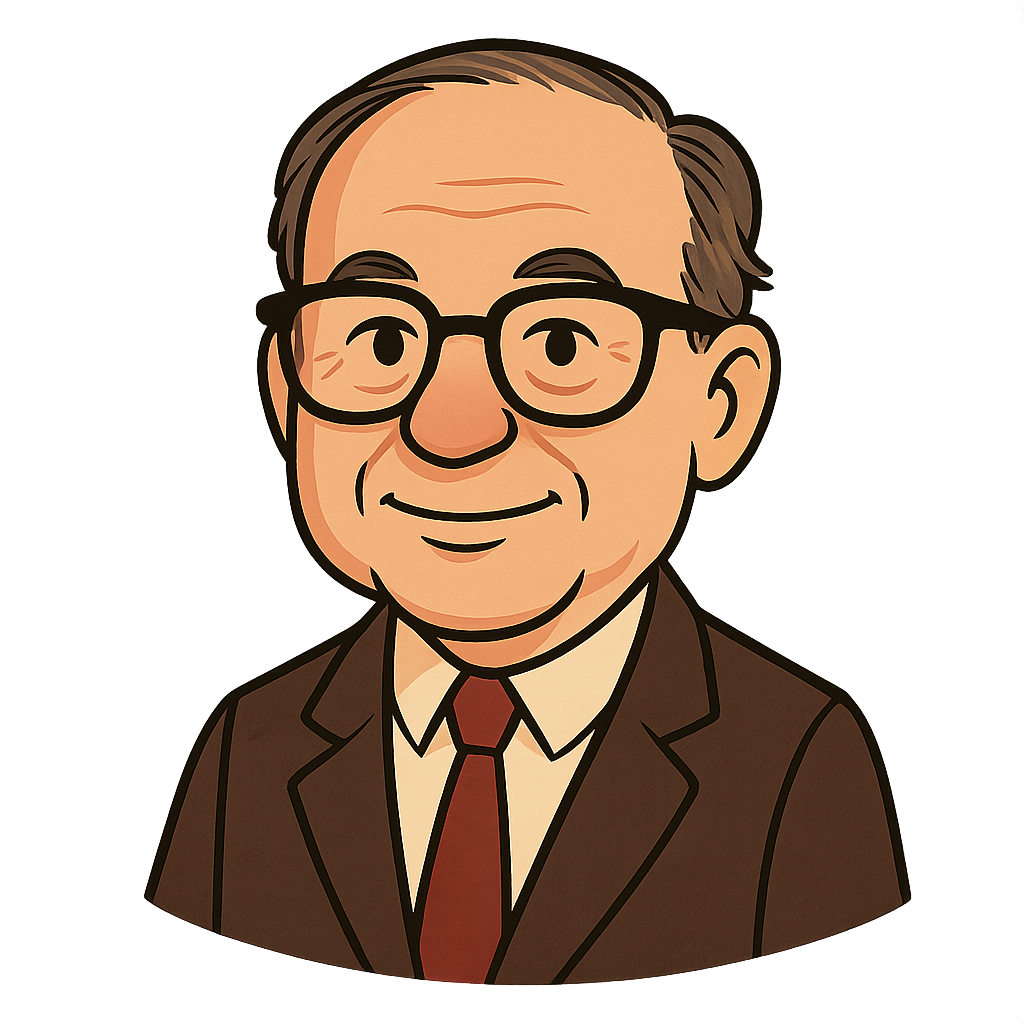
Hello, my name is John Bardeen, and I am excited to share my story with you—a story about how curiosity can lead to incredible discoveries. I was born on May 23rd, 1908, in Madison, Wisconsin. My father was a university professor, so our home was a place of learning, always filled with books and interesting ideas. I was a quiet child, but my mind was never still; it was always racing with questions and thoughts. I found a special love for mathematics because it presented a world of perfect, logical puzzles that I could solve. I was so fascinated by learning that I moved ahead quickly in my studies, skipping several grades along the way. In 1923, I graduated from high school when I was only fifteen years old, ready to see what else the world of science had in store for me.
After high school, I enrolled at the University of Wisconsin-Madison to study electrical engineering. While I found the subject fascinating, I soon realized that my deepest passion was not just in building things, but in understanding the fundamental reasons *why* they worked. This deep curiosity is the very heart of physics. After graduating with my degree in 1928, I spent a few years working in the field, but I felt a strong pull to continue my education. I knew there were more mysteries to explore. This led me to Princeton University, where I earned my Ph.D. in mathematical physics in 1936. My academic journey was briefly paused during World War II, a time when I put my skills to use for the U.S. Navy. Even then, my mind was always drawn back to the fundamental questions about how our universe operates.
John Bardeen: The Quiet Mind That Changed the World
Hello, my name is John Bardeen, and I am excited to share my story with you—a story about how curiosity can lead to incredible discoveries. I was born on May 23rd, 1908, in Madison, Wisconsin. My father was a university professor, so our home was a place of learning, always filled with books and interesting ideas. I was a quiet child, but my mind was never still; it was always racing with questions and thoughts. I found a special love for mathematics because it presented a world of perfect, logical puzzles that I could solve. I was so fascinated by learning that I moved ahead quickly in my studies, skipping several grades along the way. In 1923, I graduated from high school when I was only fifteen years old, ready to see what else the world of science had in store for me.
After high school, I enrolled at the University of Wisconsin-Madison to study electrical engineering. While I found the subject fascinating, I soon realized that my deepest passion was not just in building things, but in understanding the fundamental reasons why they worked. This deep curiosity is the very heart of physics. After graduating with my degree in 1928, I spent a few years working in the field, but I felt a strong pull to continue my education. I knew there were more mysteries to explore. This led me to Princeton University, where I earned my Ph.D. in mathematical physics in 1936. My academic journey was briefly paused during World War II, a time when I put my skills to use for the U.S. Navy. Even then, my mind was always drawn back to the fundamental questions about how our universe operates.
In 1945, a new chapter of my life began when I joined a prestigious research group at Bell Telephone Laboratories, more commonly known as Bell Labs. My mission, along with my colleagues Walter Brattain and William Shockley, was to find a more efficient way to control the flow of electricity. At that time, electronics relied on large, fragile glass vacuum tubes that consumed a lot of power and produced a lot of heat. We were convinced that a better solution could be found using solid materials called semiconductors. Our work required patience and persistence. We conducted countless experiments, facing many challenges along the way. Then, on December 16th, 1947, we had our breakthrough. We created the world's first working point-contact transistor. This tiny device could amplify electrical signals and act as a switch, all without the bulk and fragility of a vacuum tube. We knew our invention was significant, but we could not have possibly imagined that it would become the foundational component of nearly all modern electronics, from radios to the powerful computers we have today. For this revolutionary invention, the three of us were honored with the Nobel Prize in Physics in 1956.
Receiving a Nobel Prize is an incredible honor, but my curiosity was far from satisfied. In 1951, I accepted a position as a professor at the University of Illinois, where I could continue my research and mentor a new generation of scientists. I became captivated by a puzzling phenomenon known as superconductivity. For many decades, scientists had observed that certain materials, when cooled to extremely low temperatures, could conduct electricity with absolutely zero resistance—a perfect conductor. But no one had been able to explain why this happened. I collaborated with two brilliant young physicists, Leon Cooper and John Robert Schrieffer, to tackle this mystery. Together, we delved into the complex world of quantum mechanics, developing a theory about how electrons pair up and move through a cold metal without any friction. In 1957, we published our explanation, which became known as the BCS theory, named for Bardeen, Cooper, and Schrieffer. Our theory was a monumental step forward in understanding the fundamental properties of matter.
For our work on the theory of superconductivity, my colleagues and I were awarded a second Nobel Prize in Physics in 1972. I hold the unique distinction of being the only person ever to receive this prestigious honor twice in the field of physics. I was never someone who sought fame or the spotlight; I found my greatest satisfaction in the quiet, focused work of solving a difficult problem. I am immensely proud that my discoveries have had such a profound and lasting impact on the world. The transistor I helped create now exists by the billions inside the very device you might be using to read my story. The BCS theory has helped scientists develop powerful superconducting magnets used in essential medical technologies like MRI machines. I lived to be 82 years old, passing away in 1991. I hope my story inspires you to see that with persistent curiosity, dedicated teamwork, and a lot of hard work, you too can help uncover the secrets of the universe and change the world in ways you can't even imagine.
Wow facts
About
John Bardeen was an American physicist and electrical engineer. He is the only person to have won the Nobel Prize in Physics twice: first in 1956 for the invention of the transistor, and again in 1972 for a fundamental theory of superconductivity.
Take a Quiz
Question 1 of 5
In your own words, summarize why John Bardeen's invention of the transistor at Bell Labs was so important.
Explore next






Want to do even more?
Go beyond exploring. Unlock tools that turn every story into real learning.

Storypie Plus for families
Full stories, quizzes, and printables. Nights and car rides, sorted.
- Unlimited audio stories
- Create Mode: your child stars in the story
- Offline downloads
- Printable worksheets & coloring pages

Why Storypie for Schools
Students engaged. Prep in seconds. Evenings back to you.
- Worksheets & Quizzes
- Classroom Management
- Formative Assessment
- Custom Curriculum & Lesson Plans
- 27 Languages

Why Storypie for Homeschool
Curriculum done. They'll ask for more. Hours back in your day.
- Worksheet Generator
- First-Person Audio Stories
- Built-in Comprehension Quizzes
- Custom Curriculum & Lesson Plans
- Print & Go Activities