English


John Deere
John Deere was an American blacksmith and inventor who founded Deere & Company.
Reads at Grades 3–5 Listens at Grades 1–5
Print & create
Answer keys·No prep·Free with an account
28 worksheets · answer keys · full story · quiz · Ages 8-10 · CEFR B1
Plus adds 244,000+ more stories in 27 languages, audio for every one, and printables for all of them.
Just want John Deere?

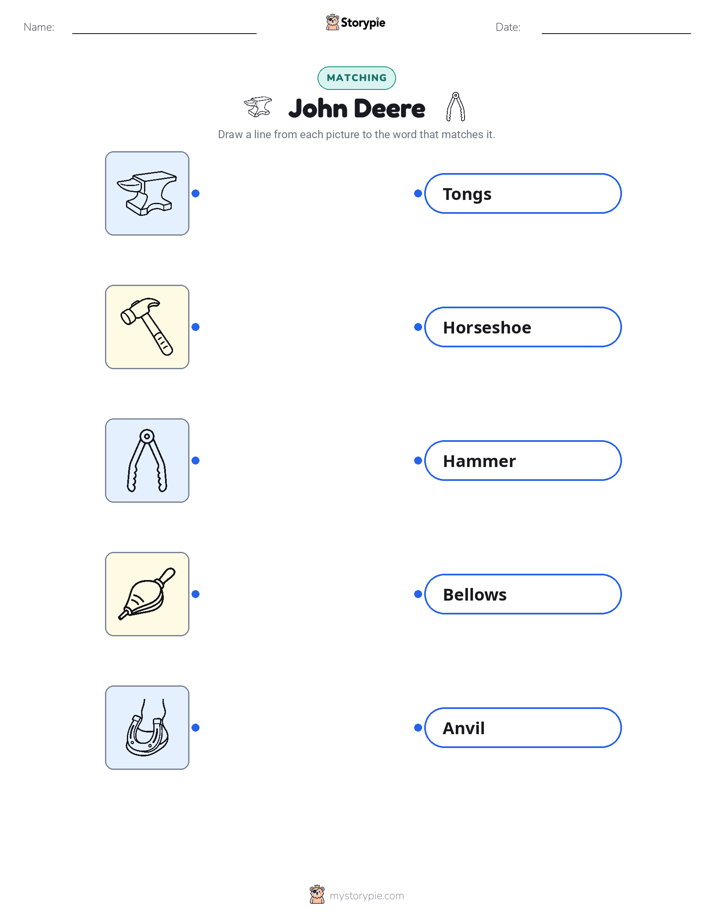
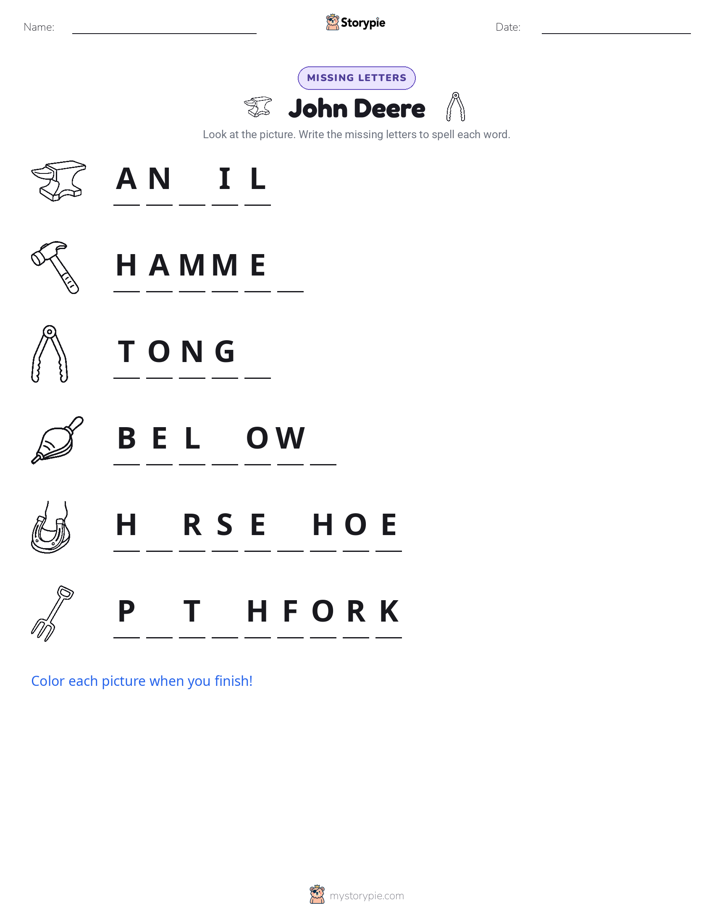
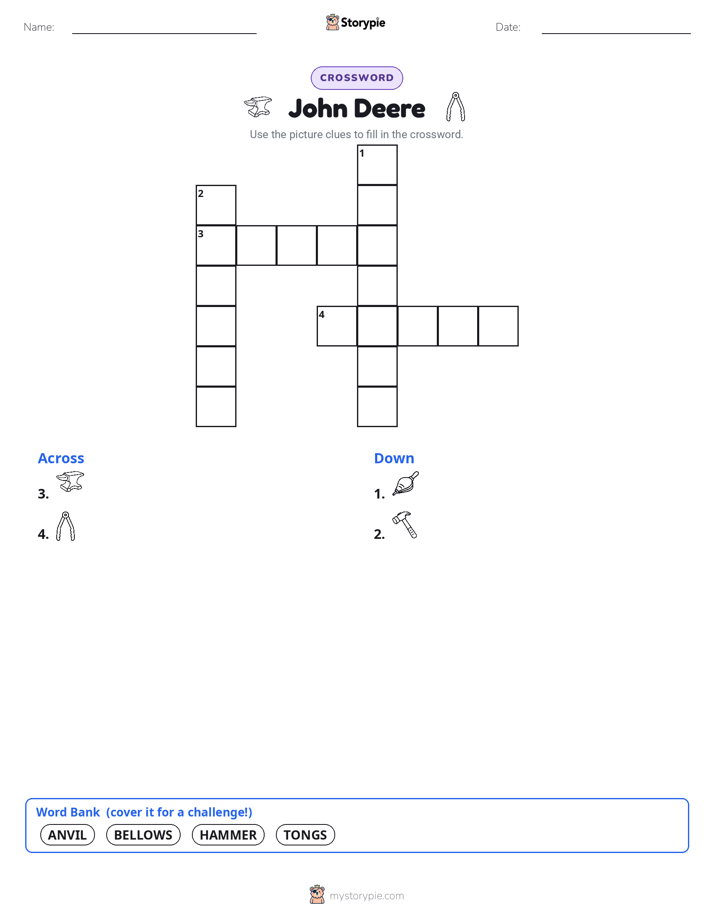
Hello, my name is John Deere, and I’d like to tell you how a simple idea helped change the world of farming. I was born a long time ago, on February 7th, 1804, in a small town called Rutland, Vermont. From a young age, I loved working with my hands. The clang of a hammer and the heat of the forge were like music to my ears. Around the year 1821, I became a blacksmith's apprentice. This meant I learned the incredible skill of heating metal until it was soft and then shaping it into useful things like horseshoes, nails, and tools for my neighbors. I took great pride in making strong, reliable items that people could depend on every day.
As I grew older, I heard stories about people moving west to find new opportunities. In 1836, I decided to make a big move myself, all the way to a little town called Grand Detour, Illinois. Out on the prairie, the land was wide open and the soil was deep and rich—perfect for farming. But the farmers there had a very big, very sticky problem. The soil was so thick and heavy that it was like glue. When they tried to use their cast-iron plows to turn the earth, the dirt would cling to the plow in big, heavy clumps. Every few steps, the farmers had to stop their work, pull out a paddle, and scrape all the mud off. It was slow, frustrating work, and it made farming the beautiful prairie land incredibly difficult.
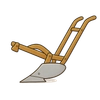
I saw how much the farmers struggled, and as a blacksmith, I knew there had to be a better way. I started thinking about different materials. What if the plow's surface was so smooth and polished that the sticky soil couldn't grab onto it? In 1837, I had an idea. I found an old, broken steel saw blade that had been thrown away. Steel was much smoother and stronger than cast iron. I carefully took that piece of steel and began to heat it, bend it, and shape it. I polished it until it shone like a mirror. I attached this new steel moldboard to a plow, creating something entirely new. When I tested it in the fields, it worked perfectly. The plow sliced cleanly through the thick prairie soil, and the earth just slid right off. It cleaned itself.
John Deere: The Man Who Tamed the Prairie
Hello, my name is John Deere, and I’d like to tell you how a simple idea helped change the world of farming. I was born a long time ago, on February 7th, 1804, in a small town called Rutland, Vermont. From a young age, I loved working with my hands. The clang of a hammer and the heat of the forge were like music to my ears. Around the year 1821, I became a blacksmith's apprentice. This meant I learned the incredible skill of heating metal until it was soft and then shaping it into useful things like horseshoes, nails, and tools for my neighbors. I took great pride in making strong, reliable items that people could depend on every day.
As I grew older, I heard stories about people moving west to find new opportunities. In 1836, I decided to make a big move myself, all the way to a little town called Grand Detour, Illinois. Out on the prairie, the land was wide open and the soil was deep and rich—perfect for farming. But the farmers there had a very big, very sticky problem. The soil was so thick and heavy that it was like glue. When they tried to use their cast-iron plows to turn the earth, the dirt would cling to the plow in big, heavy clumps. Every few steps, the farmers had to stop their work, pull out a paddle, and scrape all the mud off. It was slow, frustrating work, and it made farming the beautiful prairie land incredibly difficult.
I saw how much the farmers struggled, and as a blacksmith, I knew there had to be a better way. I started thinking about different materials. What if the plow's surface was so smooth and polished that the sticky soil couldn't grab onto it? In 1837, I had an idea. I found an old, broken steel saw blade that had been thrown away. Steel was much smoother and stronger than cast iron. I carefully took that piece of steel and began to heat it, bend it, and shape it. I polished it until it shone like a mirror. I attached this new steel moldboard to a plow, creating something entirely new. When I tested it in the fields, it worked perfectly. The plow sliced cleanly through the thick prairie soil, and the earth just slid right off. It cleaned itself.
My new plow was a huge success. Word spread quickly, and soon, farmers from all over the area wanted one of my self-scouring plows. I was making them as fast as I could in my small shop, but it wasn't enough. To help more people, I needed to grow my business. In 1848, I moved my company to Moline, Illinois. Moline was a perfect spot because it was right on the Mississippi River. The powerful river could be used to run the machines in my factory, and I could use boats to ship my finished plows to farmers far and wide. My little idea kept growing, and in 1868, my company officially became Deere & Company, a name you might still recognize today.
I did more than just build plows; I also served as the mayor of Moline for a time because I cared about my community. I lived a full and busy life until I was 82 years old. My invention helped make it possible for farmers to grow enough food to feed a growing country. I am very proud that the company with my name on it still builds those famous green and yellow machines that help people farm the land all over the world.
Wow facts
About
John Deere was an American blacksmith and inventor who founded Deere & Company. In 1837, he invented the first commercially successful self-scouring steel plow, which revolutionized farming on the American prairie.
Take a Quiz
Question 1 of 5
Why was the rich prairie soil in Illinois a big problem for farmers?
Explore next





Want to do even more?
Go beyond exploring. Unlock tools that turn every story into real learning.

Storypie Plus for families
Full stories, quizzes, and printables. Nights and car rides, sorted.
- Unlimited audio stories
- Create Mode: your child stars in the story
- Offline downloads
- Printable worksheets & coloring pages

Why Storypie for Schools
Students engaged. Prep in seconds. Evenings back to you.
- Worksheets & Quizzes
- Classroom Management
- Formative Assessment
- Custom Curriculum & Lesson Plans
- 27 Languages

Why Storypie for Homeschool
Curriculum done. They'll ask for more. Hours back in your day.
- Worksheet Generator
- First-Person Audio Stories
- Built-in Comprehension Quizzes
- Custom Curriculum & Lesson Plans
- Print & Go Activities