English

John Maynard Keynes
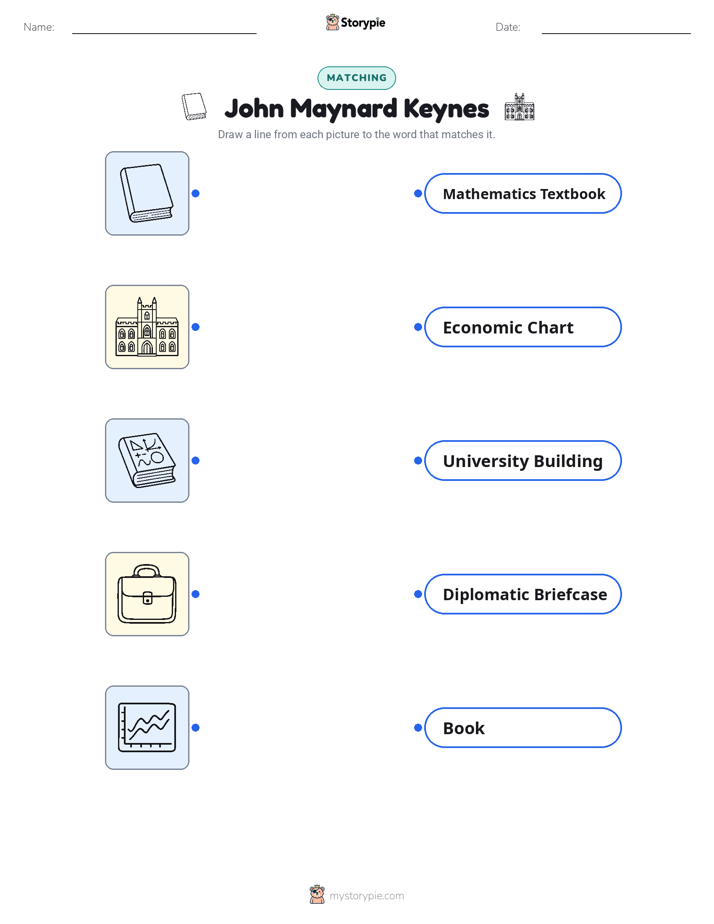
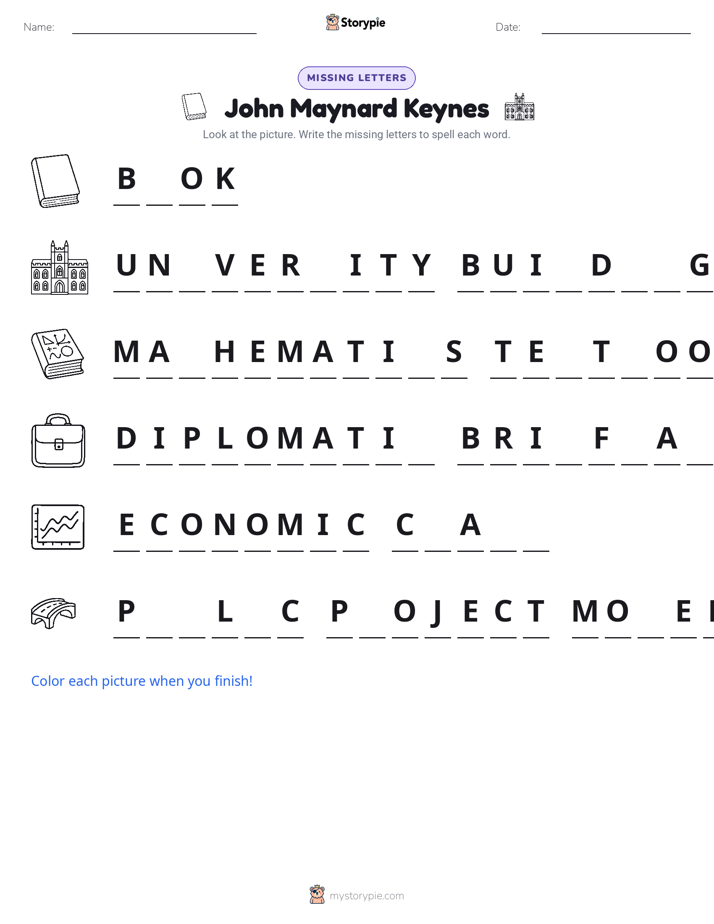
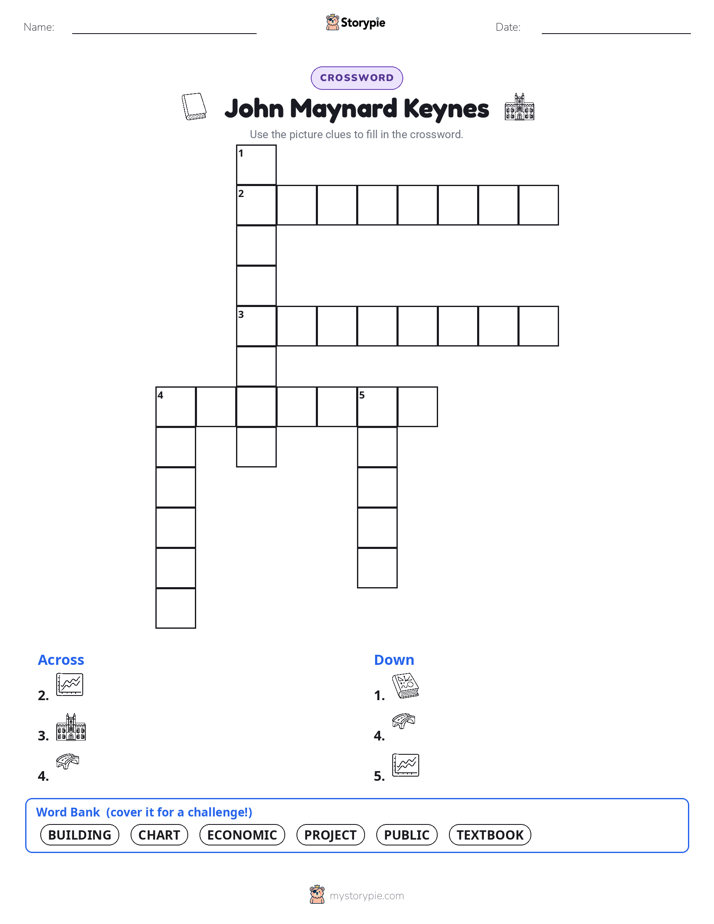
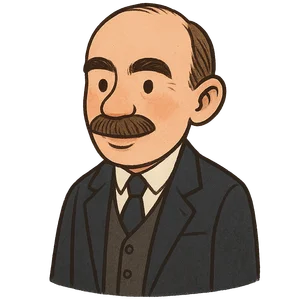
John Maynard Keynes was a highly influential British economist whose ideas, known as Keynesian economics…
Reads at Grades 6–8 Listens at Grades 4–8
Print & create
Answer keys·No prep·Free with an account
28 worksheets · answer keys · full story · quiz · Ages 10-12 · CEFR B2
Plus adds 208,000+ more stories in 27 languages, audio for every one, and printables for all of them.
Just want John Maynard Keynes?
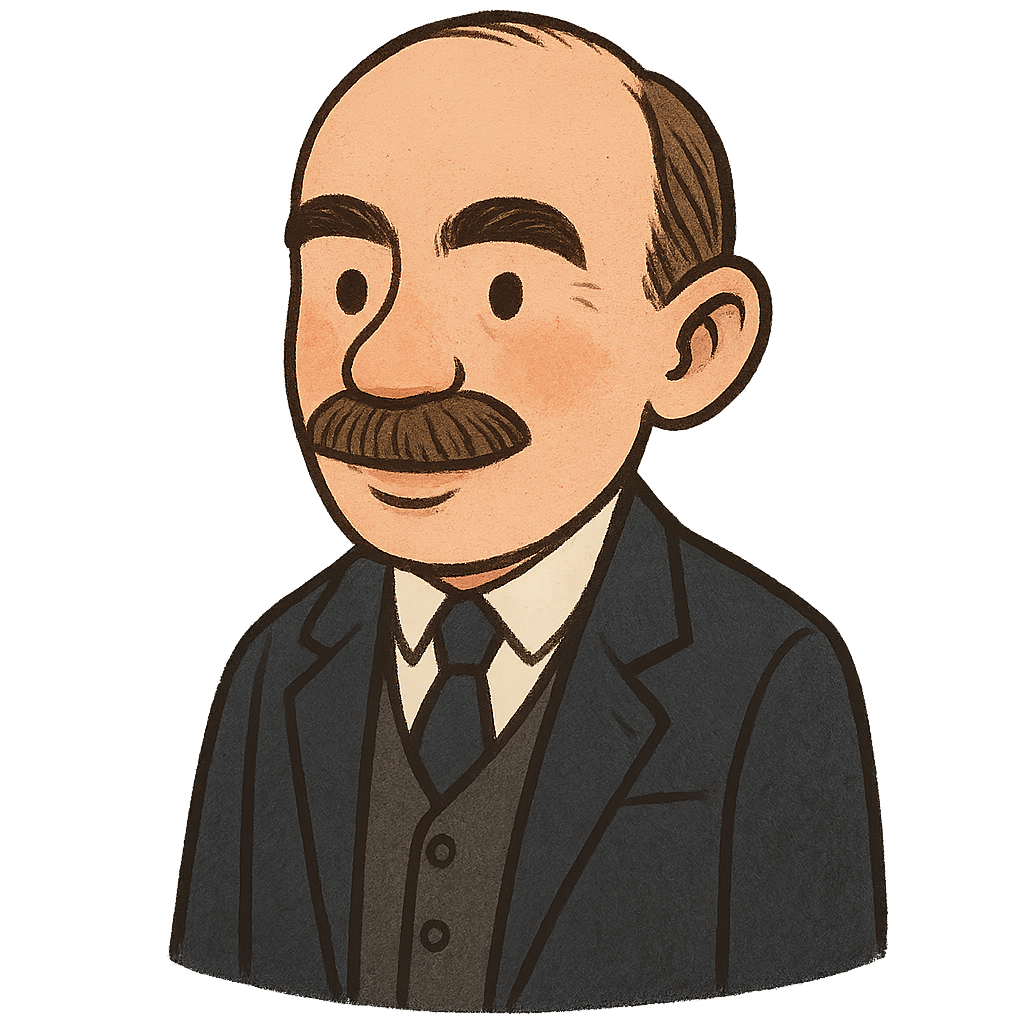
Hello, my name is John Maynard Keynes, and I am an economist whose ideas helped shape the world. I was born on June 5th, 1883, in Cambridge, England, a city celebrated for its world-famous university. My childhood home was a place of constant learning and debate. My father, John Neville Keynes, was an economist himself, and my mother, Florence Ada Keynes, was a dedicated social reformer who worked to improve our community. Surrounded by their passion for ideas, I developed a curious mind and a deep love for mathematics, which I saw as a powerful tool for solving complex problems. My education took me to some of England's finest institutions. I first attended Eton College, and then in 1902, I earned a place at King's College, which is part of the University of Cambridge. There, I explored not just mathematics but also philosophy and economics, preparing myself for a life of intellectual adventure and public service.
After my university studies, I began my career in 1906 by joining the British civil service, working in a government department called the India Office. While the work was interesting, my heart remained in the world of academia. I soon returned to Cambridge, this time as a teacher of economics. It was during this period that I became part of a wonderful circle of friends known as the Bloomsbury Group. This group was filled with brilliant artists, writers, and thinkers, including the famous author Virginia Woolf. We would gather to discuss art, literature, and the important issues of our time. Our conversations challenged my thinking and broadened my perspective beyond just numbers and theories. When World War I began, my skills were needed by the country. I went to work for the British Treasury, the government department in charge of the nation's finances. My job was to help manage the enormous economic challenges of the war, a task that showed me just how powerful and fragile a country's economy can be.
John Maynard Keynes
Hello, my name is John Maynard Keynes, and I am an economist whose ideas helped shape the world. I was born on June 5th, 1883, in Cambridge, England, a city celebrated for its world-famous university. My childhood home was a place of constant learning and debate. My father, John Neville Keynes, was an economist himself, and my mother, Florence Ada Keynes, was a dedicated social reformer who worked to improve our community. Surrounded by their passion for ideas, I developed a curious mind and a deep love for mathematics, which I saw as a powerful tool for solving complex problems. My education took me to some of England's finest institutions. I first attended Eton College, and then in 1902, I earned a place at King's College, which is part of the University of Cambridge. There, I explored not just mathematics but also philosophy and economics, preparing myself for a life of intellectual adventure and public service.
After my university studies, I began my career in 1906 by joining the British civil service, working in a government department called the India Office. While the work was interesting, my heart remained in the world of academia. I soon returned to Cambridge, this time as a teacher of economics. It was during this period that I became part of a wonderful circle of friends known as the Bloomsbury Group. This group was filled with brilliant artists, writers, and thinkers, including the famous author Virginia Woolf. We would gather to discuss art, literature, and the important issues of our time. Our conversations challenged my thinking and broadened my perspective beyond just numbers and theories. When World War I began, my skills were needed by the country. I went to work for the British Treasury, the government department in charge of the nation's finances. My job was to help manage the enormous economic challenges of the war, a task that showed me just how powerful and fragile a country's economy can be.
When World War I finally ended, I was chosen to be part of the British delegation at the Paris Peace Conference in 1919. My role was to advise on the financial terms of the peace treaty. The goal of the conference was to establish a lasting peace, but I grew deeply worried about the direction it was taking. The Treaty of Versailles, which was being drafted, placed an incredibly heavy financial burden on Germany, demanding huge payments called reparations. I believed these terms were not only unfair but also dangerously shortsighted. I argued that crippling Germany's economy would lead to instability and could plant the seeds for future conflict. When my warnings were ignored, I felt I could no longer be a part of the process. In a decision that changed my life, I resigned from my position. I immediately began writing a book to share my concerns with the public. That book, 'The Economic Consequences of the Peace,' was published in 1919 and became an international sensation, making my name known around the world.
In the 1930s, the world plunged into a severe economic crisis known as the Great Depression. Millions of people lost their jobs, and businesses failed across the globe. It was a time of immense suffering and uncertainty. The traditional economic theories of the day suggested that governments should not interfere in the economy. The belief was that the market would eventually correct itself. But as I looked around, I saw that this approach was not working; people's lives were being destroyed while we waited. I knew a new idea was needed. I spent years developing a different theory, a bold new way of thinking about how economies function. In 1936, I published my most important work, 'The General Theory of Employment, Interest and Money.' In this book, I argued that waiting was not the answer. Instead, I proposed that during an economic downturn, governments should actively step in. I explained that they should spend money on public projects, like building roads or schools, to create jobs. This spending would put money in people's pockets, which they would then spend on goods and services, helping businesses to grow and hire more workers, and ultimately helping the whole economy to recover.
As the world faced the devastation of World War II, my ideas were more important than ever. Leaders began to think about what kind of world they wanted to build after the war ended. They were determined not to repeat the mistakes that followed the first war. In 1944, I was asked to lead the British delegation to a crucial international conference held in Bretton Woods, New Hampshire, in the United States. Representatives from 44 Allied nations gathered with a shared goal: to design a new global economic system that would promote stability, trade, and prosperity. It was a monumental task. We worked to create a framework that would prevent the kind of economic chaos that had led to so much conflict in the past. I am very proud that our work at Bretton Woods led to the creation of two vital global institutions: the International Monetary Fund (IMF), designed to help keep currencies stable, and the World Bank, created to fund reconstruction and development projects. These organizations continue to play a central role in the world economy today.
Looking back, my life was about more than just numbers and theories. In 1925, I married the wonderful and talented Russian ballerina Lydia Lopokova, who brought great joy to my life. I lived to be 62 years old, passing away in 1946. My ideas, which became known as 'Keynesian economics,' have had a lasting impact. They challenged old ways of thinking and provided new tools for governments to fight unemployment and economic crises. Even today, leaders and economists around the world continue to debate and use my theories when they face economic challenges. I hope that my work helped to create a more stable and prosperous world for future generations.
Wow facts
About
John Maynard Keynes was a highly influential British economist whose ideas, known as Keynesian economics, fundamentally changed modern economic theory and government policies on spending and taxation.
Take a Quiz
Question 1 of 5
Based on the story, what major event in 1919 led me to write my famous book, 'The Economic Consequences of the Peace'?
Explore next





Want to do even more?
Go beyond exploring. Unlock tools that turn every story into real learning.

Storypie Plus for families
Full stories, quizzes, and printables. Nights and car rides, sorted.
- Unlimited audio stories
- Create Mode: your child stars in the story
- Offline downloads
- Printable worksheets & coloring pages

Why Storypie for Schools
Students engaged. Prep in seconds. Evenings back to you.
- Worksheets & Quizzes
- Classroom Management
- Formative Assessment
- Custom Curriculum & Lesson Plans
- 27 Languages

Why Storypie for Homeschool
Curriculum done. They'll ask for more. Hours back in your day.
- Worksheet Generator
- First-Person Audio Stories
- Built-in Comprehension Quizzes
- Custom Curriculum & Lesson Plans
- Print & Go Activities