English

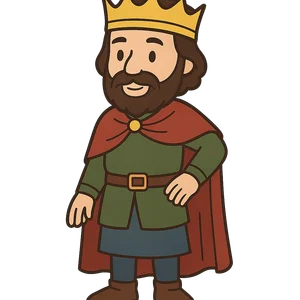
King John of England
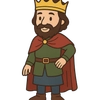
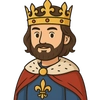
King John of England (born on December 24, 1166, in Oxford…
Reads at Grades 6–8 Listens at Grades 4–8
Print & create
Answer keys·No prep·Free with an account
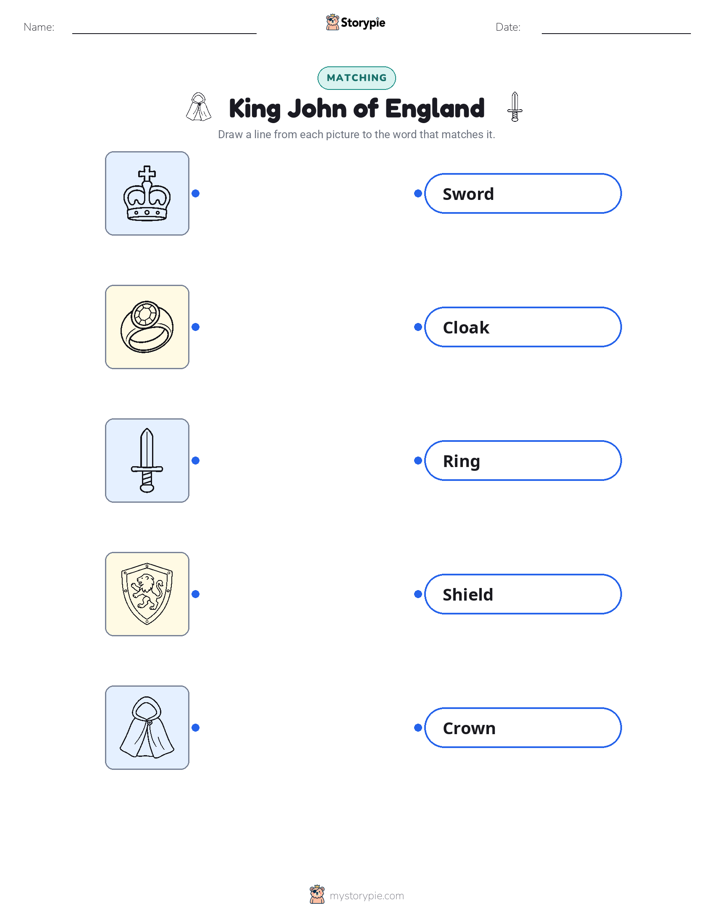
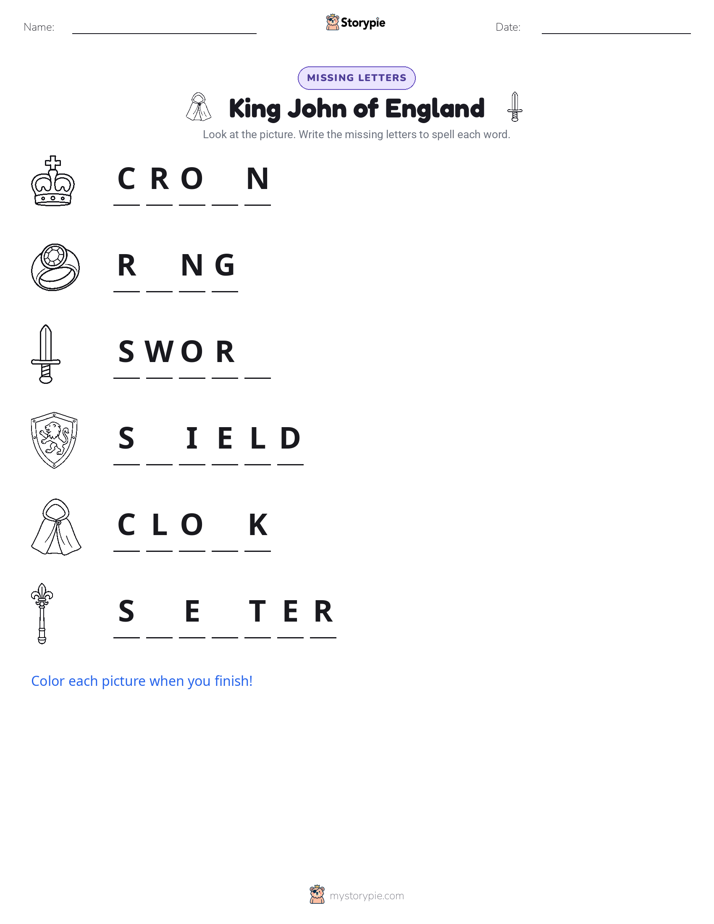
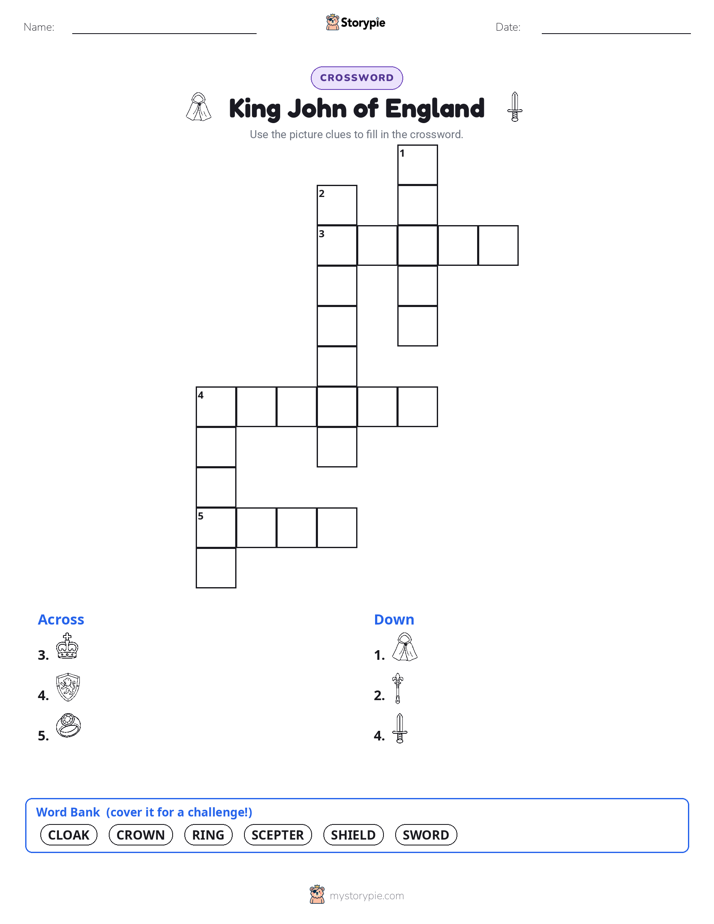
28 worksheets · answer keys · full story · quiz · Ages 10-12 · CEFR B2
Plus adds 244,000+ more stories in 27 languages, audio for every one, and printables for all of them.
Just want King John of England?
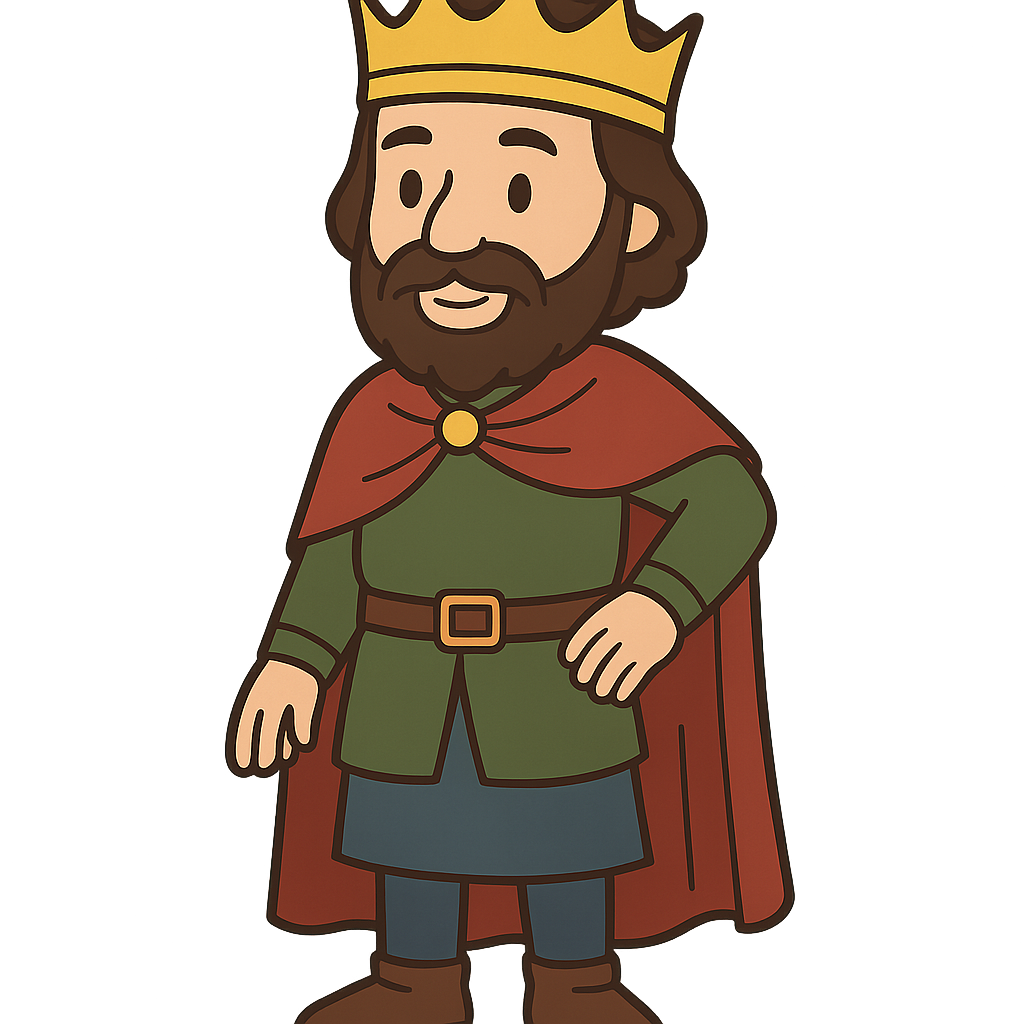
Hello, my name is John, and I was a king of England a very long time ago. My story is one of ambition, conflict, and a single document that changed the world. I was born on December 24th, 1166, into one of the most powerful families in Europe. My father was King Henry II, and my mother was the formidable Queen Eleanor of Aquitaine. As their youngest son, I arrived after all the family lands had been promised to my older brothers. Because of this, my father gave me a nickname that followed me for years: 'John Lackland.' Being the prince with no inheritance was difficult. It made me feel overlooked, but it also lit a fire inside me. This feeling of having to prove myself fueled my ambition for power. In 1177, my father tried to make up for it by naming me the Lord of Ireland, but I always felt I was destined for something greater.
My older brother, Richard, was famous throughout the world as a great warrior, earning him the title 'the Lionheart.' When our father died in 1189, he became King Richard I. Almost immediately, he left England to fight in a great religious war known as the Third Crusade. With the king so far away, I saw an opportunity. Between the years 1192 and 1194, while Richard was not only fighting but was also captured and held for ransom, I tried to take the throne for myself. It was a bold move, and many expected my brother to punish me severely when he finally returned. But Richard did something surprising—he forgave me. Despite my betrayal, he knew the importance of family. My time to rule would come, but I had to wait. On April 6th, 1199, my brother Richard died from a battle wound, and at last, the crown of England was truly mine.
King John: The King Who Signed the Great Charter
Hello, my name is John, and I was a king of England a very long time ago. My story is one of ambition, conflict, and a single document that changed the world. I was born on December 24th, 1166, into one of the most powerful families in Europe. My father was King Henry II, and my mother was the formidable Queen Eleanor of Aquitaine. As their youngest son, I arrived after all the family lands had been promised to my older brothers. Because of this, my father gave me a nickname that followed me for years: 'John Lackland.' Being the prince with no inheritance was difficult. It made me feel overlooked, but it also lit a fire inside me. This feeling of having to prove myself fueled my ambition for power. In 1177, my father tried to make up for it by naming me the Lord of Ireland, but I always felt I was destined for something greater.
My older brother, Richard, was famous throughout the world as a great warrior, earning him the title 'the Lionheart.' When our father died in 1189, he became King Richard I. Almost immediately, he left England to fight in a great religious war known as the Third Crusade. With the king so far away, I saw an opportunity. Between the years 1192 and 1194, while Richard was not only fighting but was also captured and held for ransom, I tried to take the throne for myself. It was a bold move, and many expected my brother to punish me severely when he finally returned. But Richard did something surprising—he forgave me. Despite my betrayal, he knew the importance of family. My time to rule would come, but I had to wait. On April 6th, 1199, my brother Richard died from a battle wound, and at last, the crown of England was truly mine.
Becoming king did not solve all my problems; in many ways, it was just the beginning of them. My reign was filled with immense difficulties. I was not the military commander my brother had been, and I struggled in my wars against King Philip II of France. By the year 1204, I had lost many of our family's most important lands in France, including the historic Duchy of Normandy. This failure earned me another, far less flattering nickname: 'Softsword.' My troubles were not just on the battlefield. I entered into a major disagreement with the most powerful religious leader in Europe, Pope Innocent III. We argued over who had the right to choose the next Archbishop of Canterbury, the most important church position in England. When I refused to back down, the Pope placed all of England under an interdict in 1208, which meant that all church services were forbidden. The following year, in 1209, he excommunicated me, casting me out of the church entirely. This was a very serious crisis, and I finally had to make peace with the Pope in 1213 to restore order to my kingdom.
The greatest challenge of my life came not from France or Rome, but from within my own kingdom. The barons, England's most powerful nobles, had grown furious with me. To pay for my expensive and unsuccessful wars, I had demanded very high taxes. I also had a habit of making important decisions without asking for their advice, which they felt was their right. Finally, they had enough. They organized a rebellion against me, forcing me to meet them in a meadow by the River Thames called Runnymede. It was there, on June 15th, 1215, that I was compelled to place my royal seal on a document they had prepared. It was called the Magna Carta, which means 'Great Charter' in Latin. This document was a list of 63 rules and rights that placed limits on my power. Its most important idea was revolutionary for its time: it declared that even the king was not above the law.
In my heart, I never truly intended to follow the rules of the Magna Carta. I believed a king should have absolute power, and I soon went back on my word. My refusal to honor the agreement plunged the country into a civil war in late 1215, which is now known as the First Barons' War. In the midst of this terrible conflict, I grew very ill with a fever. I lived to be 49 years old, and my life came to an end on October 19th, 1216. Though my reign was marked by failure and conflict, it accidentally produced something of incredible importance. The Magna Carta, born from the struggle between me and my barons, became a symbol of liberty. Its core idea—that a ruler must be fair and that people have rights that cannot be taken away—has inspired countless movements for freedom and justice, shaping the laws of countries all around the world.
Wow facts
About
King John of England (born on December 24, 1166, in Oxford, England - 1216) is best known for sealing the Magna Carta in 1215, a foundational document that established the principle that everyone, including the king, was subject to the law.
Take a Quiz
Question 1 of 5
What was the main conflict that led to the creation of the Magna Carta?
Explore next


Want to do even more?
Go beyond exploring. Unlock tools that turn every story into real learning.

Storypie Plus for families
Full stories, quizzes, and printables. Nights and car rides, sorted.
- Unlimited audio stories
- Create Mode: your child stars in the story
- Offline downloads
- Printable worksheets & coloring pages

Why Storypie for Schools
Students engaged. Prep in seconds. Evenings back to you.
- Worksheets & Quizzes
- Classroom Management
- Formative Assessment
- Custom Curriculum & Lesson Plans
- 27 Languages

Why Storypie for Homeschool
Curriculum done. They'll ask for more. Hours back in your day.
- Worksheet Generator
- First-Person Audio Stories
- Built-in Comprehension Quizzes
- Custom Curriculum & Lesson Plans
- Print & Go Activities