English

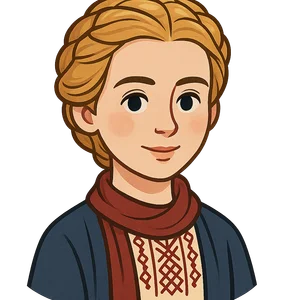
Lesya Ukrainka
Lesya Ukrainka was the pen name of Larysa Petrivna Kosach-Kvitka, a celebrated Ukrainian poet, writer…
Reads at Grades 6–8 Listens at Grades 4–8
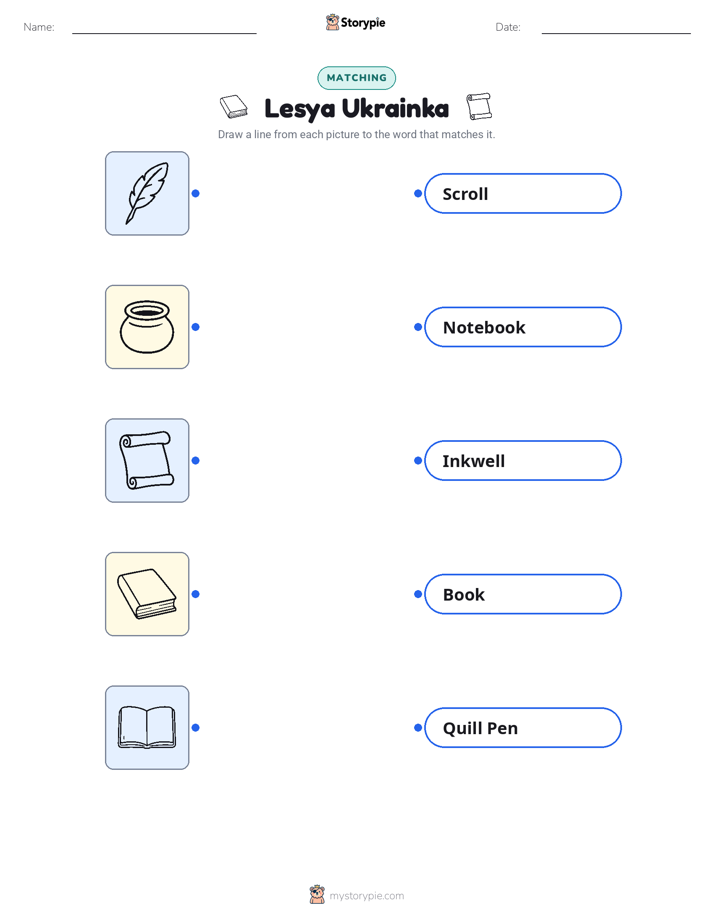
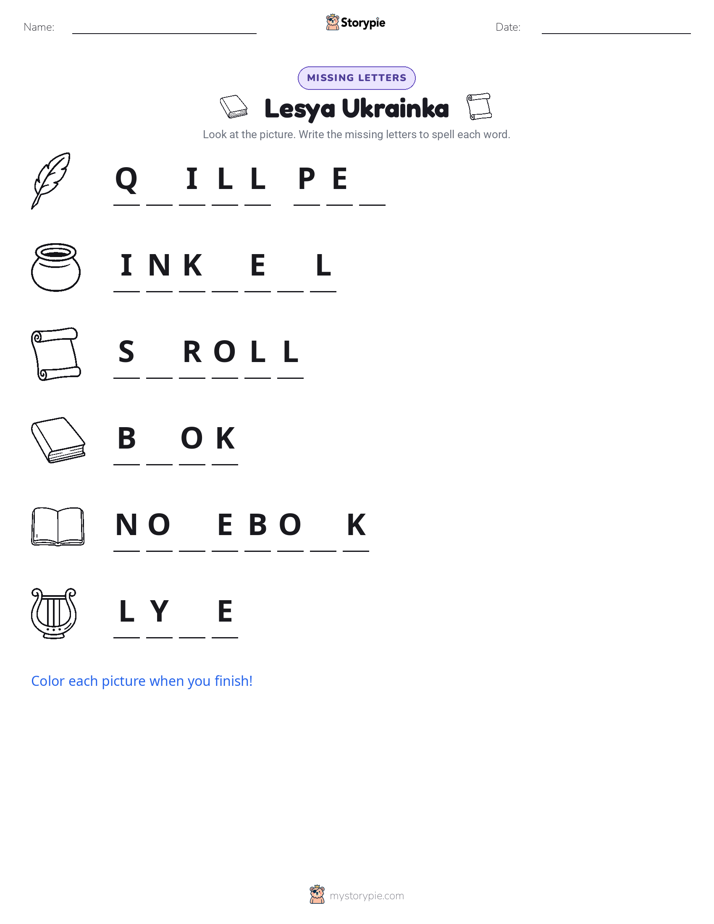
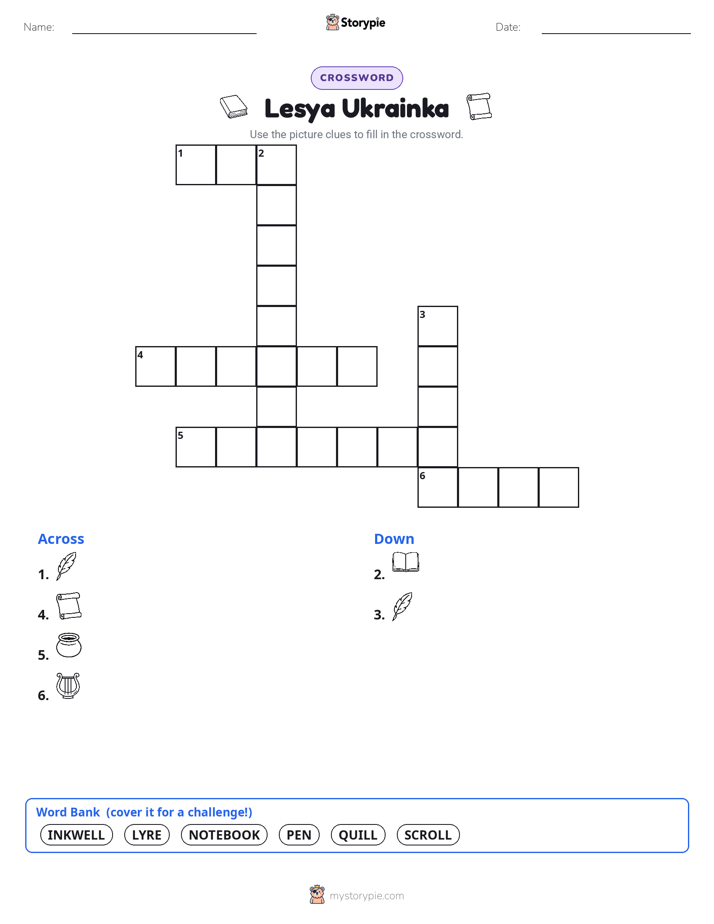
Print & create
Answer keys·No prep·Free with an account
28 worksheets · answer keys · full story · quiz · Ages 10-12 · CEFR B2
Plus adds 164,000+ more stories in 27 languages, audio for every one, and printables for all of them.
Just want Lesya Ukrainka?
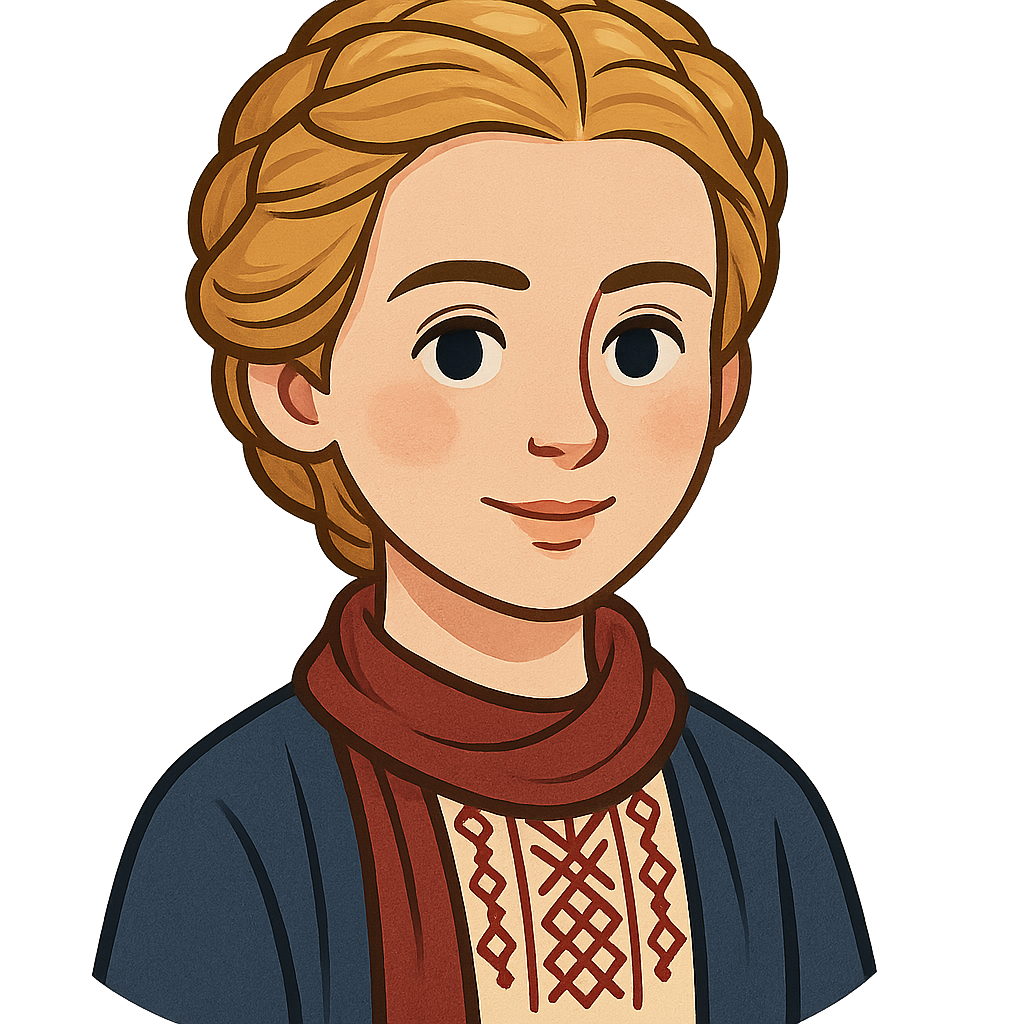
Hello. My name was Larysa Petrivna Kosach-Kvitka, but you probably know me by my pen name, Lesya Ukrainka. I was born on February 25th, 1871, in a town called Novohrad-Volynskyi in Ukraine, which at the time was part of the large Russian Empire. My family life was rich with culture and learning. My mother, Olena Pchilka, was a talented writer herself, and my father, Petro, was a respected lawyer. Our home was always filled with the sounds of music and the pages of books. More than anything, it was filled with a deep love for Ukrainian culture and our native language. This was very important to us, because the government at the time often discouraged people from speaking Ukrainian or celebrating our unique heritage. From a young age, I was taught to be proud of who I was and where I came from.
I had a great passion for learning and was able to master many languages quite quickly. But my life took a different path around the year 1883, when I was only twelve years old. I was diagnosed with a serious illness called tuberculosis of the bone. This meant I couldn't attend a regular school with other children or run and play outside as I once had. While my body faced many challenges and much pain, my mind remained free and eager. I discovered the power of words even before my illness, when I was just nine years old. In 1880, my beloved aunt was sent away by the government for her political beliefs. To express my sadness and hope for her, I wrote my very first poem, which I called 'Hope.' In that moment, I understood that writing could be my strength, a way to connect with others and express my deepest feelings, even when I couldn't leave my room.
Lesya Ukrainka: A Voice for Ukraine
Hello. My name was Larysa Petrivna Kosach-Kvitka, but you probably know me by my pen name, Lesya Ukrainka. I was born on February 25th, 1871, in a town called Novohrad-Volynskyi in Ukraine, which at the time was part of the large Russian Empire. My family life was rich with culture and learning. My mother, Olena Pchilka, was a talented writer herself, and my father, Petro, was a respected lawyer. Our home was always filled with the sounds of music and the pages of books. More than anything, it was filled with a deep love for Ukrainian culture and our native language. This was very important to us, because the government at the time often discouraged people from speaking Ukrainian or celebrating our unique heritage. From a young age, I was taught to be proud of who I was and where I came from.
I had a great passion for learning and was able to master many languages quite quickly. But my life took a different path around the year 1883, when I was only twelve years old. I was diagnosed with a serious illness called tuberculosis of the bone. This meant I couldn't attend a regular school with other children or run and play outside as I once had. While my body faced many challenges and much pain, my mind remained free and eager. I discovered the power of words even before my illness, when I was just nine years old. In 1880, my beloved aunt was sent away by the government for her political beliefs. To express my sadness and hope for her, I wrote my very first poem, which I called 'Hope.' In that moment, I understood that writing could be my strength, a way to connect with others and express my deepest feelings, even when I couldn't leave my room.
As I grew older and my writing became more serious, I chose a special name to write under: 'Lesya Ukrainka.' In our language, this means 'Lesya the Ukrainian woman.' I chose this name to show everyone my unbreakable pride in my homeland and its people. My first collection of poems, titled 'On the Wings of Songs,' was published in 1893. For me, writing was more than just creating art; it was a way to fight for my people's right to have their own culture and speak their own language freely. My poems and stories often reached back into Ukrainian history and drew upon our ancient legends. I wanted to tell the tales of our heroes and share the magic of our folklore to inspire a sense of national identity and courage in everyone who read my words.
I also found great joy in writing for the stage. I wrote what I called 'dramatic poems,' which were plays filled with lyrical language and powerful ideas. My most famous play is 'The Forest Song,' or 'Lisova Pisnia,' which I wrote in 1911. It is a beautiful, magical story based on our rich Ukrainian folklore, and its main character is a forest spirit named Mavka. Through characters like her, I could explore some of the biggest questions of life: our connection to nature, the meaning of love, and the struggles of being human. It was important for me to create strong female characters in my plays, giving them a voice and showing their intelligence and resilience. My goal was always to celebrate the beauty of our ancient myths and share them with the world.
Because of my illness, I often had to travel to warmer climates for treatment. These journeys took me to many different countries, including Italy, Egypt, and Georgia. While these trips were necessary for my health, they also opened my eyes to the world and broadened my perspective. During my travels, I met a kind and wonderful man named Klyment Kvitka. He was a musicologist, someone who studies music, and he shared my deep love for Ukrainian folk songs. We were married in 1907. Klyment was a truly supportive partner who understood my work and encouraged me to keep writing, even when I was very weak. His companionship was a great comfort to me.
My constant battle with illness finally came to an end while I was in the country of Georgia, on August 1st, 1913. I lived to be 42 years old. Although my time on Earth was short, I am proud that my words have lived on. Today, I am remembered as one of Ukraine's greatest literary figures, a voice that spoke for freedom, and a symbol of the strong, unbreakable spirit of my people. My poems and plays are still read in schools and performed on stages, and my portrait even appears on our 200 hryvnia banknote. It is my greatest hope that my story reminds new generations to always be proud of their heritage and to use their own voices to speak for what they believe in.
Wow facts
About
Lesya Ukrainka was the pen name of Larysa Petrivna Kosach-Kvitka, a celebrated Ukrainian poet, writer, and feminist who became a foremost figure in Ukrainian literature.
Take a Quiz
Question 1 of 5
What is the main reason Lesya Ukrainka chose her pen name?
Explore next

Want to do even more?
Go beyond exploring. Unlock tools that turn every story into real learning.

Storypie Plus for families
Full stories, quizzes, and printables. Nights and car rides, sorted.
- Unlimited audio stories
- Create Mode: your child stars in the story
- Offline downloads
- Printable worksheets & coloring pages

Why Storypie for Schools
Students engaged. Prep in seconds. Evenings back to you.
- Worksheets & Quizzes
- Classroom Management
- Formative Assessment
- Custom Curriculum & Lesson Plans
- 27 Languages

Why Storypie for Homeschool
Curriculum done. They'll ask for more. Hours back in your day.
- Worksheet Generator
- First-Person Audio Stories
- Built-in Comprehension Quizzes
- Custom Curriculum & Lesson Plans
- Print & Go Activities