English

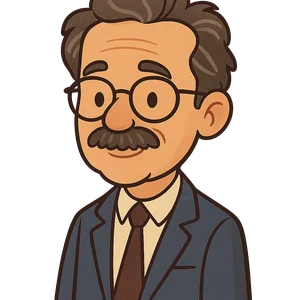
Luis Alvarez
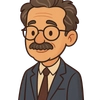
Luis Walter Alvarez was an American experimental physicist, inventor…
Reads at Grades 6–8 Listens at Grades 4–8
Print & create
Answer keys·No prep·Free with an account
28 worksheets · answer keys · full story · quiz · Ages 10-12 · CEFR B2
Plus adds 244,000+ more stories in 27 languages, audio for every one, and printables for all of them.
Just want Luis Alvarez?
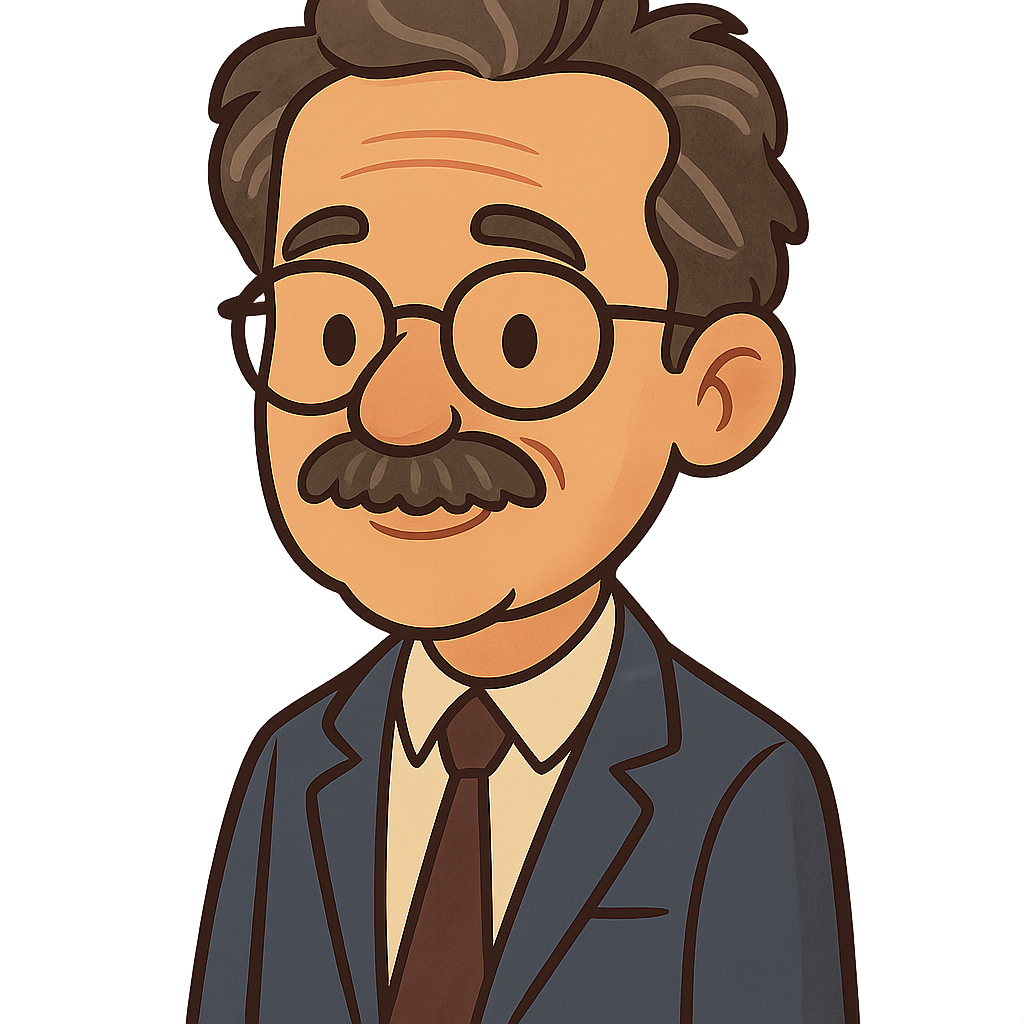
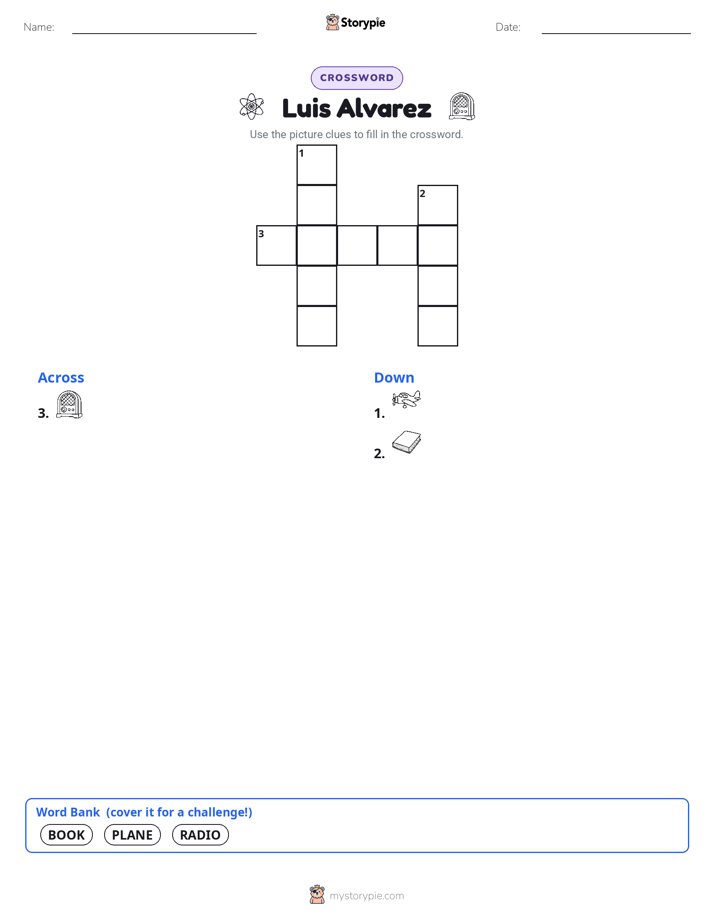
Hello! My name is Luis Alvarez, and I was a physicist and an inventor. My story begins in San Francisco, California, where I was born on June 13th, 1911. My father was a doctor, and our home was always filled with books and interesting conversations about science. From a young age, I was fascinated by how things worked. I wasn’t just content to use a radio—I wanted to build one myself! That curiosity was a spark that ignited a lifelong journey of discovery. I was always taking things apart and putting them back together, trying to understand the principles that made them function. This hands-on approach to learning set me on a path to explore some of the biggest questions about our universe.
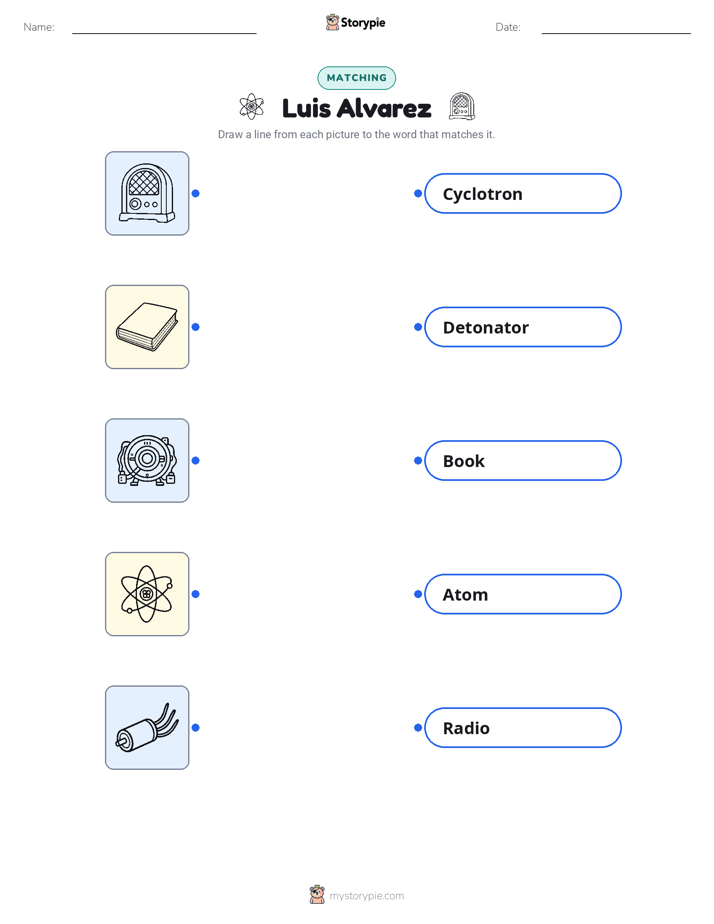
When it was time for college, I went to the University of Chicago, where I dove into the exciting world of physics. The 1930s were a revolutionary time in science, and I felt I was at the center of it all. I earned my bachelor's degree in 1932 and continued my studies, earning my doctorate in 1936. It was an amazing time to be a scientist! After school, I moved back to California to work at the University of California, Berkeley, in a special laboratory run by a brilliant scientist named Ernest O. Lawrence. There, we used powerful machines called cyclotrons to accelerate particles to incredible speeds. Our work involved exploring the tiniest building blocks of the universe, things so small you could never see them with your eyes, like the nucleus of an atom. It was here that I truly began my career in experimental physics.
Luis Alvarez: An Adventurous Mind
Hello! My name is Luis Alvarez, and I was a physicist and an inventor. My story begins in San Francisco, California, where I was born on June 13th, 1911. My father was a doctor, and our home was always filled with books and interesting conversations about science. From a young age, I was fascinated by how things worked. I wasn’t just content to use a radio—I wanted to build one myself! That curiosity was a spark that ignited a lifelong journey of discovery. I was always taking things apart and putting them back together, trying to understand the principles that made them function. This hands-on approach to learning set me on a path to explore some of the biggest questions about our universe.
When it was time for college, I went to the University of Chicago, where I dove into the exciting world of physics. The 1930s were a revolutionary time in science, and I felt I was at the center of it all. I earned my bachelor's degree in 1932 and continued my studies, earning my doctorate in 1936. It was an amazing time to be a scientist! After school, I moved back to California to work at the University of California, Berkeley, in a special laboratory run by a brilliant scientist named Ernest O. Lawrence. There, we used powerful machines called cyclotrons to accelerate particles to incredible speeds. Our work involved exploring the tiniest building blocks of the universe, things so small you could never see them with your eyes, like the nucleus of an atom. It was here that I truly began my career in experimental physics.
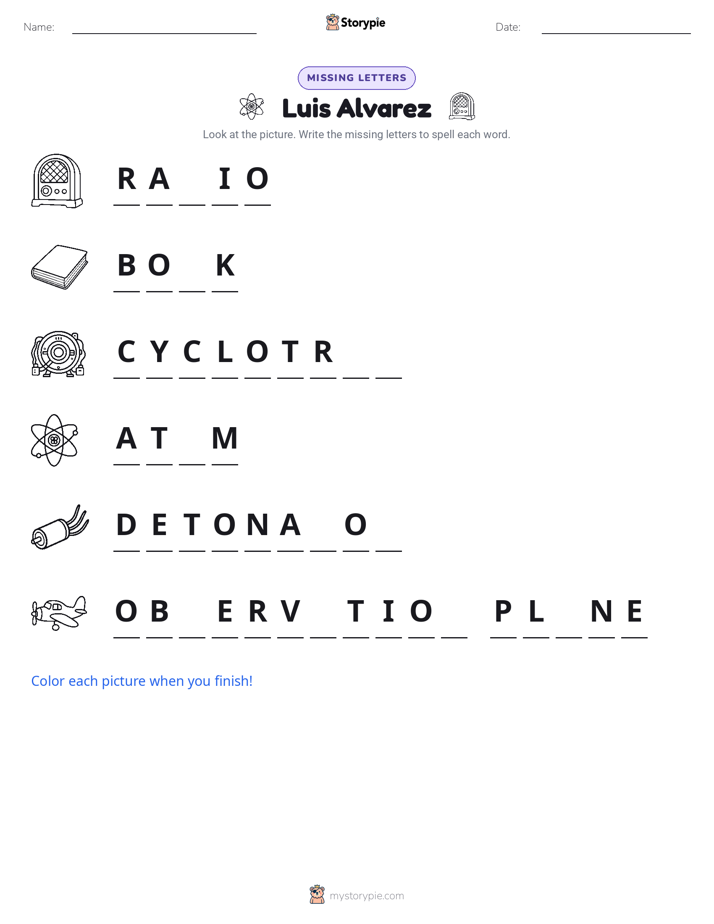
In the early 1940s, the world was in the middle of World War II, and my work took a serious and urgent turn. Like many scientists of my generation, I was asked to use my knowledge to help my country. I joined a top-secret government program called the Manhattan Project. Our goal was to understand and unlock the power of the atom before anyone else could. It was an incredibly challenging time, both scientifically and ethically. I worked with many of the world's best scientists on complex problems, including developing the precise detonators needed for the atomic bomb. In 1945, I flew in an observation plane during the mission over Hiroshima, Japan, to measure the energy of the explosion. It was a somber experience that showed me the immense and frightening power of science, for both creation and destruction. That moment stayed with me for the rest of my life.
After the war ended, I was eager to return to my university work and use science for peaceful discovery again. Back at Berkeley, I focused on a big problem in particle physics: how could we 'see' the invisible, super-fast particles that we were studying? They were too small and too fast to observe directly. In 1953, after thinking about this challenge, I had an idea. I developed something called the liquid hydrogen bubble chamber. It worked like a special kind of camera for subatomic particles. When a high-energy particle zipped through the liquid hydrogen, it left a tiny trail of bubbles, much like a boat leaves a wake in the water. We could then photograph these bubble trails and analyze them. This invention allowed my team and me to discover a whole family of new particles we never knew existed!
The work we did with the bubble chamber changed the field of particle physics forever. It was like opening a door to a hidden part of the universe, revealing a complex world of previously unknown particles and interactions. Our discoveries helped other scientists create a new model for understanding the fundamental forces of nature. For these contributions and the discoveries they enabled, I was given a very special honor. In 1968, I traveled to Stockholm, Sweden, to receive the Nobel Prize in Physics. It was one of the proudest moments of my life, not just for me, but for my entire team of researchers and technicians. It showed that when people work together with curiosity and creativity, they can achieve incredible things that push the boundaries of human knowledge.
You might think that after winning a Nobel Prize, I would slow down, but my curiosity never stopped! In my later years, I became fascinated by a completely different puzzle, one that had intrigued people for generations. I started working with my son, Walter, who is a geologist. Together, we wanted to know: what happened to the dinosaurs? In 1980, we proposed what seemed like a wild idea at the time. We had found a thin layer of clay all over the world that dated back to the time the dinosaurs disappeared, 66 million years ago. In that clay, we discovered a high concentration of iridium, an element that is rare on Earth but common in asteroids. We put the clues together and suggested that a massive asteroid had crashed into Earth, causing a global catastrophe that led to the extinction of the dinosaurs. At first, many scientists didn't believe us, but later, the giant Chicxulub crater was found under the Yucatán Peninsula, proving our theory was very likely correct!
I lived a full and exciting life of science and invention, filled with questions and discoveries that took me from the smallest particles to the largest events in Earth's history. I lived to be 77 years old. Today, people remember me for my work on everything from subatomic physics to the mystery of the dinosaurs. I hope my story shows you that science is a fantastic adventure that is open to anyone with a curious mind. Never be afraid to ask big questions, to be curious about the world, and to follow an idea, no matter how unusual it seems. You never know what you might discover.
Wow facts
About
Luis Walter Alvarez was an American experimental physicist, inventor, and professor who was awarded the Nobel Prize in Physics in 1968. He is also known for his involvement in the Manhattan Project and for co-developing the Alvarez hypothesis with his son, Walter Alvarez, which proposed that an asteroid impact caused the extinction of the dinosaurs.
Take a Quiz
Question 1 of 5
What is the main theme of Luis Alvarez's story?
Explore next





Want to do even more?
Go beyond exploring. Unlock tools that turn every story into real learning.

Storypie Plus for families
Full stories, quizzes, and printables. Nights and car rides, sorted.
- Unlimited audio stories
- Create Mode: your child stars in the story
- Offline downloads
- Printable worksheets & coloring pages

Why Storypie for Schools
Students engaged. Prep in seconds. Evenings back to you.
- Worksheets & Quizzes
- Classroom Management
- Formative Assessment
- Custom Curriculum & Lesson Plans
- 27 Languages

Why Storypie for Homeschool
Curriculum done. They'll ask for more. Hours back in your day.
- Worksheet Generator
- First-Person Audio Stories
- Built-in Comprehension Quizzes
- Custom Curriculum & Lesson Plans
- Print & Go Activities