English

Luis Alvarez
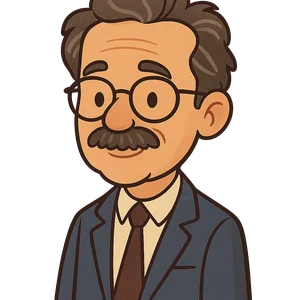
Luis Walter Alvarez was an American experimental physicist, inventor…
Reads at Grades 3–5 Listens at Grades 1–5
Print & create
Answer keys·No prep·Free with an account
28 worksheets · answer keys · full story · quiz · Ages 8-10 · CEFR B1
Plus adds 244,000+ more stories in 27 languages, audio for every one, and printables for all of them.
Just want Luis Alvarez?
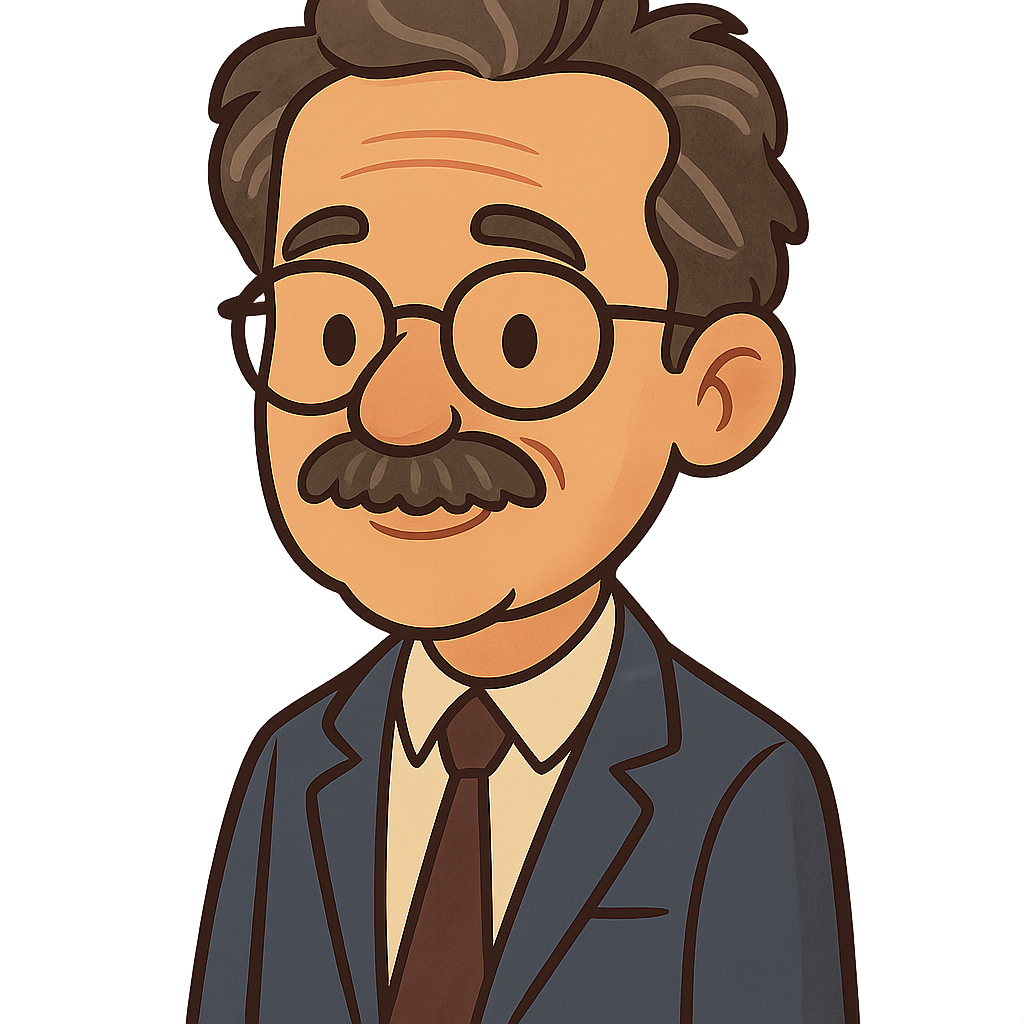
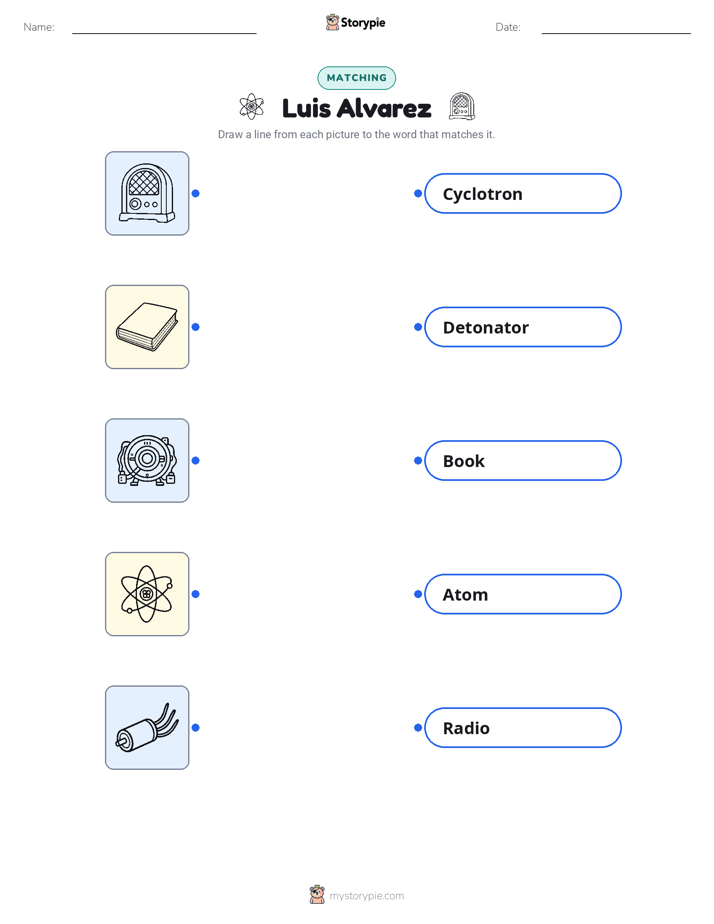
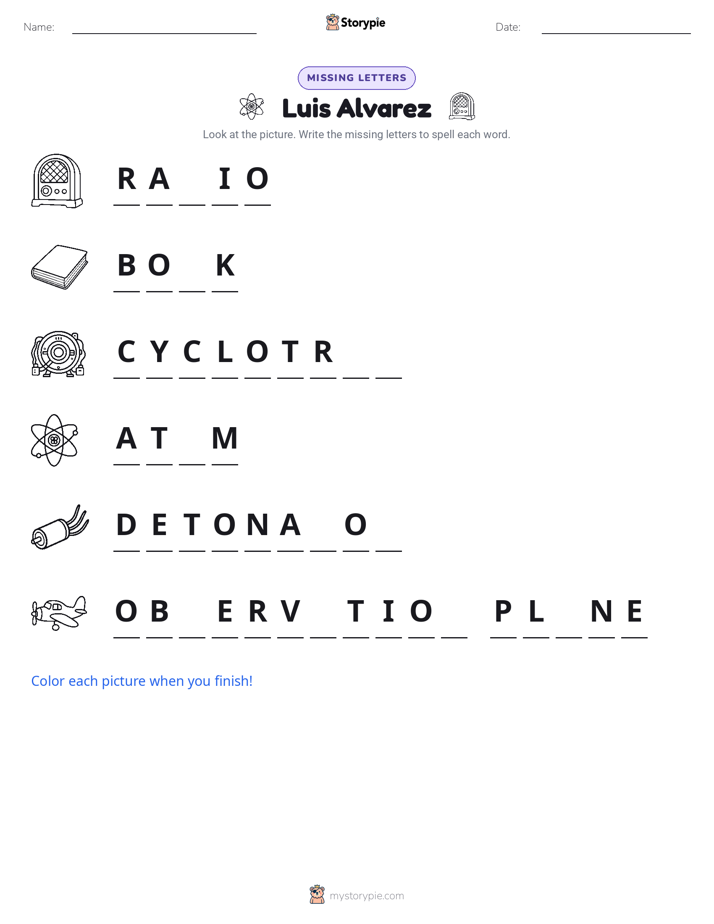
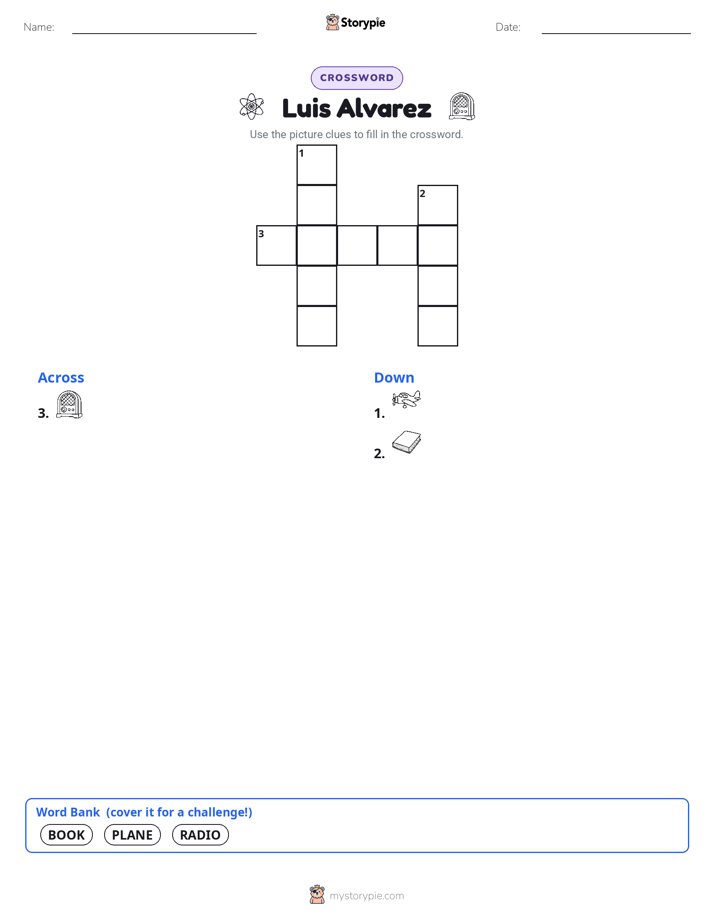
Hello, my name is Luis Alvarez, and I was a scientist who loved to solve puzzles. My story begins on June 13th, 1911, when I was born in San Francisco, California. Growing up, science was all around me. My father was a doctor, and so was my grandfather, and their work made me curious about how the world worked. I didn't just want to read about things in books; I wanted to build them with my own hands. I was always tinkering with tools and wires, trying to figure out how things were put together. One of my favorite projects was building my very own radio from scratch. It was a challenge, but when I finally heard voices and music coming through the speaker I had made, I felt a huge sense of accomplishment. That feeling of discovery, of making something work, stayed with me my whole life. It showed me that if you have a question, you can often find the answer by experimenting and building.
My love for science took me to the University of Chicago, where I studied physics, the science of matter and energy. It was a wonderful time, and I worked hard to earn my Ph.D. in 1936. After that, I moved back to California to work at a special place called the Radiation Laboratory in Berkeley. We were studying the building blocks of the universe. But then, history changed everything. During World War II, our country needed scientists for a very important job. Around 1943, I was asked to join a top-secret mission called the Manhattan Project. We were working to understand a powerful new source of energy. It was serious work, and everything we did was kept hidden from the public. I was even chosen to fly in a special airplane to observe the first test of our work. Seeing that incredible power firsthand was something I would never forget. It was a moment that showed me how much science could change the world.
Luis Alvarez: A Life of Curiosity
Hello, my name is Luis Alvarez, and I was a scientist who loved to solve puzzles. My story begins on June 13th, 1911, when I was born in San Francisco, California. Growing up, science was all around me. My father was a doctor, and so was my grandfather, and their work made me curious about how the world worked. I didn't just want to read about things in books; I wanted to build them with my own hands. I was always tinkering with tools and wires, trying to figure out how things were put together. One of my favorite projects was building my very own radio from scratch. It was a challenge, but when I finally heard voices and music coming through the speaker I had made, I felt a huge sense of accomplishment. That feeling of discovery, of making something work, stayed with me my whole life. It showed me that if you have a question, you can often find the answer by experimenting and building.
My love for science took me to the University of Chicago, where I studied physics, the science of matter and energy. It was a wonderful time, and I worked hard to earn my Ph.D. in 1936. After that, I moved back to California to work at a special place called the Radiation Laboratory in Berkeley. We were studying the building blocks of the universe. But then, history changed everything. During World War II, our country needed scientists for a very important job. Around 1943, I was asked to join a top-secret mission called the Manhattan Project. We were working to understand a powerful new source of energy. It was serious work, and everything we did was kept hidden from the public. I was even chosen to fly in a special airplane to observe the first test of our work. Seeing that incredible power firsthand was something I would never forget. It was a moment that showed me how much science could change the world.
After the war ended, I returned to my work studying the tiniest bits of the universe, which we call particles. These particles are so small you can't see them with your eyes or even with a regular microscope. How could we study something that was invisible? My team and I had an idea. We built special machines called 'bubble chambers.' These chambers were filled with a liquid that would form tiny bubbles whenever a particle passed through it. The particles left a trail, like tiny footprints in fresh snow. For the first time, we could see the paths these invisible particles took! Using these bubble chambers, we discovered many new kinds of particles that scientists had never seen before. It was like discovering a whole new part of the universe. For this exciting work, I was awarded the Nobel Prize in Physics in 1968. It was a very proud moment, and it was all thanks to finding a creative way to see what was once invisible.
Even after winning such a big award, my curiosity never faded. I believed there were always more puzzles to solve. One of the biggest mysteries of all time had to do with dinosaurs. For years, people wondered: what happened to them? I started working on this question with my son, Walter, who was a geologist—a scientist who studies rocks. In 1980, we announced a new idea that changed how we think about Earth's history. While studying layers of rock, we found something strange. In a thin layer of clay all over the world, we discovered high levels of a rare element called iridium. Iridium is not common on Earth, but it is found in asteroids from outer space. This discovery gave us a clue. We proposed that about 66 million years ago, a giant asteroid, bigger than a mountain, crashed into our planet. The crash would have sent so much dust into the air that it blocked out the sun, changing everything and causing the dinosaurs to become extinct.
I lived a life full of questions and discoveries, and it was a wonderful journey. From the smallest particles inside an atom to the giant dinosaurs that once roamed the Earth, I always followed my curiosity wherever it led. I lived to be 77 years old, and I hope my story shows you something important. Asking questions is one of the most powerful things you can do. Never be afraid to wonder 'why' or 'how.' If you stay curious and keep searching for answers, you might just uncover some of the world's most amazing secrets, too.
Wow facts
About
Luis Walter Alvarez was an American experimental physicist, inventor, and professor who was awarded the Nobel Prize in Physics in 1968. He is also known for his involvement in the Manhattan Project and for co-developing the Alvarez hypothesis with his son, Walter Alvarez, which proposed that an asteroid impact caused the extinction of the dinosaurs.
Take a Quiz
Question 1 of 5
Why was building his own radio as a child an important clue about what Luis Alvarez would be like as an adult?
Explore next






Want to do even more?
Go beyond exploring. Unlock tools that turn every story into real learning.

Storypie Plus for families
Full stories, quizzes, and printables. Nights and car rides, sorted.
- Unlimited audio stories
- Create Mode: your child stars in the story
- Offline downloads
- Printable worksheets & coloring pages

Why Storypie for Schools
Students engaged. Prep in seconds. Evenings back to you.
- Worksheets & Quizzes
- Classroom Management
- Formative Assessment
- Custom Curriculum & Lesson Plans
- 27 Languages

Why Storypie for Homeschool
Curriculum done. They'll ask for more. Hours back in your day.
- Worksheet Generator
- First-Person Audio Stories
- Built-in Comprehension Quizzes
- Custom Curriculum & Lesson Plans
- Print & Go Activities