English


Martha Graham
Martha Graham was a pioneering American modern dancer and choreographer whose influence on dance has been…
Reads at Grades 3–5 Listens at Grades 1–5
Print & create
Answer keys·No prep·Free with an account
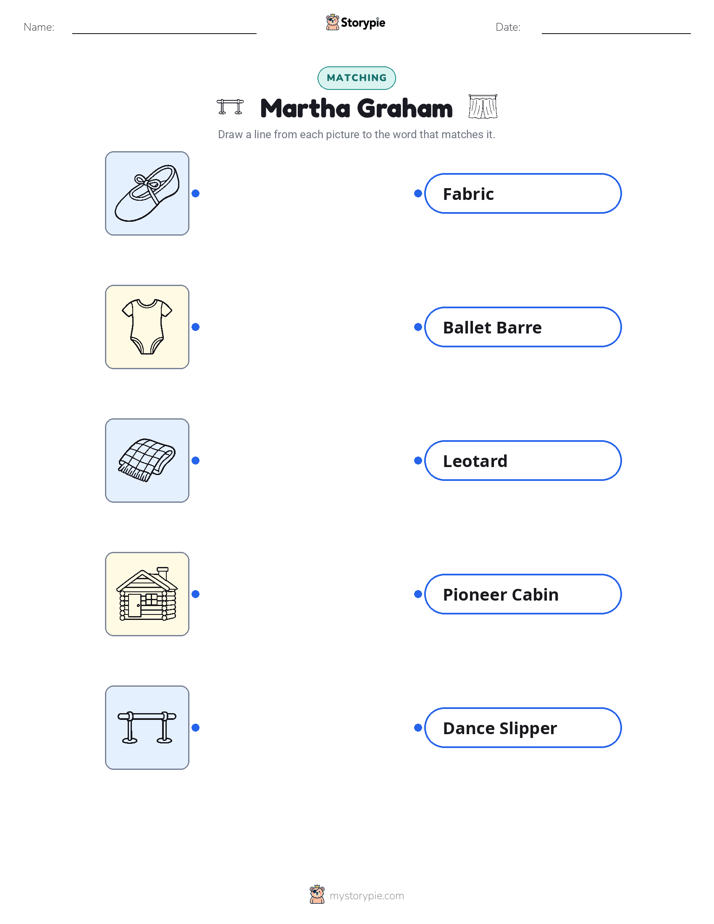
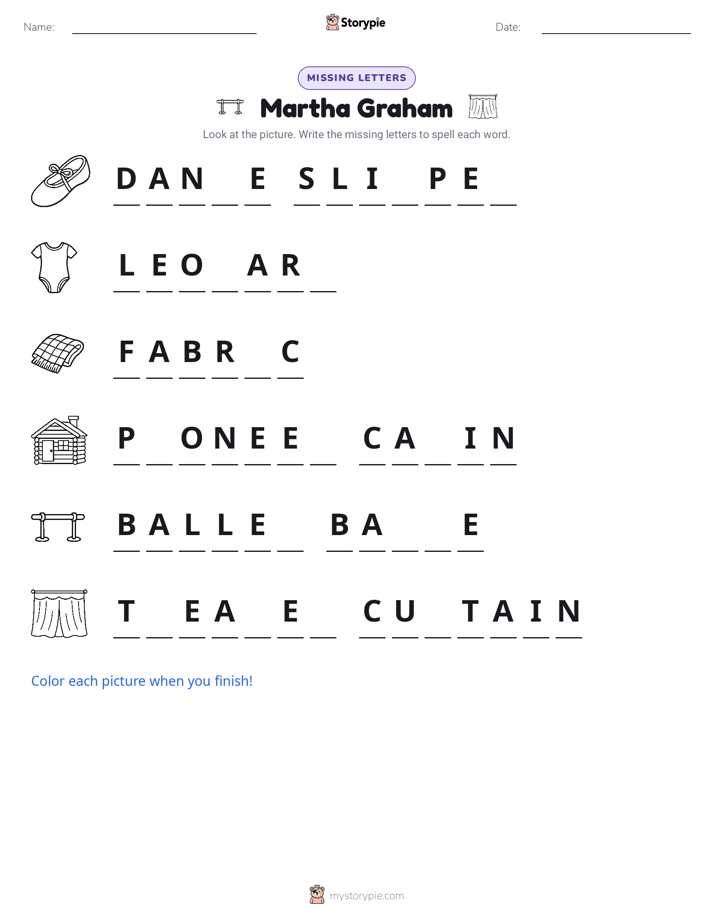
28 worksheets · answer keys · full story · quiz · Ages 8-10 · CEFR B1
Plus adds 244,000+ more stories in 27 languages, audio for every one, and printables for all of them.
Just want Martha Graham?
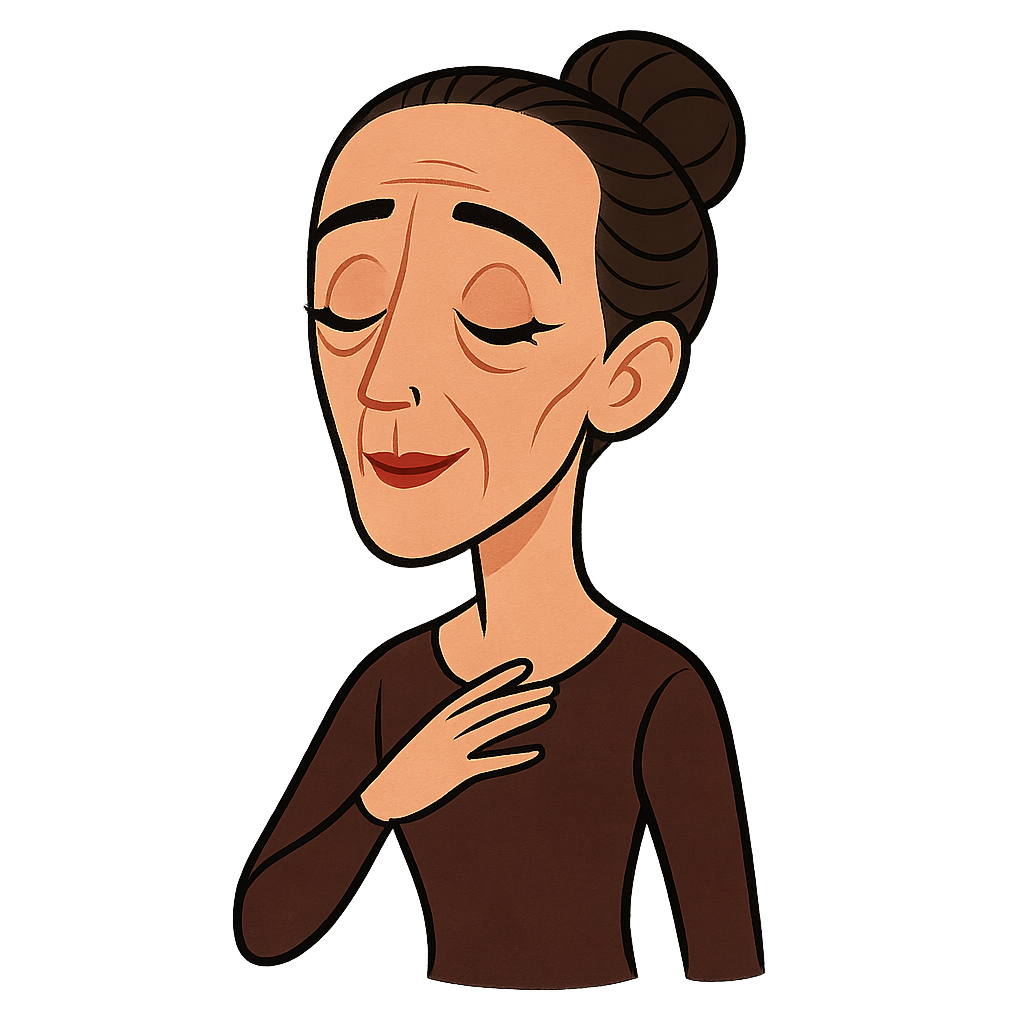
Hello, my name is Martha Graham, and I want to tell you how I learned to make the whole world feel something new through dance. I was born on May 11th, 1894, in a town that is now part of Pittsburgh, Pennsylvania. My father was a doctor who studied how people's minds worked, and he taught me something I never forgot: 'Movement never lies.' He meant that the way you move your body shows your true feelings. When I was 14, around the year 1908, my family moved to sunny Santa Barbara, California. One day in 1911, my father took me to see a dancer named Ruth St. Denis. Watching her on stage felt like magic, and in that moment, I knew I had to become a dancer.
Even though I knew I wanted to dance, I didn't start my training right away. I finally enrolled in a special school called the Denishawn School in 1916. The dances I learned there were beautiful and graceful, like floating fairies, but they didn't feel like *me*. I wanted to show the big, powerful, and sometimes messy feelings that everyone has inside—like anger, joy, and sorrow. After performing with the school's company for a few years, I decided in 1923 that it was time to leave. I moved all the way across the country to New York City to discover my own way of moving and my own stories to tell.
In New York, I began to create a whole new language of dance. I believed that every important movement should start from the center of the body. My technique was based on two main ideas: 'contraction' and 'release.' Imagine pulling all your energy into your stomach, making yourself small and tight—that’s a contraction. Now, imagine letting all that energy burst out—that’s a release! It was a sharp, strong, and emotional way to move. In 1926, I started my own group, the Martha Graham Dance Company, to perform my new style of dance. One of my first famous solos, which I created in 1930, was called *Lamentation*. In it, I sat on a bench inside a tube of stretchy fabric, twisting and pulling to show what sadness and grief felt like from the inside out.
Martha Graham
Hello, my name is Martha Graham, and I want to tell you how I learned to make the whole world feel something new through dance. I was born on May 11th, 1894, in a town that is now part of Pittsburgh, Pennsylvania. My father was a doctor who studied how people's minds worked, and he taught me something I never forgot: 'Movement never lies.' He meant that the way you move your body shows your true feelings. When I was 14, around the year 1908, my family moved to sunny Santa Barbara, California. One day in 1911, my father took me to see a dancer named Ruth St. Denis. Watching her on stage felt like magic, and in that moment, I knew I had to become a dancer.
Even though I knew I wanted to dance, I didn't start my training right away. I finally enrolled in a special school called the Denishawn School in 1916. The dances I learned there were beautiful and graceful, like floating fairies, but they didn't feel like me. I wanted to show the big, powerful, and sometimes messy feelings that everyone has inside—like anger, joy, and sorrow. After performing with the school's company for a few years, I decided in 1923 that it was time to leave. I moved all the way across the country to New York City to discover my own way of moving and my own stories to tell.
In New York, I began to create a whole new language of dance. I believed that every important movement should start from the center of the body. My technique was based on two main ideas: 'contraction' and 'release.' Imagine pulling all your energy into your stomach, making yourself small and tight—that’s a contraction. Now, imagine letting all that energy burst out—that’s a release! It was a sharp, strong, and emotional way to move. In 1926, I started my own group, the Martha Graham Dance Company, to perform my new style of dance. One of my first famous solos, which I created in 1930, was called Lamentation. In it, I sat on a bench inside a tube of stretchy fabric, twisting and pulling to show what sadness and grief felt like from the inside out.
Over my life, I created more than 180 dances, and each one told a unique story. I found inspiration in history, myths, and the lives of ordinary people. Perhaps my most famous dance is Appalachian Spring, which I choreographed in 1944. It tells the hopeful story of a young pioneer couple building a home and a future on the American frontier. My friend, the composer Aaron Copland, wrote the beautiful music for it. My goal was never just to have dancers perform pretty steps; I wanted the audience to feel the story deep inside them. I wanted to show the 'inner landscape' of the human heart.
I continued dancing on stage until I was 76 and created new dances for the rest of my life. People often call me the 'mother of modern dance' because I helped it become a powerful new way to tell stories and express feelings. I lived to be 96 years old, and I am so proud that my dance company and school are still alive today. My dances are still performed all over the world, sharing the language of the heart with new generations. I hope you remember that your body can speak, and your movements can tell the most wonderful stories.
Wow facts
About
Martha Graham was a pioneering American modern dancer and choreographer whose influence on dance has been compared to that of Picasso's on modern art. She developed the Graham technique, which reshaped American dance and is still taught worldwide.
Take a Quiz
Question 1 of 5
In the story, my father said, 'Movement never lies.' What did he mean by that?
Explore next






Want to do even more?
Go beyond exploring. Unlock tools that turn every story into real learning.

Storypie Plus for families
Full stories, quizzes, and printables. Nights and car rides, sorted.
- Unlimited audio stories
- Create Mode: your child stars in the story
- Offline downloads
- Printable worksheets & coloring pages

Why Storypie for Schools
Students engaged. Prep in seconds. Evenings back to you.
- Worksheets & Quizzes
- Classroom Management
- Formative Assessment
- Custom Curriculum & Lesson Plans
- 27 Languages

Why Storypie for Homeschool
Curriculum done. They'll ask for more. Hours back in your day.
- Worksheet Generator
- First-Person Audio Stories
- Built-in Comprehension Quizzes
- Custom Curriculum & Lesson Plans
- Print & Go Activities