English

Mary Cassatt
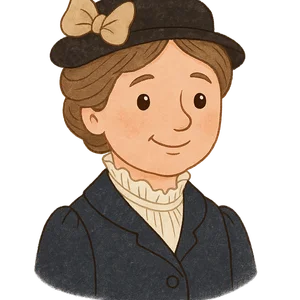
Mary Cassatt was an American painter and printmaker who was a leading figure in the Impressionist movement in…
Reads at Grades 6–8 Listens at Grades 4–8
Print & create
Answer keys·No prep·Free with an account
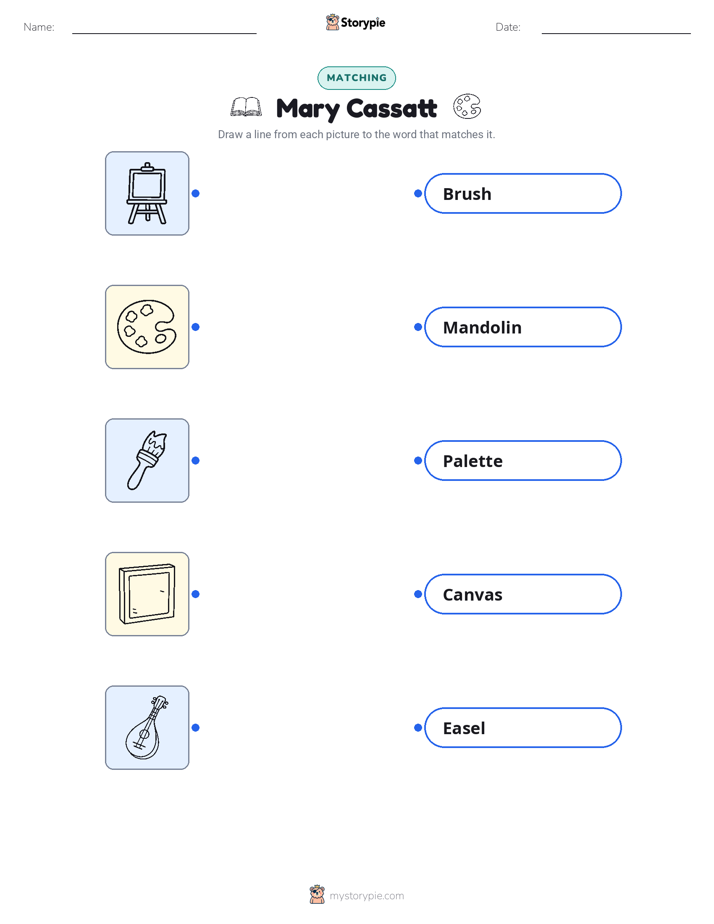
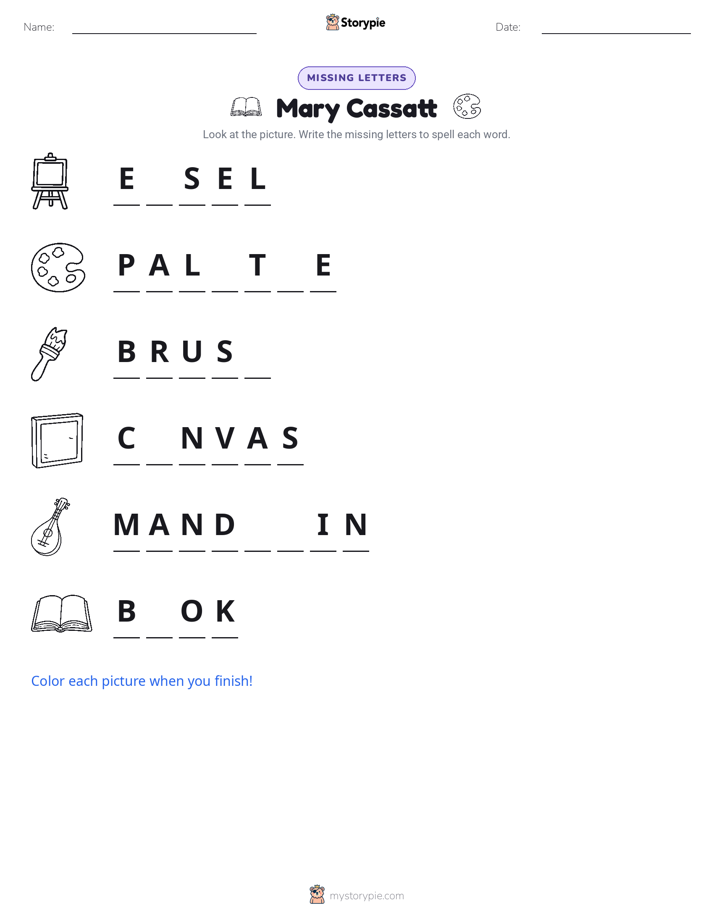
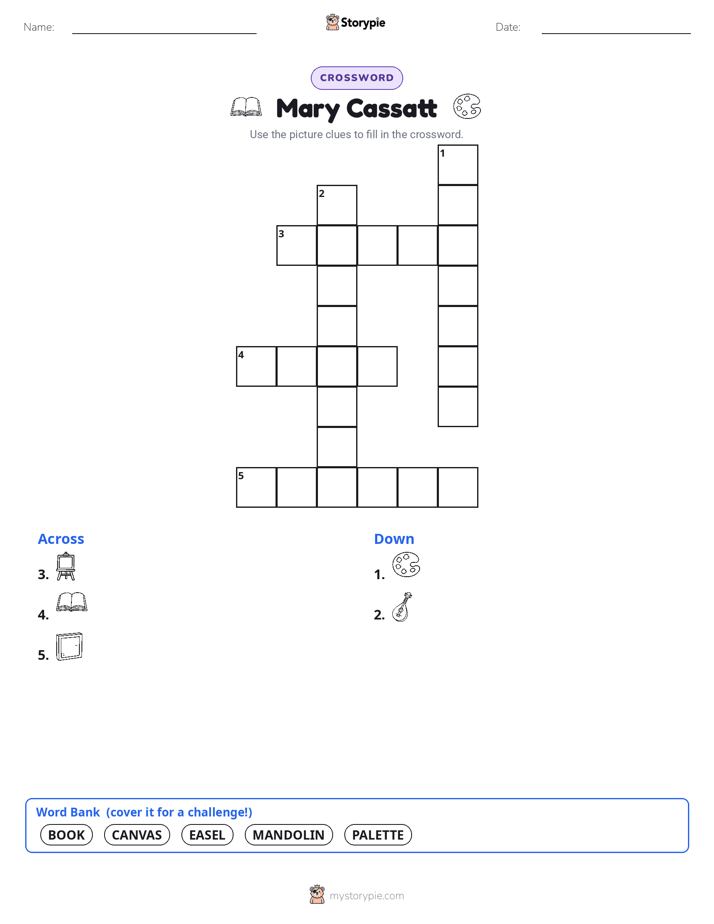
28 worksheets · answer keys · full story · quiz · Ages 10-12 · CEFR B2
Plus adds 244,000+ more stories in 27 languages, audio for every one, and printables for all of them.
Just want Mary Cassatt?
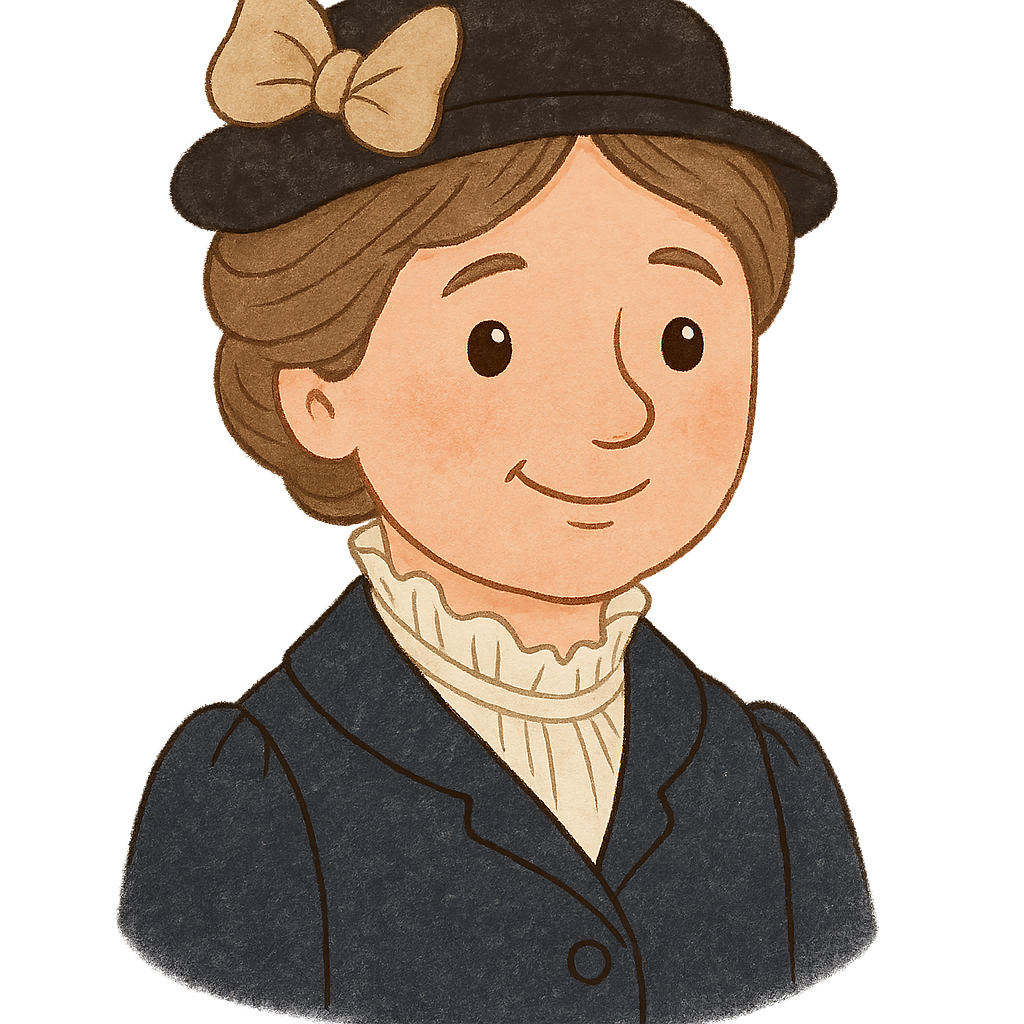
Hello, my name is Mary Cassatt, and I was an artist who saw the world in a different light. I was born on May 22nd, 1844, in Allegheny City, Pennsylvania, which is now part of Pittsburgh. My family was well-to-do, and my parents, especially my father Robert, believed that travel was one of the best forms of education. Because of this belief, my childhood was filled with adventure. Between 1851 and 1855, my family and I lived in Europe, spending time in both France and Germany. It was there, wandering through grand museums and gazing at masterpieces, that a powerful idea took root in my heart. I didn't just want to look at art; I wanted to create it. I decided that I would become a professional artist, a very bold and unusual dream for a young woman in the 1800s, when society expected us to focus only on marriage and family.
When we returned to America, I was determined to follow my dream. In 1861, at the age of 17, I enrolled at the Pennsylvania Academy of the Fine Arts. While I was eager to learn, I quickly grew frustrated. The classes were slow, and the male students were given far more opportunities than the female students. I knew that to become the artist I wanted to be, I had to go where the most exciting art was being made: Paris. In 1866, I made the difficult decision to move. My father strongly disapproved of my choice, worrying about a young woman living alone and pursuing such an unconventional career. But I was resolved. In Paris, the main art school, the École des Beaux-Arts, did not accept women, so I had to find my own path. I received special permission to be a 'copyist' at the famous Louvre Museum, where I spent hours recreating the works of the old masters. I also sought out private teachers to guide me. My hard work paid off, and in 1868, I had my first major success when my painting, 'A Mandoline Player,' was accepted by the prestigious Paris Salon, the official art exhibition of the academy.
Mary Cassatt: A Vision of Her Own
Hello, my name is Mary Cassatt, and I was an artist who saw the world in a different light. I was born on May 22nd, 1844, in Allegheny City, Pennsylvania, which is now part of Pittsburgh. My family was well-to-do, and my parents, especially my father Robert, believed that travel was one of the best forms of education. Because of this belief, my childhood was filled with adventure. Between 1851 and 1855, my family and I lived in Europe, spending time in both France and Germany. It was there, wandering through grand museums and gazing at masterpieces, that a powerful idea took root in my heart. I didn't just want to look at art; I wanted to create it. I decided that I would become a professional artist, a very bold and unusual dream for a young woman in the 1800s, when society expected us to focus only on marriage and family.
When we returned to America, I was determined to follow my dream. In 1861, at the age of 17, I enrolled at the Pennsylvania Academy of the Fine Arts. While I was eager to learn, I quickly grew frustrated. The classes were slow, and the male students were given far more opportunities than the female students. I knew that to become the artist I wanted to be, I had to go where the most exciting art was being made: Paris. In 1866, I made the difficult decision to move. My father strongly disapproved of my choice, worrying about a young woman living alone and pursuing such an unconventional career. But I was resolved. In Paris, the main art school, the École des Beaux-Arts, did not accept women, so I had to find my own path. I received special permission to be a 'copyist' at the famous Louvre Museum, where I spent hours recreating the works of the old masters. I also sought out private teachers to guide me. My hard work paid off, and in 1868, I had my first major success when my painting, 'A Mandoline Player,' was accepted by the prestigious Paris Salon, the official art exhibition of the academy.
My artistic journey had its share of challenges. In 1870, I had to return to America because of the Franco-Prussian War in Europe. Back home, away from the inspiring art scene of Paris, I felt my passion begin to fade and nearly gave up painting altogether. Fortunately, in 1871, a commission to paint copies of famous artworks in Italy allowed me to return to Europe and reignited my spirit. A few years later, a pivotal moment changed my life forever. In 1877, I met the artist Edgar Degas. He had seen my work and admired it, and I had long respected his. We had an immediate artistic connection. He invited me to join a group of independent, rebellious artists who called themselves the Impressionists. Unlike the traditional artists of the Salon, the Impressionists painted scenes from everyday life. They were interested in capturing fleeting moments, the way light changed, and the feeling of a scene, using bold colors and visible brushstrokes. I was thrilled. At last, I had found a group of artists who saw the world as I did. I proudly accepted his invitation and became the only American to officially exhibit with the Impressionists, a group that became my true artistic home.
Being part of the Impressionists gave me the freedom to paint what I truly cared about. While many of my male colleagues were painting grand historical scenes or landscapes, I was drawn to the quiet, intimate world of women and children. I wanted to capture the private moments that made up their daily lives, showing their strength, intelligence, and tenderness. In paintings like 'Little Girl in a Blue Armchair' from 1878, I tried to show the natural, unposed reality of childhood. In one of my most famous works, 'The Child's Bath' from 1893, I focused on the loving bond between a mother and her child. In addition to painting, I became deeply interested in printmaking. Beyond my own work, I used my influence to help my American friends and family discover this new style of art. I advised them on which paintings to buy, and in doing so, I helped bring some of the first Impressionist masterpieces to America. I also believed women deserved an equal voice in society, and in 1915, I showed my work in an exhibition to support the cause of women's suffrage, the right for women to vote.
My life was dedicated to my art, but time eventually brought changes I could not control. As I grew older, I was diagnosed with an illness that slowly stole my eyesight. By 1914, I could no longer see well enough to paint, and I had to lay down my brushes for good. I lived to be 82 years old, spending my final years at my beloved country home in France. Today, I am remembered as one of the great Impressionist painters and as a pioneering American woman who broke down barriers to follow her passion. I hope my story shows that if you hold onto your vision and work with determination, you can create something beautiful and lasting in the world.
Wow facts
About
Mary Cassatt was an American painter and printmaker who was a leading figure in the Impressionist movement in France. She often created images of the social and private lives of women, with a particular emphasis on the intimate bonds between mothers and children.
Take a Quiz
Question 1 of 5
What was the direct result of Edgar Degas inviting Mary Cassatt to join the Impressionists in 1877?
Explore next





Want to do even more?
Go beyond exploring. Unlock tools that turn every story into real learning.

Storypie Plus for families
Full stories, quizzes, and printables. Nights and car rides, sorted.
- Unlimited audio stories
- Create Mode: your child stars in the story
- Offline downloads
- Printable worksheets & coloring pages

Why Storypie for Schools
Students engaged. Prep in seconds. Evenings back to you.
- Worksheets & Quizzes
- Classroom Management
- Formative Assessment
- Custom Curriculum & Lesson Plans
- 27 Languages

Why Storypie for Homeschool
Curriculum done. They'll ask for more. Hours back in your day.
- Worksheet Generator
- First-Person Audio Stories
- Built-in Comprehension Quizzes
- Custom Curriculum & Lesson Plans
- Print & Go Activities