English

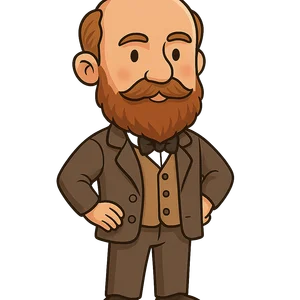
Otto Lilienthal
Otto Lilienthal was a German pioneer of aviation who was known as the "Father of Aviation" or "Father of…
Reads at Grades 6–8 Listens at Grades 4–8
Print & create
Answer keys·No prep·Free with an account
28 worksheets · answer keys · full story · quiz · Ages 10-12 · CEFR B2
Plus adds 164,000+ more stories in 27 languages, audio for every one, and printables for all of them.
Just want Otto Lilienthal?
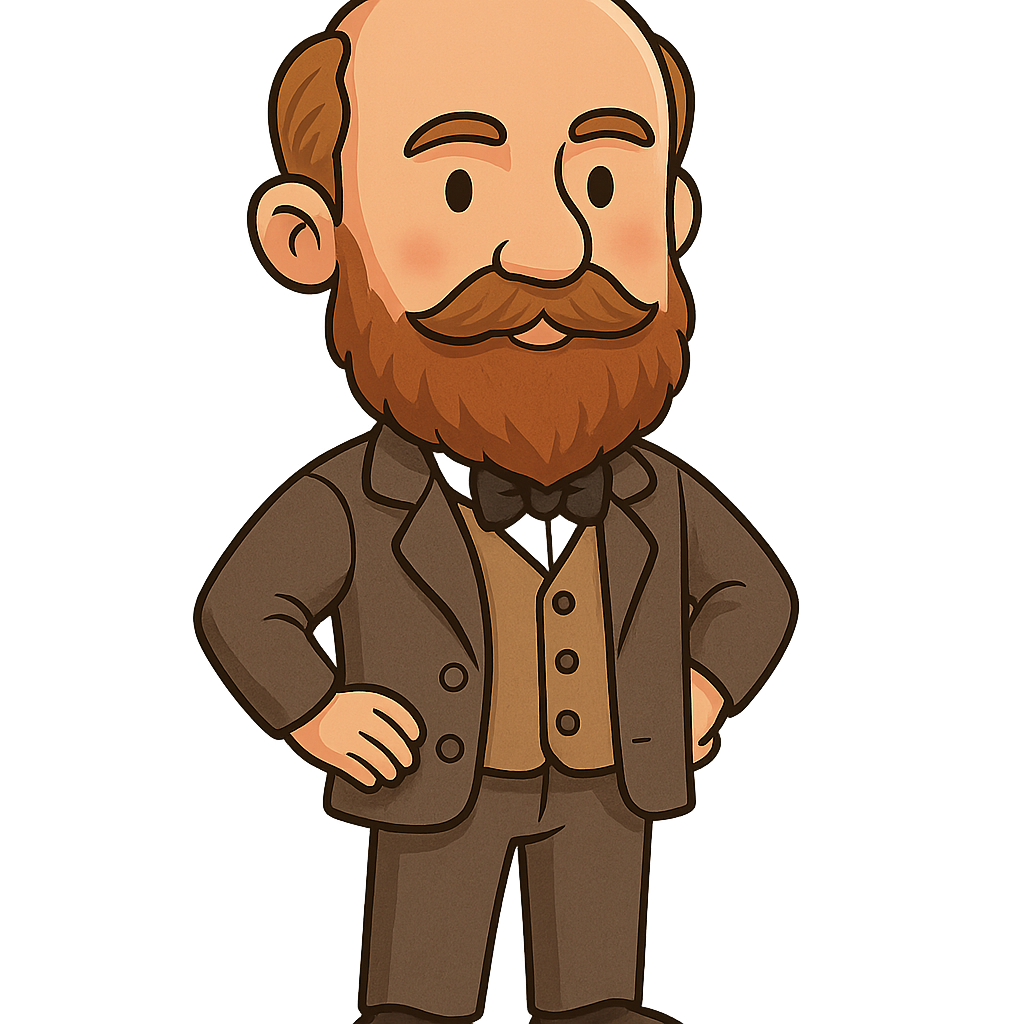
Hello, my name is Otto Lilienthal, and I am known as the world's first true pilot. My story begins not in a workshop or a laboratory, but in a small town, watching birds soar through the sky. I was born on May 23rd, 1848, in Anklam, a town in what was then Prussia. From a very young age, my younger brother, Gustav, and I were captivated by the flight of birds. We would spend countless hours watching the storks that nested on the rooftops of our town. We observed how they used the wind, how they angled their wings to climb, turn, and glide so effortlessly. We knew there was a secret to their flight, a scientific principle we could understand. It was during these days in the 1850s that a powerful curiosity took hold of me. I made it my life's quest to unlock the secrets of flight so that one day, humans could also take to the skies.
To turn my dream into a reality, I knew I needed a strong foundation in science and engineering. In 1864, I began my studies at the technical academy in Berlin, where I learned the principles that would guide my future work. My life took a brief detour when I served in the Franco-Prussian War in 1870, but my passion for aviation never faded. After the war, I started my own engineering company making boilers and steam engines. This business was successful and, most importantly, it provided me with the funds I needed to finance my true calling: the pursuit of flight. For years, I dedicated myself to the methodical study of birds, carefully documenting how their wing shapes and movements generated lift. In 1889, I compiled all of my research into a very important book called 'Birdflight as the Basis of Aviation.' In its pages, I shared my detailed findings on aerodynamics, explaining how curved wings create lift and how birds control their balance in the air.
Otto Lilienthal: The Glider King
Hello, my name is Otto Lilienthal, and I am known as the world's first true pilot. My story begins not in a workshop or a laboratory, but in a small town, watching birds soar through the sky. I was born on May 23rd, 1848, in Anklam, a town in what was then Prussia. From a very young age, my younger brother, Gustav, and I were captivated by the flight of birds. We would spend countless hours watching the storks that nested on the rooftops of our town. We observed how they used the wind, how they angled their wings to climb, turn, and glide so effortlessly. We knew there was a secret to their flight, a scientific principle we could understand. It was during these days in the 1850s that a powerful curiosity took hold of me. I made it my life's quest to unlock the secrets of flight so that one day, humans could also take to the skies.
To turn my dream into a reality, I knew I needed a strong foundation in science and engineering. In 1864, I began my studies at the technical academy in Berlin, where I learned the principles that would guide my future work. My life took a brief detour when I served in the Franco-Prussian War in 1870, but my passion for aviation never faded. After the war, I started my own engineering company making boilers and steam engines. This business was successful and, most importantly, it provided me with the funds I needed to finance my true calling: the pursuit of flight. For years, I dedicated myself to the methodical study of birds, carefully documenting how their wing shapes and movements generated lift. In 1889, I compiled all of my research into a very important book called 'Birdflight as the Basis of Aviation.' In its pages, I shared my detailed findings on aerodynamics, explaining how curved wings create lift and how birds control their balance in the air.
After decades of observation and study, the time for theorizing was over. In 1891, I built my first successful glider, the Derwitzer Glider. I will never forget the feeling of running down a hill, the wind catching beneath the wings, and the ground falling away as I was lifted into the air for the very first time. It was a short flight, but it was true flight. To conduct my experiments more safely and efficiently, I decided to build my own hill. In 1894, near Berlin, I constructed a 15-meter-high artificial hill that everyone came to call the 'Fliegeberg,' or 'Fly Hill.' From this hill and others, I made over 2,000 successful glider flights. My flights grew longer and more controlled, some covering distances as far as 250 meters. My work was no longer a secret; photographs of my soaring gliders were published in newspapers all over the world, and people began calling me the 'Glider King.'
Every flight was an experiment and a chance to learn more, but this work always involved great risk. On August 9th, 1896, I was testing a new glider design in the Rhinow Hills. The flight began well, but the sky can be unpredictable. A sudden, powerful gust of wind caught my glider, disrupting the smooth airflow over the wings. The glider stalled, meaning it instantly lost its lift, and I fell from a height of about 50 feet. The crash resulted in a very serious injury to my back. I was rushed to a clinic in Berlin for medical care.
I lived to be 48 years old. Though my final flight ended in tragedy, my work was not in vain. My detailed notes, photographs, and my thousands of successful flights proved to the world that heavier-than-air flight was achievable. My scientific discoveries about wing shape and pilot control laid the foundation for those who would come after me. My research directly inspired many other inventors, including Orville and Wilbur Wright in America, who studied my data as they designed their first airplane. I am remembered as the first person to repeatedly and successfully fly, the pilot who helped give humanity its wings.
Wow facts
About
Otto Lilienthal was a German pioneer of aviation who was known as the "Father of Aviation" or "Father of Flight." He was the first person to make well-documented, repeated, successful gliding flights, proving that heavier-than-air flight was possible.
Take a Quiz
Question 1 of 5
What is the central theme of Otto Lilienthal's story?
Explore next





Want to do even more?
Go beyond exploring. Unlock tools that turn every story into real learning.

Storypie Plus for families
Full stories, quizzes, and printables. Nights and car rides, sorted.
- Unlimited audio stories
- Create Mode: your child stars in the story
- Offline downloads
- Printable worksheets & coloring pages

Why Storypie for Schools
Students engaged. Prep in seconds. Evenings back to you.
- Worksheets & Quizzes
- Classroom Management
- Formative Assessment
- Custom Curriculum & Lesson Plans
- 27 Languages

Why Storypie for Homeschool
Curriculum done. They'll ask for more. Hours back in your day.
- Worksheet Generator
- First-Person Audio Stories
- Built-in Comprehension Quizzes
- Custom Curriculum & Lesson Plans
- Print & Go Activities