English

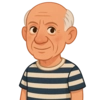
Paul Cézanne
Paul Cézanne was a French Post-Impressionist painter whose work laid the foundations for the transition to…
Reads at Grades 6–8 Listens at Grades 4–8
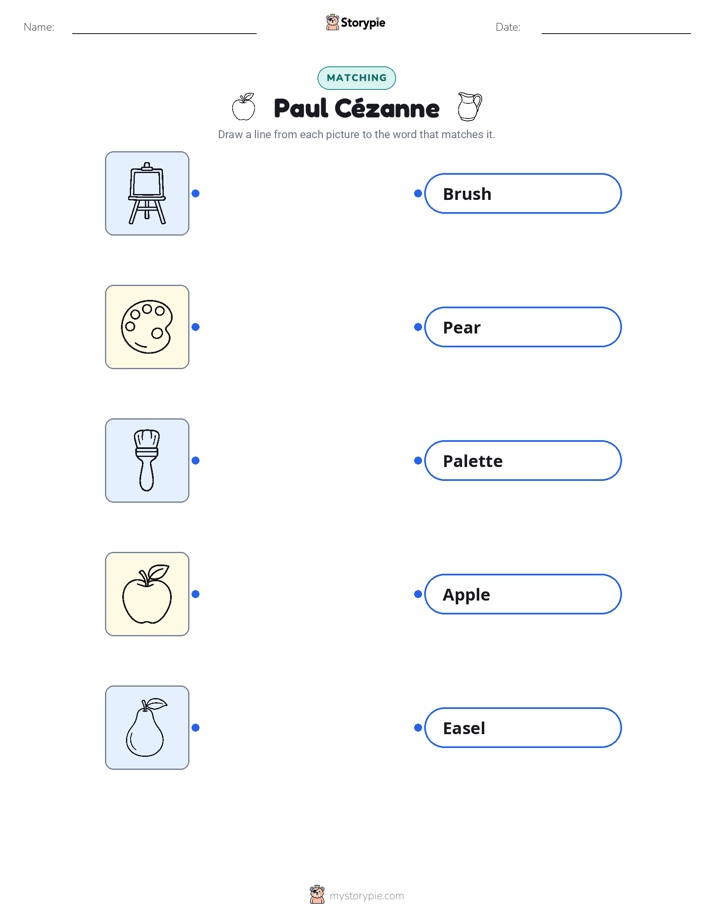
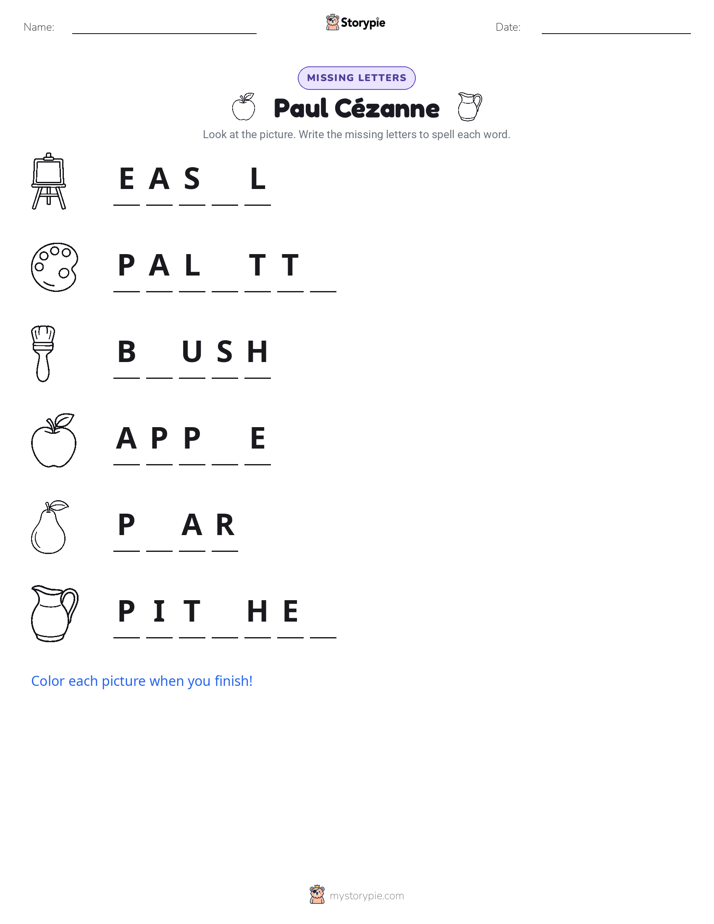
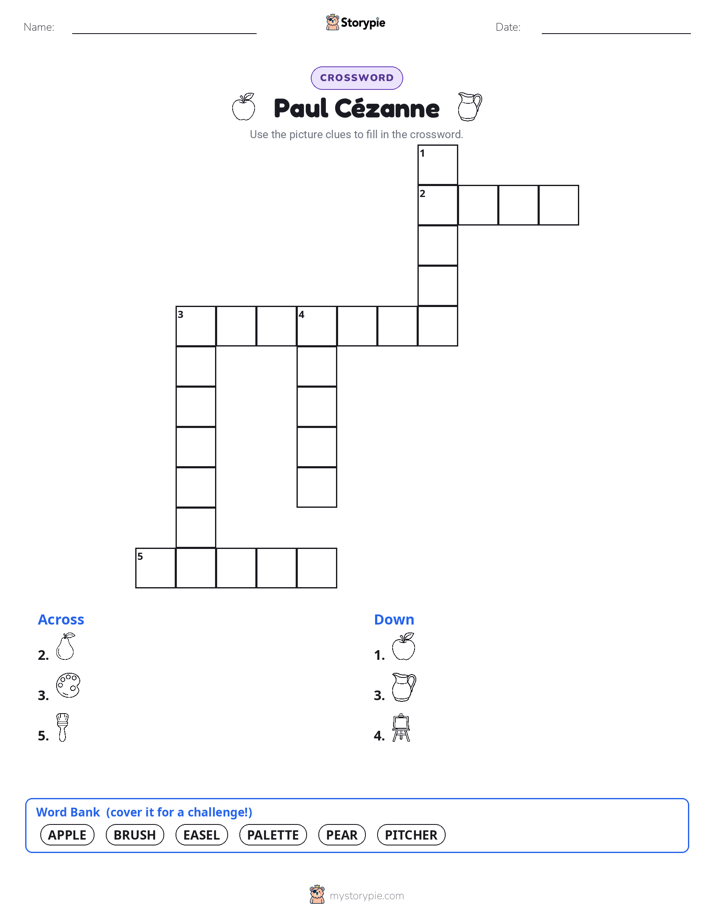
Print & create
Answer keys·No prep·Free with an account
28 worksheets · answer keys · full story · quiz · Ages 10-12 · CEFR B2
Plus adds 208,000+ more stories in 27 languages, audio for every one, and printables for all of them.
Just want Paul Cézanne?
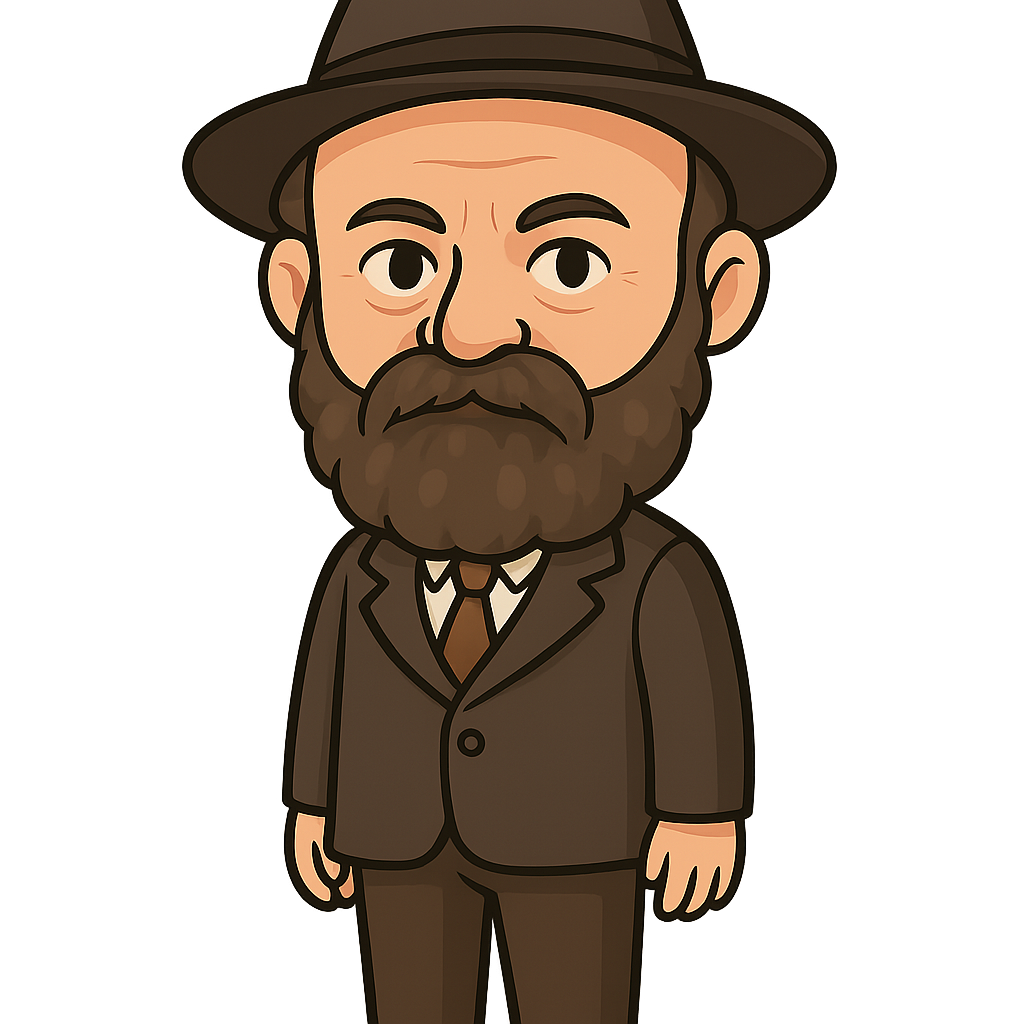
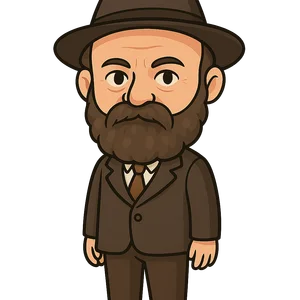
Hello, my name is Paul Cézanne, and I want to tell you the story of how I learned to see the world differently through my paintings. My life began in the sun-drenched town of Aix-en-Provence in the south of France, where I was born on January 19th, 1839. The world around me was full of bright light and vivid colors, which sparked my imagination from a very young age. My father, Louis-Auguste Cézanne, was a successful banker and had practical dreams for me; he insisted I study law. While I tried to please him, my heart was truly set on painting. My closest friend during those years was a boy named Émile Zola, who would one day become a famous writer. Together, we would escape into the countryside, exploring the hills and fields, dreaming of a future where we could dedicate our lives to art and literature. Those long walks filled my mind with images and ideas that I would carry with me for the rest of my life.
Eventually, I knew I could not ignore my passion any longer. In 1861, I convinced my father to let me move to Paris to pursue my dream of becoming an artist. The city was a whirlwind of energy, filled with museums, studios, and other artists who shared my dedication. However, it was also a place of great challenges. I studied art and met many painters who were experimenting with new ideas, including a kind artist named Camille Pissarro who became a mentor to me. The most important goal for any artist at the time was to have their work accepted by the official art exhibition, known as the Salon. I submitted my paintings year after year, but they were almost always rejected. The judges and the public were used to smooth, traditional art, and my style, with its visible brushstrokes and unusual perspectives, was seen as clumsy and unfinished. It was discouraging, but I held a strong belief in my vision and knew I had to follow my own path, no matter how difficult.
Paul Cézanne: The Father of Modern Art
Hello, my name is Paul Cézanne, and I want to tell you the story of how I learned to see the world differently through my paintings. My life began in the sun-drenched town of Aix-en-Provence in the south of France, where I was born on January 19th, 1839. The world around me was full of bright light and vivid colors, which sparked my imagination from a very young age. My father, Louis-Auguste Cézanne, was a successful banker and had practical dreams for me; he insisted I study law. While I tried to please him, my heart was truly set on painting. My closest friend during those years was a boy named Émile Zola, who would one day become a famous writer. Together, we would escape into the countryside, exploring the hills and fields, dreaming of a future where we could dedicate our lives to art and literature. Those long walks filled my mind with images and ideas that I would carry with me for the rest of my life.
Eventually, I knew I could not ignore my passion any longer. In 1861, I convinced my father to let me move to Paris to pursue my dream of becoming an artist. The city was a whirlwind of energy, filled with museums, studios, and other artists who shared my dedication. However, it was also a place of great challenges. I studied art and met many painters who were experimenting with new ideas, including a kind artist named Camille Pissarro who became a mentor to me. The most important goal for any artist at the time was to have their work accepted by the official art exhibition, known as the Salon. I submitted my paintings year after year, but they were almost always rejected. The judges and the public were used to smooth, traditional art, and my style, with its visible brushstrokes and unusual perspectives, was seen as clumsy and unfinished. It was discouraging, but I held a strong belief in my vision and knew I had to follow my own path, no matter how difficult.
In Paris, I found a community among a group of rebellious artists who, like me, were tired of the Salon's strict rules. They called themselves the Impressionists, and they were fascinated with capturing fleeting moments of light and color. I decided to show my paintings alongside theirs in their very first exhibition in 1874. It was a bold move, and many critics were harsh, but it was liberating to show my work with artists who were also breaking from tradition. While I learned a great deal from my Impressionist friends, I felt my own artistic goals were different. I wanted to create art that felt more solid and lasting, something with structure and weight. I began to think about the world in a new way, seeing the fundamental shapes beneath the surface of everything. I believed that all of nature could be seen in terms of the cylinder, the sphere, and the cone. This idea became the foundation of my work as I tried to paint not just what I saw, but the very structure of what I saw.
Feeling the need to focus deeply on my work away from the distractions of Paris, I eventually returned to my quiet hometown of Aix-en-Provence. It was there, in the familiar landscape of my childhood, that I found my greatest subjects. I became fascinated with a mountain that dominated the horizon, Mont Sainte-Victoire. Starting in the 1880s and for the rest of my life, I painted it over and over again. Each painting was not just a picture of a mountain, but an attempt to capture its timeless, powerful presence using planes of color and geometric forms. I also found great inspiration in simple, everyday objects. I spent countless hours arranging apples, pears, and pitchers for my still life paintings. These were not just arrangements of fruit; they were my laboratory. Through them, I could experiment with color, explore shape, and study how objects relate to one another in the space they occupy. I wanted every brushstroke to have a purpose in building the structure of the painting.
I dedicated my entire life to my art, working tirelessly to capture my unique vision of the world. I continued to paint outdoors every day, even as I grew older. One day in 1906, I was caught in a storm while painting and fell ill. My life's work came to an end shortly after. I lived to be 67 years old. During my lifetime, very few people understood what I was trying to achieve with my art. However, after my death, younger artists began to study my work and were inspired by my ideas. Today, I am often called the 'Father of Modern Art.' My focus on geometric shapes and structure created a bridge from the art of the 19th century to the new, revolutionary styles of the 20th century, like Cubism. It is a great honor to know that my lifelong quest to see the world in a new way helped inspire future generations of artists to do the same.
Wow facts
About
Paul Cézanne was a French Post-Impressionist painter whose work laid the foundations for the transition to modern art in the 20th century, profoundly influencing movements like Cubism.
Take a Quiz
Question 1 of 5
Describe Paul Cézanne's journey as an artist, from his early life in Aix-en-Provence to his later years.
Explore next

Want to do even more?
Go beyond exploring. Unlock tools that turn every story into real learning.

Storypie Plus for families
Full stories, quizzes, and printables. Nights and car rides, sorted.
- Unlimited audio stories
- Create Mode: your child stars in the story
- Offline downloads
- Printable worksheets & coloring pages

Why Storypie for Schools
Students engaged. Prep in seconds. Evenings back to you.
- Worksheets & Quizzes
- Classroom Management
- Formative Assessment
- Custom Curriculum & Lesson Plans
- 27 Languages

Why Storypie for Homeschool
Curriculum done. They'll ask for more. Hours back in your day.
- Worksheet Generator
- First-Person Audio Stories
- Built-in Comprehension Quizzes
- Custom Curriculum & Lesson Plans
- Print & Go Activities