English

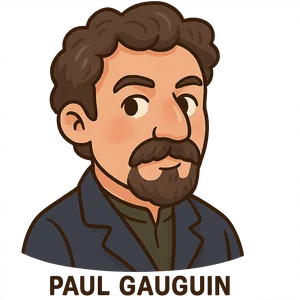
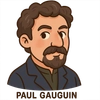
Paul Gauguin
Paul Gauguin was a leading French Post-Impressionist artist known for his experimental use of color and…
Reads at Grades 6–8 Listens at Grades 4–8
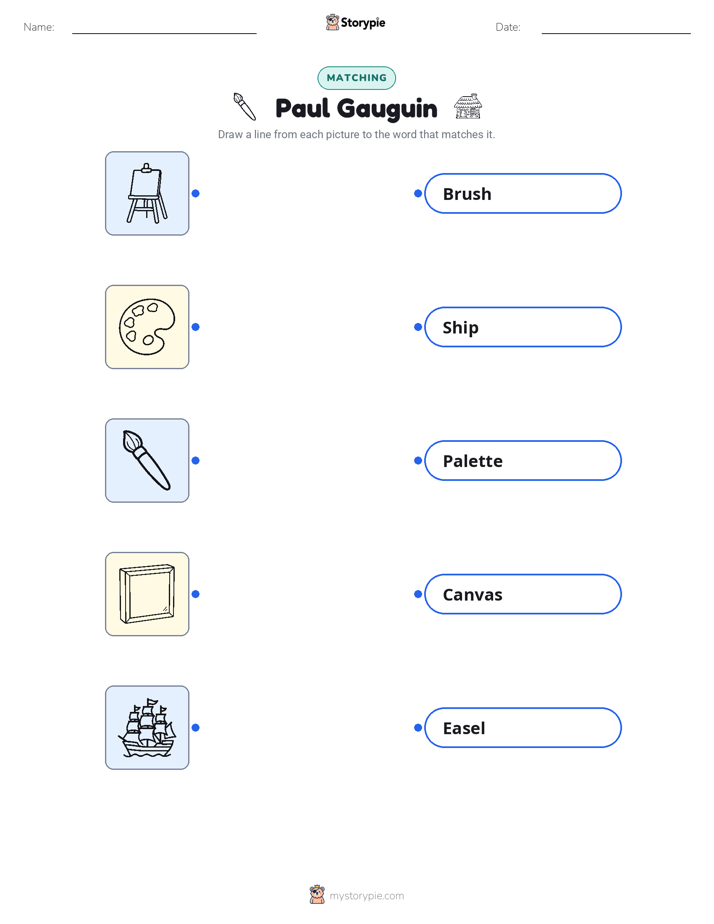
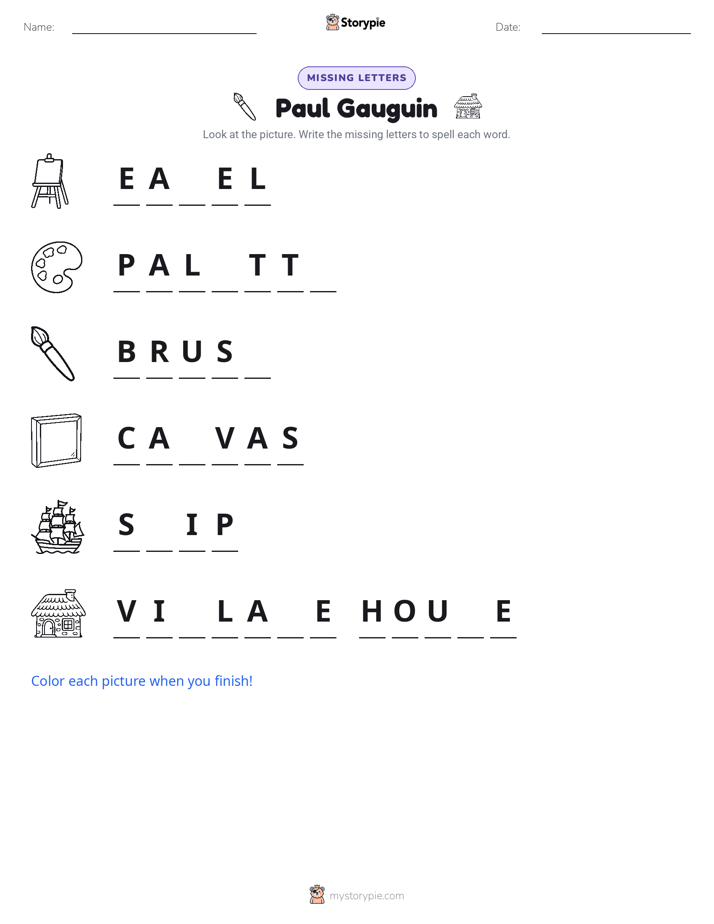
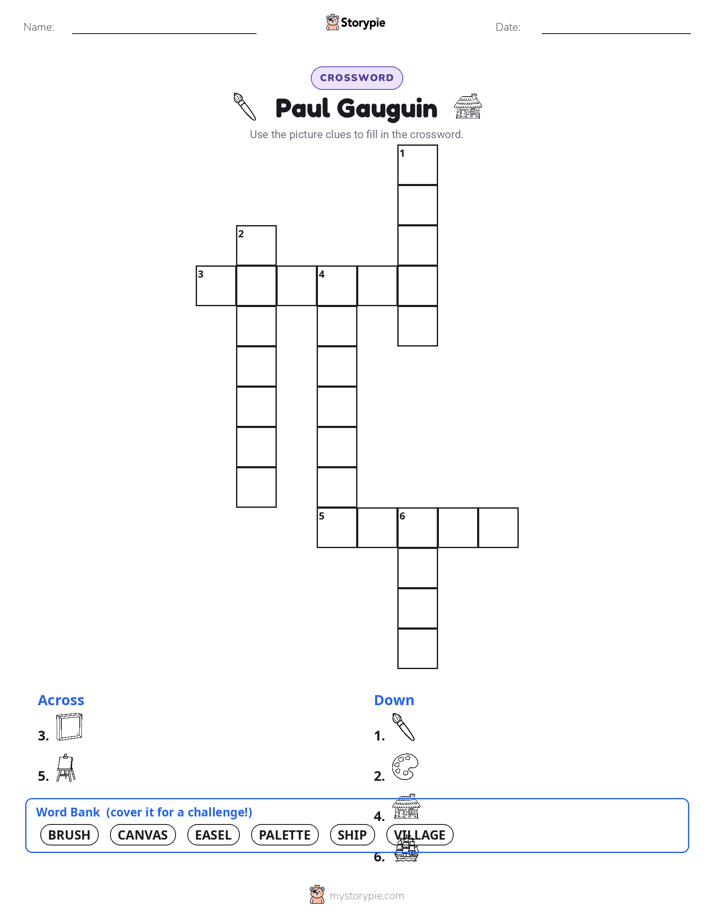
Print & create
Answer keys·No prep·Free with an account
28 worksheets · answer keys · full story · quiz · Ages 10-12 · CEFR B2
Plus adds 208,000+ more stories in 27 languages, audio for every one, and printables for all of them.
Just want Paul Gauguin?
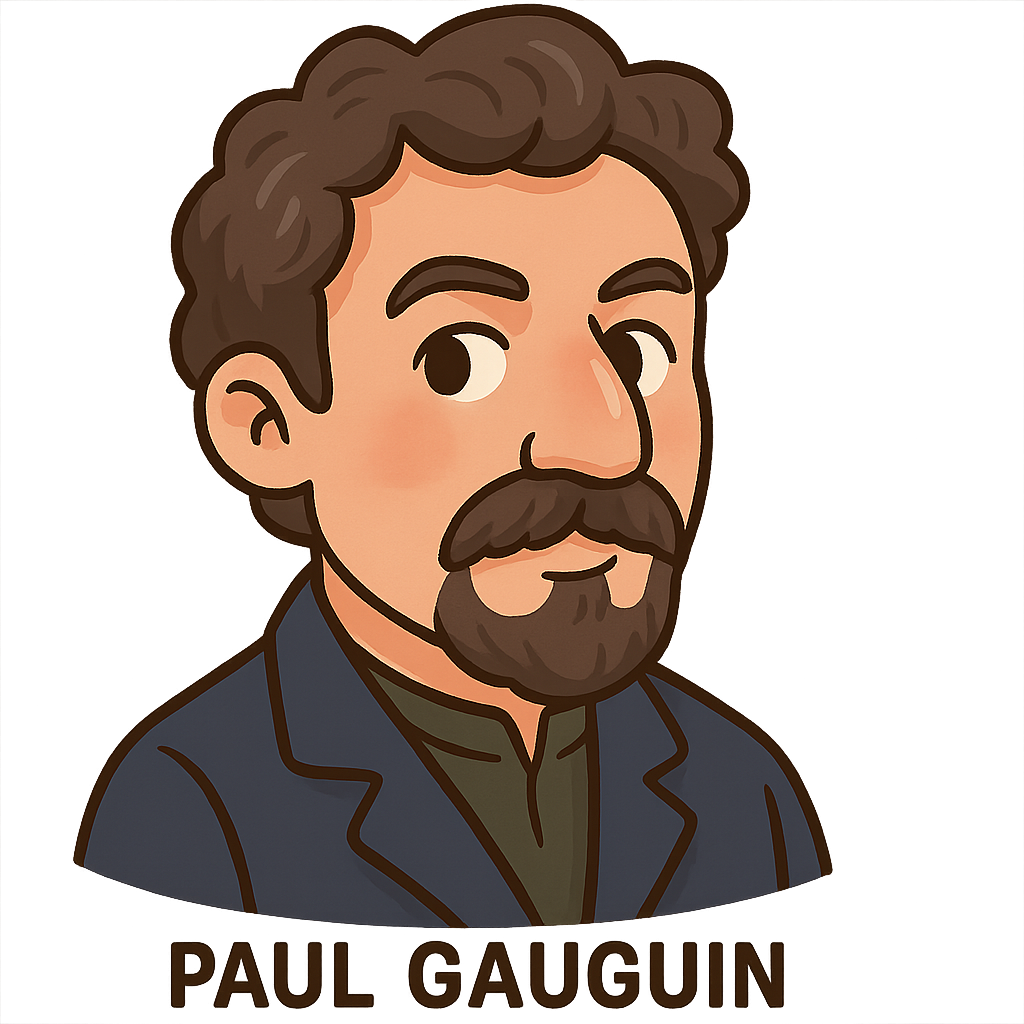
Hello! My name is Paul Gauguin, and I was a painter who saw the world in brilliant, bold colors. I was born in Paris, France, on June 7th, 1848, a time of great change in my country. Though I was born in Europe, my earliest memories were of a much different place. My early childhood was spent far away in Lima, Peru, a city that filled my imagination with tropical light and vibrant scenes that I would never forget. The bright sun and lush landscapes there made a deep impression on me. After my time in Peru, my family returned to France, but the spirit of adventure stayed with me. As a young man, I spent many years as a sailor, traveling the vast oceans and visiting ports around the globe. Seeing so much of the world only deepened my love for new experiences and different cultures.
For a while, I tried to live a more conventional life. Around 1872, I settled down in Paris and became a stockbroker, a job that involves buying and selling investments. I was quite successful at my work and started a family. However, even with a stable career, my true passion was art. I began collecting paintings by the artists of my time and spent my free time with painters like Camille Pissarro, who became a friend and mentor. He taught me about a new style called Impressionism, which focused on capturing light and moments in time. In 1879, I was incredibly proud to show my own work in an official Impressionist exhibition alongside artists I admired. The more I painted, the more I felt a pull toward art that I couldn't ignore. In 1883, I made the very difficult and risky decision to quit my job to become a full-time artist. It meant giving up financial security, but I knew I had to follow my dream.
Paul Gauguin: A Painter's Journey
Hello! My name is Paul Gauguin, and I was a painter who saw the world in brilliant, bold colors. I was born in Paris, France, on June 7th, 1848, a time of great change in my country. Though I was born in Europe, my earliest memories were of a much different place. My early childhood was spent far away in Lima, Peru, a city that filled my imagination with tropical light and vibrant scenes that I would never forget. The bright sun and lush landscapes there made a deep impression on me. After my time in Peru, my family returned to France, but the spirit of adventure stayed with me. As a young man, I spent many years as a sailor, traveling the vast oceans and visiting ports around the globe. Seeing so much of the world only deepened my love for new experiences and different cultures.
For a while, I tried to live a more conventional life. Around 1872, I settled down in Paris and became a stockbroker, a job that involves buying and selling investments. I was quite successful at my work and started a family. However, even with a stable career, my true passion was art. I began collecting paintings by the artists of my time and spent my free time with painters like Camille Pissarro, who became a friend and mentor. He taught me about a new style called Impressionism, which focused on capturing light and moments in time. In 1879, I was incredibly proud to show my own work in an official Impressionist exhibition alongside artists I admired. The more I painted, the more I felt a pull toward art that I couldn't ignore. In 1883, I made the very difficult and risky decision to quit my job to become a full-time artist. It meant giving up financial security, but I knew I had to follow my dream.
Life as a professional artist was not easy, and financial struggles were constant. To find new inspiration and live more cheaply, I moved to a region in France called Brittany in the mid-1880s. The culture and landscape there were very different from Paris, and it was here that I began to truly change my artistic style. I no longer wanted to just paint what I saw in front of me, like the Impressionists. I wanted to paint my feelings and ideas using strong, dark outlines and flat areas of bright, pure color. This new way of painting, which came from my imagination and memory rather than direct observation, was called Synthetism. In 1888, I spent a few eventful months in the southern town of Arles with my friend, another painter you might know, Vincent van Gogh. We worked side-by-side, sharing our passions. However, our ideas about art were so strong and so different that we often argued, and I soon left to continue my own artistic journey.
I grew tired of Europe and its conventions. I dreamed of a simpler place, a paradise full of nature and unspoiled beauty. In 1891, I made a life-changing decision and sailed across the world to the island of Tahiti in the South Pacific. It was everything I had imagined and more. The intense colors, the local people, and the ancient stories of the island became the heart of my art. I painted the world around me, filling my canvases with deep blues, brilliant yellows, and rich, earthy reds that I felt captured the spirit of the place. Life was still a struggle, and I often felt isolated, but my art flourished in this new environment. I eventually moved to the nearby Marquesas Islands in 1901, seeking an even more remote home. It was during my time in the Pacific that I created some of my most important pieces. In 1897, I painted one of my most famous works, a giant painting titled 'Where Do We Come From? What Are We? Where Are We Going?'. This enormous canvas was my way of exploring the great, universal questions of life through the people and symbols of Polynesia.
I spent the rest of my days painting on my island home, always searching for new ways to express the world through my unique vision. I lived to be 54 years old. Though my bold and colorful style was often considered unusual and was not widely celebrated during my lifetime, my ideas about using color and form to express emotion went on to change art forever. I showed future generations of artists that they didn't have to copy the world exactly as it was, but could use their imagination to express powerful feelings. My work greatly inspired famous artists like Henri Matisse and Pablo Picasso and helped pave the way for the movements of modern art that would define the next century.
Wow facts
About
Paul Gauguin was a leading French Post-Impressionist artist known for his experimental use of color and Synthetist style. His work was influential on modern art and often depicted scenes from his travels in French Polynesia.
Take a Quiz
Question 1 of 5
Summarize the main reason I decided to move to Tahiti in 1891.
Explore next


Want to do even more?
Go beyond exploring. Unlock tools that turn every story into real learning.

Storypie Plus for families
Full stories, quizzes, and printables. Nights and car rides, sorted.
- Unlimited audio stories
- Create Mode: your child stars in the story
- Offline downloads
- Printable worksheets & coloring pages

Why Storypie for Schools
Students engaged. Prep in seconds. Evenings back to you.
- Worksheets & Quizzes
- Classroom Management
- Formative Assessment
- Custom Curriculum & Lesson Plans
- 27 Languages

Why Storypie for Homeschool
Curriculum done. They'll ask for more. Hours back in your day.
- Worksheet Generator
- First-Person Audio Stories
- Built-in Comprehension Quizzes
- Custom Curriculum & Lesson Plans
- Print & Go Activities