English

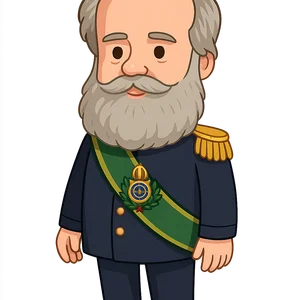
Pedro II of Brazil
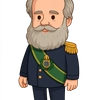
Pedro II, nicknamed "the Magnanimous," was the second and final monarch of the Empire of Brazil.
Reads at Grades 6–8 Listens at Grades 4–8
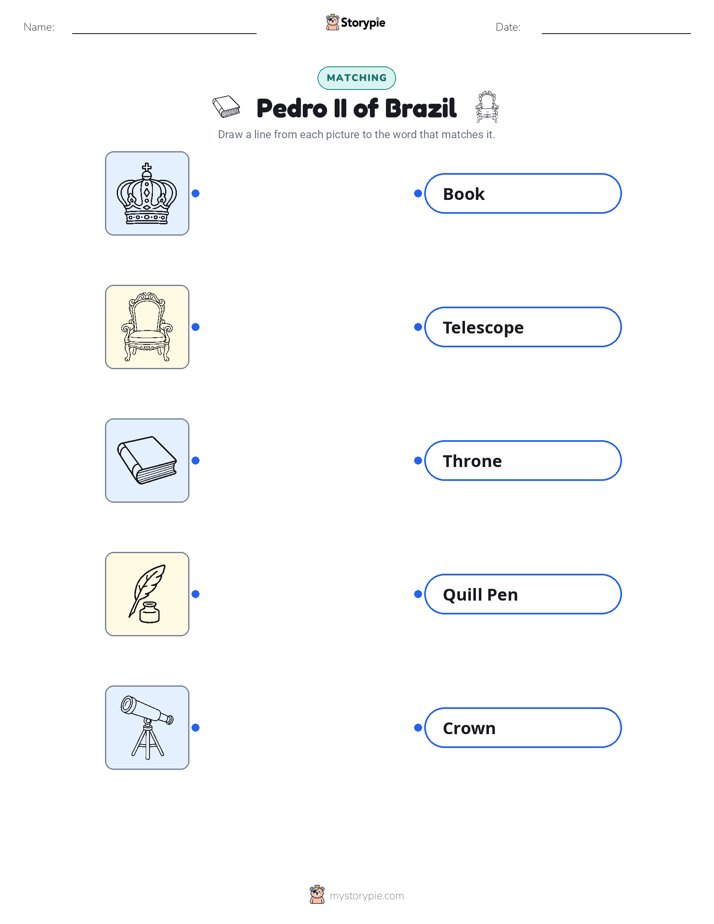
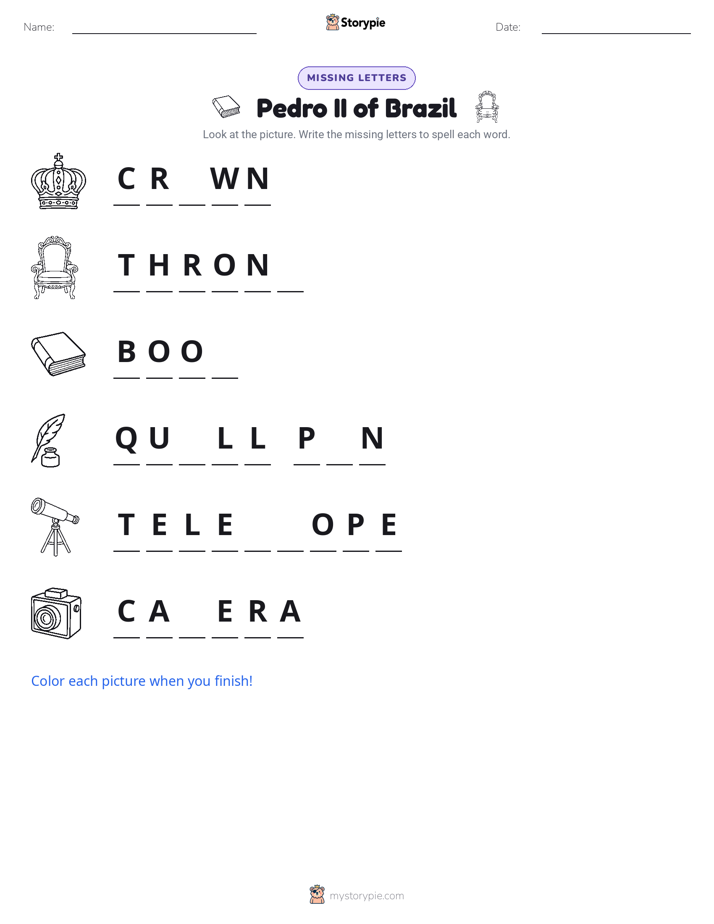
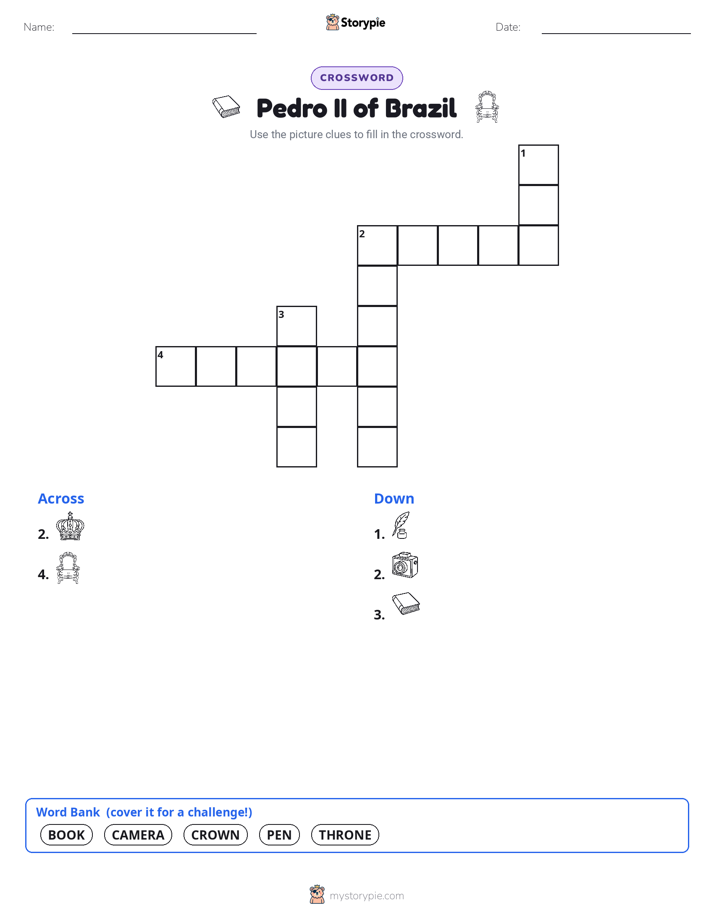
Print & create
Answer keys·No prep·Free with an account
28 worksheets · answer keys · full story · quiz · Ages 10-12 · CEFR B2
Plus adds 164,000+ more stories in 27 languages, audio for every one, and printables for all of them.
Just want Pedro II of Brazil?
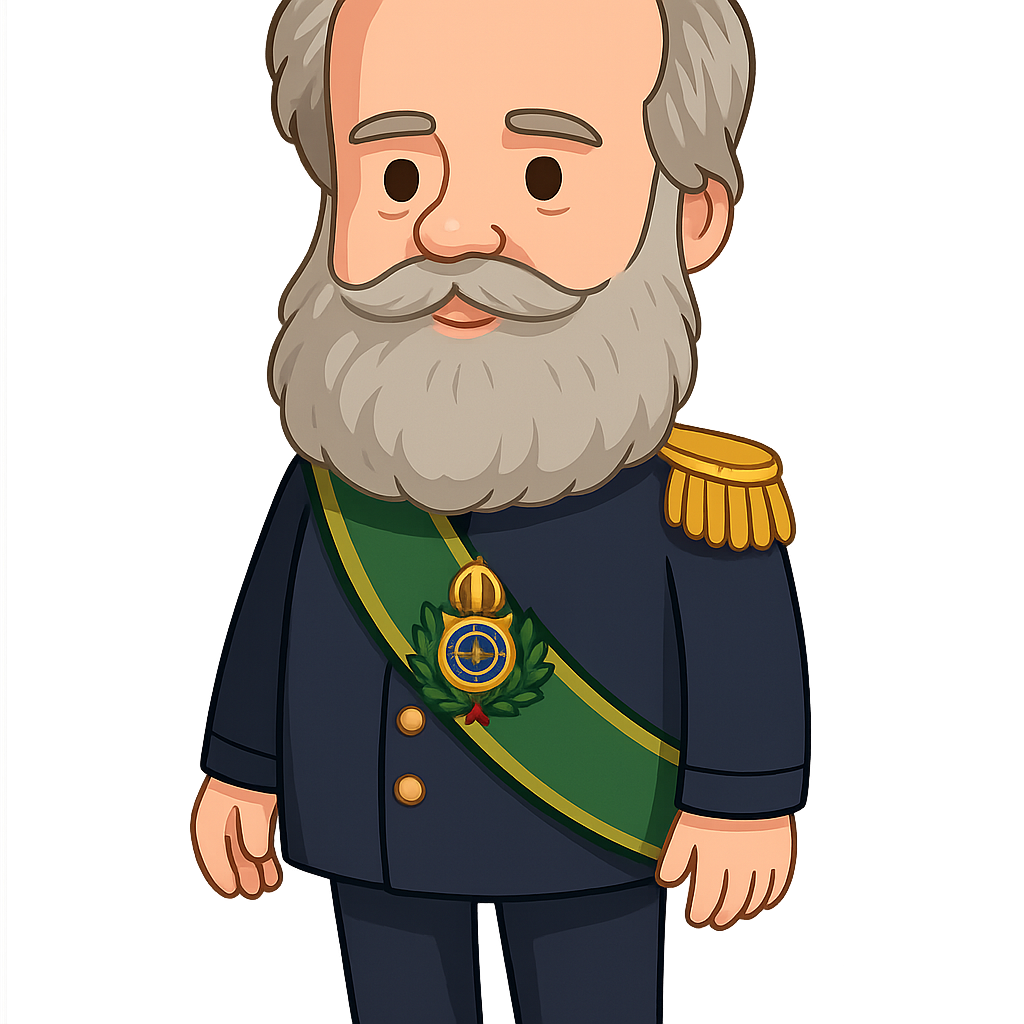
Hello, my name is Dom Pedro II, and I was the second and last emperor of Brazil. My story is a little unusual because I became an emperor when I was just a boy. I was born in the beautiful city of Rio de Janeiro on December 2nd, 1825. My father was Emperor Pedro I. When I was only five years old, on April 7th, 1831, my father decided to return to Portugal and left the throne of Brazil to me. Imagine being told you were in charge of a country as big as Brazil before you even knew how to read properly! Because I was so young, a group of adults called regents ruled for me. My childhood was very quiet and lonely, filled with books and tutors to prepare me for the enormous job that awaited me.
While other children were out playing, I spent nearly all my time studying. I loved learning! I learned to speak many languages and was fascinated by science, art, and one of the newest inventions of my time—photography. I wanted to know everything I could to be a good ruler for my people. The country was going through some difficult times, and many people felt Brazil needed a strong leader. So, in 1840, when I was only 14 years old, the government declared that I was old enough to rule on my own. I was officially crowned Emperor of Brazil on July 18th, 1841. A few years later, in 1843, I married Princess Teresa Cristina. It was an arranged marriage, as was common for royalty, but we grew to respect each other deeply and had a family together. I was finally ready to lead my country into the future.
Dom Pedro II: The Scholar Emperor of Brazil
Hello, my name is Dom Pedro II, and I was the second and last emperor of Brazil. My story is a little unusual because I became an emperor when I was just a boy. I was born in the beautiful city of Rio de Janeiro on December 2nd, 1825. My father was Emperor Pedro I. When I was only five years old, on April 7th, 1831, my father decided to return to Portugal and left the throne of Brazil to me. Imagine being told you were in charge of a country as big as Brazil before you even knew how to read properly! Because I was so young, a group of adults called regents ruled for me. My childhood was very quiet and lonely, filled with books and tutors to prepare me for the enormous job that awaited me.
While other children were out playing, I spent nearly all my time studying. I loved learning! I learned to speak many languages and was fascinated by science, art, and one of the newest inventions of my time—photography. I wanted to know everything I could to be a good ruler for my people. The country was going through some difficult times, and many people felt Brazil needed a strong leader. So, in 1840, when I was only 14 years old, the government declared that I was old enough to rule on my own. I was officially crowned Emperor of Brazil on July 18th, 1841. A few years later, in 1843, I married Princess Teresa Cristina. It was an arranged marriage, as was common for royalty, but we grew to respect each other deeply and had a family together. I was finally ready to lead my country into the future.
My biggest goal was to make Brazil a modern and respected nation. For nearly 50 years, I worked to bring stability and progress. We encouraged the growth of our coffee industry, which became very important to the world. We built thousands of miles of railroads to connect our vast country, laid telegraph lines so people could communicate across long distances, and started new steamship routes. I was also a great supporter of the arts and sciences. I believed that for a country to be truly great, it must value knowledge and creativity. I corresponded with famous scientists like Louis Pasteur and inventors like Alexander Graham Bell. In 1876, I attended a big exhibition in Philadelphia in the United States, where I was one of the first people to ever hear a voice through Mr. Bell’s new invention, the telephone! My reign was not without conflict, however. From 1864 to 1870, Brazil fought in the long and difficult Paraguayan War alongside our allies Argentina and Uruguay. It was a terrible war, but in the end, our side was victorious.
One of the most important and difficult issues during my reign was slavery. From a young age, I believed that it was a terrible injustice for one person to own another. I wanted to end it, but it was very complicated. Many powerful coffee plantation owners depended on the labor of enslaved people and did not want to see it abolished. I knew I had to move carefully to avoid tearing the country apart. So, we began to pass laws that would end slavery gradually. In 1871, we passed the 'Law of the Free Womb,' which declared that all children born to enslaved mothers from that day forward would be free. Then, in 1885, a new law freed all enslaved people over the age of 60. The final step came when I was traveling in Europe for my health. My daughter, Princess Isabel, was ruling in my place. On May 13th, 1888, she signed the 'Lei Áurea,' or Golden Law, which abolished slavery in Brazil completely and forever. I was so proud and happy when I heard the news.
Although ending slavery was the right thing to do, it made the powerful landowners who had once supported me very angry. They turned against the monarchy. At the same time, some leaders in the army were becoming powerful and thought Brazil should be a republic, a country without a king or emperor. On November 15th, 1889, the army organized a coup and declared the empire was over. They told me and my family that we had to leave our home. It was one of the saddest days of my life. I had dedicated my entire life—nearly 59 years—to Brazil. We sailed to Europe in exile. My dear wife, Teresa Cristina, died just a few weeks later, her heart broken from leaving the country she had come to love.
I spent my last couple of years living quietly in Paris, France, always dreaming of my beloved Brazil. I lived to be 66 years old. Today, people remember me as a scholar and a patron of the sciences, a ruler who brought stability and progress to his country for over half a century. My greatest hope was to see a modern, educated, and just Brazil, and I am most remembered for my role in the long journey to end slavery. Though the empire I led is gone, my story is a reminder of how a leader’s love for knowledge and justice can shape a nation. Years after my passing, my home country welcomed me back, and I was laid to rest in Brazil as a national hero.
Wow facts
About
Pedro II, nicknamed "the Magnanimous," was the second and final monarch of the Empire of Brazil. His 58-year reign was a period of significant growth and stability for the country, culminating in the abolition of slavery in 1888.
Take a Quiz
Question 1 of 5
Based on the story, what was Dom Pedro II's primary goal during his reign as emperor of Brazil?
Explore next





Want to do even more?
Go beyond exploring. Unlock tools that turn every story into real learning.

Storypie Plus for families
Full stories, quizzes, and printables. Nights and car rides, sorted.
- Unlimited audio stories
- Create Mode: your child stars in the story
- Offline downloads
- Printable worksheets & coloring pages

Why Storypie for Schools
Students engaged. Prep in seconds. Evenings back to you.
- Worksheets & Quizzes
- Classroom Management
- Formative Assessment
- Custom Curriculum & Lesson Plans
- 27 Languages

Why Storypie for Homeschool
Curriculum done. They'll ask for more. Hours back in your day.
- Worksheet Generator
- First-Person Audio Stories
- Built-in Comprehension Quizzes
- Custom Curriculum & Lesson Plans
- Print & Go Activities