English

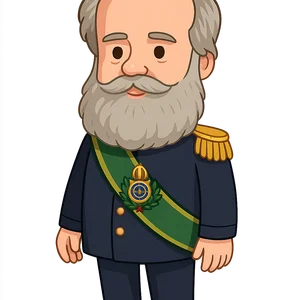
Pedro II of Brazil
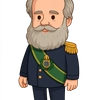
Pedro II, nicknamed "the Magnanimous," was the second and final monarch of the Empire of Brazil.
Reads at Grades 3–5 Listens at Grades 1–5
Print & create
Answer keys·No prep·Free with an account
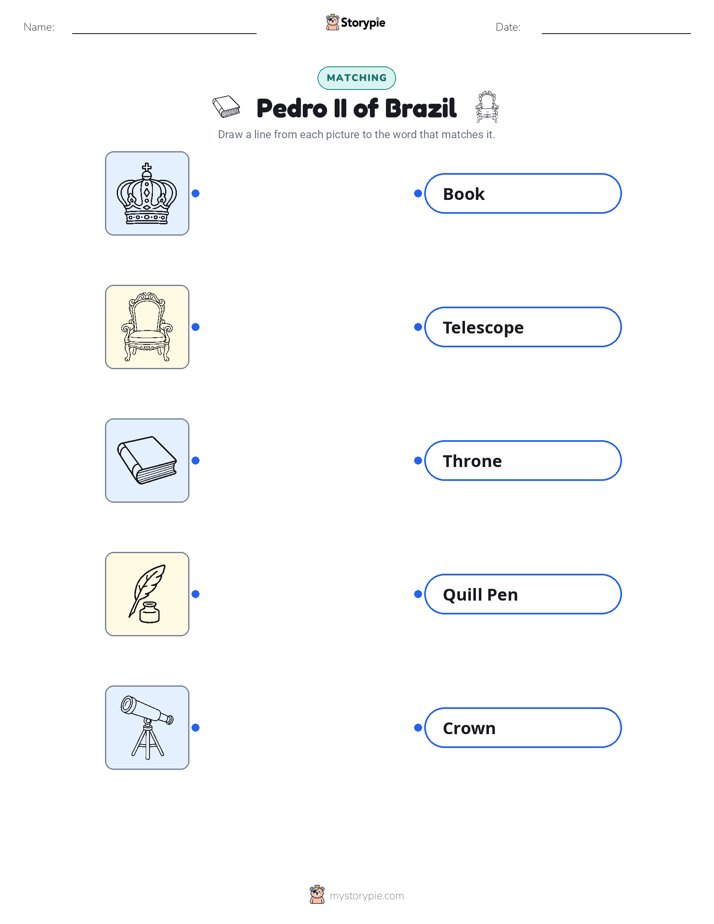
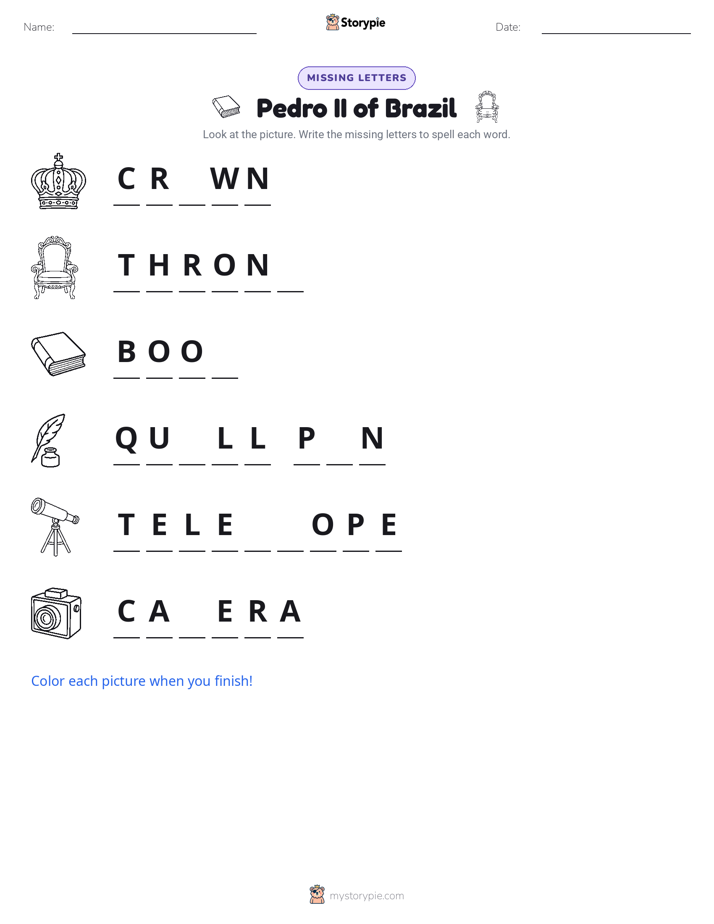
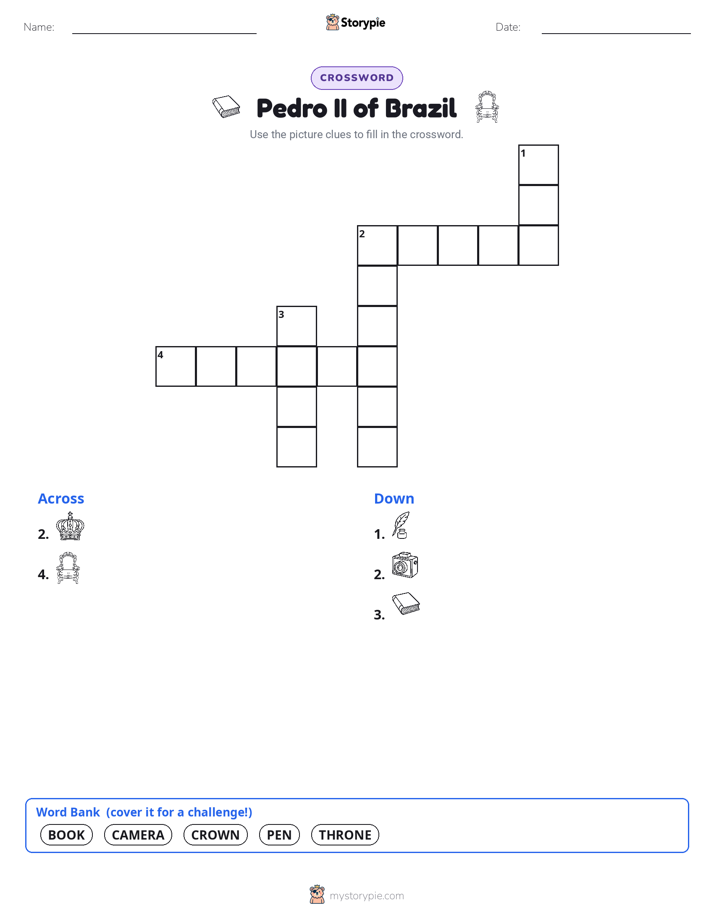
28 worksheets · answer keys · full story · quiz · Ages 8-10 · CEFR B1
Plus adds 164,000+ more stories in 27 languages, audio for every one, and printables for all of them.
Just want Pedro II of Brazil?
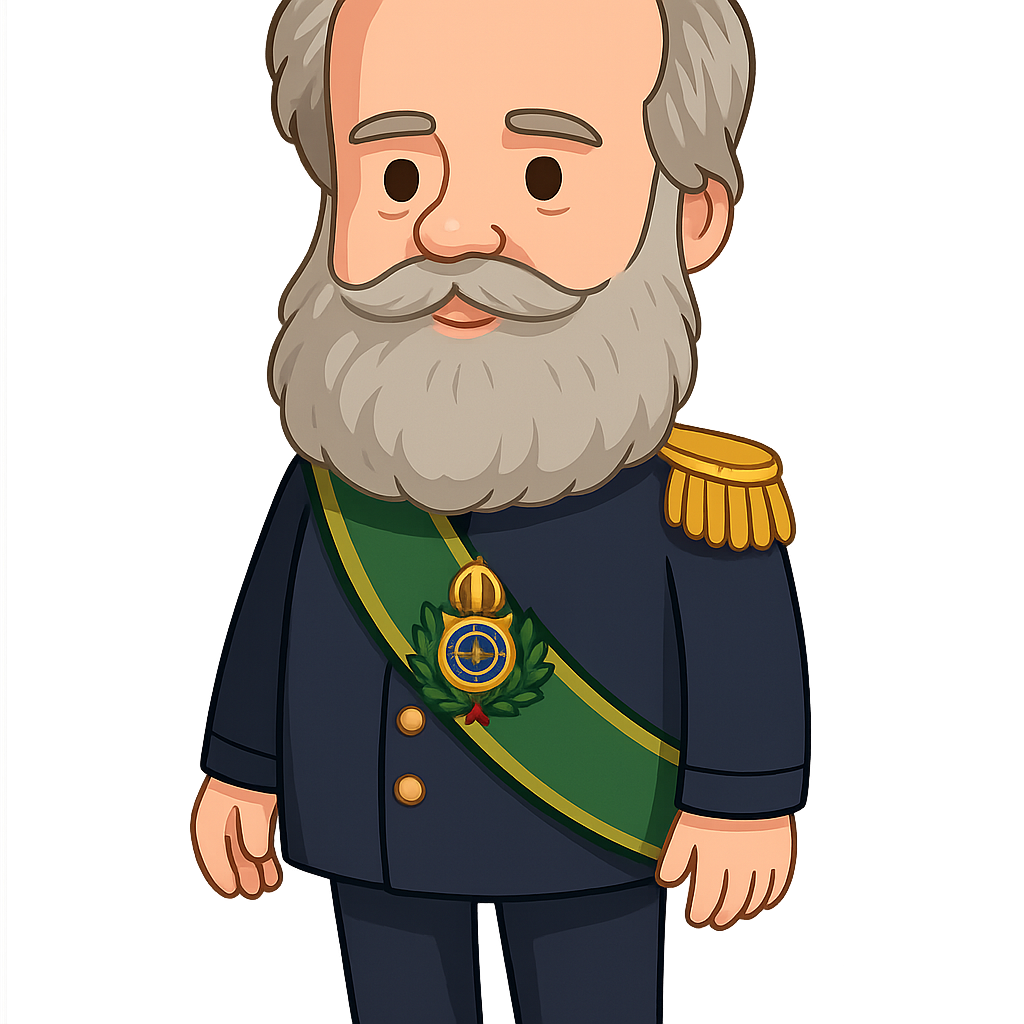
Hello, my name is Pedro II, and I was the last emperor of Brazil. My story begins in the beautiful city of Rio de Janeiro, surrounded by lush green mountains and the sparkling blue sea. I was born there on December 2nd, 1825. My life changed very suddenly when I was just five years old. In 1831, my father, Emperor Pedro I, had to leave our country for important reasons. He left me behind, a young boy who was now destined to become the next ruler. It was a very big responsibility for someone so small. My childhood was quite lonely and wasn't like that of most children. Instead of playing all day, I spent my time with tutors, studying history, science, languages, and art. I had to learn everything about Brazil and how to be a good leader for its people. I read book after book, preparing for the enormous job ahead of me. It was a lot of hard work, but I knew it was my duty. Finally, in 1841, when I was only a teenager, the time came. I was officially crowned the emperor of Brazil. It was a grand ceremony, and I felt the weight of my nation on my young shoulders, but I was ready to serve.
My reign over the vast country of Brazil was very long, spanning nearly 50 years, and during that time, I tried to help my country grow and modernize. I have always had a deep love for knowledge, science, and new inventions. I was fascinated by photography, astronomy, and especially the amazing new technologies that were changing the world. I read everything I could get my hands on and encouraged schools and universities to grow across the land. One of the most exciting moments for me was in 1876 when I traveled to the United States for an exhibition. There, I met a brilliant inventor named Alexander Graham Bell. He showed me his new invention, the telephone. Imagine my surprise when I put the receiver to my ear and could hear a voice speaking from another room. It was an astonishing experience. My life wasn't just about ruling and science, though. I had a family that I loved dearly. My wife, Empress Teresa Cristina, was my constant support, and we had children who brought great joy to our lives. Of course, being an emperor also came with very difficult times. From 1864 to 1870, our country was involved in the Paraguayan War. It was a very sad and challenging period for Brazil and our neighbors. Many lives were lost, and it was a great relief when the conflict finally ended. Through it all, I believed in the strength of the Brazilian people and worked hard to lead them toward a more peaceful and prosperous future.
Pedro II: The Last Emperor of Brazil
Hello, my name is Pedro II, and I was the last emperor of Brazil. My story begins in the beautiful city of Rio de Janeiro, surrounded by lush green mountains and the sparkling blue sea. I was born there on December 2nd, 1825. My life changed very suddenly when I was just five years old. In 1831, my father, Emperor Pedro I, had to leave our country for important reasons. He left me behind, a young boy who was now destined to become the next ruler. It was a very big responsibility for someone so small. My childhood was quite lonely and wasn't like that of most children. Instead of playing all day, I spent my time with tutors, studying history, science, languages, and art. I had to learn everything about Brazil and how to be a good leader for its people. I read book after book, preparing for the enormous job ahead of me. It was a lot of hard work, but I knew it was my duty. Finally, in 1841, when I was only a teenager, the time came. I was officially crowned the emperor of Brazil. It was a grand ceremony, and I felt the weight of my nation on my young shoulders, but I was ready to serve.
My reign over the vast country of Brazil was very long, spanning nearly 50 years, and during that time, I tried to help my country grow and modernize. I have always had a deep love for knowledge, science, and new inventions. I was fascinated by photography, astronomy, and especially the amazing new technologies that were changing the world. I read everything I could get my hands on and encouraged schools and universities to grow across the land. One of the most exciting moments for me was in 1876 when I traveled to the United States for an exhibition. There, I met a brilliant inventor named Alexander Graham Bell. He showed me his new invention, the telephone. Imagine my surprise when I put the receiver to my ear and could hear a voice speaking from another room. It was an astonishing experience. My life wasn't just about ruling and science, though. I had a family that I loved dearly. My wife, Empress Teresa Cristina, was my constant support, and we had children who brought great joy to our lives. Of course, being an emperor also came with very difficult times. From 1864 to 1870, our country was involved in the Paraguayan War. It was a very sad and challenging period for Brazil and our neighbors. Many lives were lost, and it was a great relief when the conflict finally ended. Through it all, I believed in the strength of the Brazilian people and worked hard to lead them toward a more peaceful and prosperous future.
Of all the things I wanted to achieve as emperor, one goal stood above the rest: I wanted to end slavery in Brazil. From a young age, I believed it was deeply wrong for one person to own another. It was an injustice that had to be corrected. However, changing such a long-standing system was not easy. Many wealthy and powerful landowners depended on the labor of enslaved people, and they did not want things to change. So, the process had to be slow and careful. We passed laws over many years that freed children born to enslaved mothers and later, freed older slaves. These were important steps, but they were not enough. I knew that every single person had to be free. The final, most important step happened while I was away on a trip. On May 13th, 1888, my daughter, Princess Isabel, who was ruling in my place, signed a very special law. It was called the 'Lei Áurea,' which means the 'Golden Law.' With the stroke of a pen, this law freed every last enslaved person in Brazil. When the news spread, there were huge celebrations in the streets. People were singing, dancing, and cheering for their freedom. It was one of the proudest moments of my life. But, as I mentioned, not everyone was happy. The powerful landowners who lost their enslaved workers became very angry with my family and me.
That anger from the powerful landowners had serious consequences. In 1889, just a year after the Golden Law was signed, a group of army leaders decided that Brazil should no longer have an emperor. They wanted to form a republic instead. It was truly heartbreaking for me and my family. We were told we had to leave the country that we loved so much. We sailed across the ocean to Europe, leaving our home behind forever. It was a sad end to my long reign. I lived to be 66 years old. Even though my time as emperor ended in exile, I am remembered for my love of learning and my desire to see Brazil become a modern, respected nation. Most importantly, I am so proud that I left behind a country where every single person was finally free. That is the legacy I hope people remember most.
Wow facts
About
Pedro II, nicknamed "the Magnanimous," was the second and final monarch of the Empire of Brazil. His 58-year reign was a period of significant growth and stability for the country, culminating in the abolition of slavery in 1888.
Take a Quiz
Question 1 of 5
What was the 'Lei Áurea,' also known as the Golden Law?
Explore next





Want to do even more?
Go beyond exploring. Unlock tools that turn every story into real learning.

Storypie Plus for families
Full stories, quizzes, and printables. Nights and car rides, sorted.
- Unlimited audio stories
- Create Mode: your child stars in the story
- Offline downloads
- Printable worksheets & coloring pages

Why Storypie for Schools
Students engaged. Prep in seconds. Evenings back to you.
- Worksheets & Quizzes
- Classroom Management
- Formative Assessment
- Custom Curriculum & Lesson Plans
- 27 Languages

Why Storypie for Homeschool
Curriculum done. They'll ask for more. Hours back in your day.
- Worksheet Generator
- First-Person Audio Stories
- Built-in Comprehension Quizzes
- Custom Curriculum & Lesson Plans
- Print & Go Activities