English

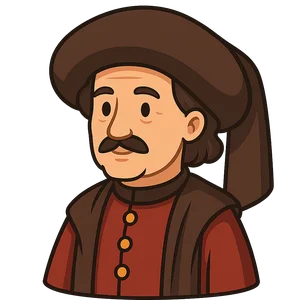
Prince Henry the Navigator
A Portuguese prince from the 15th century who sponsored many voyages of exploration down the West African…
Reads at Grades 6–8 Listens at Grades 4–8
Print & create
Answer keys·No prep·Free with an account
28 worksheets · answer keys · full story · quiz · Ages 10-12 · CEFR B2
Plus adds 244,000+ more stories in 27 languages, audio for every one, and printables for all of them.
Just want Prince Henry the Navigator?
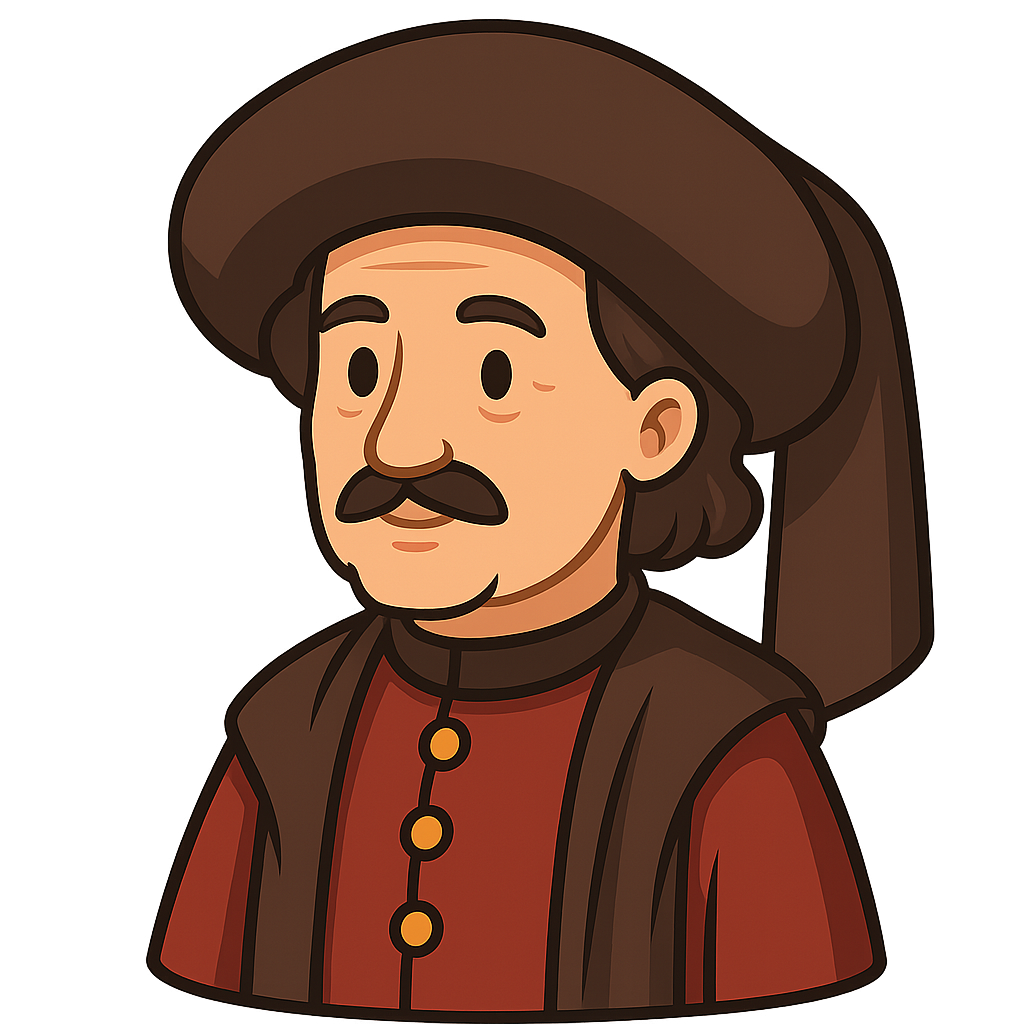
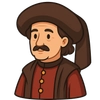
Hello! My name is Infante Dom Henrique, but history remembers me as Prince Henry the Navigator. I was born in Porto, Portugal, on March 4th, 1394. As the third surviving son of King John I, I grew up in a world filled with tales of faraway lands, legendary Christian kingdoms, and the valuable spices and gold that came from beyond the horizon. In my time, much of the world was a mystery to Europeans. Our maps were filled with vast blank spaces, and many people believed the oceans were home to terrifying monsters. From a young age, I was fascinated by the sea and dreamed of discovering what lay beyond the known world. I wanted to find new trade routes for Portugal and learn more about the immense continent of Africa to our south.
My real journey began not on a ship, but on the battlefield. In 1415, when I was 21 years old, my father, my brothers, and I led a Portuguese army to capture the great trading city of Ceuta in North Africa. It was a major victory for our kingdom. While I was there, I saw firsthand the incredible goods that traveled through the city—gold, spices, and silks that came from deep within Africa and the East. This experience ignited my curiosity like never before. I realized that if we could find a way to sail around Africa, Portugal could trade for these treasures directly, without relying on others. That adventure set the course for the rest of my life: I would dedicate myself to unlocking the secrets of the sea.
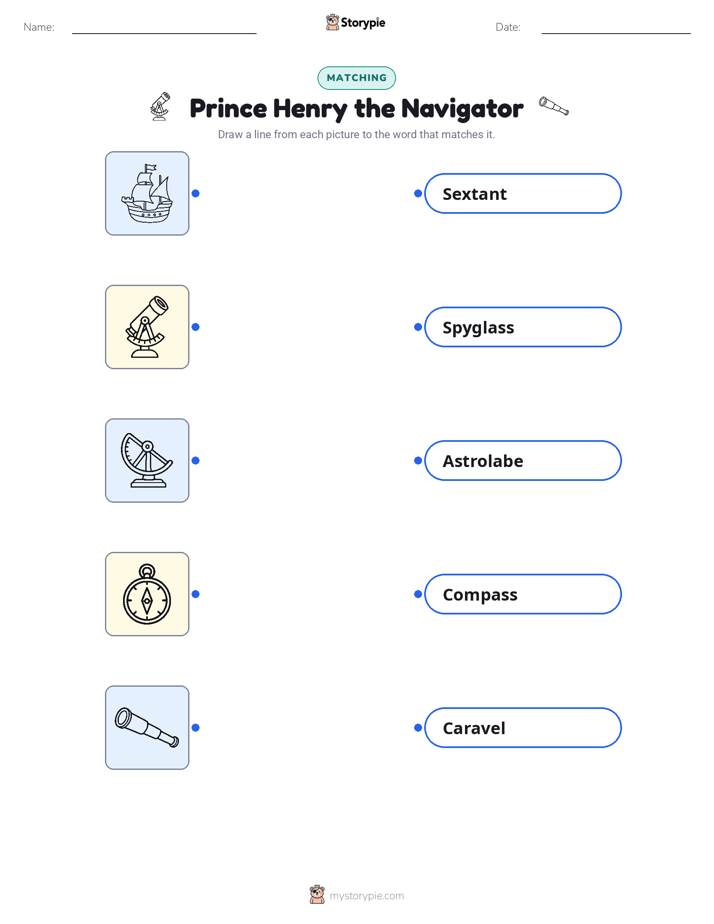
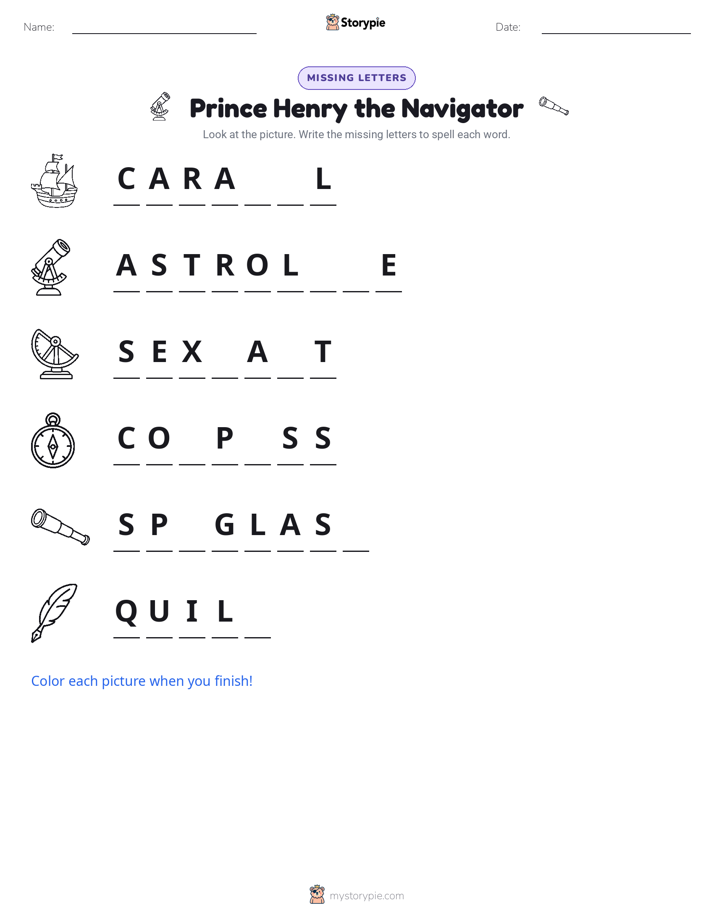
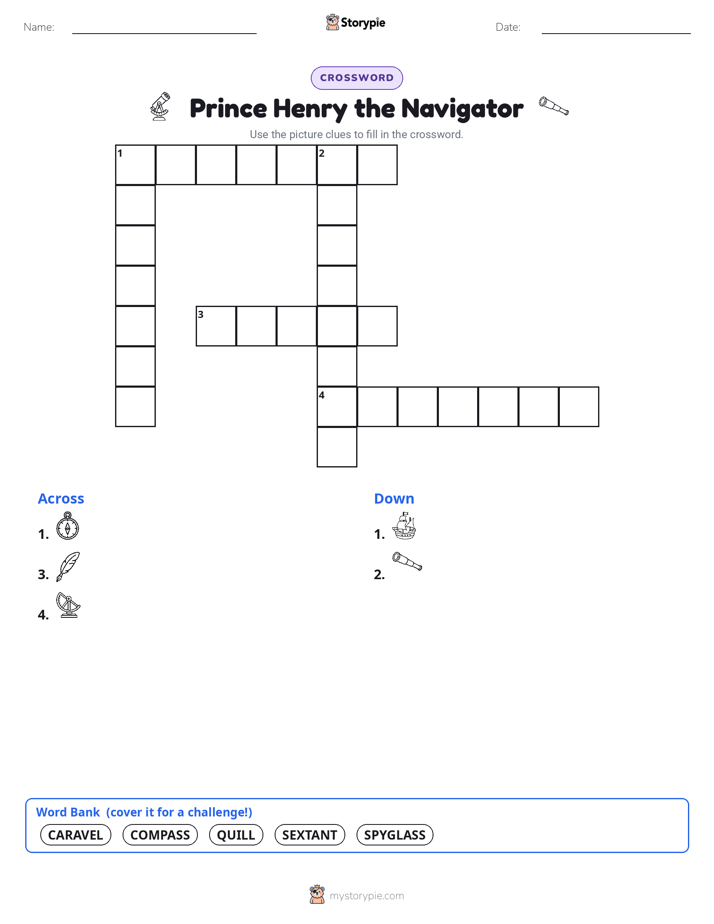
I knew that to sail into the unknown, we needed the best knowledge and technology available. So, around the 1420s, I established a base in a place called Sagres, located on the southern tip of Portugal. It was not a formal school with classrooms, but rather a center of innovation. I brought together the most skilled people I could find: expert sailors, brilliant mapmakers, experienced shipbuilders, and astronomers who could read the stars to navigate. Together, we worked to solve the complex problems of long-distance sea travel. We improved maps, studied wind patterns, and helped develop a new kind of ship called the caravel. It was small, light, and fast, with special triangular sails that allowed it to sail against the wind—perfect for exploring unknown coastlines.
Prince Henry the Navigator
Hello! My name is Infante Dom Henrique, but history remembers me as Prince Henry the Navigator. I was born in Porto, Portugal, on March 4th, 1394. As the third surviving son of King John I, I grew up in a world filled with tales of faraway lands, legendary Christian kingdoms, and the valuable spices and gold that came from beyond the horizon. In my time, much of the world was a mystery to Europeans. Our maps were filled with vast blank spaces, and many people believed the oceans were home to terrifying monsters. From a young age, I was fascinated by the sea and dreamed of discovering what lay beyond the known world. I wanted to find new trade routes for Portugal and learn more about the immense continent of Africa to our south.
My real journey began not on a ship, but on the battlefield. In 1415, when I was 21 years old, my father, my brothers, and I led a Portuguese army to capture the great trading city of Ceuta in North Africa. It was a major victory for our kingdom. While I was there, I saw firsthand the incredible goods that traveled through the city—gold, spices, and silks that came from deep within Africa and the East. This experience ignited my curiosity like never before. I realized that if we could find a way to sail around Africa, Portugal could trade for these treasures directly, without relying on others. That adventure set the course for the rest of my life: I would dedicate myself to unlocking the secrets of the sea.
I knew that to sail into the unknown, we needed the best knowledge and technology available. So, around the 1420s, I established a base in a place called Sagres, located on the southern tip of Portugal. It was not a formal school with classrooms, but rather a center of innovation. I brought together the most skilled people I could find: expert sailors, brilliant mapmakers, experienced shipbuilders, and astronomers who could read the stars to navigate. Together, we worked to solve the complex problems of long-distance sea travel. We improved maps, studied wind patterns, and helped develop a new kind of ship called the caravel. It was small, light, and fast, with special triangular sails that allowed it to sail against the wind—perfect for exploring unknown coastlines.
For many years, European sailors had been stopped by a place on the African coast called Cape Bojador. They called it the 'Cape of Fear.' Sailors told terrifying stories of boiling seas, strange and powerful currents, and sea monsters, and many believed it was the edge of the world. For more than a decade, I sent ship after ship to try and pass it, and each one turned back in fear. But I was determined and refused to give up. I encouraged my captains to persevere. Finally, in 1434, a brave captain named Gil Eanes, on his fifteenth attempt, took a wide path out into the Atlantic Ocean and successfully sailed around the cape. He proved the old legends were just stories. This was a massive breakthrough! It shattered the psychological barrier that had held back sailors for generations and opened the door for us to explore the rest of the African coast.
After we passed Cape Bojador, my expeditions pushed farther and farther south along the African coast. My ships reached the Madeira Islands and the Azores, which became important Portuguese colonies and vital stops for future voyages. By the 1440s, we had sailed as far as present-day Senegal and Sierra Leone. We established trading posts along the coast, bringing back gold and ivory, which made Portugal very wealthy. But these voyages also had a dark and terrible side. My explorers began to participate in the trade of enslaved African people, capturing them and bringing them back to Europe. This was the beginning of the transatlantic slave trade, a horrific system that would cause immense suffering for centuries. It is a sad and important part of the history that began with our explorations.
I never actually sailed on most of these long, dangerous voyages myself. The nickname 'the Navigator' was given to me centuries after my time because I was the one who funded, organized, and relentlessly pushed for all this exploration. I dedicated my life and my fortune to it. I lived to be 66 years old, passing away on November 13th, 1460. The work I started did not stop with me. The knowledge, maps, and confidence gained from my expeditions made it possible for later explorers like Vasco da Gama to finally sail all the way around Africa to India. My passion for discovery helped to change the world's map forever, connecting continents and cultures in ways no one had ever imagined, for both good and ill.
Wow facts
About
A Portuguese prince from the 15th century who sponsored many voyages of exploration down the West African coast, playing a key role in the beginning of Europe's Age of Discovery.
Take a Quiz
Question 1 of 5
What was Prince Henry's main motivation for funding expeditions after his experience in Ceuta in 1415?
Explore next


Want to do even more?
Go beyond exploring. Unlock tools that turn every story into real learning.

Storypie Plus for families
Full stories, quizzes, and printables. Nights and car rides, sorted.
- Unlimited audio stories
- Create Mode: your child stars in the story
- Offline downloads
- Printable worksheets & coloring pages

Why Storypie for Schools
Students engaged. Prep in seconds. Evenings back to you.
- Worksheets & Quizzes
- Classroom Management
- Formative Assessment
- Custom Curriculum & Lesson Plans
- 27 Languages

Why Storypie for Homeschool
Curriculum done. They'll ask for more. Hours back in your day.
- Worksheet Generator
- First-Person Audio Stories
- Built-in Comprehension Quizzes
- Custom Curriculum & Lesson Plans
- Print & Go Activities