

 English


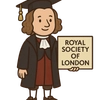
Robert Hooke
Robert Hooke was a 17th-century English scientist, inventor, and architect…
Reads at Grades K-2 Listens at K–3
Robert Hooke: The Man Who Saw a Hidden World
Hello! My name is Robert Hooke. I was born a very long time ago, on July 18th, 1635, on a small island in England called the Isle of Wight. Even when I was a little boy, I was full of curiosity. I loved watching how everything worked, from the big sails of a windmill spinning in the wind to the tiniest insects crawling in the garden. I didn't just like to watch things; I loved to build them! I once made a small clock out of wood that really ticked, and I even built toy ships that had sails that could catch the wind.
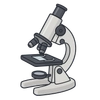
When I was older, I moved to the big city of London to study science. My favorite tool was my microscope. Using it felt like I had a superpower because it let me see a secret, tiny world that no one else could see. I would look at everyday things for hours, like the sharp point of a needle or a piece of cloth, and they looked so different and amazing up close! In 1665, I made a book called 'Micrographia' and filled it with drawings of everything I saw. I drew the huge, bumpy eye of a fly and the fuzzy mold growing on a piece of bread. One day, I looked at a very thin slice of cork. I saw it was made of many tiny, empty boxes. They reminded me of the small rooms, or cells, where monks lived in a monastery. So, I decided to call them 'cells.' I was the very first person to ever see them!
I didn't only look at tiny things. I also loved figuring out how bigger things worked. I discovered the secret of how springs work—how they can stretch out and then bounce right back to their shape. This idea was later called Hooke's Law, and it was very important for making clocks and watches work much better. Then, in 1666, a huge fire, called the Great Fire of London, burned down a large part of the city. It was a very sad time, but it was also a chance to build the city again. I worked with my good friend, Sir Christopher Wren, to help design new buildings and streets to make London a wonderful city once more.
I was always busy with new ideas and was always curious about the world, right up until the end of my life. I lived to be 67 years old. Today, people remember me for all my different inventions and discoveries, but especially for my book 'Micrographia.' Because of my drawings, people were able to see the amazing, tiny world all around them for the very first time. Every time you learn about cells in your science class, you can remember me, because I was the one who gave them their name.
Wow facts
About
Robert Hooke was a 17th-century English scientist, inventor, and architect, known for his groundbreaking book Micrographia, coining the term 'cell,' and formulating Hooke's Law of elasticity.
Take a Quiz
Question 1 of 4
What was the name of the book Robert Hooke published in 1665?
Explore next




Want to do even more?
Go beyond exploring. Unlock tools that turn every story into real learning.

Storypie Plus for families
Full stories, quizzes, and printables. Nights and car rides, sorted.
- Unlimited audio stories
- Create Mode: your child stars in the story
- Offline downloads
- Printable worksheets & coloring pages

Why Storypie for Schools
Students engaged. Prep in seconds. Evenings back to you.
- Worksheets & Quizzes
- Classroom Management
- Formative Assessment
- Custom Curriculum & Lesson Plans
- 27 Languages

Why Storypie for Homeschool
Curriculum done. They'll ask for more. Hours back in your day.
- Worksheet Generator
- First-Person Audio Stories
- Built-in Comprehension Quizzes
- Custom Curriculum & Lesson Plans
- Print & Go Activities

