

 English


Robert Hooke
Robert Hooke was a 17th-century English scientist, inventor, and architect…
Reads at Grades 3–5 Listens at Grades 1–5
Robert Hooke: The Man Who Saw a Hidden World
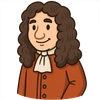
Hello! My name is Robert Hooke. My story begins on a little island off the coast of England called the Isle of Wight, where I was born on July 18th, 1635. As a boy, I was always curious about how things worked. I would take toys apart just to see their inner workings and then put them back together. I even built my own working wooden clock and tiny model ships that could fire their cannons! When I was 13, in the year 1648, my father passed away, and I traveled to the big city of London to begin my studies in science and art.
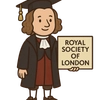
In 1653, I went to the famous Oxford University. There, I had the amazing opportunity to work as an assistant for a brilliant scientist named Robert Boyle. Together, we built a fantastic machine called an air pump, which we used to discover all sorts of new things about the air we breathe. My work impressed many people, and in 1662, I was given a very important job. I became the first 'Curator of Experiments' for a new group called the Royal Society of London. It was a club for the most curious minds in England, and my job was to perform exciting new experiments for them every single week!
One of my greatest passions was looking at the world through a microscope. I even built my own powerful microscope, which was much better than others available at the time. I spent hours looking at everyday things, like the eye of a fly, the sharp point of a needle, or a tiny flea. They looked like giant monsters up close! In 1665, I published a book called Micrographia filled with detailed drawings of this hidden world. While looking at a thin slice of cork, I noticed it was made of thousands of tiny, empty boxes. They reminded me of the little rooms, or 'cells,' where monks lived, so that's what I called them. I was the very first person to use the word 'cell' to describe the building blocks of life.
In 1666, a terrible event happened: the Great Fire of London burned down much of the city. It was a sad time, but it was also a chance to build something new and better. I worked with my good friend, the famous architect Sir Christopher Wren, to survey the city and design new buildings. We even designed the Monument to the Great Fire, a tall column that still stands today. During this time, I was also thinking about physics. I figured out how springs and other stretchy things work, a rule that scientists still use today and call 'Hooke's Law'.
I spent my whole life inventing, discovering, and exploring. I improved telescopes, created weather instruments, and drew pictures of stars and planets. I lived to be 67 years old. After I was gone, people continued to build on my ideas. My book Micrographia opened up a whole new world for scientists to explore, and my discovery of the 'cell' became the foundation for understanding all living things. I hope you'll always stay curious, just like I did, and never stop asking questions about the amazing world around you.
Wow facts
About
Robert Hooke was a 17th-century English scientist, inventor, and architect, known for his groundbreaking book Micrographia, coining the term 'cell,' and formulating Hooke's Law of elasticity.
Take a Quiz
Question 1 of 5
In the story, I said the tiny boxes in the cork reminded me of the 'cells' where monks lived. What does the word 'cell' mean in this context?
Explore next




Want to do even more?
Go beyond exploring. Unlock tools that turn every story into real learning.

Storypie Plus for families
Full stories, quizzes, and printables. Nights and car rides, sorted.
- Unlimited audio stories
- Create Mode: your child stars in the story
- Offline downloads
- Printable worksheets & coloring pages

Why Storypie for Schools
Students engaged. Prep in seconds. Evenings back to you.
- Worksheets & Quizzes
- Classroom Management
- Formative Assessment
- Custom Curriculum & Lesson Plans
- 27 Languages

Why Storypie for Homeschool
Curriculum done. They'll ask for more. Hours back in your day.
- Worksheet Generator
- First-Person Audio Stories
- Built-in Comprehension Quizzes
- Custom Curriculum & Lesson Plans
- Print & Go Activities

