English

Robert Peary
Robert Peary was an American explorer and U.S.
Reads at Grades 6–8 Listens at Grades 4–8
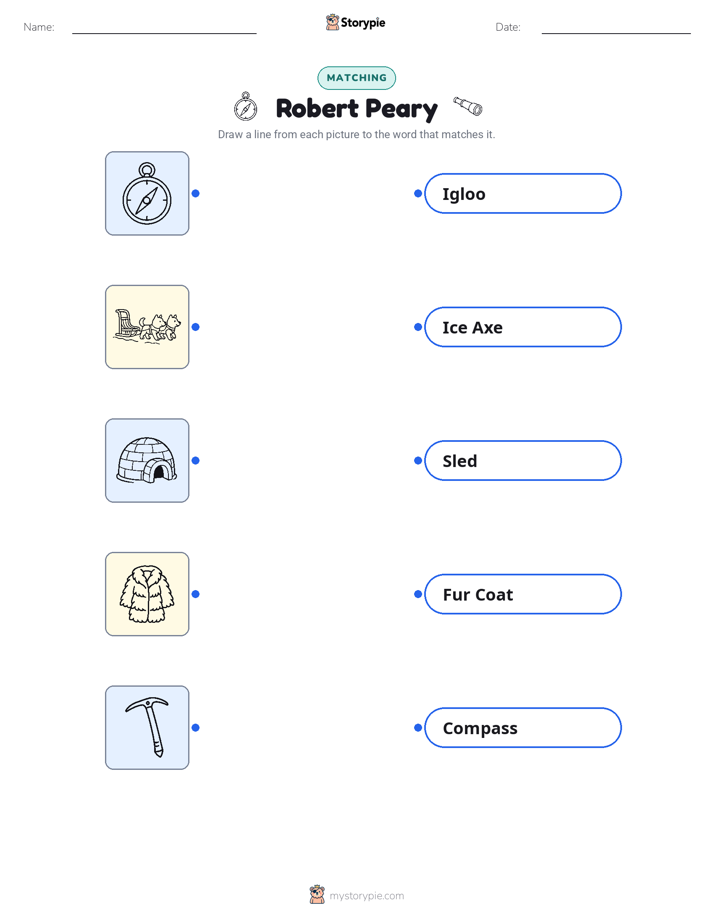
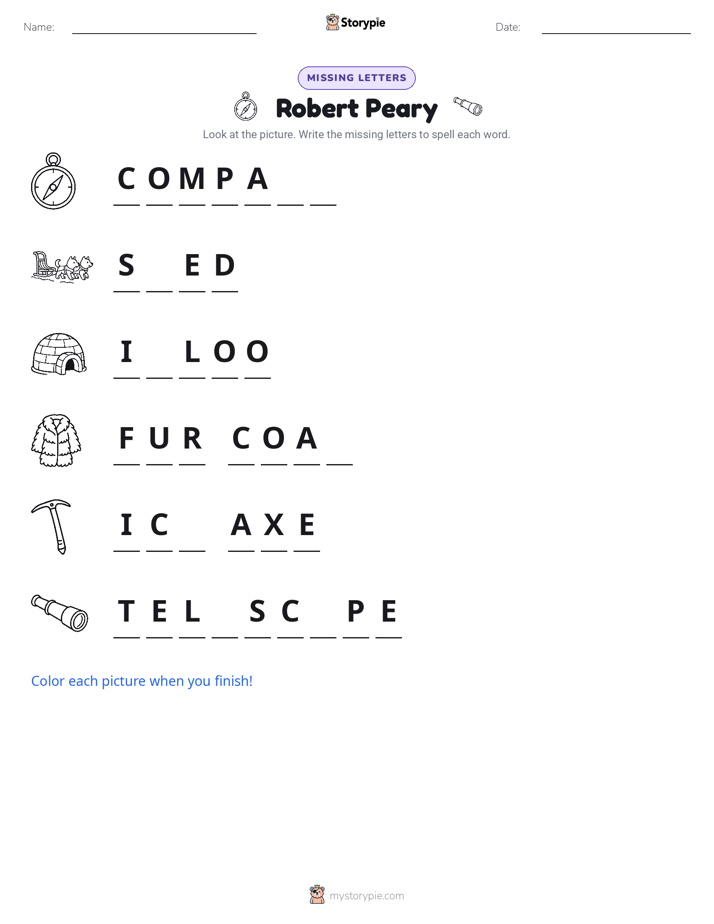
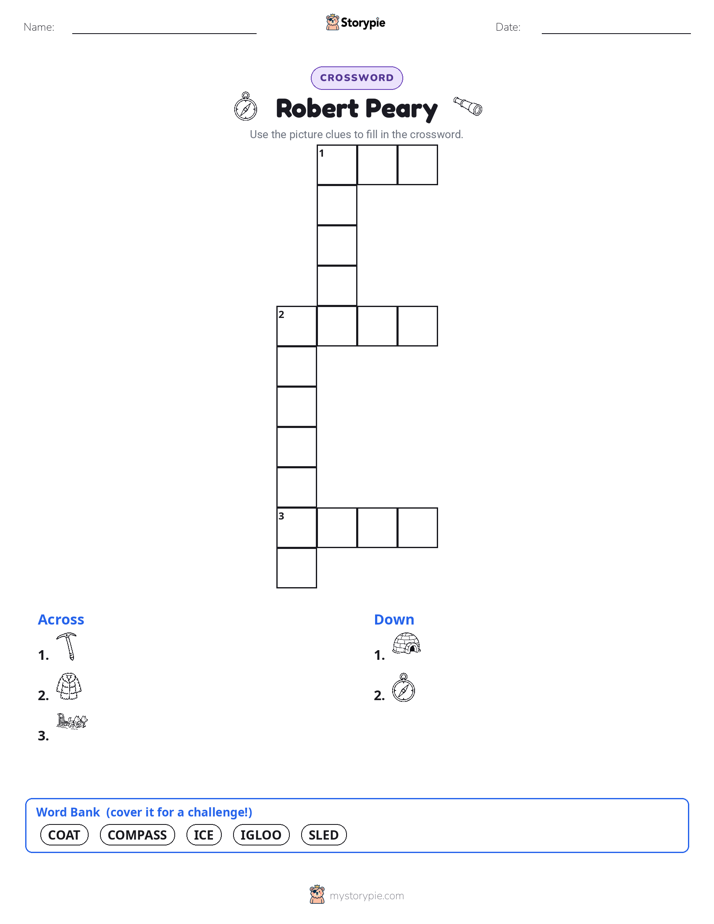
Print & create
Answer keys·No prep·Free with an account
28 worksheets · answer keys · full story · quiz · Ages 10-12 · CEFR B2
Plus adds 244,000+ more stories in 27 languages, audio for every one, and printables for all of them.
Just want Robert Peary?
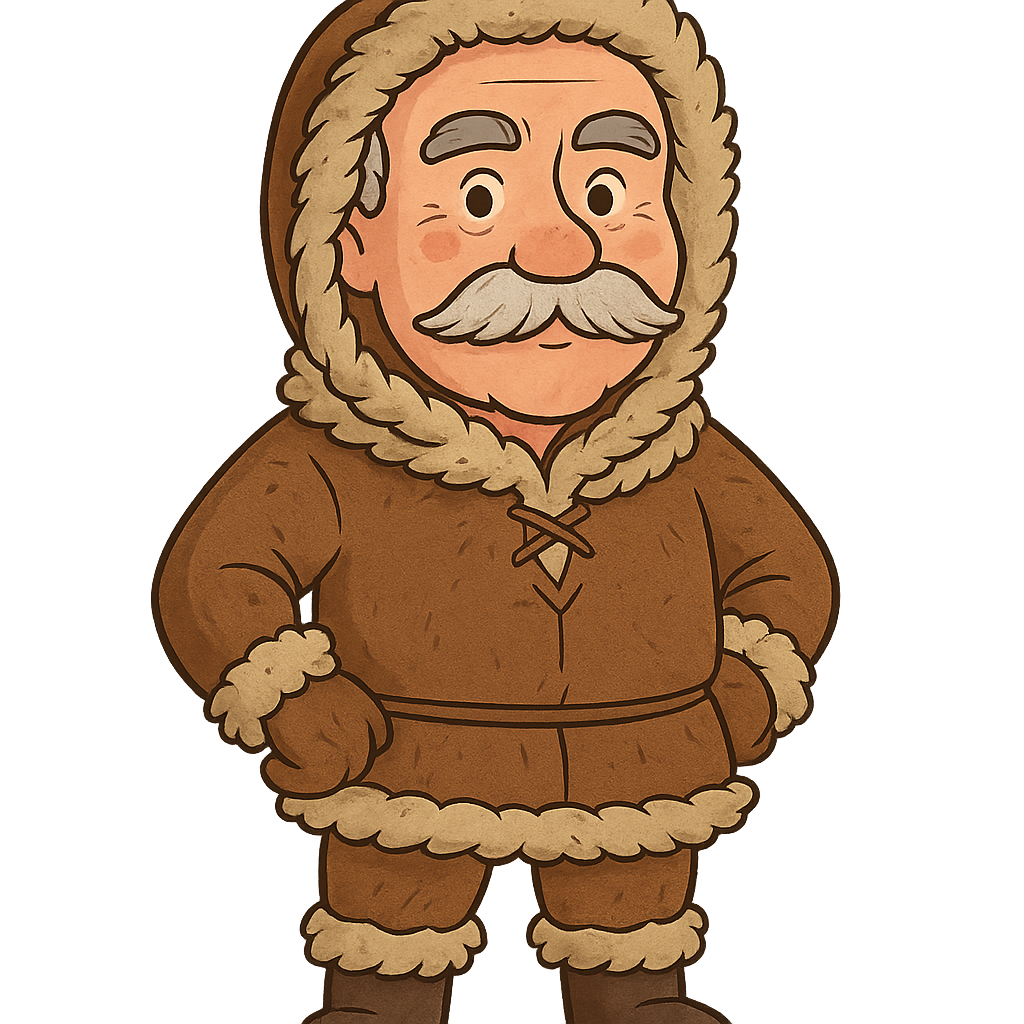
Hello, my name is Robert Peary, and I am an explorer who spent my life chasing a dream that led me to the coldest, most remote places on Earth. My journey began on May 6th, 1856, when I was born in the town of Cresson, Pennsylvania. However, I spent most of my childhood in the rugged landscapes of Maine, where the deep forests and rocky coastlines filled me with a powerful love for the outdoors and a thirst for adventure. I knew from a young age that I wanted to see parts of the world that few had ever witnessed. To prepare for such a life, I attended Bowdoin College and studied civil engineering. This education was crucial, as it gave me the practical skills I would need to survey land, draw maps, and navigate through uncharted territories. I didn't know it then, but these skills would one day guide me across hundreds of miles of ice to the very top of the world.
After graduating, I joined the U.S. Navy in 1881 as a civil engineer. My early work sent me to very different climates than the ones I would later become famous for. For a time, I was stationed in the tropical environment of Nicaragua, where I was part of a team surveying the land for a potential canal to connect the Atlantic and Pacific Oceans. It was important work, but my mind was always drawn to the opposite end of the globe—the vast, icy wilderness of the Arctic. In 1886, I took my first trip to Greenland. That journey was a turning point for me. The immense glaciers, the biting wind, and the sheer challenge of survival in such a place didn't scare me away; instead, they strengthened my fascination. It was there, surrounded by ice and silence, that I formed the ultimate goal that would define the rest of my life: I would be the first person to stand at the North Pole.
Robert Peary: Journey to the Top of the World
Hello, my name is Robert Peary, and I am an explorer who spent my life chasing a dream that led me to the coldest, most remote places on Earth. My journey began on May 6th, 1856, when I was born in the town of Cresson, Pennsylvania. However, I spent most of my childhood in the rugged landscapes of Maine, where the deep forests and rocky coastlines filled me with a powerful love for the outdoors and a thirst for adventure. I knew from a young age that I wanted to see parts of the world that few had ever witnessed. To prepare for such a life, I attended Bowdoin College and studied civil engineering. This education was crucial, as it gave me the practical skills I would need to survey land, draw maps, and navigate through uncharted territories. I didn't know it then, but these skills would one day guide me across hundreds of miles of ice to the very top of the world.
After graduating, I joined the U.S. Navy in 1881 as a civil engineer. My early work sent me to very different climates than the ones I would later become famous for. For a time, I was stationed in the tropical environment of Nicaragua, where I was part of a team surveying the land for a potential canal to connect the Atlantic and Pacific Oceans. It was important work, but my mind was always drawn to the opposite end of the globe—the vast, icy wilderness of the Arctic. In 1886, I took my first trip to Greenland. That journey was a turning point for me. The immense glaciers, the biting wind, and the sheer challenge of survival in such a place didn't scare me away; instead, they strengthened my fascination. It was there, surrounded by ice and silence, that I formed the ultimate goal that would define the rest of my life: I would be the first person to stand at the North Pole.
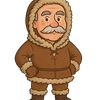
Reaching the North Pole was not a goal that could be achieved on a single attempt. It required many years of preparation and several expeditions to Greenland and the high Arctic throughout the 1890s and early 1900s. On these journeys, I was fortunate to have by my side my most trusted companion, Matthew Henson. He was a brilliant man, an expert craftsman, navigator, and dog-sled driver whose skills were absolutely essential to our survival and success. Together, we understood that we could not conquer the Arctic with our own knowledge alone. We learned essential survival techniques from the local Inuit people, who have thrived in that environment for centuries. They taught us how to build sturdy igloos for shelter against the wind, how to hunt for food, and the importance of wearing layered fur clothing to protect against the deadly cold. We faced incredible hardships on these expeditions—frostbite, starvation, and the constant danger of shifting ice were our daily realities. Several of our attempts failed, forcing us to turn back, but I never saw these as failures. Each journey was a lesson that taught us more about the land and brought us one step closer to our final goal.
In 1908, I launched my final expedition, determined that this would be the one. I had developed a strategy I called the 'Peary system.' The plan involved using multiple support teams who would travel ahead of the main group to lay down supply caches of food and fuel along the route. Each team would go a certain distance and then turn back, leaving the trail and supplies for the next group. This allowed the final polar team to travel light and fast for the last, most difficult stretch. For this final push across the treacherous sea ice, I selected a small, dedicated team. I knew I needed the best of the best for this dangerous part of the journey. On April 6th, 1909, after weeks of grueling travel, my team and I finally reached our destination. I stood there with Matthew Henson and four courageous Inuit men—Ootah, Egigingwah, Seegloo, and Ooqueah. Together, we had made it to the North Pole.
When I returned home in 1909, I was expecting a hero's welcome for achieving what so many had tried and failed to do. Instead, I was met with a difficult and complicated situation. I learned that another American explorer, Dr. Frederick Cook, had returned the year before and claimed that he had already reached the North Pole in 1908. A fierce public debate began, and I found myself in the challenging position of having to prove my own claim. It was a stressful time, as records were examined and testimonies were heard. Finally, after a long and thorough investigation, the United States Congress officially recognized my achievement in 1911. In honor of my accomplishment, I was promoted to the rank of Rear Admiral in the Navy, a fitting end to my long career as both an officer and an explorer.
Looking back, my life was dedicated to pushing the boundaries of what was thought possible. My expeditions did more than just reach a single point on the map; we charted vast areas of the Arctic that were previously unknown to the outside world and gathered valuable scientific information about its climate and geography. I lived to be 63 years old, and my life's journey came to an end in 1920. Today, I am remembered as a pioneering Arctic explorer, though historians still discuss the details and records of my 1909 journey. My story stands as a testament to the power of perseverance, careful planning, and the courage to venture into the unknown.
Wow facts
About
Robert Peary was an American explorer and U.S. Navy officer who made several expeditions to the Arctic in the late 19th and early 20th centuries and is known for claiming to have reached the North Pole on April 6, 1909. However, his claim is still questioned by many people.
Take a Quiz
Question 1 of 5
According to the story, what was Robert Peary's ultimate goal that drove his many expeditions?
Explore next






Want to do even more?
Go beyond exploring. Unlock tools that turn every story into real learning.

Storypie Plus for families
Full stories, quizzes, and printables. Nights and car rides, sorted.
- Unlimited audio stories
- Create Mode: your child stars in the story
- Offline downloads
- Printable worksheets & coloring pages

Why Storypie for Schools
Students engaged. Prep in seconds. Evenings back to you.
- Worksheets & Quizzes
- Classroom Management
- Formative Assessment
- Custom Curriculum & Lesson Plans
- 27 Languages

Why Storypie for Homeschool
Curriculum done. They'll ask for more. Hours back in your day.
- Worksheet Generator
- First-Person Audio Stories
- Built-in Comprehension Quizzes
- Custom Curriculum & Lesson Plans
- Print & Go Activities