English

Robert Peary
Robert Peary was an American explorer and U.S.
Reads at Grades 3–5 Listens at Grades 1–5
Print & create
Answer keys·No prep·Free with an account
28 worksheets · answer keys · full story · quiz · Ages 8-10 · CEFR B1
Plus adds 244,000+ more stories in 27 languages, audio for every one, and printables for all of them.
Just want Robert Peary?
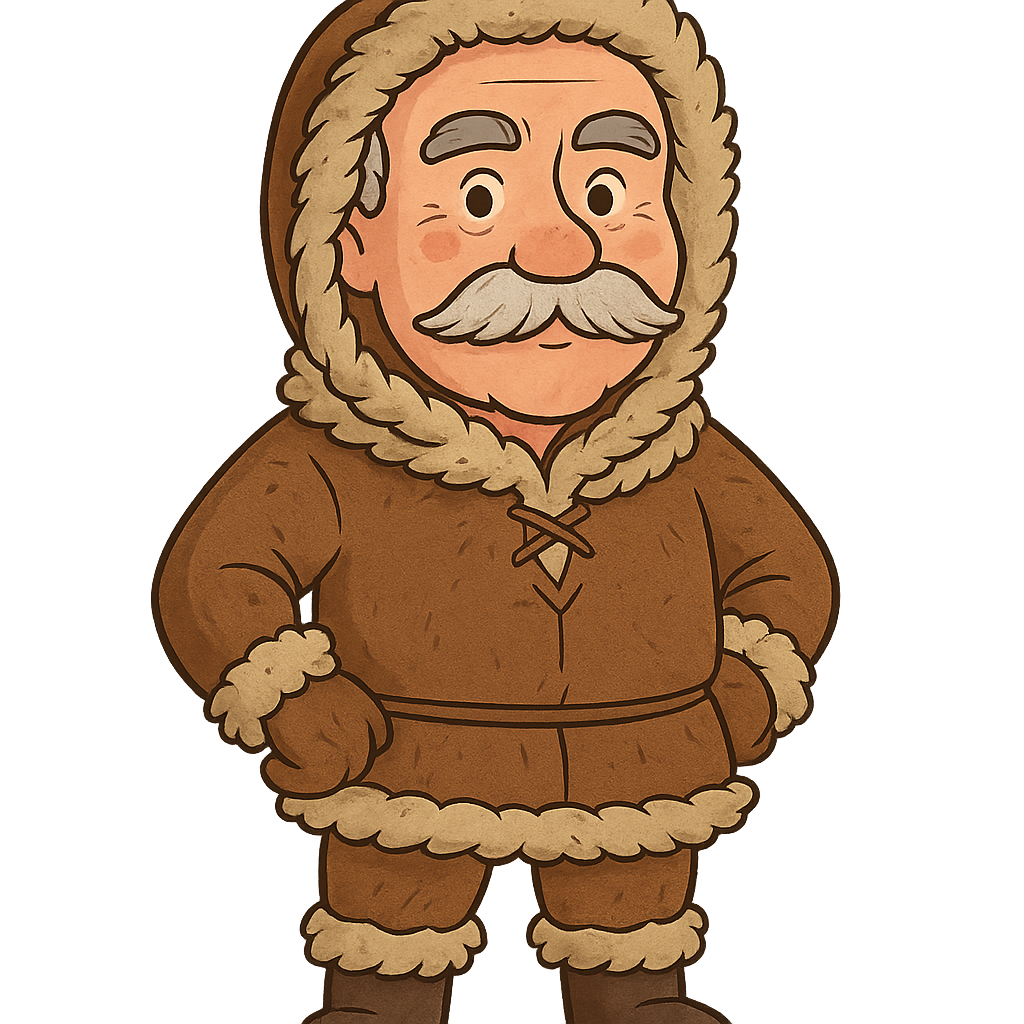
Hello! My name is Robert Peary, and I was an explorer who dreamed of seeing the coldest, most faraway places on Earth. I was born on May 6th, 1856, in a town called Cresson, Pennsylvania. Even as a boy, I loved being outdoors, exploring the woods and learning about nature. After I finished college, I joined the United States Navy in 1881 as a civil engineer. My job took me to interesting places, but I read books about the Arctic—a vast, icy land at the very top of the world—and I knew I had to go there. In 1886, I took my very first trip to a huge, frozen island called Greenland. That journey was tough, but it only made me more determined to explore the icy wilderness of the far north.
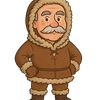
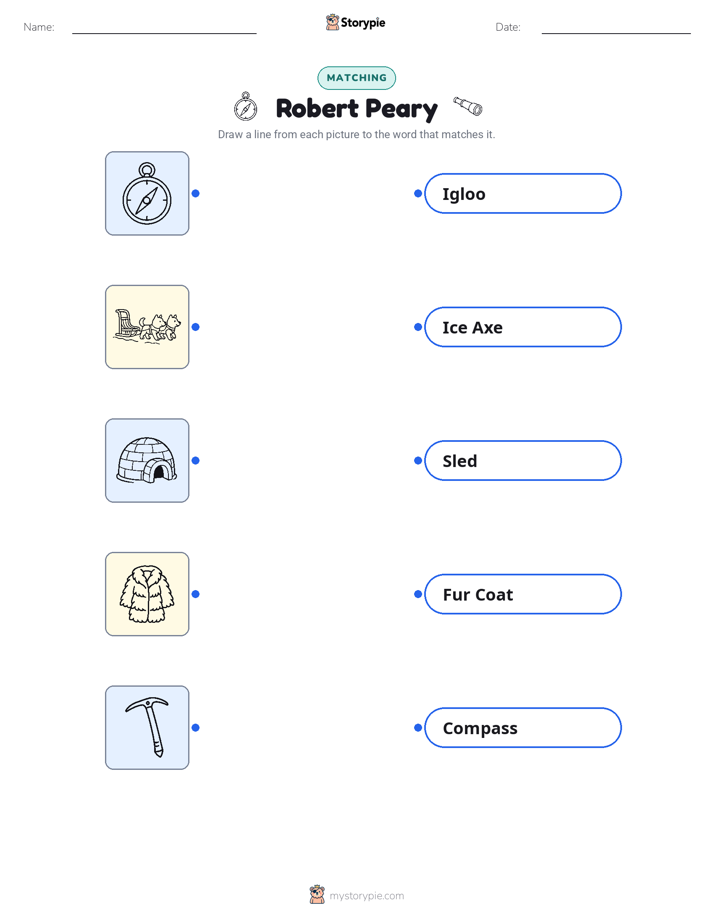
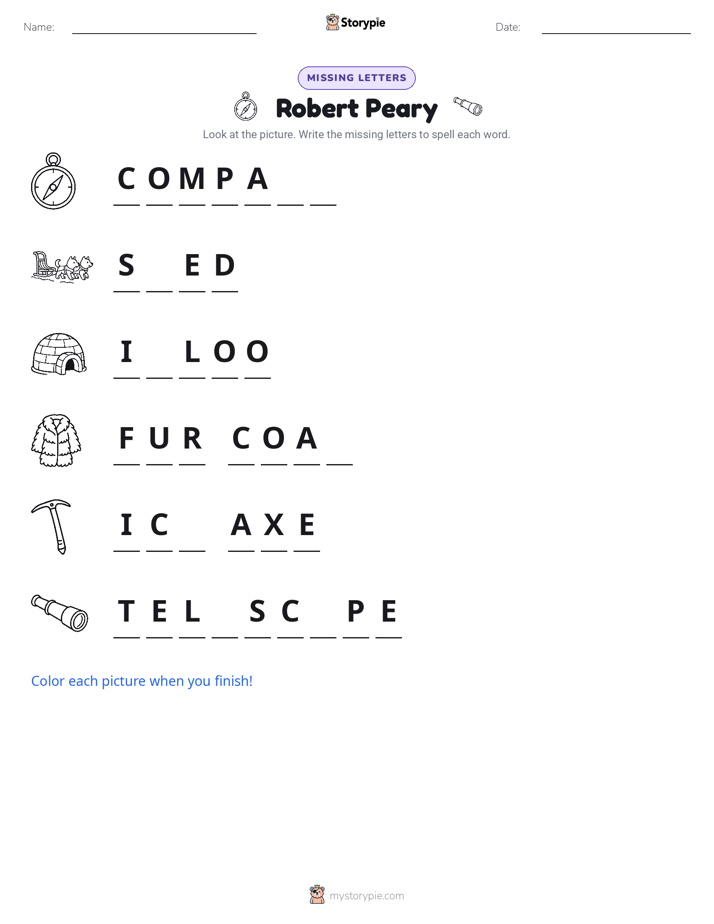
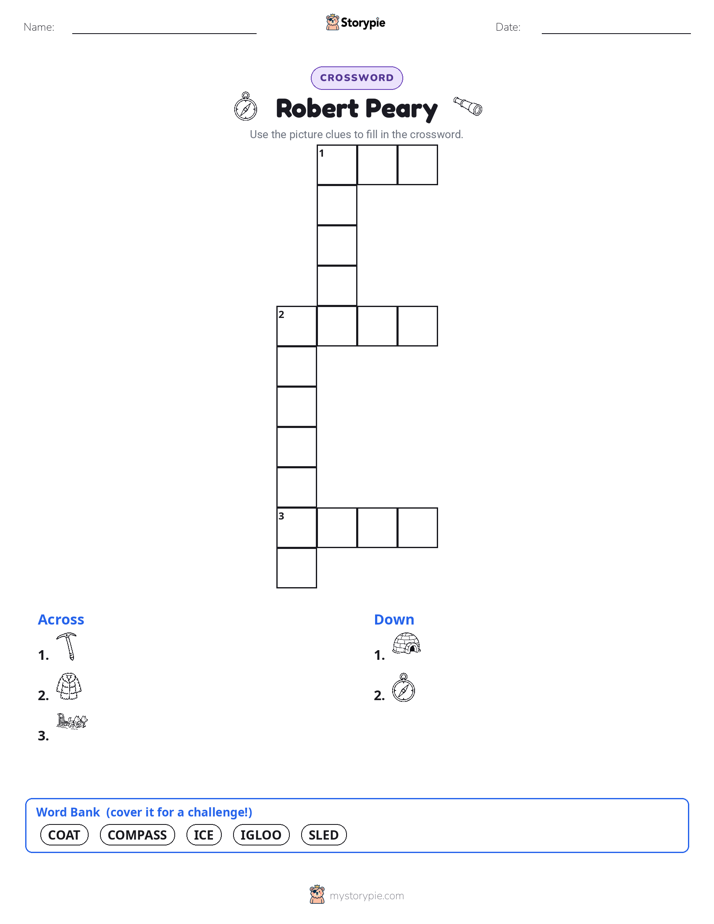
An explorer can't succeed alone. Around 1887, I met a brilliant man named Matthew Henson who became my most trusted partner for over 20 years. Together, we made many trips to the Arctic. We learned so much from the native people of Greenland, the Inuit. They taught us the best ways to survive in the freezing cold. We learned to build igloos for shelter, to drive dog sleds across the ice, and to wear warm clothing made from animal furs. The Inuit were experts at living in that harsh, beautiful land, and their knowledge was more valuable than any map. On one expedition in 1891, my leg was badly broken, but with the help of my team, I kept going. Each trip taught me more and brought me closer to my ultimate goal: to be the first person to stand at the North Pole.
By 1908, I was ready for my final attempt to reach the North Pole. My team and I sailed north on a ship specially built to break through ice, called the *Roosevelt*. The journey was long and dangerous. We sailed as far north as we could and then set up a camp on the ice to wait for the sun to return after the long, dark polar winter. When the time was right, we began our long march across the frozen Arctic Ocean. We used a system I designed where support teams would go ahead to lay a trail and leave supplies. Then, they would turn back, leaving the main group with enough food and fuel to keep going. It was a giant relay race against the cold.
Robert Peary: Journey to the North Pole
Hello! My name is Robert Peary, and I was an explorer who dreamed of seeing the coldest, most faraway places on Earth. I was born on May 6th, 1856, in a town called Cresson, Pennsylvania. Even as a boy, I loved being outdoors, exploring the woods and learning about nature. After I finished college, I joined the United States Navy in 1881 as a civil engineer. My job took me to interesting places, but I read books about the Arctic—a vast, icy land at the very top of the world—and I knew I had to go there. In 1886, I took my very first trip to a huge, frozen island called Greenland. That journey was tough, but it only made me more determined to explore the icy wilderness of the far north.
An explorer can't succeed alone. Around 1887, I met a brilliant man named Matthew Henson who became my most trusted partner for over 20 years. Together, we made many trips to the Arctic. We learned so much from the native people of Greenland, the Inuit. They taught us the best ways to survive in the freezing cold. We learned to build igloos for shelter, to drive dog sleds across the ice, and to wear warm clothing made from animal furs. The Inuit were experts at living in that harsh, beautiful land, and their knowledge was more valuable than any map. On one expedition in 1891, my leg was badly broken, but with the help of my team, I kept going. Each trip taught me more and brought me closer to my ultimate goal: to be the first person to stand at the North Pole.
By 1908, I was ready for my final attempt to reach the North Pole. My team and I sailed north on a ship specially built to break through ice, called the Roosevelt. The journey was long and dangerous. We sailed as far north as we could and then set up a camp on the ice to wait for the sun to return after the long, dark polar winter. When the time was right, we began our long march across the frozen Arctic Ocean. We used a system I designed where support teams would go ahead to lay a trail and leave supplies. Then, they would turn back, leaving the main group with enough food and fuel to keep going. It was a giant relay race against the cold.
For the final part of the journey, my team was small. It was me, my partner Matthew Henson, and four brave Inuit men named Ootah, Egigingwah, Seegloo, and Ooqueah. We pushed on with our dog sleds over giant ridges of ice and freezing water. Finally, on April 6th, 1909, we made it! We stood at the very top of the world—the North Pole. There was ice and snow in every direction. We planted the American flag in the ice and spent about 30 hours there, taking scientific measurements before beginning the long, hard journey back. When we returned, we learned another explorer also claimed to have reached the Pole, but we knew what we had accomplished. For our achievement, the United States Congress honored me with the rank of Rear Admiral in 1911.
After my adventures, I spent time with my family and wrote books about my travels to the Arctic. I lived to be 63 years old. Today, people remember me as an explorer who never gave up on his dream. My expeditions taught the world a lot about the Arctic, and my story shows that with careful planning, teamwork, and a lot of determination, you can achieve even the most difficult goals.
Wow facts
About
Robert Peary was an American explorer and U.S. Navy officer who made several expeditions to the Arctic in the late 19th and early 20th centuries and is known for claiming to have reached the North Pole on April 6, 1909. However, his claim is still questioned by many people.
Take a Quiz
Question 1 of 5
The story says the Inuit's knowledge was 'more valuable than any map.' What does this mean?
Explore next






Want to do even more?
Go beyond exploring. Unlock tools that turn every story into real learning.

Storypie Plus for families
Full stories, quizzes, and printables. Nights and car rides, sorted.
- Unlimited audio stories
- Create Mode: your child stars in the story
- Offline downloads
- Printable worksheets & coloring pages

Why Storypie for Schools
Students engaged. Prep in seconds. Evenings back to you.
- Worksheets & Quizzes
- Classroom Management
- Formative Assessment
- Custom Curriculum & Lesson Plans
- 27 Languages

Why Storypie for Homeschool
Curriculum done. They'll ask for more. Hours back in your day.
- Worksheet Generator
- First-Person Audio Stories
- Built-in Comprehension Quizzes
- Custom Curriculum & Lesson Plans
- Print & Go Activities