English

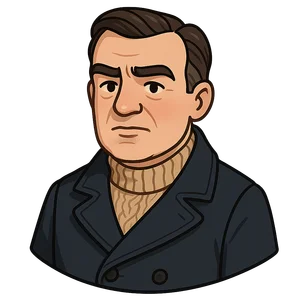
Sir Ernest Shackleton
Sir Ernest Shackleton was a polar explorer who led three British expeditions to the Antarctic.
Reads at Grades 6–8 Listens at Grades 4–8
Print & create
Answer keys·No prep·Free with an account
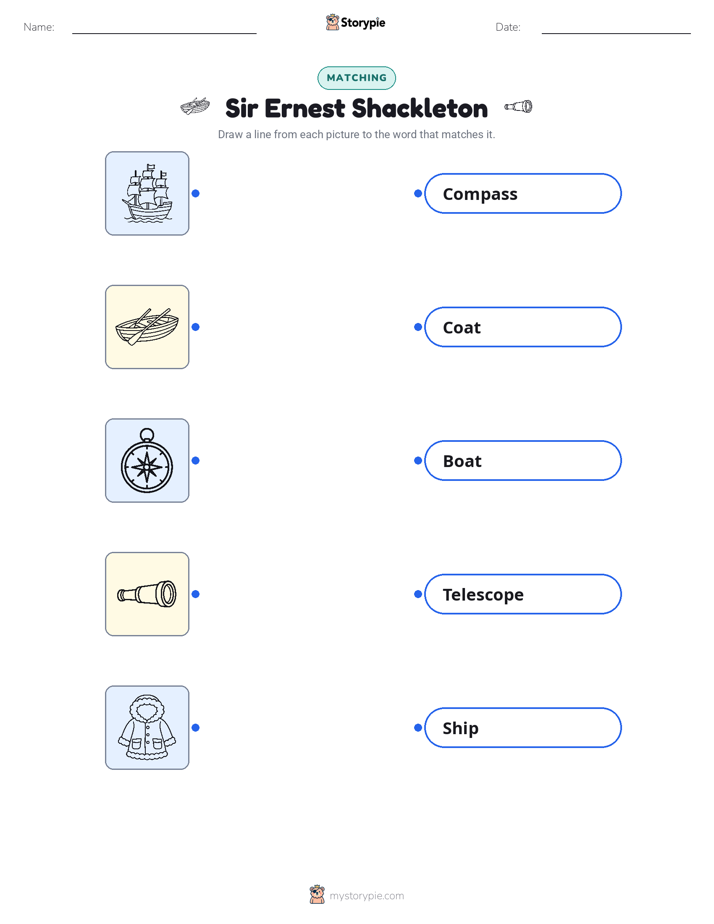
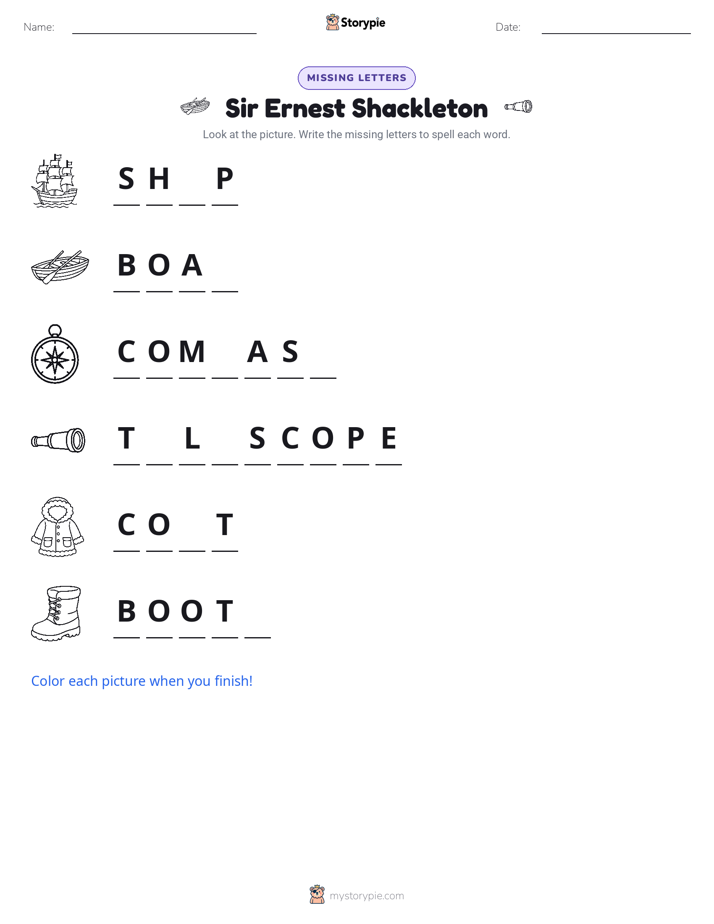
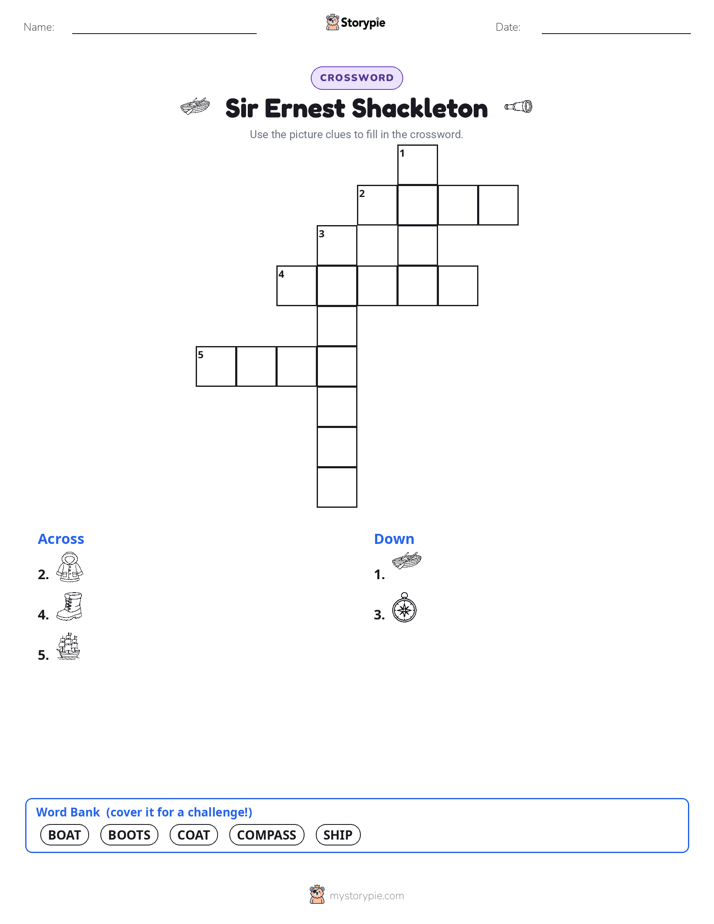
28 worksheets · answer keys · full story · quiz · Ages 10-12 · CEFR B2
Plus adds 208,000+ more stories in 27 languages, audio for every one, and printables for all of them.
Just want Sir Ernest Shackleton?
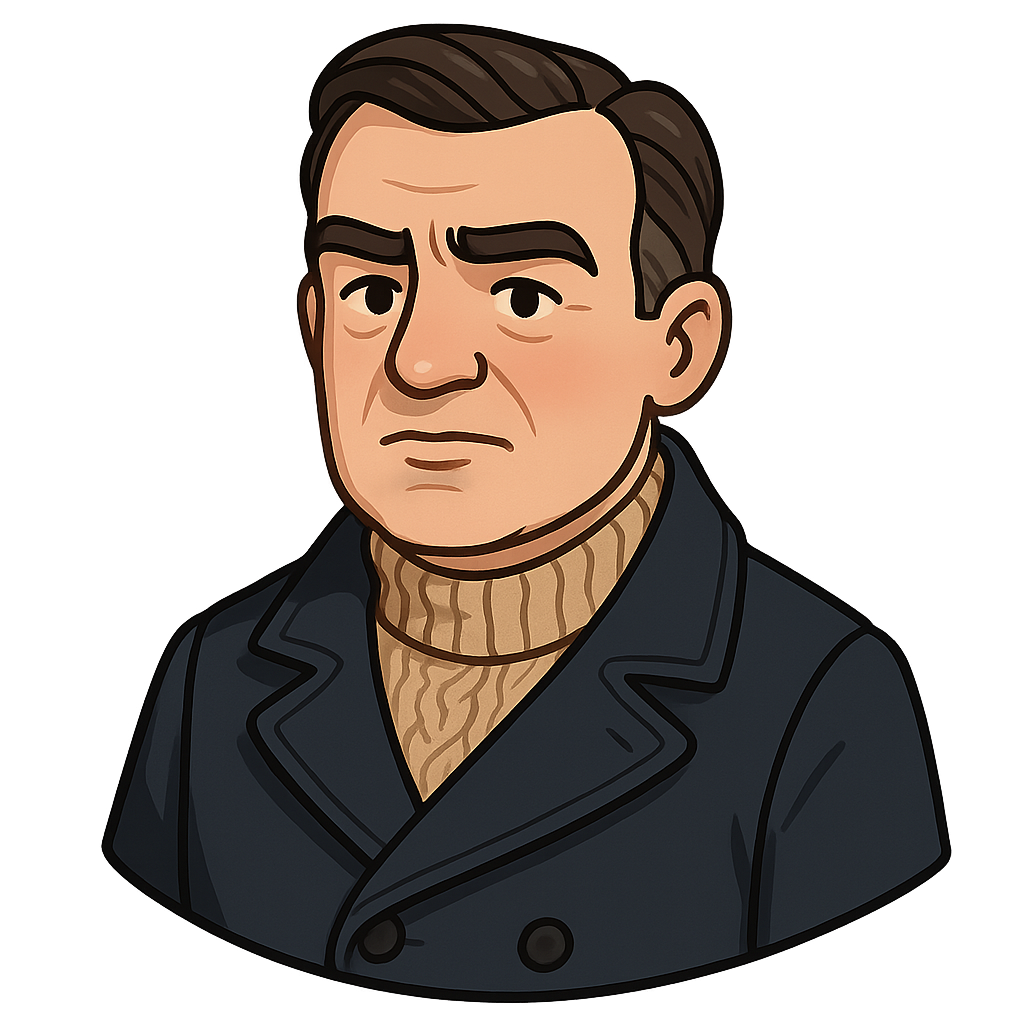
Hello. My name is Sir Ernest Shackleton, and my life was a great adventure set against the vast, white wilderness of Antarctica. My story begins on February 15th, 1874, when I was born in Ireland. My family later moved to London, but the city could not contain my restless spirit. The call of the ocean was too strong to ignore. At the age of 16, I decided that my true education would be found on the deck of a ship, so I left school and joined the merchant navy. The sea taught me about navigation, leadership, and the power of nature. My first taste of the polar regions came in 1901 when I joined Captain Robert Falcon Scott’s Discovery Expedition. We sailed south to the magnificent and dangerous continent of Antarctica. That journey was a profound experience, but it was cut short for me. Even so, the moment I saw those towering ice cliffs and endless fields of snow, I knew I had to return. A passion for exploring this last great wilderness on Earth was ignited within me, and it would guide the rest of my life.
My ambition to lead my own expedition became a reality in 1907 with the start of the Nimrod Expedition. Our goal was one of the greatest prizes of exploration at the time: to be the very first people to reach the South Pole. My team and I faced brutal winds, unimaginable cold, and the constant threat of starvation as we pushed deeper into the continent's frozen heart. On January 9th, 1909, we stood at a point no human had ever reached before. We had set a new 'Farthest South' record, coming within just 97 miles of the South Pole. The goal was so close I could almost taste it. But I looked at my men, weary and running low on food, and I knew I had to make a choice. We could press on for glory and risk not making it back, or we could turn around and live. I chose to save my men. The pole, I decided, was not worth a single human life. We turned back, and though we didn't achieve our ultimate goal, we returned home as heroes. For our efforts and for the difficult decision I made, I was knighted by the King, becoming Sir Ernest Shackleton.
Ernest Shackleton: Explorer of the Antarctic
Hello. My name is Sir Ernest Shackleton, and my life was a great adventure set against the vast, white wilderness of Antarctica. My story begins on February 15th, 1874, when I was born in Ireland. My family later moved to London, but the city could not contain my restless spirit. The call of the ocean was too strong to ignore. At the age of 16, I decided that my true education would be found on the deck of a ship, so I left school and joined the merchant navy. The sea taught me about navigation, leadership, and the power of nature. My first taste of the polar regions came in 1901 when I joined Captain Robert Falcon Scott’s Discovery Expedition. We sailed south to the magnificent and dangerous continent of Antarctica. That journey was a profound experience, but it was cut short for me. Even so, the moment I saw those towering ice cliffs and endless fields of snow, I knew I had to return. A passion for exploring this last great wilderness on Earth was ignited within me, and it would guide the rest of my life.
My ambition to lead my own expedition became a reality in 1907 with the start of the Nimrod Expedition. Our goal was one of the greatest prizes of exploration at the time: to be the very first people to reach the South Pole. My team and I faced brutal winds, unimaginable cold, and the constant threat of starvation as we pushed deeper into the continent's frozen heart. On January 9th, 1909, we stood at a point no human had ever reached before. We had set a new 'Farthest South' record, coming within just 97 miles of the South Pole. The goal was so close I could almost taste it. But I looked at my men, weary and running low on food, and I knew I had to make a choice. We could press on for glory and risk not making it back, or we could turn around and live. I chose to save my men. The pole, I decided, was not worth a single human life. We turned back, and though we didn't achieve our ultimate goal, we returned home as heroes. For our efforts and for the difficult decision I made, I was knighted by the King, becoming Sir Ernest Shackleton.
In 1914, I embarked on what I believed would be my greatest adventure: the Imperial Trans-Antarctic Expedition. The goal was even more ambitious than reaching the pole; we aimed to be the first to cross the entire continent of Antarctica on foot, from one sea to another. Our ship, a beautiful and sturdy vessel named the Endurance, was our home and our hope. We sailed into the Weddell Sea, a treacherous body of water known for its thick, unpredictable pack ice. In January 1915, our worst fears came true. The sea froze around us, and the Endurance became trapped, held fast in a frozen grip. For ten long months, we were prisoners of the ice, drifting wherever the frozen sea took us. We lived on the ship, hoping the ice would release its hold, but it only grew stronger. Finally, in November 1915, the immense pressure became too much for our beloved ship. With loud, splintering groans, the ice crushed the wooden hull of the Endurance. We were forced to abandon our floating home and set up a camp on the shifting sea ice, watching as our ship was slowly swallowed by the frozen ocean.
With the Endurance gone, our mission of crossing the continent was over. A new mission had begun: survival. For five more agonizing months, my 27 men and I lived on the floating ice, a fragile raft in a hostile sea. We waited for the ice to drift north into open water. When it finally began to break up, we launched our three small lifeboats into the rough, icy waves. In April 1916, after a perilous journey at sea, we landed on the shores of Elephant Island. It was a barren, rocky outcrop, but it was the first solid ground we had stood on in 497 days. I knew that no one would ever think to look for us there; we were completely isolated from the world. Our only hope was for a small party to seek help. I chose our strongest lifeboat, the 22-foot James Caird, and five of my best men to attempt an impossible journey. We set out on an 800-mile voyage across the South Atlantic Ocean, considered the most treacherous stretch of water on the planet, aiming for the remote whaling stations on the island of South Georgia.
The journey in the James Caird was a battle against hurricane-force winds and monstrous waves, but after 16 days, we spotted the cliffs of South Georgia. Unfortunately, the storm had pushed us to the uninhabited, southern side of the island. To reach the Stromness whaling station, we would have to cross the island's interior—a landscape of uncharted, glacier-covered mountains that no one had ever crossed before. With two of my men, Frank Worsley and Tom Crean, we made the dangerous trek. When we finally stumbled into the whaling station, we were almost unrecognizable. My first act was not to rest but to begin planning the rescue of my men left behind. It took several attempts, but I never gave up. On August 30th, 1916, I finally reached my crew on Elephant Island. I had made them a promise that we would all get through it together, and I kept it. Every single man from the Endurance expedition came home alive.
My life was one of constant adventure, and my final journey began in 1921 when I set out for Antarctica one last time. I lived to be 47 years old and was laid to rest on South Georgia, the island that had been the site of our miraculous survival. People today remember me not for the poles I failed to reach, but for my leadership and determination during the Endurance expedition. My story has become a testament to hope and perseverance in the face of impossible odds. It shows that true success isn't always about reaching a destination, but about the courage, endurance, and unwavering commitment to take care of your team along the way.
Wow facts
About
Sir Ernest Shackleton was a polar explorer who led three British expeditions to the Antarctic. He is most famous for his leadership during the 1914 Imperial Trans-Antarctic Expedition, where he and his crew survived for approximately 20 months after their ship, the Endurance, was crushed by ice.
Take a Quiz
Question 1 of 5
What was the main goal of the Imperial Trans-Antarctic Expedition that began in 1914?
Explore next






Want to do even more?
Go beyond exploring. Unlock tools that turn every story into real learning.

Storypie Plus for families
Full stories, quizzes, and printables. Nights and car rides, sorted.
- Unlimited audio stories
- Create Mode: your child stars in the story
- Offline downloads
- Printable worksheets & coloring pages

Why Storypie for Schools
Students engaged. Prep in seconds. Evenings back to you.
- Worksheets & Quizzes
- Classroom Management
- Formative Assessment
- Custom Curriculum & Lesson Plans
- 27 Languages

Why Storypie for Homeschool
Curriculum done. They'll ask for more. Hours back in your day.
- Worksheet Generator
- First-Person Audio Stories
- Built-in Comprehension Quizzes
- Custom Curriculum & Lesson Plans
- Print & Go Activities