English

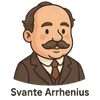
Svante Arrhenius
Svante Arrhenius was a Swedish scientist who won the 1903 Nobel Prize in Chemistry for his theory of ions and…
Reads at Grades 6–8 Listens at Grades 4–8
Print & create
Answer keys·No prep·Free with an account
28 worksheets · answer keys · full story · quiz · Ages 10-12 · CEFR B2
Plus adds 208,000+ more stories in 27 languages, audio for every one, and printables for all of them.
Just want Svante Arrhenius?
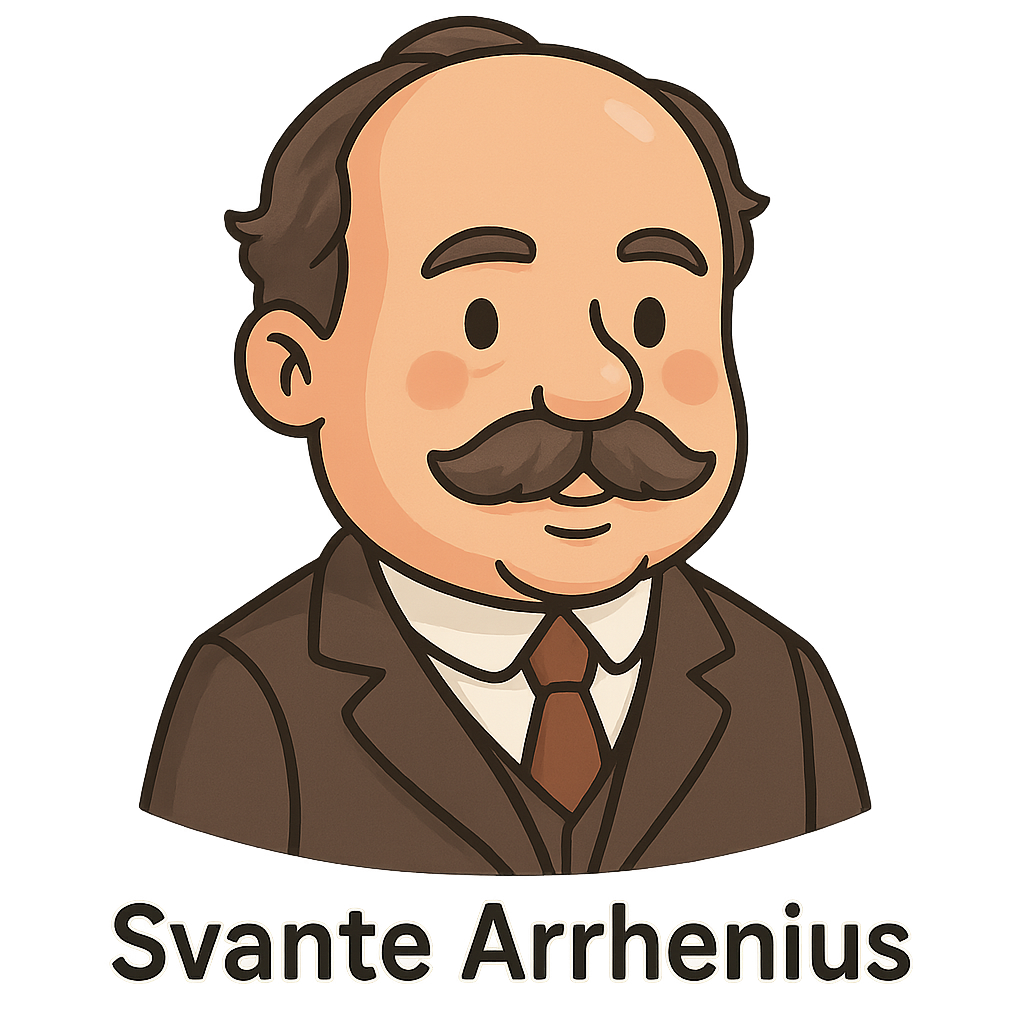
Hello! My name is Svante Arrhenius. I want to tell you the story of my life and the amazing world of science I discovered. I was born on February 19th, 1859, on an estate near Uppsala, Sweden. Even as a very young boy, I was fascinated by numbers and puzzles. My father was a land surveyor for Uppsala University, and I loved watching him work with his columns of numbers. I was so eager to learn that I taught myself to read at age three! I was what you might call a child prodigy, especially with math. I could perform complex calculations in my head, which amazed my teachers and family. This love for numbers and patterns was the very beginning of my journey as a scientist.
In 1876, when I was seventeen, I enrolled at the famous University of Uppsala. I studied everything I could: mathematics, chemistry, and physics. I was particularly puzzled by a question that had stumped other scientists: why did some solutions, like saltwater, conduct electricity while others, like sugar water, did not? I spent years thinking about this. This led me to a radical idea. In my doctoral thesis in 1884, I proposed that when certain chemical compounds dissolve in water, they don't stay as whole molecules. Instead, they break apart into electrically charged atoms or groups of atoms. I called these charged particles 'ions.' This was a brand-new idea, and honestly, my professors didn't like it one bit. They thought it was too strange and gave me the lowest possible passing grade for my work.
I was disappointed by the reaction at my university, but I truly believed in my theory. So, I didn't give up. I decided to send copies of my 150-page thesis to the most brilliant chemists across Europe. Luckily, a few of them, including the famous scientists Wilhelm Ostwald in Germany and Jacobus Henricus van't Hoff in the Netherlands, recognized the importance of my work. They offered me jobs in their laboratories and encouraged me to continue my research. Their support was exactly what I needed. It showed me that even if some people don't understand your ideas at first, it's important to keep sharing them with the world.
Svante Arrhenius
Hello! My name is Svante Arrhenius. I want to tell you the story of my life and the amazing world of science I discovered. I was born on February 19th, 1859, on an estate near Uppsala, Sweden. Even as a very young boy, I was fascinated by numbers and puzzles. My father was a land surveyor for Uppsala University, and I loved watching him work with his columns of numbers. I was so eager to learn that I taught myself to read at age three! I was what you might call a child prodigy, especially with math. I could perform complex calculations in my head, which amazed my teachers and family. This love for numbers and patterns was the very beginning of my journey as a scientist.
In 1876, when I was seventeen, I enrolled at the famous University of Uppsala. I studied everything I could: mathematics, chemistry, and physics. I was particularly puzzled by a question that had stumped other scientists: why did some solutions, like saltwater, conduct electricity while others, like sugar water, did not? I spent years thinking about this. This led me to a radical idea. In my doctoral thesis in 1884, I proposed that when certain chemical compounds dissolve in water, they don't stay as whole molecules. Instead, they break apart into electrically charged atoms or groups of atoms. I called these charged particles 'ions.' This was a brand-new idea, and honestly, my professors didn't like it one bit. They thought it was too strange and gave me the lowest possible passing grade for my work.
I was disappointed by the reaction at my university, but I truly believed in my theory. So, I didn't give up. I decided to send copies of my 150-page thesis to the most brilliant chemists across Europe. Luckily, a few of them, including the famous scientists Wilhelm Ostwald in Germany and Jacobus Henricus van't Hoff in the Netherlands, recognized the importance of my work. They offered me jobs in their laboratories and encouraged me to continue my research. Their support was exactly what I needed. It showed me that even if some people don't understand your ideas at first, it's important to keep sharing them with the world.
With the backing of my new colleagues, my theory of 'electrolytic dissociation'—the idea of molecules splitting into ions—slowly began to be accepted. It became the foundation for an entirely new field called physical chemistry, which bridges the gap between physics and chemistry. In 1895, I became a professor at Stockholm University College. My work was finally getting the respect it deserved. The greatest honor came in 1903, when I was awarded the Nobel Prize in Chemistry for the very same theory that my professors had nearly failed me for almost twenty years earlier! It was a powerful lesson that sometimes it takes the world a little while to catch up to a new idea.
My curiosity didn't stop with ions. I started to think about even bigger questions. I wondered what caused the Earth's ice ages. I began to study the Earth's atmosphere. In 1896, I became the first person to use the principles of physical chemistry to calculate how changes in the amount of carbon dioxide in the air could affect the planet's surface temperature. I realized that gases like carbon dioxide could trap heat from the sun, much like the glass in a greenhouse. This concept is now famously known as the 'greenhouse effect.' I calculated that if we doubled the carbon dioxide in the atmosphere, the Earth's temperature would rise by several degrees. My work was the very first step in understanding what we now call global warming and climate change.
I continued my work for many years, becoming the director of the Nobel Institute for Physical Chemistry in 1905. I lived a full and exciting life of discovery and passed away on October 2nd, 1927. I lived to be 68 years old. Today, my theory of ions is taught in every chemistry class around the world, and it is essential for everything from batteries to biology. My early calculations about the greenhouse effect laid the foundation for modern climate science, a field that is more important now than ever. I hope my story shows you that it's good to be curious, to ask big questions, and to never give up on an idea you believe in, no matter what anyone else says.
Wow facts
About
Svante Arrhenius was a Swedish scientist who won the 1903 Nobel Prize in Chemistry for his theory of ions and was one of the first to describe the greenhouse effect, linking carbon dioxide to global warming.
Take a Quiz
Question 1 of 5
In your own words, retell the story of Svante Arrhenius's theory of ions, from its creation to its acceptance.
Explore next






Want to do even more?
Go beyond exploring. Unlock tools that turn every story into real learning.

Storypie Plus for families
Full stories, quizzes, and printables. Nights and car rides, sorted.
- Unlimited audio stories
- Create Mode: your child stars in the story
- Offline downloads
- Printable worksheets & coloring pages

Why Storypie for Schools
Students engaged. Prep in seconds. Evenings back to you.
- Worksheets & Quizzes
- Classroom Management
- Formative Assessment
- Custom Curriculum & Lesson Plans
- 27 Languages

Why Storypie for Homeschool
Curriculum done. They'll ask for more. Hours back in your day.
- Worksheet Generator
- First-Person Audio Stories
- Built-in Comprehension Quizzes
- Custom Curriculum & Lesson Plans
- Print & Go Activities