English

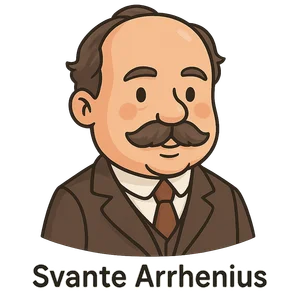
Svante Arrhenius
Svante Arrhenius was a Swedish scientist who won the Nobel Prize in Chemistry in 1903 for his theory of…
Reads at Grades 3–5 Listens at Grades 1–5
Print & create
Answer keys·No prep·Free with an account
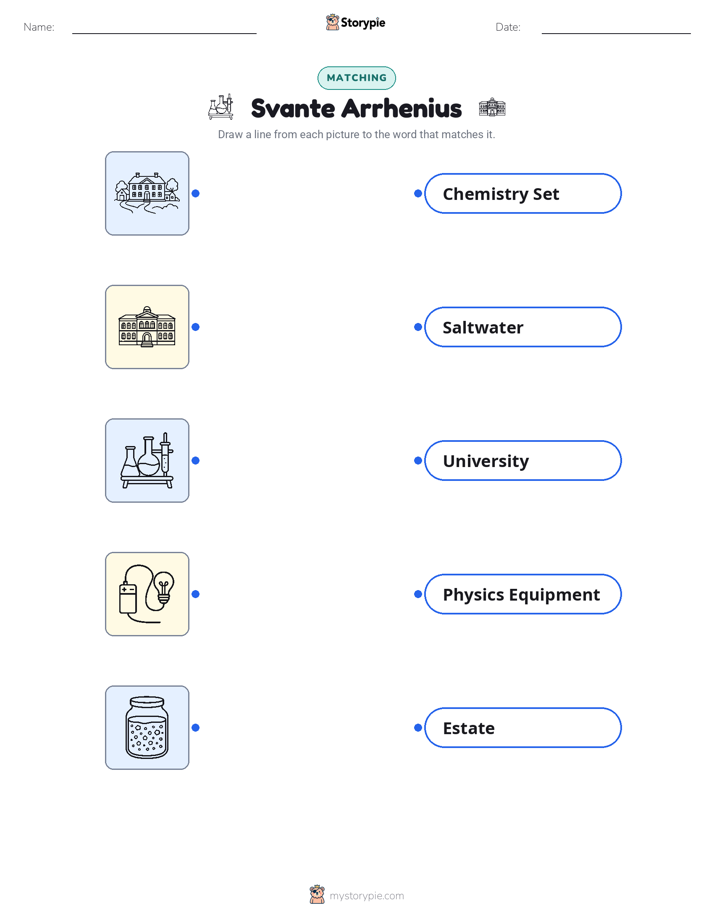
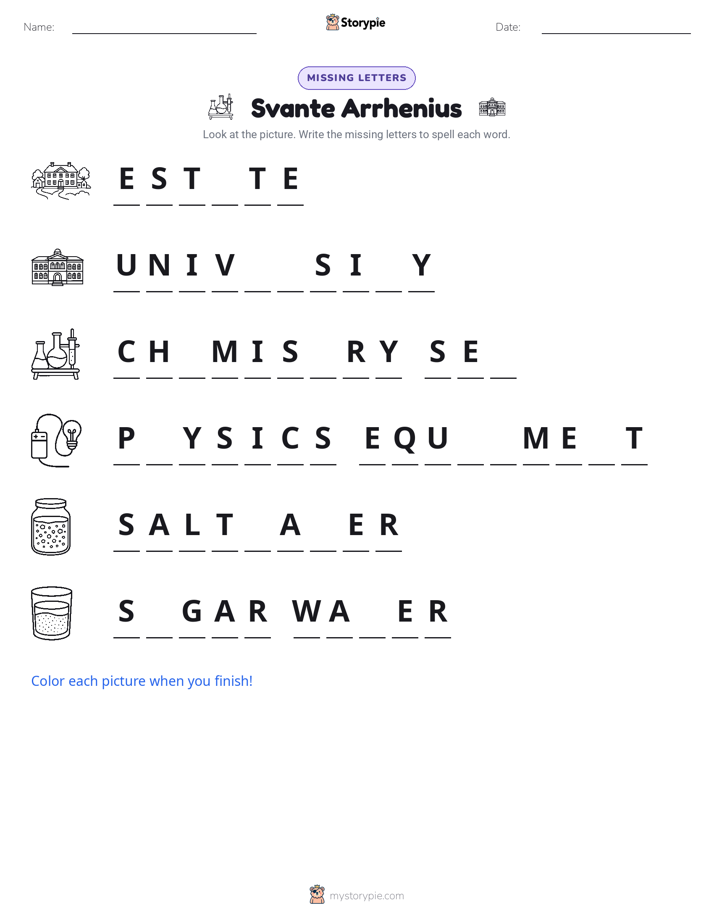
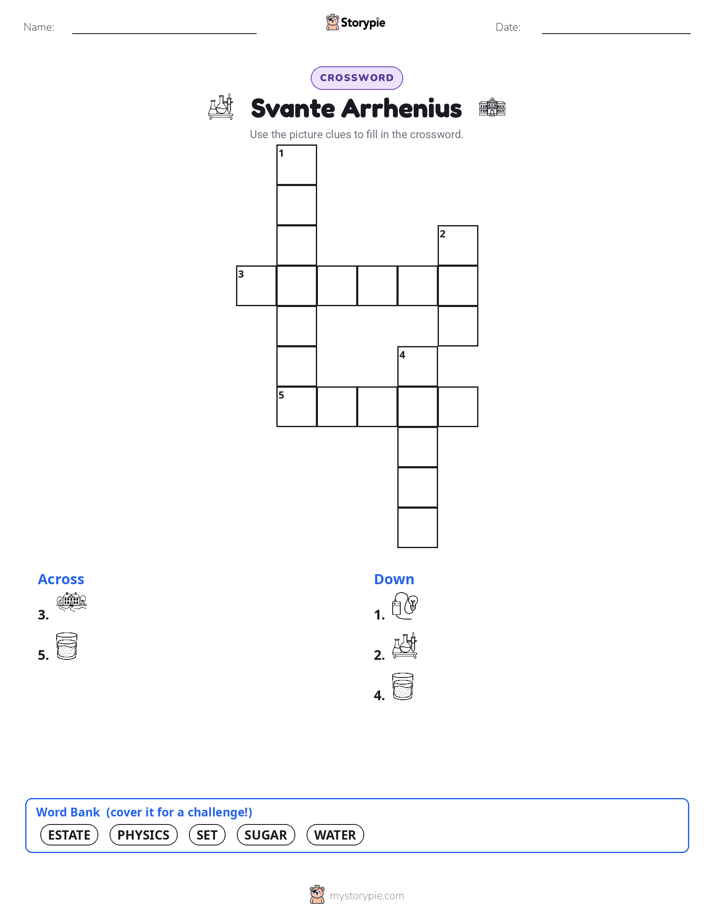
28 worksheets · answer keys · full story · quiz · Ages 8-10 · CEFR B1
Plus adds 208,000+ more stories in 27 languages, audio for every one, and printables for all of them.
Just want Svante Arrhenius?
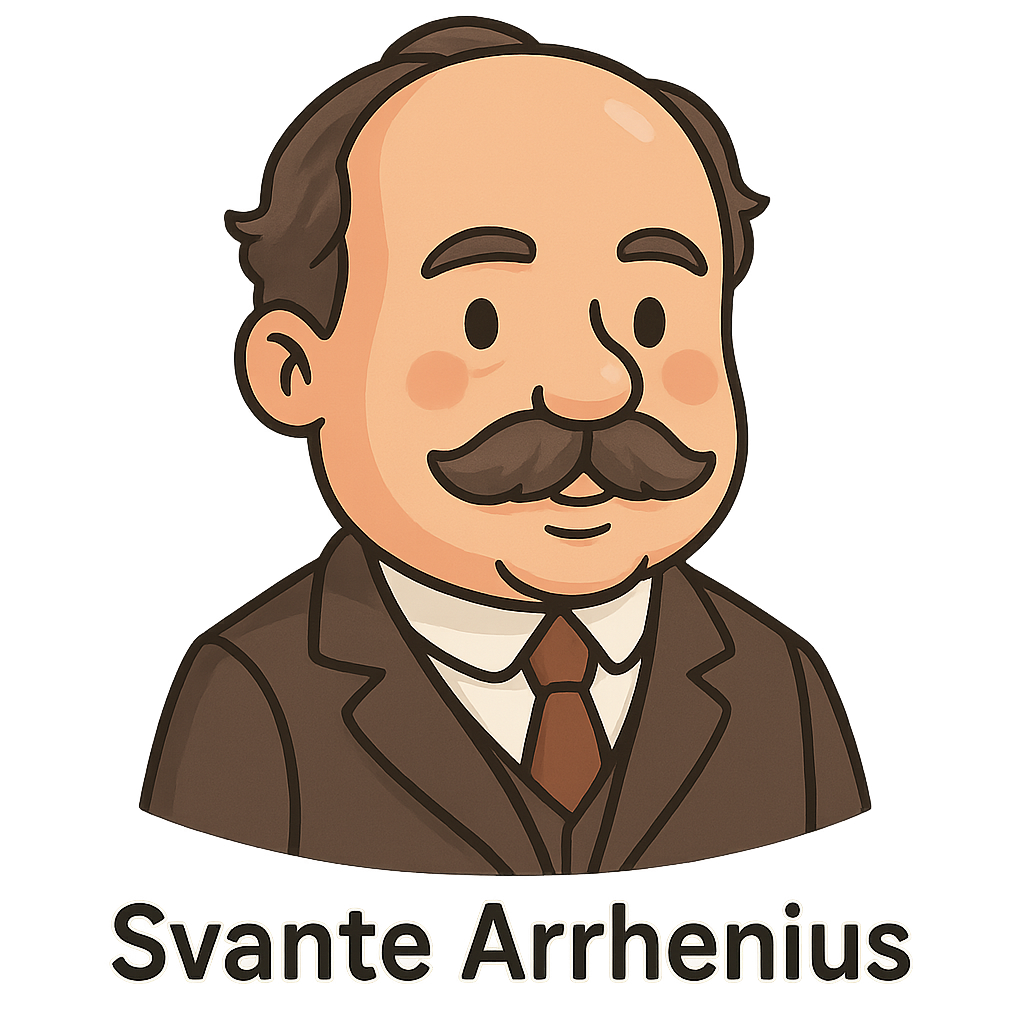
Hello! My name is Svante Arrhenius. I was born on a farm in Sweden on February 19th, 1859. Even when I was very little, I was fascinated by numbers and questions. I loved figuring out how the world worked, from the smallest raindrop to the biggest star. I was so curious that I taught myself to read by the time I was three years old, just by watching my father add up numbers in his account books! Solving puzzles and learning new things was my favorite way to spend the day.
When I grew up, I went to the University of Uppsala to study science, which was my greatest passion. It was there that I had a big, strange idea about what happens when you dissolve something like salt in water. In 1884, for my final project, I wrote that the salt didn't just disappear into the water. Instead, I believed it split into tiny, electrically charged particles. I decided to call these particles 'ions.' My professors had never heard of such a thing! They thought my idea was so strange and unbelievable that they gave me the lowest possible passing grade. I was disappointed, of course, but deep down, I truly believed I was onto something important.
Even though my teachers didn't like my idea about ions, I didn't give up. I sent my work to other scientists all across Europe, hoping someone would see what I saw. Luckily, a few very famous scientists did. One of them, named Wilhelm Ostwald, thought my theory was brilliant! He and others supported my work, which helped convince everyone else that my idea was correct. It taught me a very important lesson: even if people doubt you at first, you should stick with what you believe is true, especially when you have evidence to back it up.
Svante Arrhenius
Hello! My name is Svante Arrhenius. I was born on a farm in Sweden on February 19th, 1859. Even when I was very little, I was fascinated by numbers and questions. I loved figuring out how the world worked, from the smallest raindrop to the biggest star. I was so curious that I taught myself to read by the time I was three years old, just by watching my father add up numbers in his account books! Solving puzzles and learning new things was my favorite way to spend the day.
When I grew up, I went to the University of Uppsala to study science, which was my greatest passion. It was there that I had a big, strange idea about what happens when you dissolve something like salt in water. In 1884, for my final project, I wrote that the salt didn't just disappear into the water. Instead, I believed it split into tiny, electrically charged particles. I decided to call these particles 'ions.' My professors had never heard of such a thing! They thought my idea was so strange and unbelievable that they gave me the lowest possible passing grade. I was disappointed, of course, but deep down, I truly believed I was onto something important.
Even though my teachers didn't like my idea about ions, I didn't give up. I sent my work to other scientists all across Europe, hoping someone would see what I saw. Luckily, a few very famous scientists did. One of them, named Wilhelm Ostwald, thought my theory was brilliant! He and others supported my work, which helped convince everyone else that my idea was correct. It taught me a very important lesson: even if people doubt you at first, you should stick with what you believe is true, especially when you have evidence to back it up.
My curiosity didn't stop with ions. After my theory was accepted, I started wondering about something much bigger: the Earth's climate. In 1896, I had another huge idea. I realized that a gas in the air called carbon dioxide acts like a giant, invisible blanket around our planet, trapping heat from the sun and keeping Earth warm. I was one of the very first people to figure out that if humans burned more things like coal, we would add more carbon dioxide to the air. This would make the Earth's blanket thicker and warm the whole planet over time. People now call this the 'greenhouse effect,' and it was a very new idea back then.
In 1903, the world finally and officially recognized my idea about ions. For that discovery, I was awarded the Nobel Prize in Chemistry! It was a wonderful honor and a long way from the low grade my professors had given me years before. I spent the rest of my life teaching, researching, and always asking big questions about the world around me. I lived to be 68 years old, passing away on October 2nd, 1927. Today, my discovery of ions is a basic part of chemistry that students learn all over the world, and my early work on the greenhouse effect helps scientists understand climate change. I hope my story shows you that curiosity can lead to amazing discoveries that can change the world.
Wow facts
About
Svante Arrhenius was a Swedish scientist who won the Nobel Prize in Chemistry in 1903 for his theory of electrolytic dissociation (ions) and was one of the first to study the greenhouse effect.
Take a Quiz
Question 1 of 5
What did I name the tiny, electrically charged particles that I discovered?
Explore next






Want to do even more?
Go beyond exploring. Unlock tools that turn every story into real learning.

Storypie Plus for families
Full stories, quizzes, and printables. Nights and car rides, sorted.
- Unlimited audio stories
- Create Mode: your child stars in the story
- Offline downloads
- Printable worksheets & coloring pages

Why Storypie for Schools
Students engaged. Prep in seconds. Evenings back to you.
- Worksheets & Quizzes
- Classroom Management
- Formative Assessment
- Custom Curriculum & Lesson Plans
- 27 Languages

Why Storypie for Homeschool
Curriculum done. They'll ask for more. Hours back in your day.
- Worksheet Generator
- First-Person Audio Stories
- Built-in Comprehension Quizzes
- Custom Curriculum & Lesson Plans
- Print & Go Activities