English

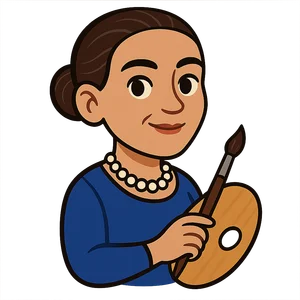
Tarsila do Amaral
Tarsila do Amaral was a leading Brazilian modernist artist whose vibrant paintings and involvement in the…
Reads at Grades 3–5 Listens at Grades 1–5
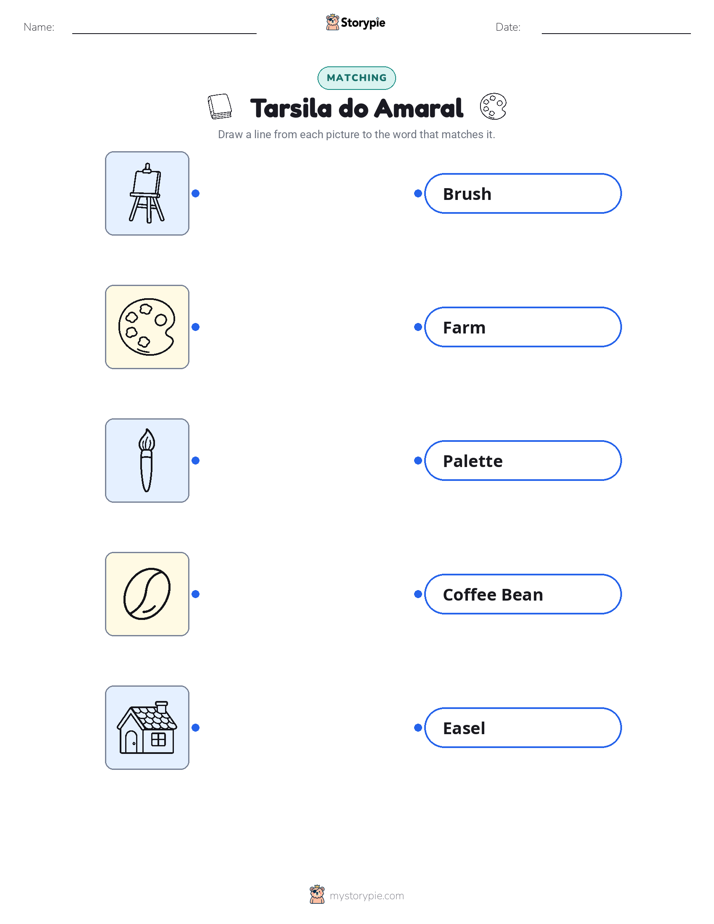
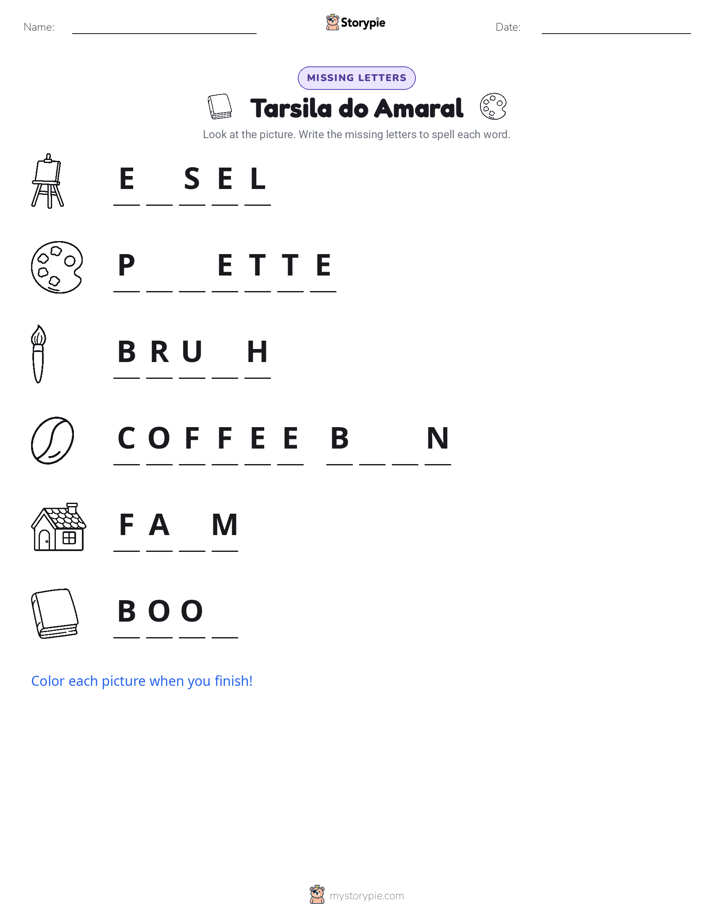
Print & create
Answer keys·No prep·Free with an account
28 worksheets · answer keys · full story · quiz · Ages 8-10 · CEFR B1
Plus adds 164,000+ more stories in 27 languages, audio for every one, and printables for all of them.
Just want Tarsila do Amaral?

Hello! My name is Tarsila do Amaral, and I was a painter from the beautiful country of Brazil. My story begins on a big coffee farm, which we call a 'fazenda,' in São Paulo. I was born there on September 1st, 1886. Growing up surrounded by nature was like living inside a painting. I saw the most vibrant colors everywhere I looked: the deep greens of the jungle, the bright pinks and yellows of tropical flowers, and the rich, dark soil that grew our coffee. These bold colors of the Brazilian countryside filled my imagination and made me want to capture them. From a very young age, I knew I loved art. My family saw my passion and encouraged me. They believed in my dream so much that when I was a teenager, they sent me all the way across the ocean to a school in Barcelona, Spain, so I could study art and learn even more.
My biggest dream was to become a professional artist, and I knew I had to go where the most exciting new art was being made. In 1920, I moved to Paris, France. The city was buzzing with energy and new ideas. I studied at famous art schools, like the Académie Julian, and learned from some of the greatest modern artists of the time. But while I loved learning new techniques, I felt something was missing. The art in Paris didn't look like my home. I realized that I didn't want to paint like a European artist; I wanted my art to look and feel truly Brazilian. I began to use what I called the 'caipira' colors—the powerful blues, pure pinks, and lively yellows from my childhood on the farm. I painted with simplified shapes that felt bold and strong. When I returned to Brazil in 1922, I joined my wonderful friends Anita Malfatti, Oswald de Andrade, Mário de Andrade, and Menotti Del Picchia. Together, we formed the 'Grupo dos Cinco,' or the Group of Five. We all shared the same exciting goal: to create a new kind of modern art for Brazil.
Tarsila do Amaral: The Colors of Brazil
Hello! My name is Tarsila do Amaral, and I was a painter from the beautiful country of Brazil. My story begins on a big coffee farm, which we call a 'fazenda,' in São Paulo. I was born there on September 1st, 1886. Growing up surrounded by nature was like living inside a painting. I saw the most vibrant colors everywhere I looked: the deep greens of the jungle, the bright pinks and yellows of tropical flowers, and the rich, dark soil that grew our coffee. These bold colors of the Brazilian countryside filled my imagination and made me want to capture them. From a very young age, I knew I loved art. My family saw my passion and encouraged me. They believed in my dream so much that when I was a teenager, they sent me all the way across the ocean to a school in Barcelona, Spain, so I could study art and learn even more.
My biggest dream was to become a professional artist, and I knew I had to go where the most exciting new art was being made. In 1920, I moved to Paris, France. The city was buzzing with energy and new ideas. I studied at famous art schools, like the Académie Julian, and learned from some of the greatest modern artists of the time. But while I loved learning new techniques, I felt something was missing. The art in Paris didn't look like my home. I realized that I didn't want to paint like a European artist; I wanted my art to look and feel truly Brazilian. I began to use what I called the 'caipira' colors—the powerful blues, pure pinks, and lively yellows from my childhood on the farm. I painted with simplified shapes that felt bold and strong. When I returned to Brazil in 1922, I joined my wonderful friends Anita Malfatti, Oswald de Andrade, Mário de Andrade, and Menotti Del Picchia. Together, we formed the 'Grupo dos Cinco,' or the Group of Five. We all shared the same exciting goal: to create a new kind of modern art for Brazil.
My most creative years were filled with color and big ideas. In 1928, I painted what would become my most famous work, 'Abaporu.' I created it as a special birthday present for my husband, Oswald. It is a very unusual painting of a person with a gigantic foot and a very tiny, thoughtful head, sitting under the sun next to a cactus. The name 'Abaporu' comes from the Tupi-Guarani language of Brazil’s indigenous people, and it means 'man who eats.' This painting sparked a whole new idea that we called the 'Antropofagia' movement, which means 'cannibalism.' It sounds a bit shocking, but it wasn't about eating people. It was an idea that Brazilian artists should 'devour,' or take in, all the ideas from other cultures, digest them, and then mix them with our own Brazilian spirit to create something completely new and powerful. My other paintings also told the story of my country. In 1923, I painted 'A Negra,' which showed the strength of the people who worked on the land. A decade later, in 1933, I painted 'Operários,' which showed the many different faces of the workers who were building our growing cities.
I spent my life telling the stories of my beloved Brazil through my art. My paintings traveled the world, sharing the vibrant spirit and unique landscapes of my home. I lived a full and colorful life until I was 86 years old. My greatest legacy was helping to create a modern artistic identity for Brazil, one that was proud of its own colors and culture. I hope that when you see my paintings, you can feel the warmth of the Brazilian sun and see the joy in its bold, beautiful colors. My art is a celebration of the country I loved so much.
Wow facts
About
Tarsila do Amaral was a leading Brazilian modernist artist whose vibrant paintings and involvement in the Anthropophagy movement helped define a new artistic identity for Brazil in the 20th century.
Take a Quiz
Question 1 of 5
In what year did Tarsila paint her famous work, 'Abaporu'?
Explore next





Want to do even more?
Go beyond exploring. Unlock tools that turn every story into real learning.

Storypie Plus for families
Full stories, quizzes, and printables. Nights and car rides, sorted.
- Unlimited audio stories
- Create Mode: your child stars in the story
- Offline downloads
- Printable worksheets & coloring pages

Why Storypie for Schools
Students engaged. Prep in seconds. Evenings back to you.
- Worksheets & Quizzes
- Classroom Management
- Formative Assessment
- Custom Curriculum & Lesson Plans
- 27 Languages

Why Storypie for Homeschool
Curriculum done. They'll ask for more. Hours back in your day.
- Worksheet Generator
- First-Person Audio Stories
- Built-in Comprehension Quizzes
- Custom Curriculum & Lesson Plans
- Print & Go Activities