English

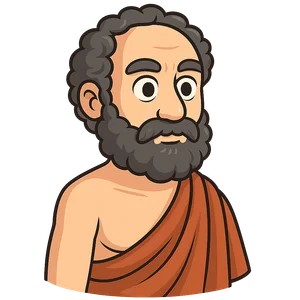
Thucydides
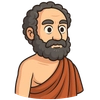
Thucydides was an ancient Athenian historian and general.
Reads at Grades 3–5 Listens at Grades 1–5
Print & create
Answer keys·No prep·Free with an account
28 worksheets · answer keys · full story · quiz · Ages 8-10 · CEFR B1
Plus adds 244,000+ more stories in 27 languages, audio for every one, and printables for all of them.
Just want Thucydides?
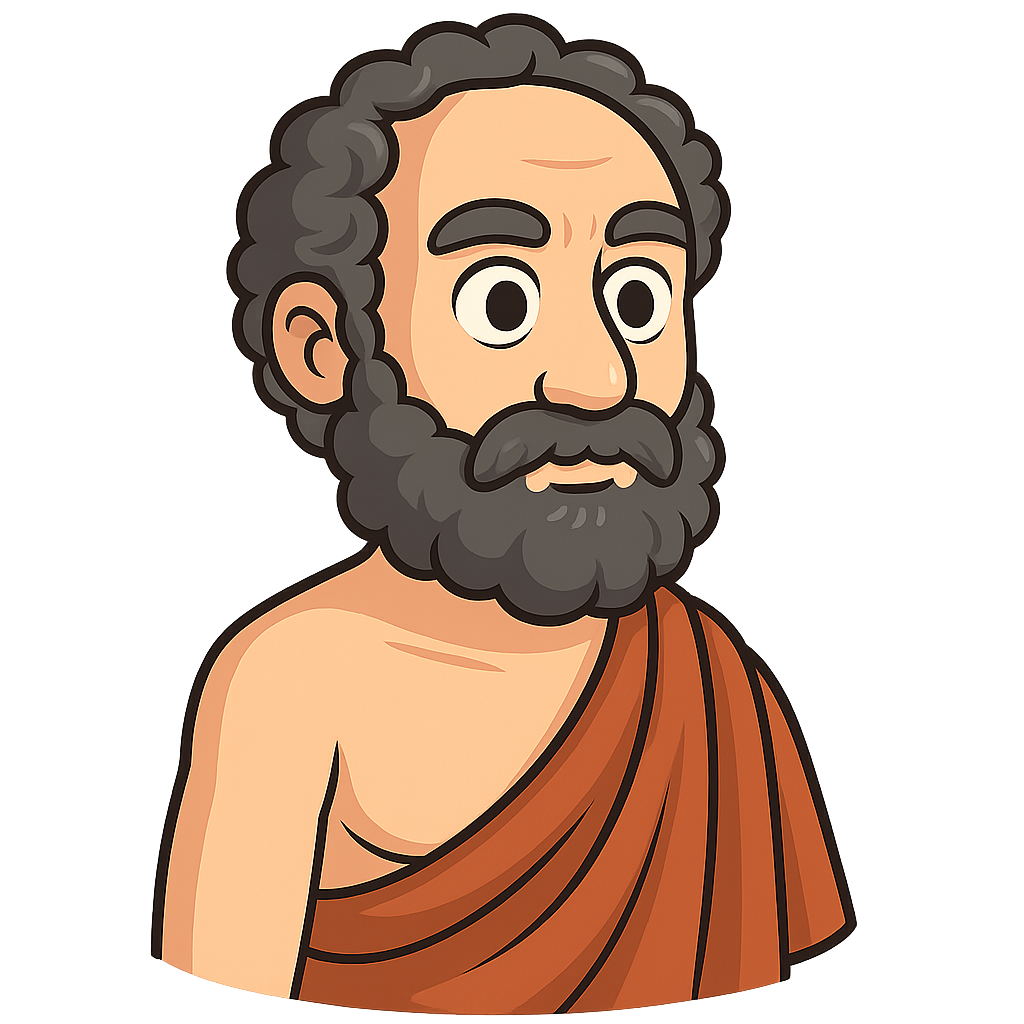
Hello, my name is Thucydides, and I want to share my story with you from a time long ago in Ancient Greece. I was born in the incredible city of Athens around the year 460 BCE. My family was one of the wealthiest in the city because we owned gold mines in a place called Thrace. This meant I had opportunities that many others did not, including a fine education. Growing up in Athens was truly special. It was the heart of the world for art, new ideas, and our special form of government called democracy. I would walk through the city and see magnificent temples rising into the sky and listen to wise thinkers debate important questions. It felt like anything was possible. I often saw the great leader Pericles, who was a brilliant speaker. He could fill a crowd with pride for our city, and I was no different. I listened to his speeches and felt a powerful sense of belonging and patriotism. I was proud to be an Athenian and believed our city was a shining example for the rest of the world. I knew that I wanted to dedicate my life to serving this great city that I called home.
When I grew up, the peaceful and exciting days of my youth came to an end. In the year 431 BCE, a terrible conflict called the Peloponnesian War broke out. This was a huge war between my beloved city of Athens and our greatest rival, Sparta. Both sides were powerful, and the war would last for a very long time. Like many other Athenian men, I became a soldier to defend my city. The fighting was hard, but soon we faced an even worse enemy right inside our own walls. In 430 BCE, a horrible sickness, which we called the Plague of Athens, spread through the crowded city. It was a devastating time, and many people I knew did not survive. I became ill, too, but I was fortunate enough to recover. A few years into the war, in 424 BCE, I was given a very important position. I was elected to be a general, which we called a 'strategos.' It was a great honor, and my first major command was to protect the city of Amphipolis in the north. This city was vital to Athens. I gathered my troops and sailed as quickly as possible, but the journey was difficult. The Spartan general was clever and swift. I arrived only to find that the city had already surrendered. I had failed my mission, and there was nothing I could do to take it back.
Thucydides
Hello, my name is Thucydides, and I want to share my story with you from a time long ago in Ancient Greece. I was born in the incredible city of Athens around the year 460 BCE. My family was one of the wealthiest in the city because we owned gold mines in a place called Thrace. This meant I had opportunities that many others did not, including a fine education. Growing up in Athens was truly special. It was the heart of the world for art, new ideas, and our special form of government called democracy. I would walk through the city and see magnificent temples rising into the sky and listen to wise thinkers debate important questions. It felt like anything was possible. I often saw the great leader Pericles, who was a brilliant speaker. He could fill a crowd with pride for our city, and I was no different. I listened to his speeches and felt a powerful sense of belonging and patriotism. I was proud to be an Athenian and believed our city was a shining example for the rest of the world. I knew that I wanted to dedicate my life to serving this great city that I called home.
When I grew up, the peaceful and exciting days of my youth came to an end. In the year 431 BCE, a terrible conflict called the Peloponnesian War broke out. This was a huge war between my beloved city of Athens and our greatest rival, Sparta. Both sides were powerful, and the war would last for a very long time. Like many other Athenian men, I became a soldier to defend my city. The fighting was hard, but soon we faced an even worse enemy right inside our own walls. In 430 BCE, a horrible sickness, which we called the Plague of Athens, spread through the crowded city. It was a devastating time, and many people I knew did not survive. I became ill, too, but I was fortunate enough to recover. A few years into the war, in 424 BCE, I was given a very important position. I was elected to be a general, which we called a 'strategos.' It was a great honor, and my first major command was to protect the city of Amphipolis in the north. This city was vital to Athens. I gathered my troops and sailed as quickly as possible, but the journey was difficult. The Spartan general was clever and swift. I arrived only to find that the city had already surrendered. I had failed my mission, and there was nothing I could do to take it back.
Losing Amphipolis was a great blow to Athens, and the people needed someone to blame. That person was me. For my failure, I was punished severely. Starting in the year 424 BCE, I was exiled from my beloved city. The sentence was for 20 long years. It was heartbreaking to be forced to leave my home, my family, and everything I had ever known. At first, I was filled with sadness, but as time went on, I found a new and important mission. I decided that if I could no longer fight for Athens as a general, I would serve it in another way. I would write the complete and true history of the Peloponnesian War. Being in exile gave me a unique opportunity. Since I was not tied to Athens, I could travel freely and talk to people from both sides of the war. I spent years interviewing soldiers, commanders, and witnesses from Athens and Sparta. I gathered their stories and collected facts, always trying to find evidence for what I wrote. I did not want to write about myths or blame the gods for what happened. I wanted to understand the human reasons for the conflict—the fear, the ambition, and the mistakes. My greatest wish was to create an accurate account so that future generations could learn from our struggles and perhaps avoid making the same errors.
My long exile finally came to an end in 404 BCE, the same year the Peloponnesian War ended with Athens' defeat. I was finally allowed to return home. I spent the last years of my life in Athens, working carefully on my book, which is now called 'History of the Peloponnesian War.' I lived to be about 60 years old. Today, people remember me not as a failed general, but as one of the world's first 'scientific' historians. This is because I believed in using evidence and facts to understand the past, rather than just telling entertaining stories. My work showed that by looking closely at why events happened, we can learn important lessons about people and power. For thousands of years, my ideas have inspired other historians to seek the truth, reminding everyone that the past has much to teach us about the future.
Wow facts
About
Thucydides was an ancient Athenian historian and general. He is best known for his detailed, evidence-based account of the conflict between Athens and Sparta, titled 'History of the Peloponnesian War.'
Take a Quiz
Question 1 of 5
Why was Thucydides sent into exile from Athens for 20 years?
Explore next





Want to do even more?
Go beyond exploring. Unlock tools that turn every story into real learning.

Storypie Plus for families
Full stories, quizzes, and printables. Nights and car rides, sorted.
- Unlimited audio stories
- Create Mode: your child stars in the story
- Offline downloads
- Printable worksheets & coloring pages

Why Storypie for Schools
Students engaged. Prep in seconds. Evenings back to you.
- Worksheets & Quizzes
- Classroom Management
- Formative Assessment
- Custom Curriculum & Lesson Plans
- 27 Languages

Why Storypie for Homeschool
Curriculum done. They'll ask for more. Hours back in your day.
- Worksheet Generator
- First-Person Audio Stories
- Built-in Comprehension Quizzes
- Custom Curriculum & Lesson Plans
- Print & Go Activities