English

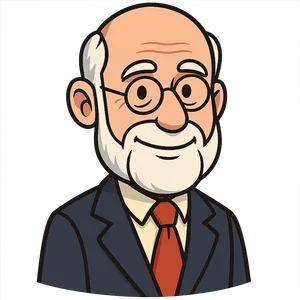
Vinton Cerf
Vinton Cerf is an American computer scientist…
Reads at Grades 6–8 Listens at Grades 4–8
Print & create
Answer keys·No prep·Free with an account
28 worksheets · answer keys · full story · quiz · Ages 10-12 · CEFR B2
Plus adds 164,000+ more stories in 27 languages, audio for every one, and printables for all of them.
Just want Vinton Cerf?
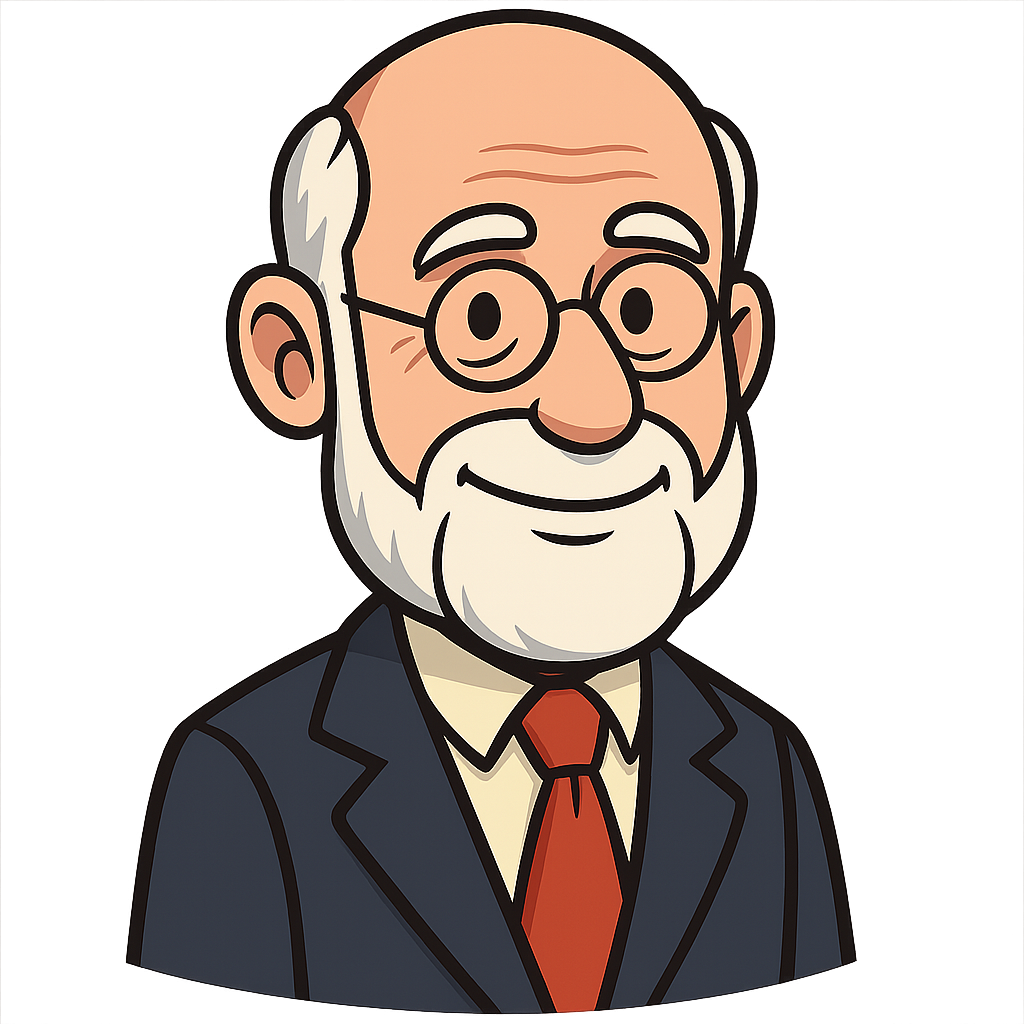
Hello there. My name is Vinton Cerf, but most people call me Vint. I am known as one of the “fathers of the internet,” and I’d like to share my story with you. I was born on June 23rd, 1943, in New Haven, Connecticut. From a young age, I was fascinated by the worlds I discovered in science fiction books, and I developed a deep love for mathematics and chemistry. I was always asking questions, trying to understand how things worked. This seriousness about my work even influenced how I dressed. Starting in high school, I began wearing my signature three-piece suits because I believed it was important to present myself seriously. I also faced a personal challenge that shaped my perspective. I have a hearing impairment, which meant I had to think about communication in a different way than most people. This experience made me deeply consider how we connect and share information, a theme that would define my entire career.
My curiosity led me to college, where my journey truly began. I first attended Stanford University to study mathematics. Later, I continued my education at the University of California, Los Angeles, also known as UCLA. It was during the late 1960s that I found a job that would change my life and, eventually, the world. I joined a special project for the United States government called ARPANET. You can think of ARPANET as a very early, small version of the internet. Its purpose was to connect computers at different universities and research laboratories so they could share information. However, it had a major limitation: it could only connect computers that were the same type. The big challenge we faced was figuring out how to get different kinds of computer networks, with their own unique hardware and software, to talk to each other.
Vinton Cerf: Connecting the World
Hello there. My name is Vinton Cerf, but most people call me Vint. I am known as one of the “fathers of the internet,” and I’d like to share my story with you. I was born on June 23rd, 1943, in New Haven, Connecticut. From a young age, I was fascinated by the worlds I discovered in science fiction books, and I developed a deep love for mathematics and chemistry. I was always asking questions, trying to understand how things worked. This seriousness about my work even influenced how I dressed. Starting in high school, I began wearing my signature three-piece suits because I believed it was important to present myself seriously. I also faced a personal challenge that shaped my perspective. I have a hearing impairment, which meant I had to think about communication in a different way than most people. This experience made me deeply consider how we connect and share information, a theme that would define my entire career.
My curiosity led me to college, where my journey truly began. I first attended Stanford University to study mathematics. Later, I continued my education at the University of California, Los Angeles, also known as UCLA. It was during the late 1960s that I found a job that would change my life and, eventually, the world. I joined a special project for the United States government called ARPANET. You can think of ARPANET as a very early, small version of the internet. Its purpose was to connect computers at different universities and research laboratories so they could share information. However, it had a major limitation: it could only connect computers that were the same type. The big challenge we faced was figuring out how to get different kinds of computer networks, with their own unique hardware and software, to talk to each other.
I was not alone in trying to solve this enormous puzzle. I worked closely with my friend and colleague, Robert Kahn, whom I call Bob. Together, Bob and I dedicated ourselves to overcoming the problem of connecting all the separate, isolated computer networks. We realized that what we needed was a universal set of rules, a kind of digital language that any computer, anywhere, could understand. This would allow different networks to communicate seamlessly. In 1974, we published a paper that detailed our groundbreaking idea. We called this new language Transmission Control Protocol and Internet Protocol, or TCP/IP for short. In that paper, we described our vision for a worldwide “internet,” a global web of interconnected networks that could share data freely.
Having the idea for TCP/IP was one thing, but making it a reality was another. It took years of hard work and collaboration to convince everyone involved with ARPANET to adopt our new protocols. Finally, we set a date for the big switch. On January 1st, 1983, a day I will never forget, the entire ARPANET officially changed over to using TCP/IP. It was a monumental moment. It was as if every computer network in the world had suddenly agreed to speak the same language. This single event marked the true birth of the modern internet, creating a unified digital space where different computers and networks could finally connect and share information with one another.
Creating the technical foundation for the internet was just the beginning. The next step was to help it grow and ensure it served humanity well. In 1992, I co-founded the Internet Society, an organization dedicated to guiding the internet's development and making sure it remained open and accessible to people all over the world. My work continued to evolve, and in 2005, I took on a role at Google as its Chief Internet Evangelist. In this position, my job is to travel the globe, talk about the power of the internet, and think about how this technology can help solve some of the world's most pressing problems. I am always looking toward the future, considering what the next phase of global connection will look like.
Even today, I am still working and dreaming about what's next. One of the exciting challenges I'm thinking about now is how to create an Interplanetary Internet, a network that could connect spacecrafts across our solar system. My life's work has been about building connections, and my greatest hope is that the internet continues to be a powerful tool for learning, creativity, and bringing people from all corners of the globe closer together. I want to leave you with this thought: always stay curious, don't be afraid to tackle big, complicated problems, and remember that the greatest achievements are often built by people working together.
Wow facts
About
Vinton Cerf is an American computer scientist, widely known as one of the 'Fathers of the Internet' for co-designing the TCP/IP protocols and the basic architecture of the internet with Robert Kahn.
Take a Quiz
Question 1 of 5
What was the main problem with ARPANET that Vinton Cerf and Robert Kahn tried to solve?
Explore next




Want to do even more?
Go beyond exploring. Unlock tools that turn every story into real learning.

Storypie Plus for families
Full stories, quizzes, and printables. Nights and car rides, sorted.
- Unlimited audio stories
- Create Mode: your child stars in the story
- Offline downloads
- Printable worksheets & coloring pages

Why Storypie for Schools
Students engaged. Prep in seconds. Evenings back to you.
- Worksheets & Quizzes
- Classroom Management
- Formative Assessment
- Custom Curriculum & Lesson Plans
- 27 Languages

Why Storypie for Homeschool
Curriculum done. They'll ask for more. Hours back in your day.
- Worksheet Generator
- First-Person Audio Stories
- Built-in Comprehension Quizzes
- Custom Curriculum & Lesson Plans
- Print & Go Activities