English

Vinton Cerf
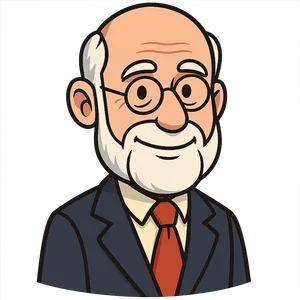
Vinton Cerf is an American computer scientist…
Reads at Grades 3–5 Listens at Grades 1–5
Print & create
Answer keys·No prep·Free with an account
28 worksheets · answer keys · full story · quiz · Ages 8-10 · CEFR B1
Plus adds 164,000+ more stories in 27 languages, audio for every one, and printables for all of them.
Just want Vinton Cerf?
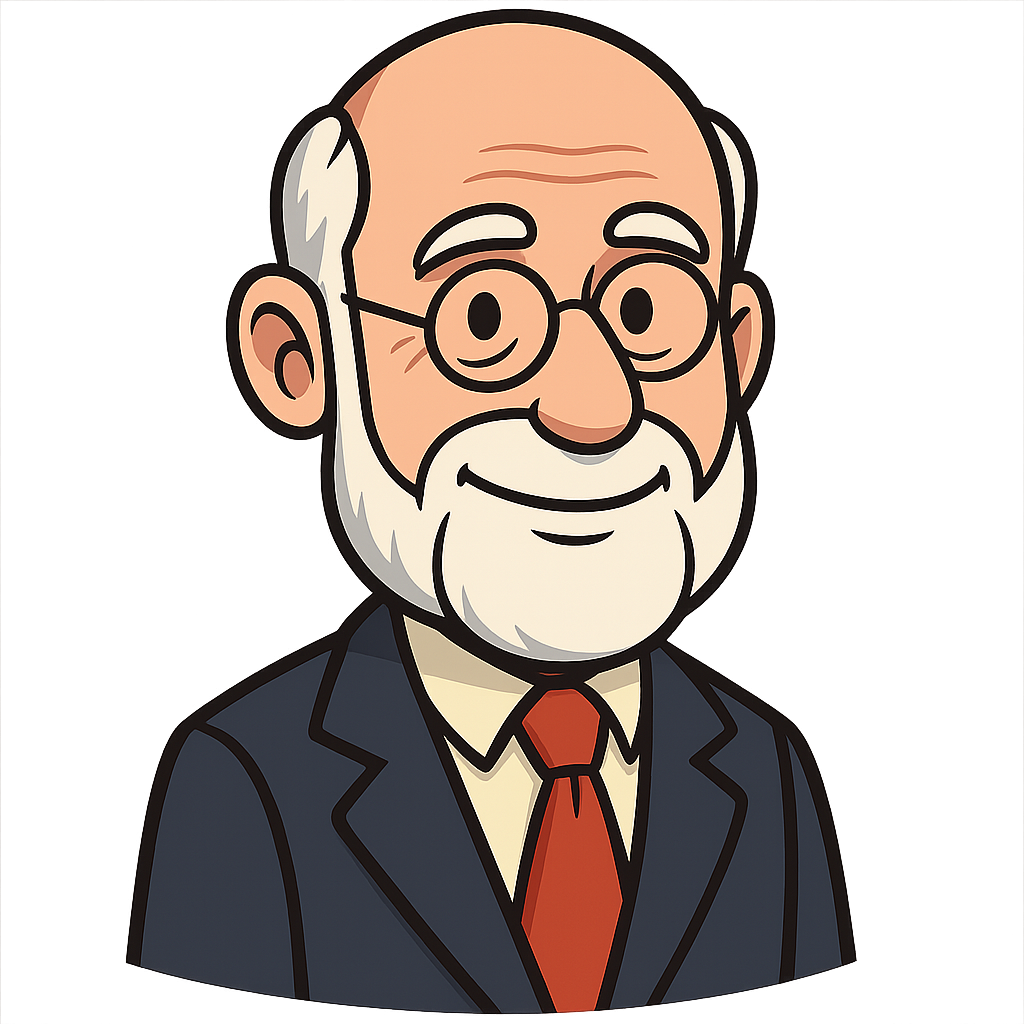
Hello! My name is Vinton Cerf, and I am one of the people often called a 'father of the internet.' My story begins on June 23rd, 1943, when I was born in New Haven, Connecticut. From a very young age, I was fascinated by math and science. My mind was always buzzing with questions. I constantly asked my parents and teachers 'how' things worked and 'why' they were the way they were. I wanted to understand the world from the inside out. Something else about my childhood was very important to my future work. I started wearing hearing aids when I was young. This experience made me think deeply about communication. I wondered how we could make it easier for people, and even machines, to connect and share ideas with one another. This question about connection would become the biggest puzzle I would try to solve in my life.
When it was time for college, I went to a wonderful school called Stanford University. There, I studied mathematics, but I discovered something else I loved: computers. You have to imagine what computers were like back in the 1960s. They weren't small devices you could carry in your pocket. They were giant machines that filled entire rooms! And they were very lonely; each computer worked by itself and couldn't easily talk to other computers. After I finished my studies at Stanford, I went to another university, UCLA, for more learning. It was at UCLA that I began working on a special project for the government called ARPANET. This project was an early type of computer network. While working there, I met a brilliant man named Robert Kahn. We quickly became friends and partners. Together, we saw a huge problem that needed to be solved. There were a few different computer networks like ARPANET, but they couldn't communicate with each other. It was like having a telephone that could only call other phones on your own street.
Vinton Cerf: The Story of the Internet
Hello! My name is Vinton Cerf, and I am one of the people often called a 'father of the internet.' My story begins on June 23rd, 1943, when I was born in New Haven, Connecticut. From a very young age, I was fascinated by math and science. My mind was always buzzing with questions. I constantly asked my parents and teachers 'how' things worked and 'why' they were the way they were. I wanted to understand the world from the inside out. Something else about my childhood was very important to my future work. I started wearing hearing aids when I was young. This experience made me think deeply about communication. I wondered how we could make it easier for people, and even machines, to connect and share ideas with one another. This question about connection would become the biggest puzzle I would try to solve in my life.
When it was time for college, I went to a wonderful school called Stanford University. There, I studied mathematics, but I discovered something else I loved: computers. You have to imagine what computers were like back in the 1960s. They weren't small devices you could carry in your pocket. They were giant machines that filled entire rooms! And they were very lonely; each computer worked by itself and couldn't easily talk to other computers. After I finished my studies at Stanford, I went to another university, UCLA, for more learning. It was at UCLA that I began working on a special project for the government called ARPANET. This project was an early type of computer network. While working there, I met a brilliant man named Robert Kahn. We quickly became friends and partners. Together, we saw a huge problem that needed to be solved. There were a few different computer networks like ARPANET, but they couldn't communicate with each other. It was like having a telephone that could only call other phones on your own street.
Bob Kahn and I put our heads together to solve this big communication puzzle. How could we get all these different computer networks to talk to one another? We imagined it was like having a room full of people who all speak different languages. To communicate, they would need a common language that everyone could understand. So, that's what we decided to create—a common language for computers. We called our invention TCP/IP, which stands for Transmission Control Protocol/Internet Protocol. It sounds complicated, but you can think of it as a set of rules for sending information. TCP/IP breaks information into small digital packages, puts an address on each one, and sends them across the networks. The rules make sure all the packages arrive at the right place and are put back together in the correct order. We published our ideas in a scientific paper in 1974. It took many years of hard work by many people, but finally, a very important day arrived. On January 1st, 1983, the entire ARPANET officially switched over to using TCP/IP. That was the day the internet as we know it was truly born.
After our invention started working, the internet began its incredible journey. At first, in the early 1980s, it was mainly used by scientists, engineers, and the government to share research and messages. But I knew it could be so much more. I wanted everyone to be able to use it. To help with that, I worked on a project to create the first commercial email service to connect to the internet. This meant that businesses and people outside of research labs could start sending electronic mail. As the internet grew, it needed people to help guide it. So, in 1992, I co-founded a group called the Internet Society. Our goal was to help make decisions about the internet's future and to make sure it remained open and available for people all over the world. It was an amazing feeling to watch this system we had designed grow from a small network into a global web connecting millions of people and their ideas.
My work with the internet is not over. I am still working today at a company you may have heard of, called Google. My official title is Chief Internet Evangelist, which means my job is to think about where the internet is going and how we can continue to improve it for everyone. The internet is not finished; it is growing and changing every single day. New ideas and inventions are making it faster, smarter, and more useful. My message to you is to always stay curious. Keep asking 'how' and 'why,' just like I did when I was a boy. The internet is a powerful tool for learning and creating. I hope you will use it to explore your passions and maybe even build the next amazing thing that will change the world.
Wow facts
About
Vinton Cerf is an American computer scientist, widely known as one of the 'Fathers of the Internet' for co-designing the TCP/IP protocols and the basic architecture of the internet with Robert Kahn.
Take a Quiz
Question 1 of 5
The story says Vinton Cerf and Robert Kahn created a 'common language' for computers. What does this mean?
Explore next



Want to do even more?
Go beyond exploring. Unlock tools that turn every story into real learning.

Storypie Plus for families
Full stories, quizzes, and printables. Nights and car rides, sorted.
- Unlimited audio stories
- Create Mode: your child stars in the story
- Offline downloads
- Printable worksheets & coloring pages

Why Storypie for Schools
Students engaged. Prep in seconds. Evenings back to you.
- Worksheets & Quizzes
- Classroom Management
- Formative Assessment
- Custom Curriculum & Lesson Plans
- 27 Languages

Why Storypie for Homeschool
Curriculum done. They'll ask for more. Hours back in your day.
- Worksheet Generator
- First-Person Audio Stories
- Built-in Comprehension Quizzes
- Custom Curriculum & Lesson Plans
- Print & Go Activities