English

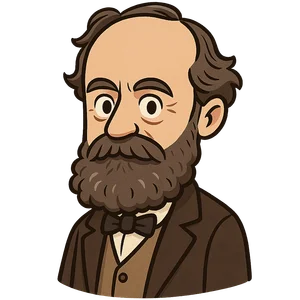
William James
William James was a pioneering American philosopher and psychologist…
Reads at Grades 3–5 Listens at Grades 1–5
Print & create
Answer keys·No prep·Free with an account
28 worksheets · answer keys · full story · quiz · Ages 8-10 · CEFR B1
Plus adds 244,000+ more stories in 27 languages, audio for every one, and printables for all of them.
Just want William James?
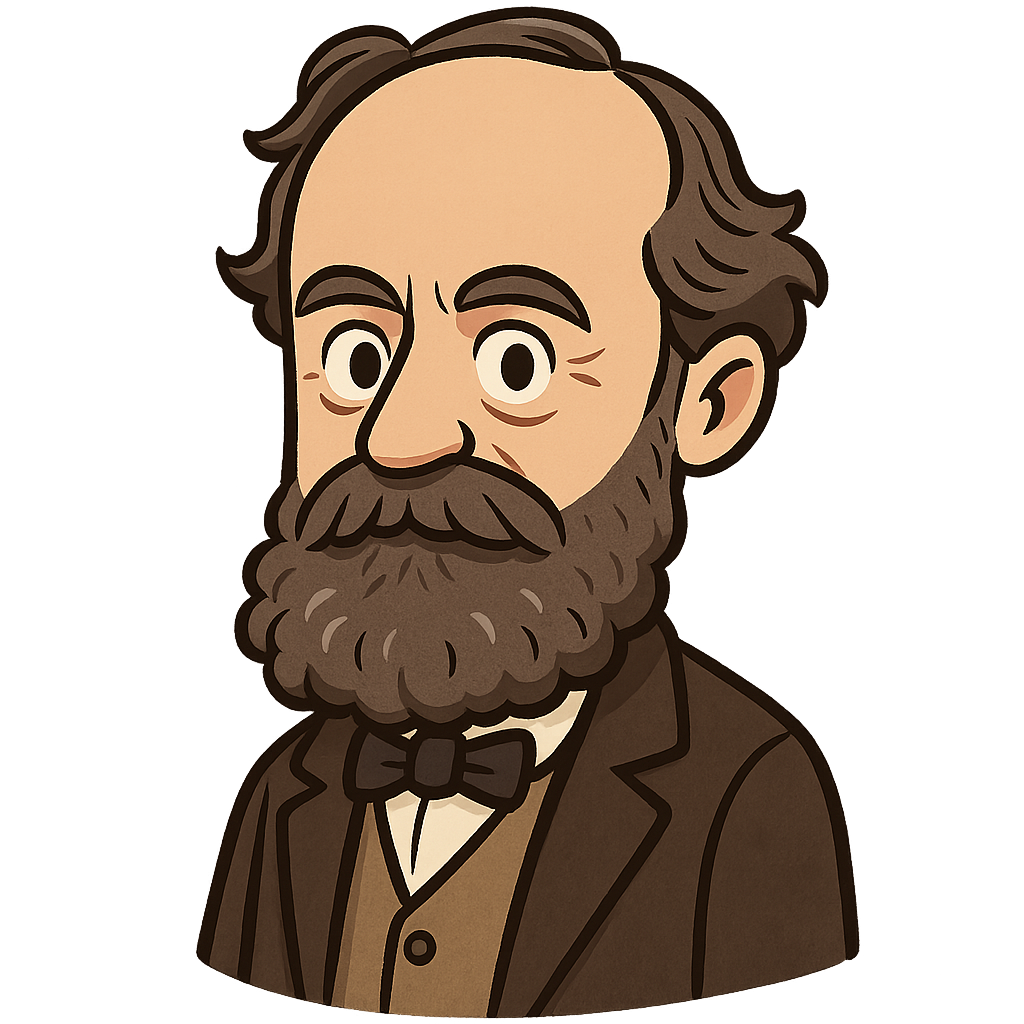
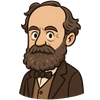
Hello, my name is William James, and I spent my life exploring one of the most mysterious places in the universe: the human mind. My story begins on January 11th, 1842, when I was born in New York City. I grew up in a very interesting family. My father, Henry James Sr., was a deep thinker, and my younger brother, Henry, grew up to become a very famous writer. Our family didn't stay in one place for long. We traveled all over Europe, and seeing so many different places and meeting so many different people sparked a great curiosity in me. I wanted to understand everything, but most of all, I wanted to understand what was going on inside people's heads. These early adventures set me on a path to learn about how we think, feel, and experience the world.
At first, I dreamed of becoming an artist, and I loved to draw and paint. But as I grew older, my fascination with science became much stronger. In 1861, I decided to attend Harvard University to study science. A few years later, in 1865, I went on a scientific trip all the way to the Amazon rainforest. I was supposed to be collecting specimens, like plants and animals, but I discovered something much more interesting to me. I realized that I was more curious about the minds of the people on the trip than the creatures in the jungle. This trip helped me understand my true passion. I returned to my studies and decided to become a doctor, earning my medical degree from Harvard in 1869. Even with my degree, I knew that being a regular doctor wasn't my destiny. I felt a strong pull toward my true calling: to understand the puzzles of human thought and feelings.
William James: A Journey into the Mind
Hello, my name is William James, and I spent my life exploring one of the most mysterious places in the universe: the human mind. My story begins on January 11th, 1842, when I was born in New York City. I grew up in a very interesting family. My father, Henry James Sr., was a deep thinker, and my younger brother, Henry, grew up to become a very famous writer. Our family didn't stay in one place for long. We traveled all over Europe, and seeing so many different places and meeting so many different people sparked a great curiosity in me. I wanted to understand everything, but most of all, I wanted to understand what was going on inside people's heads. These early adventures set me on a path to learn about how we think, feel, and experience the world.
At first, I dreamed of becoming an artist, and I loved to draw and paint. But as I grew older, my fascination with science became much stronger. In 1861, I decided to attend Harvard University to study science. A few years later, in 1865, I went on a scientific trip all the way to the Amazon rainforest. I was supposed to be collecting specimens, like plants and animals, but I discovered something much more interesting to me. I realized that I was more curious about the minds of the people on the trip than the creatures in the jungle. This trip helped me understand my true passion. I returned to my studies and decided to become a doctor, earning my medical degree from Harvard in 1869. Even with my degree, I knew that being a regular doctor wasn't my destiny. I felt a strong pull toward my true calling: to understand the puzzles of human thought and feelings.
My journey truly began when I started teaching at Harvard in 1872. It was there that I had the chance to truly dive into the study of the mind. I even started one of the first-ever psychology laboratories in America, creating a space where the mind could be studied scientifically. During my time at Harvard, I came up with one of my most famous ideas, which I called the 'stream of consciousness.' I compared our thoughts to a flowing river, always moving, changing, and connecting. It's not a series of separate ideas, but one continuous stream. This idea became a very important part of a book I spent twelve years writing. In 1890, my book, 'The Principles of Psychology,' was finally published. It was a very big book, but it completely changed how people thought about psychology and helped it become a true science.
Later in my life, my work exploring the mind led me to think about big questions in a field called philosophy. I developed an idea called 'pragmatism.' It might sound like a complicated word, but the idea behind it is quite simple. I believed that the truth of an idea depends on how useful it is in our real lives. If an idea helps us solve problems, understand the world better, or live a good life, then it has value. To share this way of thinking with more people, I wrote another important book called 'Pragmatism,' which was published in 1907. My goal was to give people a practical and helpful way to think about life's most important questions, rather than just getting lost in theories that didn't make a difference.
I spent my life teaching, writing, and thinking, always trying to understand more about ourselves. I lived to be 68 years old. Today, I am often remembered as the 'Father of American Psychology.' My ideas, from the 'stream of consciousness' to pragmatism, have helped many people. I hope my work continues to help everyone understand the wonderful and complex ways our own minds work, reminding us that there is always more to explore inside ourselves.
Wow facts
About
William James was a pioneering American philosopher and psychologist, often called the 'Father of American psychology.' He was a leading thinker in the philosophical school of pragmatism and the psychological school of functionalism.
Take a Quiz
Question 1 of 5
In the story, what does the phrase 'stream of consciousness' mean?
Explore next






Want to do even more?
Go beyond exploring. Unlock tools that turn every story into real learning.

Storypie Plus for families
Full stories, quizzes, and printables. Nights and car rides, sorted.
- Unlimited audio stories
- Create Mode: your child stars in the story
- Offline downloads
- Printable worksheets & coloring pages

Why Storypie for Schools
Students engaged. Prep in seconds. Evenings back to you.
- Worksheets & Quizzes
- Classroom Management
- Formative Assessment
- Custom Curriculum & Lesson Plans
- 27 Languages

Why Storypie for Homeschool
Curriculum done. They'll ask for more. Hours back in your day.
- Worksheet Generator
- First-Person Audio Stories
- Built-in Comprehension Quizzes
- Custom Curriculum & Lesson Plans
- Print & Go Activities