English

Animal Instincts and Learned Behaviors
This concept distinguishes between innate…
Reads at Grades 3–5 Listens at Grades 1–5
Print & create
Answer keys·No prep·Free with an account
28 worksheets · answer keys · full story · quiz · Ages 8-10 · CEFR B1
Plus adds 244,000+ more stories in 27 languages, audio for every one, and printables for all of them.
Just want Animal Instincts and Learned Behaviors?
Have you ever watched a tiny spider spin a perfect, shimmering web on its very first try, with no one to teach it how? Or have you seen a baby bird, just hatched, knowing exactly how to open its beak wide for its mother to drop in a juicy worm? It’s like they are born with a set of secret instructions, a tiny, invisible rulebook that tells them just what to do to survive. It’s a magical thing to see. But then, think about a fluffy puppy, tumbling over its own paws as it tries to learn how to fetch a ball. You throw it, and the puppy brings back a stick, or just looks at you with a confused tilt of its head. It takes practice, patience, and lots of happy praise before it gets it right. Or think about the first time you tried to ride a bike, wobbling and maybe even falling before you finally found your balance. Your mind and body were like blank pages in a book, waiting for experience to write the story of how to pedal and steer. I am the invisible force behind both of these amazing things. I am in the spider's perfect web and the puppy's clumsy chase. Hello. I am Animal Instincts and Learned Behaviors. I'm two ideas rolled into one, and I help explain the amazing world of animals, including you.
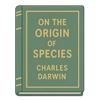
For thousands of years, people have watched animals and wondered about me. They saw bees dance to tell their hive where to find flowers and wolves howl to talk to their pack. But it wasn't until a couple of hundred years ago that scientists really started to study my two sides with careful eyes. One of the first was a very curious man named Charles Darwin. In the 1830s, he sailed all around the world on a ship, and everywhere he went, he saw how my first part—instinct—was so important. He saw how finches on different islands had beaks perfectly shaped for the food that grew there, and he realized these weren't just lucky guesses. These were built-in tools for survival. On November 24th, 1859, he published a famous book called 'On the Origin of Species,' which helped explain that instincts are traits passed down from parents to babies, helping the whole family of animals survive for a very, very long time. But what about my other half, the learning part? A scientist named Ivan Pavlov from Russia helped everyone understand that side of me. In the 1890s, he was studying how dogs digest their food. He noticed something peculiar. His dogs would start to drool when they saw their food, which is an instinct. But soon, they started drooling when they just heard the footsteps of the person bringing the food. He decided to test this. He started ringing a bell right before he fed them. After a while, the dogs would drool at the sound of the bell alone, even with no food in sight. They had learned to connect the sound with the meal. This was a learned behavior. A little later, in the middle of the 20th century, around the 1930s and 1940s, another scientist named B.F. Skinner showed how powerful learning could be. He created special boxes where he could teach rats or pigeons to press a lever. When they pressed it, a tasty food pellet would pop out. The animals quickly learned that pressing the lever meant getting a reward. These clever scientists helped show the world my two different sides: the part that is nature, or instinct, and the part that is nurture, or learning.
The Secret Instructions and the Blank Pages
Have you ever watched a tiny spider spin a perfect, shimmering web on its very first try, with no one to teach it how? Or have you seen a baby bird, just hatched, knowing exactly how to open its beak wide for its mother to drop in a juicy worm? It’s like they are born with a set of secret instructions, a tiny, invisible rulebook that tells them just what to do to survive. It’s a magical thing to see. But then, think about a fluffy puppy, tumbling over its own paws as it tries to learn how to fetch a ball. You throw it, and the puppy brings back a stick, or just looks at you with a confused tilt of its head. It takes practice, patience, and lots of happy praise before it gets it right. Or think about the first time you tried to ride a bike, wobbling and maybe even falling before you finally found your balance. Your mind and body were like blank pages in a book, waiting for experience to write the story of how to pedal and steer. I am the invisible force behind both of these amazing things. I am in the spider's perfect web and the puppy's clumsy chase. Hello. I am Animal Instincts and Learned Behaviors. I'm two ideas rolled into one, and I help explain the amazing world of animals, including you.
For thousands of years, people have watched animals and wondered about me. They saw bees dance to tell their hive where to find flowers and wolves howl to talk to their pack. But it wasn't until a couple of hundred years ago that scientists really started to study my two sides with careful eyes. One of the first was a very curious man named Charles Darwin. In the 1830s, he sailed all around the world on a ship, and everywhere he went, he saw how my first part—instinct—was so important. He saw how finches on different islands had beaks perfectly shaped for the food that grew there, and he realized these weren't just lucky guesses. These were built-in tools for survival. On November 24th, 1859, he published a famous book called 'On the Origin of Species,' which helped explain that instincts are traits passed down from parents to babies, helping the whole family of animals survive for a very, very long time. But what about my other half, the learning part? A scientist named Ivan Pavlov from Russia helped everyone understand that side of me. In the 1890s, he was studying how dogs digest their food. He noticed something peculiar. His dogs would start to drool when they saw their food, which is an instinct. But soon, they started drooling when they just heard the footsteps of the person bringing the food. He decided to test this. He started ringing a bell right before he fed them. After a while, the dogs would drool at the sound of the bell alone, even with no food in sight. They had learned to connect the sound with the meal. This was a learned behavior. A little later, in the middle of the 20th century, around the 1930s and 1940s, another scientist named B.F. Skinner showed how powerful learning could be. He created special boxes where he could teach rats or pigeons to press a lever. When they pressed it, a tasty food pellet would pop out. The animals quickly learned that pressing the lever meant getting a reward. These clever scientists helped show the world my two different sides: the part that is nature, or instinct, and the part that is nurture, or learning.
So why do my two sides matter to you? Well, understanding me helps us in so many ways. When you teach your dog to sit, stay, or fetch using treats and praise, you are using my 'learned behavior' side. You are using the same ideas that B.F. Skinner studied, showing that positive rewards are a kind and effective way to teach. Understanding my 'instinct' side helps scientists protect animals in the wild. They know that sea turtles have an instinct to return to the beach where they were born to lay their own eggs, so they make sure those beaches are safe. They study the migration instincts of birds to protect the forests and wetlands they need to rest during their long journeys. And what about you? You have instincts, too. You automatically blink if a bug flies near your eye, and you’ll pull your hand away from something hot without even thinking. But most of your life is a grand adventure in learned behaviors. You learned to talk, to read these very words, to make friends, and to solve tricky math problems. You are learning new things every single day. I am the story of what we are born with and what we can become. I show that every creature has a special starting point, but the journey of learning is what makes life an amazing and unpredictable adventure.
Wow facts
About
This concept distinguishes between innate, genetically hardwired behaviors (instincts) and behaviors acquired through experience, observation, or teaching (learned behaviors). It is a fundamental principle in biology and psychology for understanding how organisms adapt and survive.
Take a Quiz
Question 1 of 5
Who was the scientist who noticed dogs would drool at the sound of a bell, and what did this show?
Explore next



Want to do even more?
Go beyond exploring. Unlock tools that turn every story into real learning.

Storypie Plus for families
Full stories, quizzes, and printables. Nights and car rides, sorted.
- Unlimited audio stories
- Create Mode: your child stars in the story
- Offline downloads
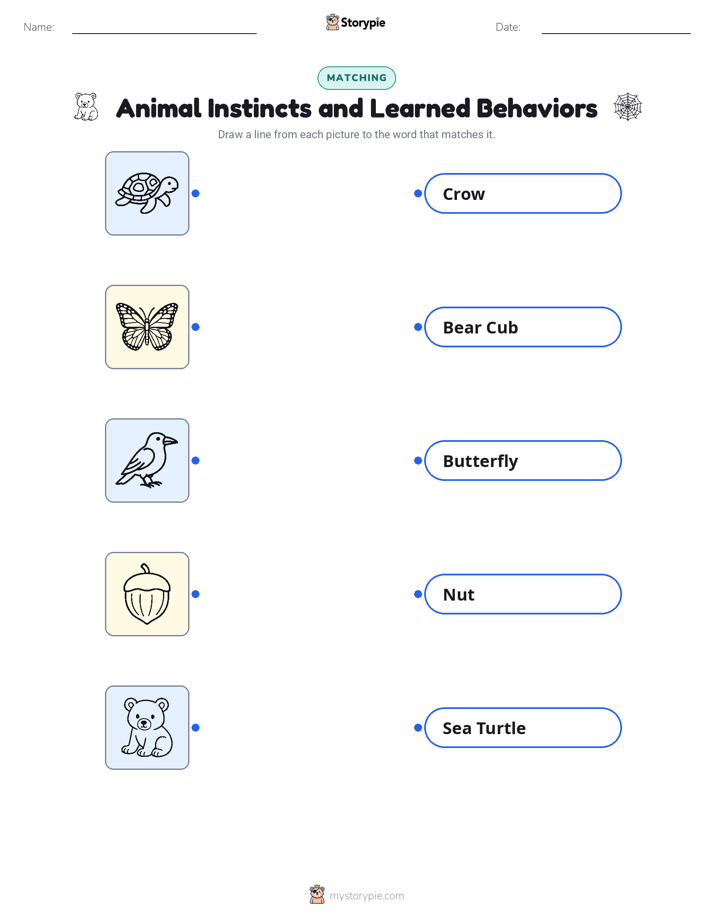
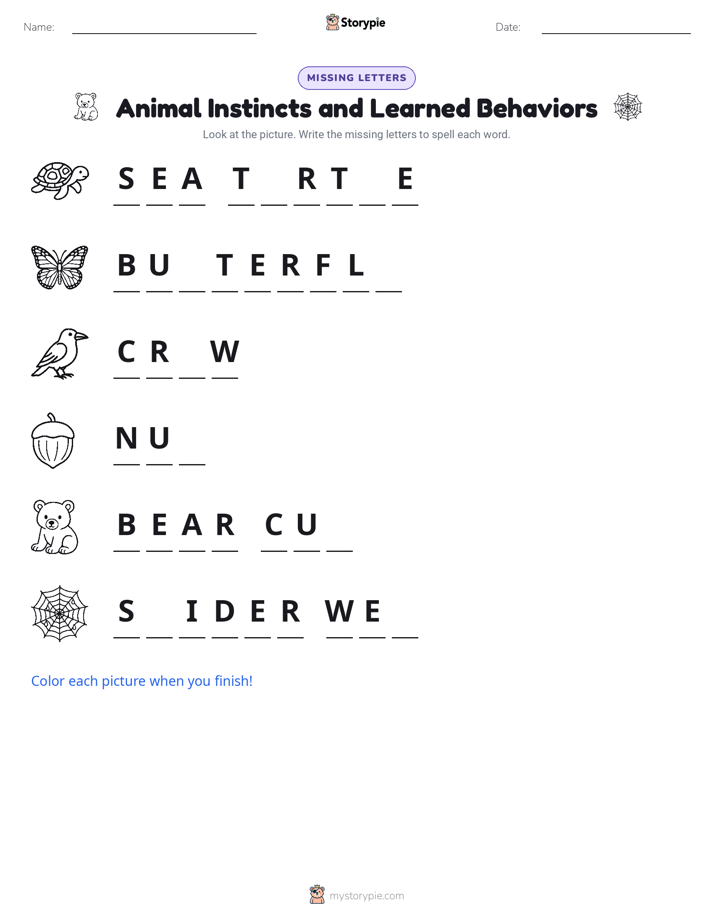
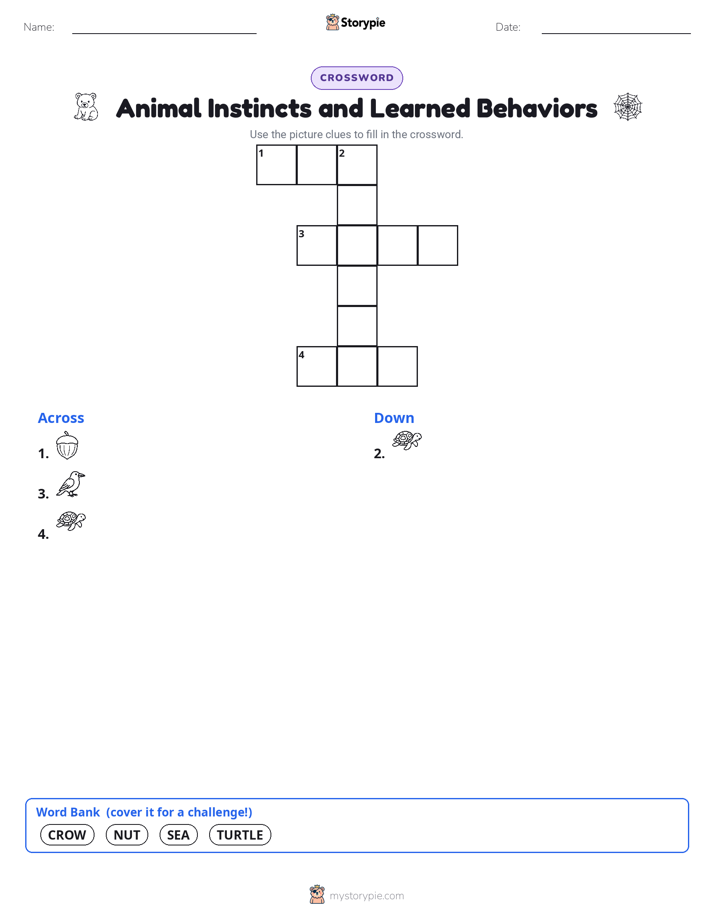
- Printable worksheets & coloring pages

Why Storypie for Schools
Students engaged. Prep in seconds. Evenings back to you.
- Worksheets & Quizzes
- Classroom Management
- Formative Assessment
- Custom Curriculum & Lesson Plans
- 27 Languages

Why Storypie for Homeschool
Curriculum done. They'll ask for more. Hours back in your day.
- Worksheet Generator
- First-Person Audio Stories
- Built-in Comprehension Quizzes
- Custom Curriculum & Lesson Plans
- Print & Go Activities