English

Animal Life Cycles
The series of changes an animal undergoes from birth through growth, reproduction, and death.
Reads at Grades 6–8 Listens at Grades 4–8
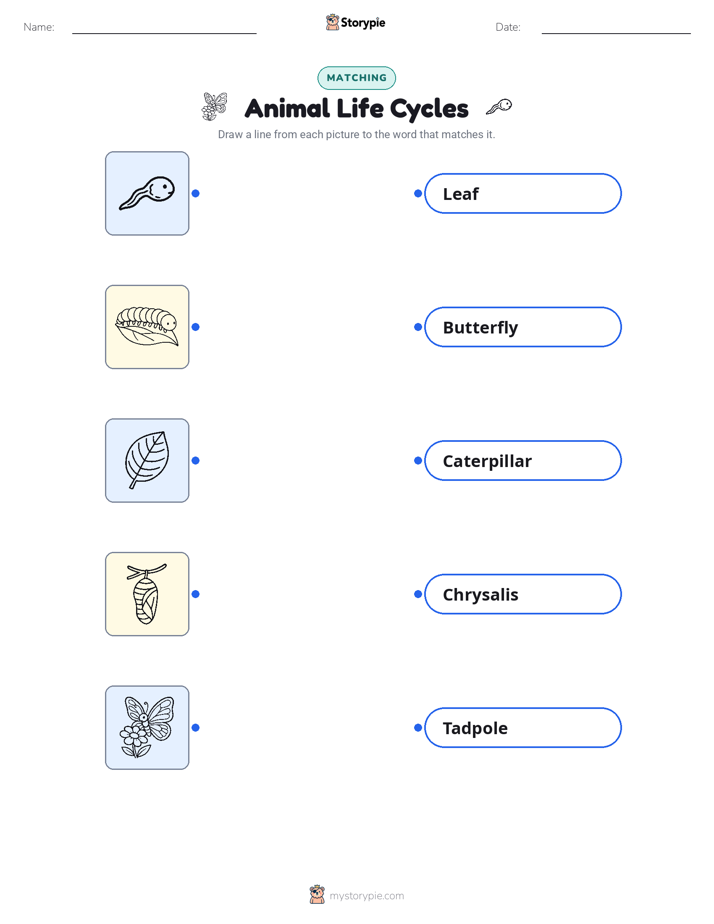
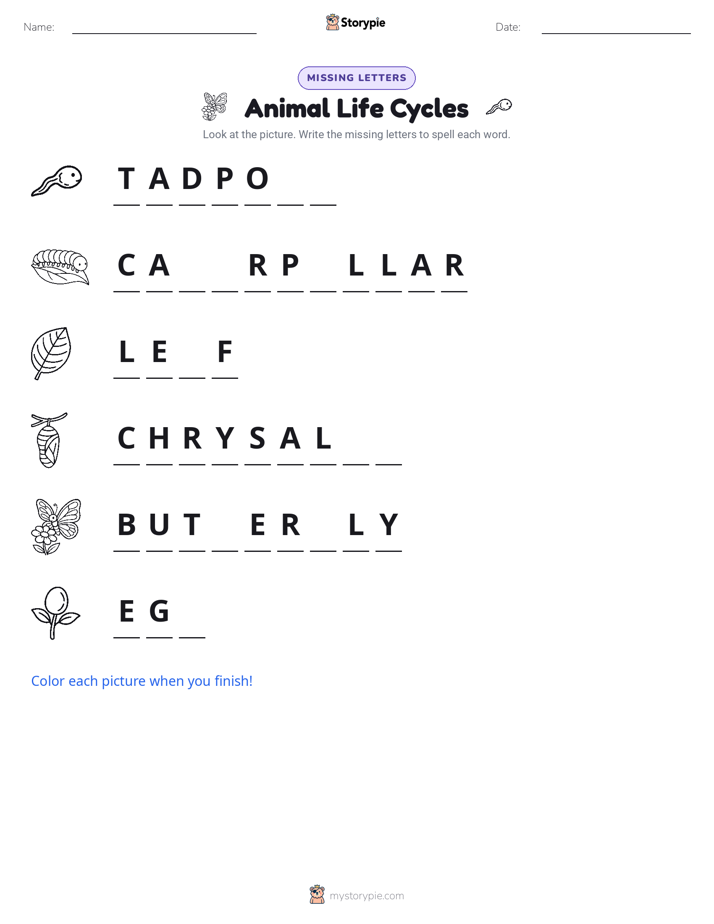
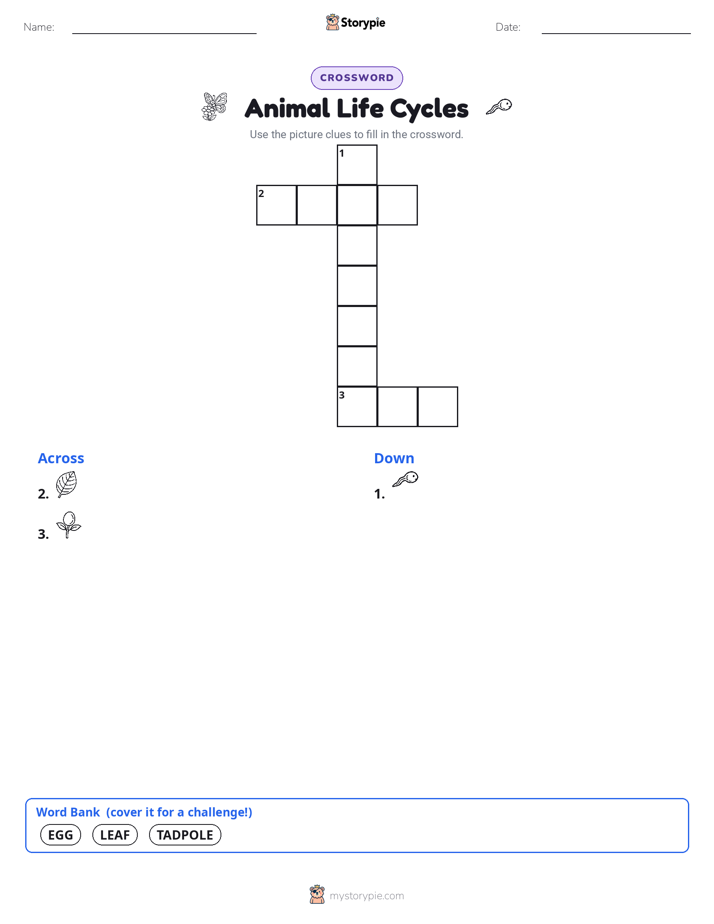
Print & create
Answer keys·No prep·Free with an account
28 worksheets · answer keys · full story · quiz · Ages 10-12 · CEFR B2
Plus adds 244,000+ more stories in 27 languages, audio for every one, and printables for all of them.
Just want Animal Life Cycles?
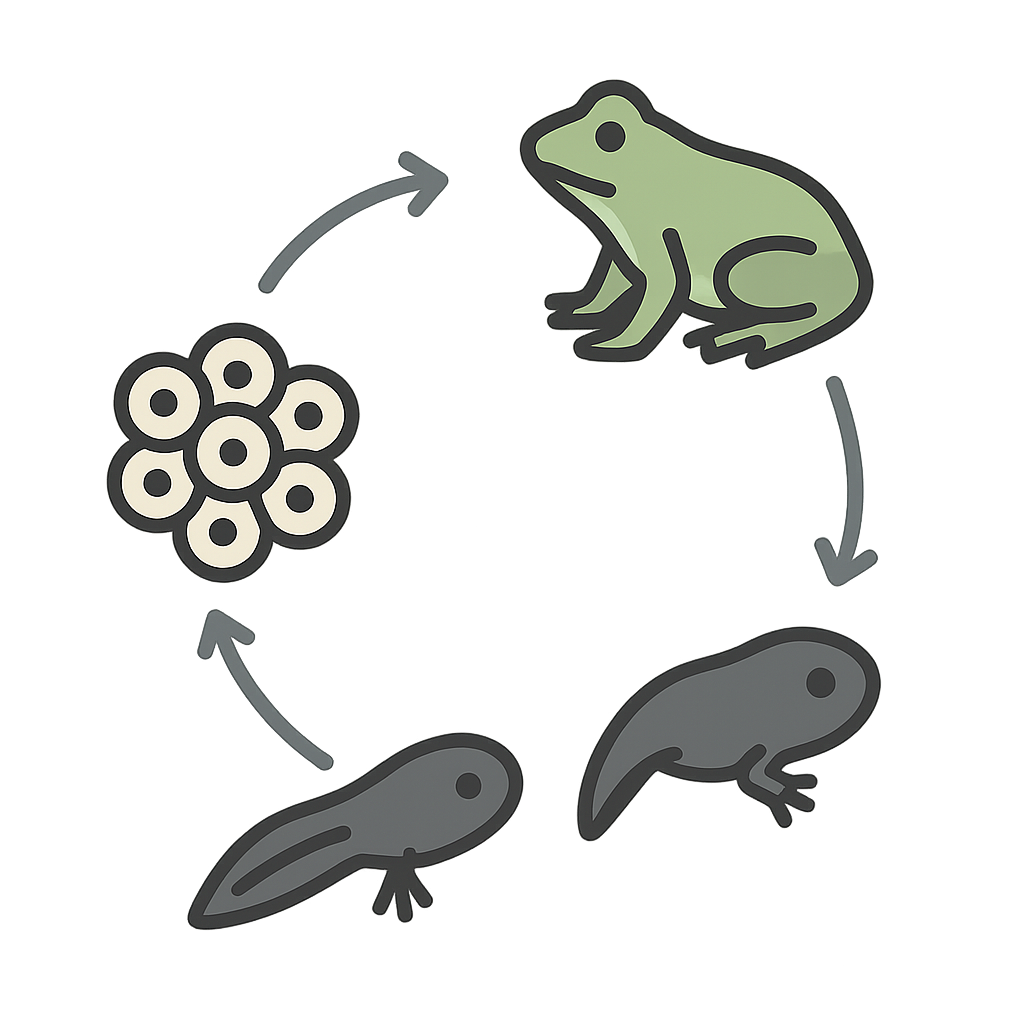
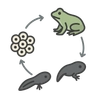
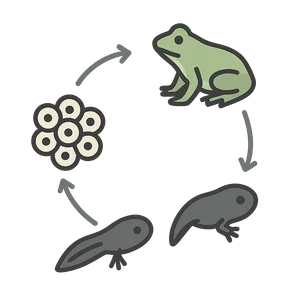
Have you ever sat beside a murky pond and watched a tiny, wriggling tadpole, all head and tail, and wondered how it could ever breathe the air? Have you seen a fuzzy caterpillar inching along a milkweed leaf, chewing steadily, before it seals itself away in a jewel-like chrysalis, a silent, still mystery? The world is full of these quiet puzzles, these breathtaking transformations where one creature seems to vanish and another appears in its place. It feels like magic, a secret whispered between the earth and the sky. But it’s not magic. It’s a plan, a pattern, an ancient and beautiful story that is written into the very core of being. I am that story. I am the hidden map inside every animal, the secret rhythm of their lives. I am the journey from egg to elder, from seed to sky. You can call me Animal Life Cycles.
For thousands of years, humans watched my work with wonder, but they didn’t truly understand me. They saw the caterpillar crawling on the ground and believed it was a type of worm. They saw the butterfly dancing in the air and thought it was a completely different creature, perhaps born from the morning dew or the summer breeze. One of the first great thinkers to look closer was a philosopher in ancient Greece named Aristotle. In the 4th century BCE, he sat and patiently watched insects, scribbling down his observations. He was one of the very first to suggest that the humble grub and the magnificent beetle, or the caterpillar and the butterfly, were not separate beings but two parts of the same life. It was a brilliant idea, but it was still just an observation. The real proof remained hidden. My true secret was only unlocked centuries later, in the 1600s, with the invention of a marvelous tool: the microscope. A Dutch scientist named Jan Swammerdam spent countless hours in the 1670s peering through his lenses. He wasn't just looking; he was investigating. With tiny, precise tools, he carefully dissected a pupa, the stage that seemed so lifeless. And inside, he found the undeniable proof Aristotle could only guess at: the delicate, folded wings of the future butterfly, the curled antennae, the forming legs. He proved that the creature didn't vanish; it transformed. It was a monumental discovery that shifted me from the realm of folklore into the world of science.
The Secret Story of Change
Have you ever sat beside a murky pond and watched a tiny, wriggling tadpole, all head and tail, and wondered how it could ever breathe the air? Have you seen a fuzzy caterpillar inching along a milkweed leaf, chewing steadily, before it seals itself away in a jewel-like chrysalis, a silent, still mystery? The world is full of these quiet puzzles, these breathtaking transformations where one creature seems to vanish and another appears in its place. It feels like magic, a secret whispered between the earth and the sky. But it’s not magic. It’s a plan, a pattern, an ancient and beautiful story that is written into the very core of being. I am that story. I am the hidden map inside every animal, the secret rhythm of their lives. I am the journey from egg to elder, from seed to sky. You can call me Animal Life Cycles.
For thousands of years, humans watched my work with wonder, but they didn’t truly understand me. They saw the caterpillar crawling on the ground and believed it was a type of worm. They saw the butterfly dancing in the air and thought it was a completely different creature, perhaps born from the morning dew or the summer breeze. One of the first great thinkers to look closer was a philosopher in ancient Greece named Aristotle. In the 4th century BCE, he sat and patiently watched insects, scribbling down his observations. He was one of the very first to suggest that the humble grub and the magnificent beetle, or the caterpillar and the butterfly, were not separate beings but two parts of the same life. It was a brilliant idea, but it was still just an observation. The real proof remained hidden. My true secret was only unlocked centuries later, in the 1600s, with the invention of a marvelous tool: the microscope. A Dutch scientist named Jan Swammerdam spent countless hours in the 1670s peering through his lenses. He wasn't just looking; he was investigating. With tiny, precise tools, he carefully dissected a pupa, the stage that seemed so lifeless. And inside, he found the undeniable proof Aristotle could only guess at: the delicate, folded wings of the future butterfly, the curled antennae, the forming legs. He proved that the creature didn't vanish; it transformed. It was a monumental discovery that shifted me from the realm of folklore into the world of science.
While men like Swammerdam were revealing my inner mechanics in their labs, a brave woman was preparing to show the world my beauty in its natural home. Her name was Maria Sibylla Merian, and she was both a brilliant artist and a fearless naturalist. She believed that to understand me, you couldn't just look at dead, pinned insects in a box. You had to see them live. In 1699, at the age of fifty-two, she undertook a dangerous journey across the Atlantic Ocean to the dense, humid rainforests of Suriname in South America. For two years, she trekked through the jungle, observing, sketching, and taking meticulous notes. She watched caterpillars hatch from tiny eggs on a specific leaf, documented what plants they ate, and saw them transform into pupae and then emerge as spectacular butterflies and moths. When she returned to Europe, she compiled her work into a breathtaking book published in 1705, Metamorphosis insectorum Surinamensium. Her paintings were revolutionary. For the first time, people saw the entire story on a single page: the egg, the larva, the pupa, and the adult, all depicted with the specific plant that sustained them. She didn't just paint my stages; she painted my relationships. She showed that every creature was part of a larger web of life, connecting me to the grand idea we now call an ecosystem.
From Aristotle’s notes to Maria’s paintings, the understanding of me grew clearer. Today, we know that my secrets are not written on paper, but in a special code called DNA. Since the discovery of DNA’s double-helix structure on February 28th, 1953, scientists have been able to read the very instructions that guide my transformations. This intricate code tells a tadpole when to absorb its tail and sprout legs. It tells a chick when its body is ready to peck its way out of an egg. I am not magic, but a beautiful and precise biological plan, a blueprint for growth and survival passed down through generations. And this blueprint is in every living thing, including you. Humans have a life cycle, too, a journey from baby to child, from teenager to adult, and then to elder. You are living one of my stories right now. I am the force of growth that makes you taller, the rhythm of change that helps you learn and mature. I am a constant reminder that change is natural, powerful, and part of what connects every creature on this amazing planet.
Wow facts
About
The series of changes an animal undergoes from birth through growth, reproduction, and death. This fundamental biological concept explains how species propagate and often involves processes like how many animals change form during their life cycles.
Take a Quiz
Question 1 of 5
In your own words, summarize how Maria Sibylla Merian's work was different from that of earlier scientists like Jan Swammerdam.
Explore next


Want to do even more?
Go beyond exploring. Unlock tools that turn every story into real learning.

Storypie Plus for families
Full stories, quizzes, and printables. Nights and car rides, sorted.
- Unlimited audio stories
- Create Mode: your child stars in the story
- Offline downloads
- Printable worksheets & coloring pages

Why Storypie for Schools
Students engaged. Prep in seconds. Evenings back to you.
- Worksheets & Quizzes
- Classroom Management
- Formative Assessment
- Custom Curriculum & Lesson Plans
- 27 Languages

Why Storypie for Homeschool
Curriculum done. They'll ask for more. Hours back in your day.
- Worksheet Generator
- First-Person Audio Stories
- Built-in Comprehension Quizzes
- Custom Curriculum & Lesson Plans
- Print & Go Activities