English

Animal Life Cycles
The series of changes an animal undergoes from birth through growth, reproduction, and death.
Reads at Grades 3–5 Listens at Grades 1–5
Print & create
Answer keys·No prep·Free with an account
28 worksheets · answer keys · full story · quiz · Ages 8-10 · CEFR B1
Plus adds 244,000+ more stories in 27 languages, audio for every one, and printables for all of them.
Just want Animal Life Cycles?
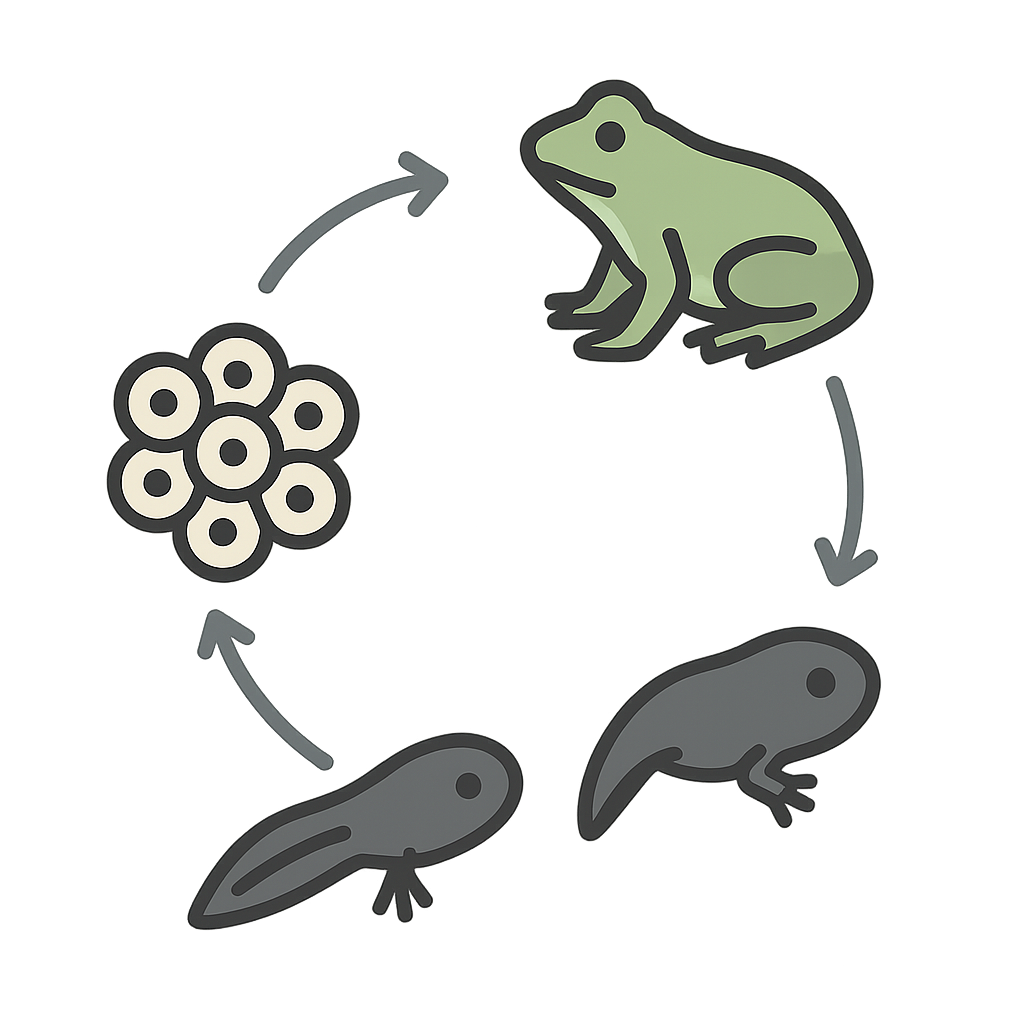
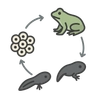
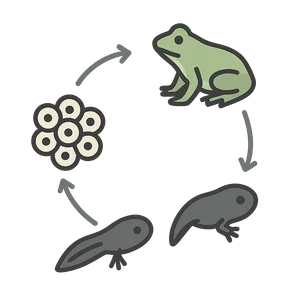
Have you ever watched a tiny, wriggling tadpole in a pond slowly sprout legs and shrink its tail until it becomes a hopping frog. Or have you seen a fuzzy caterpillar munching on a leaf, build a cozy case around itself, and later emerge as a butterfly with wings like stained glass. It is a magical trick, a secret story whispered from one generation to the next. High in the trees, a mother bird carefully builds a nest of twigs and soft feathers, waiting for her pale blue eggs to crack open. Far out in the ocean, a salmon that has spent years growing strong feels a pull to swim all the way back to the very stream where it was born, just to lay its own eggs. These are not just random events. They are all part of a grand, repeating pattern that connects every animal on Earth. I am the secret map that every creature follows, the story of how they begin, grow, change, and make new life. You can call me Animal Life Cycles.
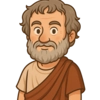
For thousands of years, people saw my amazing transformations but did not always understand them. Can you imagine seeing frogs suddenly appear from the mud after the Nile River flooded. In the 2nd millennium BCE, the Ancient Egyptians thought the frogs were born right from the mud. They even had a goddess with a frog's head named Heqet, who represented new life. A long time later, in the 4th century BCE, a very curious thinker in Ancient Greece named Aristotle spent hours watching insects. He was one of the first people to write down that creatures changed in stages, but even he got some parts wrong. For a very long time after that, many people believed in something called 'spontaneous generation,' the idea that living things like maggots could just appear from non-living things like rotting meat. It took some clever scientists to finally solve the puzzle. In 1668, an Italian scientist named Francesco Redi did a famous experiment. He put meat in two jars, leaving one open and covering the other with a cloth. Flies landed on the meat in the open jar and laid eggs, which became maggots. But no maggots appeared in the covered jar. He proved that the maggots came from fly eggs, not the meat itself. Then, in the early 1700s, a brilliant artist and scientist named Maria Sibylla Merian traveled all the way to South America to study insects. She drew incredibly detailed pictures that showed my whole story for the first time: the egg, the larva like a caterpillar, the pupa in its chrysalis, and the final adult butterfly, all on one page. Her beautiful drawings helped everyone see that I was a connected, predictable process.
The Story of Animal Life Cycles
Have you ever watched a tiny, wriggling tadpole in a pond slowly sprout legs and shrink its tail until it becomes a hopping frog. Or have you seen a fuzzy caterpillar munching on a leaf, build a cozy case around itself, and later emerge as a butterfly with wings like stained glass. It is a magical trick, a secret story whispered from one generation to the next. High in the trees, a mother bird carefully builds a nest of twigs and soft feathers, waiting for her pale blue eggs to crack open. Far out in the ocean, a salmon that has spent years growing strong feels a pull to swim all the way back to the very stream where it was born, just to lay its own eggs. These are not just random events. They are all part of a grand, repeating pattern that connects every animal on Earth. I am the secret map that every creature follows, the story of how they begin, grow, change, and make new life. You can call me Animal Life Cycles.
For thousands of years, people saw my amazing transformations but did not always understand them. Can you imagine seeing frogs suddenly appear from the mud after the Nile River flooded. In the 2nd millennium BCE, the Ancient Egyptians thought the frogs were born right from the mud. They even had a goddess with a frog's head named Heqet, who represented new life. A long time later, in the 4th century BCE, a very curious thinker in Ancient Greece named Aristotle spent hours watching insects. He was one of the first people to write down that creatures changed in stages, but even he got some parts wrong. For a very long time after that, many people believed in something called 'spontaneous generation,' the idea that living things like maggots could just appear from non-living things like rotting meat. It took some clever scientists to finally solve the puzzle. In 1668, an Italian scientist named Francesco Redi did a famous experiment. He put meat in two jars, leaving one open and covering the other with a cloth. Flies landed on the meat in the open jar and laid eggs, which became maggots. But no maggots appeared in the covered jar. He proved that the maggots came from fly eggs, not the meat itself. Then, in the early 1700s, a brilliant artist and scientist named Maria Sibylla Merian traveled all the way to South America to study insects. She drew incredibly detailed pictures that showed my whole story for the first time: the egg, the larva like a caterpillar, the pupa in its chrysalis, and the final adult butterfly, all on one page. Her beautiful drawings helped everyone see that I was a connected, predictable process.
Today, understanding me is more important than ever. I am not just a fascinating story. I am a tool that helps people care for the world. When conservationists want to protect sea turtles, they need to know my pattern. They learn where the mother turtles go to lay their eggs on the beach and when the tiny hatchlings will scramble toward the ocean. This helps them protect the nests from danger. Farmers use their knowledge of me to protect their crops. By understanding the life cycle of a pesky insect, they know the best time to stop it from eating all their vegetables. Even doctors use me. Knowing the life cycles of tiny germs and parasites helps them figure out how to stop sickness from spreading and keep people healthy. I am a beautiful, repeating circle of birth, growth, and new beginnings. I show that change is a natural and wonderful part of life and that every single stage, from the tiny egg to the grown adult, has a special purpose. The next time you see a bird's nest, a spider's egg sac, or a ladybug, look closely. You are seeing one of my stories unfold, a story that connects you to the entire animal world.
Wow facts
About
The series of changes an animal undergoes from birth through growth, reproduction, and death. This fundamental biological concept explains how species propagate and often involves processes like how many animals change form during their life cycles.
Take a Quiz
Question 1 of 5
Why do you think Maria Sibylla Merian's drawings were so important for understanding life cycles?
Explore next



Want to do even more?
Go beyond exploring. Unlock tools that turn every story into real learning.

Storypie Plus for families
Full stories, quizzes, and printables. Nights and car rides, sorted.
- Unlimited audio stories
- Create Mode: your child stars in the story
- Offline downloads
- Printable worksheets & coloring pages

Why Storypie for Schools
Students engaged. Prep in seconds. Evenings back to you.
- Worksheets & Quizzes
- Classroom Management
- Formative Assessment
- Custom Curriculum & Lesson Plans
- 27 Languages

Why Storypie for Homeschool
Curriculum done. They'll ask for more. Hours back in your day.
- Worksheet Generator
- First-Person Audio Stories
- Built-in Comprehension Quizzes
- Custom Curriculum & Lesson Plans
- Print & Go Activities