English

Animal Migration
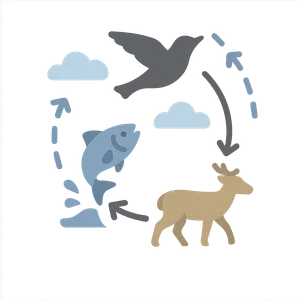
Animal migration is the seasonal…
Reads at Grades 3–5 Listens at Grades 1–5
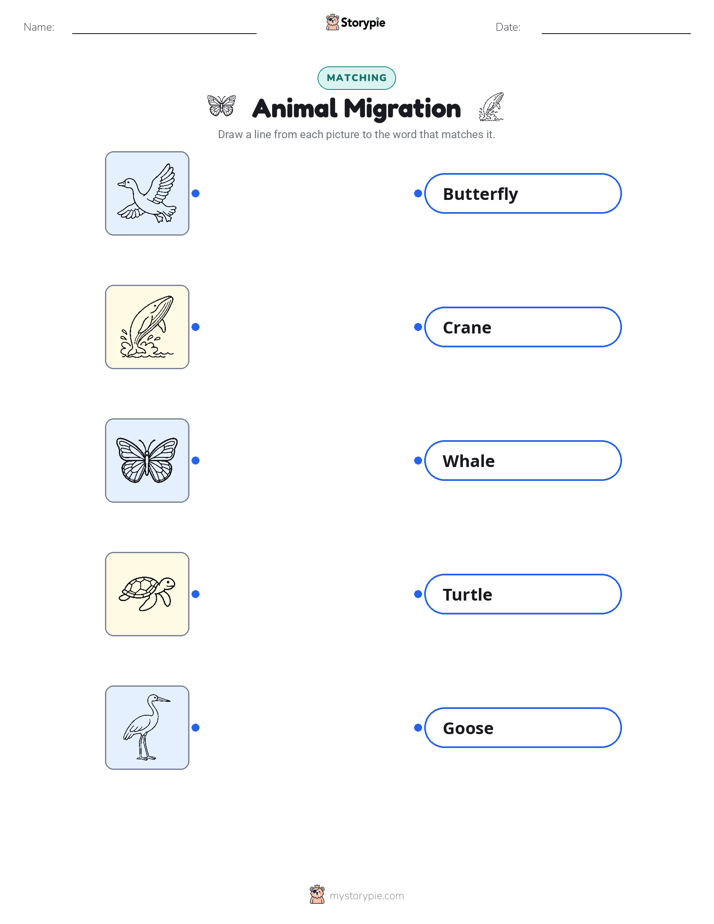
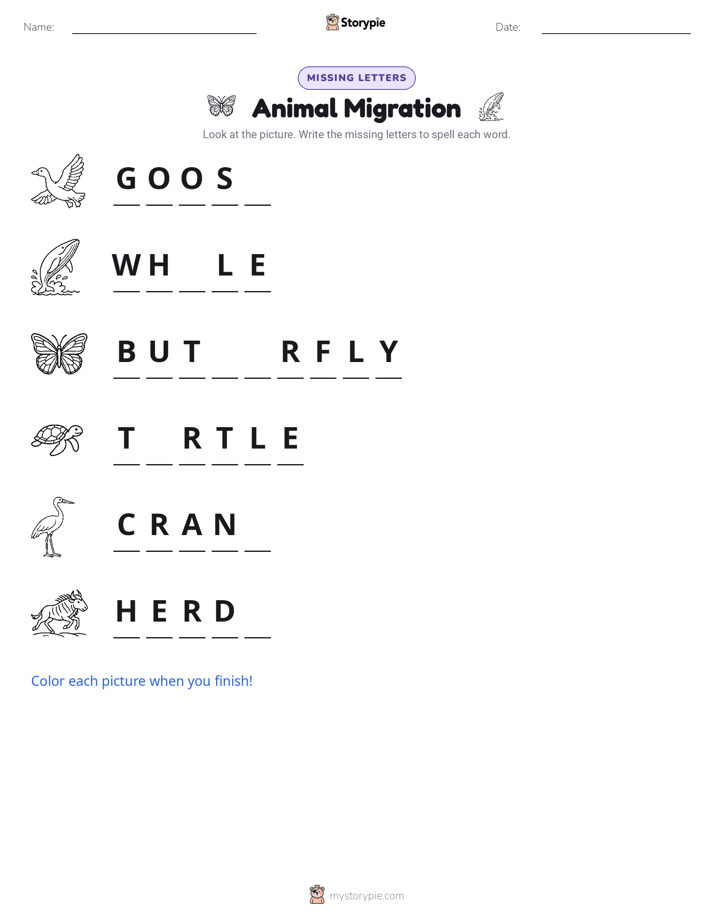
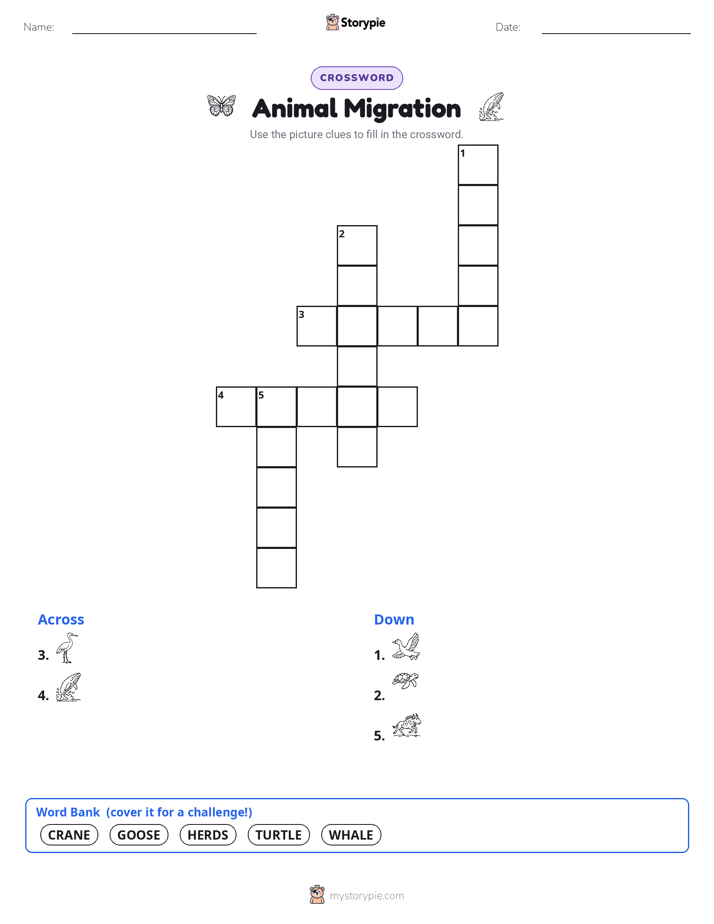
Print & create
Answer keys·No prep·Free with an account
28 worksheets · answer keys · full story · quiz · Ages 8-10 · CEFR B1
Plus adds 244,000+ more stories in 27 languages, audio for every one, and printables for all of them.
Just want Animal Migration?
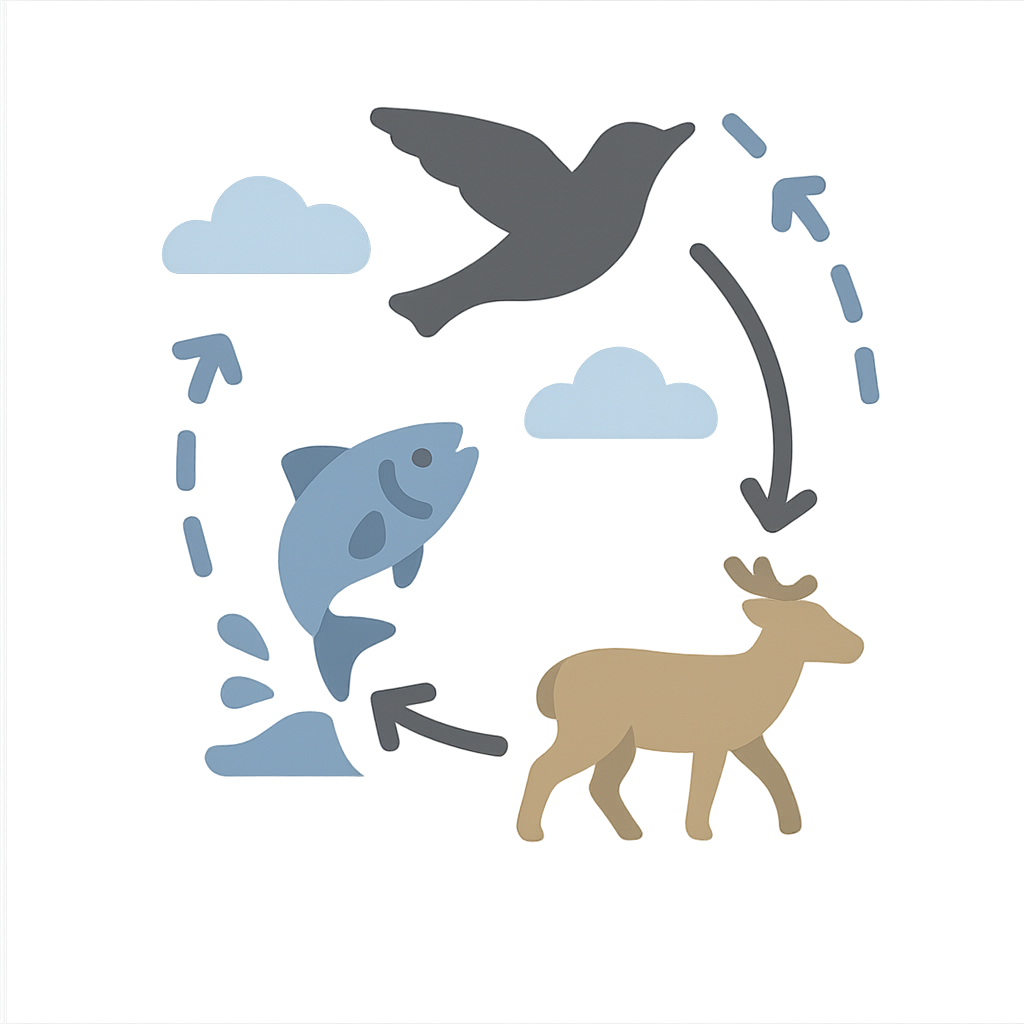
Can you feel it. A ticking clock deep inside, a secret message carried on the crisp autumn wind. It tells the geese it’s time to fly, their calls echoing as they form a perfect V in the sky. It’s a low rumble that shakes the ground as a million wildebeest begin to move as one across the plains. It’s a silent signal that sends a shimmering cloud of orange and black monarch butterflies fluttering south. For thousands of years, animals have felt this pull, this ancient and powerful urge to move. They carry a map in their hearts, a compass in their minds, showing them the way to go. What is this incredible force that guides them on their long and difficult paths. I am the great journey they all must take. I am Animal Migration.
For most of human history, my journeys were a complete mystery. People would watch flocks of birds darken the sky one day, and the next, they would be gone. Where did they go. It was a great disappearing act. Ancient people knew me well, even if they didn't understand how I worked. About 17,000 years ago, on the walls of caves in a place now called Lascaux, France, they painted amazing pictures of the great herds of horses and bison that moved with the seasons. They saw my power and respected it. Thousands of years later, in the 4th century BCE, a very clever thinker in Ancient Greece named Aristotle wrote about me. He correctly noted that cranes flew from the cold north to the warm Nile River in Egypt for the winter. But he also had some funny ideas. He guessed that smaller birds, like swallows, didn't fly away at all. He thought they just dove to the bottom of muddy ponds and slept all winter. Can you imagine. It was a good guess, but my true story was far more incredible. The biggest clue arrived on a spring day in 1822, in a German village. A white stork landed in a field, but something was very wrong. It had a long, wooden spear from central Africa stuck right through its neck. Amazingly, the bird was alive. This incredible bird, which became known as a 'Pfeilstorch,' or 'arrow stork,' was absolute proof. It had not been sleeping in a nearby pond; it had flown thousands of miles from another continent. This solved the great disappearing act. After that, people became even more curious. In 1899, a Danish schoolteacher named Hans Christian Cornelius Mortensen had a brilliant idea. He began catching storks and putting tiny, lightweight aluminum rings on their legs, each with a unique number and address. When these birds were found in other places, people could write back and say where. For the first time, humans could map my secret highways in the sky.
The Great Journey
Can you feel it. A ticking clock deep inside, a secret message carried on the crisp autumn wind. It tells the geese it’s time to fly, their calls echoing as they form a perfect V in the sky. It’s a low rumble that shakes the ground as a million wildebeest begin to move as one across the plains. It’s a silent signal that sends a shimmering cloud of orange and black monarch butterflies fluttering south. For thousands of years, animals have felt this pull, this ancient and powerful urge to move. They carry a map in their hearts, a compass in their minds, showing them the way to go. What is this incredible force that guides them on their long and difficult paths. I am the great journey they all must take. I am Animal Migration.
For most of human history, my journeys were a complete mystery. People would watch flocks of birds darken the sky one day, and the next, they would be gone. Where did they go. It was a great disappearing act. Ancient people knew me well, even if they didn't understand how I worked. About 17,000 years ago, on the walls of caves in a place now called Lascaux, France, they painted amazing pictures of the great herds of horses and bison that moved with the seasons. They saw my power and respected it. Thousands of years later, in the 4th century BCE, a very clever thinker in Ancient Greece named Aristotle wrote about me. He correctly noted that cranes flew from the cold north to the warm Nile River in Egypt for the winter. But he also had some funny ideas. He guessed that smaller birds, like swallows, didn't fly away at all. He thought they just dove to the bottom of muddy ponds and slept all winter. Can you imagine. It was a good guess, but my true story was far more incredible. The biggest clue arrived on a spring day in 1822, in a German village. A white stork landed in a field, but something was very wrong. It had a long, wooden spear from central Africa stuck right through its neck. Amazingly, the bird was alive. This incredible bird, which became known as a 'Pfeilstorch,' or 'arrow stork,' was absolute proof. It had not been sleeping in a nearby pond; it had flown thousands of miles from another continent. This solved the great disappearing act. After that, people became even more curious. In 1899, a Danish schoolteacher named Hans Christian Cornelius Mortensen had a brilliant idea. He began catching storks and putting tiny, lightweight aluminum rings on their legs, each with a unique number and address. When these birds were found in other places, people could write back and say where. For the first time, humans could map my secret highways in the sky.
My journey continues today, but the way people follow me has changed. Scientists no longer have to wait for someone to find a ringed bird. Now, they can attach tiny, lightweight satellite trackers to my travelers, like little backpacks on a Bar-tailed Godwit or a special tag on the fin of a Humpback Whale. These amazing tools show my exact paths in real time, connecting forests in North America to jungles in South America, and oceans in the Arctic to the warm waters near the equator. I am so much more than just a long trip. I am the thread that stitches the world’s wild places together. My travelers carry seeds to plant new forests and pollinate flowers along the way. I am the rhythm of the planet, the promise that no matter how cold the winter, spring will always return with the song of a bird that has traveled thousands of miles to be there. So the next time you see a flock of birds painting a pattern across the sky or hear about the great herds moving across the land, remember my ancient story. You are part of a planet that is always on the move, always connected, and always full of wonder.
Wow facts
About
Animal migration is the seasonal, large-scale movement of animals from one habitat to another in search of food, better conditions, or breeding grounds.
Take a Quiz
Question 1 of 5
In the story, Animal Migration is called an 'ancient, powerful urge.' What does the word 'urge' mean in this sentence?
Explore next






Want to do even more?
Go beyond exploring. Unlock tools that turn every story into real learning.

Storypie Plus for families
Full stories, quizzes, and printables. Nights and car rides, sorted.
- Unlimited audio stories
- Create Mode: your child stars in the story
- Offline downloads
- Printable worksheets & coloring pages

Why Storypie for Schools
Students engaged. Prep in seconds. Evenings back to you.
- Worksheets & Quizzes
- Classroom Management
- Formative Assessment
- Custom Curriculum & Lesson Plans
- 27 Languages

Why Storypie for Homeschool
Curriculum done. They'll ask for more. Hours back in your day.
- Worksheet Generator
- First-Person Audio Stories
- Built-in Comprehension Quizzes
- Custom Curriculum & Lesson Plans
- Print & Go Activities