English


Architecture
Architecture is the art and science of designing and constructing buildings and other physical structures.
Reads at Grades 6–8 Listens at Grades 4–8
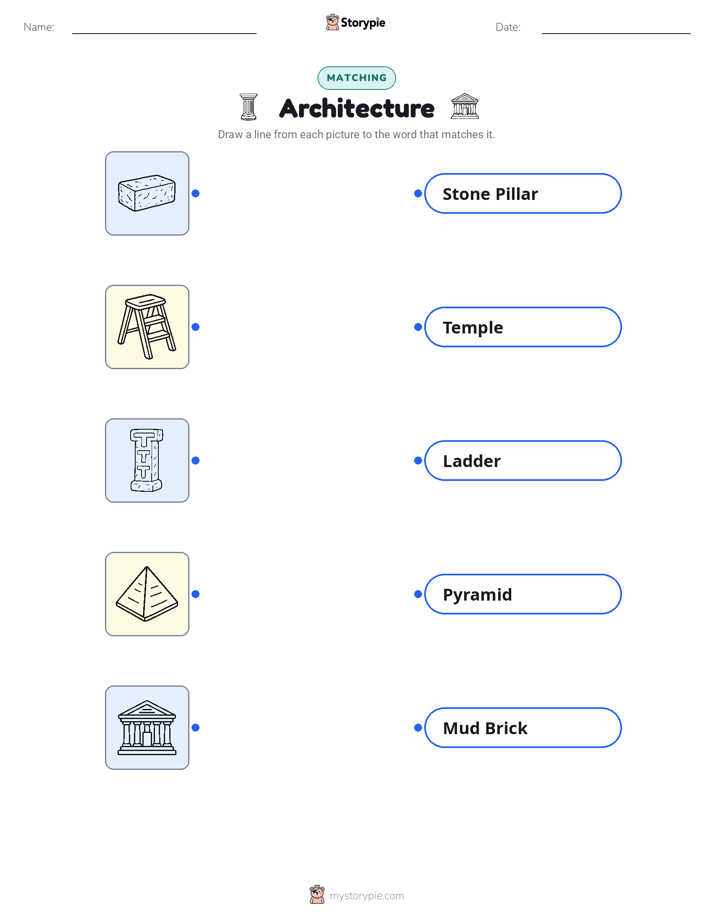
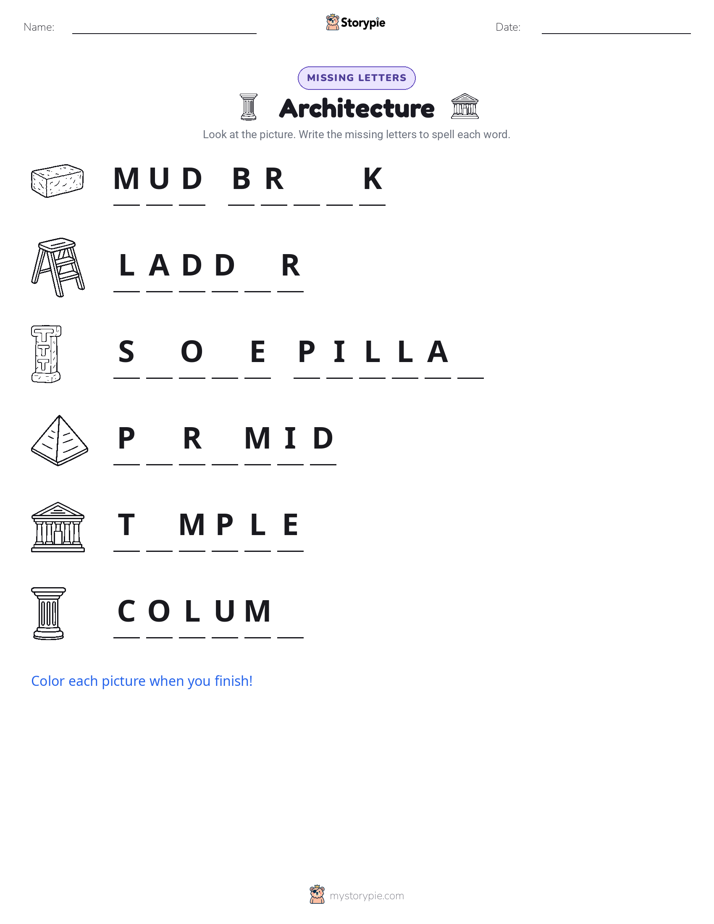
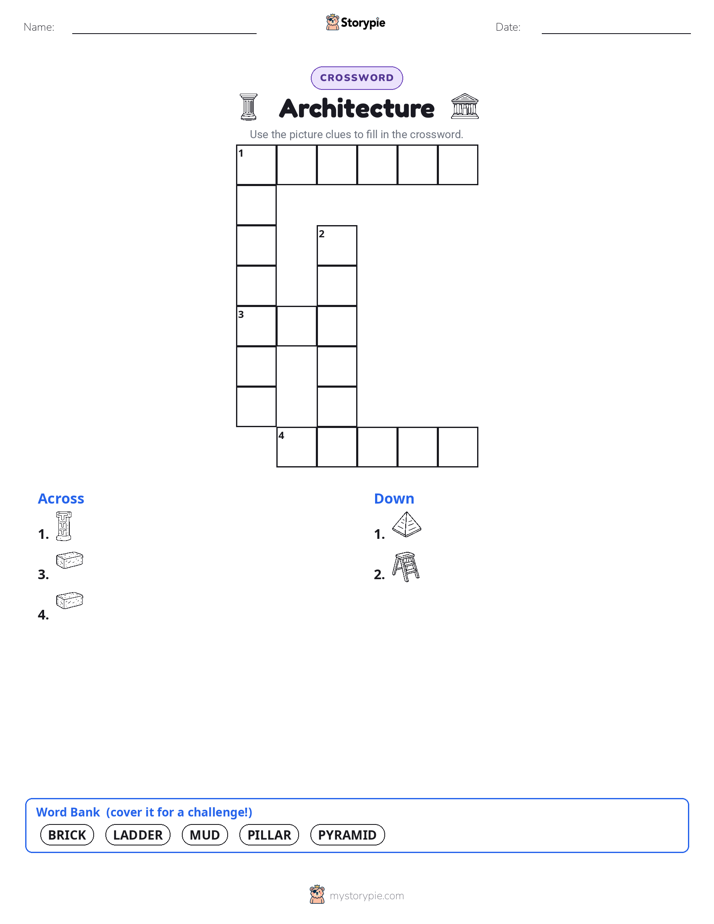
Print & create
Answer keys·No prep·Free with an account
28 worksheets · answer keys · full story · quiz · Ages 10-12 · CEFR B2
Plus adds 244,000+ more stories in 27 languages, audio for every one, and printables for all of them.
Just want Architecture?
Imagine the feeling of being snug in your house while a thunderstorm rages outside, the wind howling and the rain drumming on the roof. Think about the awe you feel when you crane your neck back to see the top of a skyscraper that seems to pierce the clouds. Picture the quiet, focused energy of a library, where shelves packed with stories stretch high above you. I am in all of these places. I am the invisible plan that gives shape to the spaces where you live your life—where you learn, play, and dream. You can find me in the graceful curve of a steel bridge, the soaring height of a cathedral spire, and the simple comfort of your own bedroom. I am the spark of an idea, the careful calculation, and the creative vision that transforms a pile of wood, stone, glass, and steel into a place with purpose and feeling. I am the art and science of designing buildings and spaces. I am Architecture.
My story began when humanity first decided to put down roots. For countless generations, humans were nomadic, following herds and seasons. But with the dawn of agriculture around 10,000 BCE, everything changed. People needed permanent homes near their crops and communities. In a place called Çatalhöyük in modern-day Turkey, one of the world's first cities emerged around 7500 BCE. Here, people built homes from mud-brick, packed so densely together that there were no streets. They walked across the rooftops and climbed down ladders to enter their homes. This unique design created a strong, defensive community. But even before that, my purpose went beyond simple shelter. At a site named Göbekli Tepe, dating back to around 9500 BCE, hunter-gatherers erected massive, carved stone pillars in large circles. They weren't homes; they were ceremonial centers. This proves that from my earliest moments, I was used not just to protect bodies, but to bring people together, to create places for community, and to give physical form to their most important beliefs.
The Story of Architecture
Imagine the feeling of being snug in your house while a thunderstorm rages outside, the wind howling and the rain drumming on the roof. Think about the awe you feel when you crane your neck back to see the top of a skyscraper that seems to pierce the clouds. Picture the quiet, focused energy of a library, where shelves packed with stories stretch high above you. I am in all of these places. I am the invisible plan that gives shape to the spaces where you live your life—where you learn, play, and dream. You can find me in the graceful curve of a steel bridge, the soaring height of a cathedral spire, and the simple comfort of your own bedroom. I am the spark of an idea, the careful calculation, and the creative vision that transforms a pile of wood, stone, glass, and steel into a place with purpose and feeling. I am the art and science of designing buildings and spaces. I am Architecture.
My story began when humanity first decided to put down roots. For countless generations, humans were nomadic, following herds and seasons. But with the dawn of agriculture around 10,000 BCE, everything changed. People needed permanent homes near their crops and communities. In a place called Çatalhöyük in modern-day Turkey, one of the world's first cities emerged around 7500 BCE. Here, people built homes from mud-brick, packed so densely together that there were no streets. They walked across the rooftops and climbed down ladders to enter their homes. This unique design created a strong, defensive community. But even before that, my purpose went beyond simple shelter. At a site named Göbekli Tepe, dating back to around 9500 BCE, hunter-gatherers erected massive, carved stone pillars in large circles. They weren't homes; they were ceremonial centers. This proves that from my earliest moments, I was used not just to protect bodies, but to bring people together, to create places for community, and to give physical form to their most important beliefs.
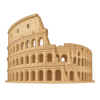
As great civilizations rose, I grew and flourished alongside them, becoming grander and more complex. In the sun-scorched land of ancient Egypt, I was a tool to defy time itself. The pharaohs wanted to build for eternity, and so I helped them create the Great Pyramid of Giza, a wonder of the world finished around 2560 BCE. It was a colossal tomb, built with breathtaking mathematical precision, designed to protect a king's soul forever. Then came the ancient Greeks, who believed I should reflect harmony, reason, and ideal beauty. In Athens, they used me to build the Parthenon, a temple dedicated to the goddess Athena, completed in 432 BCE. Its elegant, perfectly proportioned columns have been copied for centuries and still represent classical beauty. The Romans, however, were master engineers who saw me as a way to demonstrate their power and ingenuity. They perfected the arch and the dome and invented a revolutionary material: concrete. These innovations allowed them to build on a scale never seen before, from the mighty Colosseum, which opened in 80 CE and could hold over 50,000 spectators, to the magnificent Pantheon, a temple with a breathtaking domed ceiling, completed around 128 CE, that still stands today as a testament to their genius.
Through the centuries, I continued to evolve, reaching ever greater heights. During the Middle Ages in Europe, a new style emerged in the 12th century CE. Builders, driven by faith, wanted their cathedrals to soar toward the heavens. Using pointed arches, ribbed vaults, and clever external supports called flying buttresses, they created the Gothic style. These techniques allowed them to build thin, towering stone walls that could support vast, colorful stained-glass windows. For the first time, the inside of a massive building could be flooded with divine, colored light. Much later, the Industrial Revolution of the 18th and 19th centuries brought another wave of change, introducing powerful new materials like mass-produced steel and large panes of glass. In the late 19th century, these materials made something incredible possible: the skyscraper. Architects could now design skeletal frames of steel that could carry a building’s weight, allowing them to climb higher than ever. Cities like Chicago and New York began to grow up instead of out, and their skylines were transformed into jagged, exciting landscapes of ambition.
Today, you can find me all around you, and my work is more critical than ever. My purpose is no longer just about being the biggest, the tallest, or the most decorated. Now, I am about being smart, responsible, and kind to our planet. Architects and engineers work together to design 'green' buildings that generate their own energy with solar panels, cool themselves with rooftop gardens, and are built with recycled materials. They use me to create schools with bright, open spaces that make you excited to learn, and design hospitals with peaceful views and natural light that can help people feel calm and heal faster. I am in the clever design of a comfortable chair, the layout of your neighborhood park, and the welcoming entrance to your local library. I am a living story of human creativity, problem-solving, and dreams. And my next chapter is unwritten, waiting for you to design it. What amazing places will you imagine?
Wow facts
About
Architecture is the art and science of designing and constructing buildings and other physical structures. It shapes the world we live in, from our homes and schools to the grandest monuments.
Take a Quiz
Question 1 of 5
What is the main idea of the section 'Growing Up with Great Civilizations'?
Explore next





Want to do even more?
Go beyond exploring. Unlock tools that turn every story into real learning.

Storypie Plus for families
Full stories, quizzes, and printables. Nights and car rides, sorted.
- Unlimited audio stories
- Create Mode: your child stars in the story
- Offline downloads
- Printable worksheets & coloring pages

Why Storypie for Schools
Students engaged. Prep in seconds. Evenings back to you.
- Worksheets & Quizzes
- Classroom Management
- Formative Assessment
- Custom Curriculum & Lesson Plans
- 27 Languages

Why Storypie for Homeschool
Curriculum done. They'll ask for more. Hours back in your day.
- Worksheet Generator
- First-Person Audio Stories
- Built-in Comprehension Quizzes
- Custom Curriculum & Lesson Plans
- Print & Go Activities