English


Architecture
Architecture is the art and science of designing and constructing buildings and other physical structures.
Reads at Grades 3–5 Listens at Grades 1–5
Print & create
Answer keys·No prep·Free with an account
28 worksheets · answer keys · full story · quiz · Ages 8-10 · CEFR B1
Plus adds 244,000+ more stories in 27 languages, audio for every one, and printables for all of them.
Just want Architecture?
I am the reason you have a cozy roof over your head when it rains and a cool, shady spot when the sun is bright. I am in the shape of your school, the height of the tallest skyscraper, and the curve of a magnificent bridge. I am the walls that keep you safe, the windows that let you see the world, and the doorways you walk through every day. Before you knew my name, you knew how I felt: like a safe hug, a grand adventure, or a quiet place to think. I am the art of making places for people. Hello, I am Architecture.
My story began a very long time ago, when the first humans decided to build their own homes instead of just finding caves. Around 40,000 BCE, they used mammoth bones and animal skins to create sturdy tents. Can you imagine living in a house made of bones? Then, as people started farming around 10,000 BCE, they needed to stay in one place, so they built the first towns. In a place called Çatalhöyük in modern-day Turkey, around 7500 BCE, people built houses packed right next to each other, with doors on the roofs that they climbed into with ladders. I was growing up, learning how to build communities. My first famous builder that we know by name was a brilliant Egyptian named Imhotep. Around the year 2670 BCE, he designed a special new tomb called the Step Pyramid for his king, Djoser. It looked like giant steps leading to the sky. A little later, around 2580 BCE, I helped the Egyptians build the Great Pyramids of Giza—giant, mysterious stone structures that have puzzled people for thousands of years.
The Story of Architecture
I am the reason you have a cozy roof over your head when it rains and a cool, shady spot when the sun is bright. I am in the shape of your school, the height of the tallest skyscraper, and the curve of a magnificent bridge. I am the walls that keep you safe, the windows that let you see the world, and the doorways you walk through every day. Before you knew my name, you knew how I felt: like a safe hug, a grand adventure, or a quiet place to think. I am the art of making places for people. Hello, I am Architecture.
My story began a very long time ago, when the first humans decided to build their own homes instead of just finding caves. Around 40,000 BCE, they used mammoth bones and animal skins to create sturdy tents. Can you imagine living in a house made of bones? Then, as people started farming around 10,000 BCE, they needed to stay in one place, so they built the first towns. In a place called Çatalhöyük in modern-day Turkey, around 7500 BCE, people built houses packed right next to each other, with doors on the roofs that they climbed into with ladders. I was growing up, learning how to build communities. My first famous builder that we know by name was a brilliant Egyptian named Imhotep. Around the year 2670 BCE, he designed a special new tomb called the Step Pyramid for his king, Djoser. It looked like giant steps leading to the sky. A little later, around 2580 BCE, I helped the Egyptians build the Great Pyramids of Giza—giant, mysterious stone structures that have puzzled people for thousands of years.
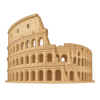
As I traveled to new places, I learned new tricks. In ancient Greece, I became very focused on beauty and balance. The Greeks created magnificent temples for their gods, with rows of strong, elegant columns that looked both powerful and graceful. They invented three styles—Doric, Ionic, and Corinthian—that we still use today to make buildings look important. The most famous example is the Parthenon in Athens, which was started in 447 BCE. Then came the Romans, who were incredible engineers. They were like the superstar problem-solvers of the ancient world. They figured out how to use the arch and the dome to build bigger and more amazing spaces than ever before. Thanks to them, I could create the giant Colosseum for gladiator games, which was finished in 80 CE, and the Pantheon, a temple with a giant hole in its roof open to the sky. A Roman writer named Vitruvius even wrote a huge book all about me in the 1st century BCE, explaining the best ways to design buildings so they would be strong, useful, and beautiful.
I never stopped learning. During the Middle Ages, I learned to create soaring Gothic cathedrals with pointed arches and colorful stained-glass windows that told stories without words, like Notre-Dame in Paris, which was started in 1163. These buildings reached toward the heavens. Later, in the late 19th century, new materials like steel and the invention of the elevator allowed me to stretch higher than ever before, creating the first skyscrapers that touched the clouds in big cities. Today, I am still evolving. I help people design 'green' buildings that are kind to our planet by using less energy and collecting rainwater. I am in the design of your favorite library, the local museum, and the house you call home. I am always here, working with people to build a more beautiful, safe, and inspiring world, one building at a time.
Wow facts
About
Architecture is the art and science of designing and constructing buildings and other physical structures. It shapes the world we live in, from our homes and schools to the grandest monuments.
Take a Quiz
Question 1 of 5
In the story, who was the first famous builder mentioned by name, and what did he design?
Explore next





Want to do even more?
Go beyond exploring. Unlock tools that turn every story into real learning.

Storypie Plus for families
Full stories, quizzes, and printables. Nights and car rides, sorted.
- Unlimited audio stories
- Create Mode: your child stars in the story
- Offline downloads
- Printable worksheets & coloring pages

Why Storypie for Schools
Students engaged. Prep in seconds. Evenings back to you.
- Worksheets & Quizzes
- Classroom Management
- Formative Assessment
- Custom Curriculum & Lesson Plans
- 27 Languages

Why Storypie for Homeschool
Curriculum done. They'll ask for more. Hours back in your day.
- Worksheet Generator
- First-Person Audio Stories
- Built-in Comprehension Quizzes
- Custom Curriculum & Lesson Plans
- Print & Go Activities