English


The Language of the Stars
Imagine the world before electric lights, when the night sky was a deep, velvet blanket sprinkled with countless glittering diamonds. For thousands of years, people would lie on their backs, look up into that vast darkness, and play a grand game of connect-the-dots. They saw mighty heroes, fierce lions, graceful swans, and mysterious creatures traced in the shimmering lights. They noticed that while most stars stayed in their patterns, a few special ones seemed to wander across this celestial map. These were the planets, the ‘wandering stars,’ each moving to its own secret rhythm against the backdrop of the constellations. People felt a deep connection to this cosmic dance. They wondered if the stories in the sky had anything to do with their own lives down below, if the heavens held a secret language just waiting to be understood. They were right to wonder, because that is exactly what I am. I am the ancient language of the stars, the story that connects the heavens to your life on Earth. My name is Astrology.
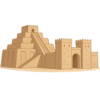
My story begins in the fertile lands of Mesopotamia, a place you might know as the home of the Babylonians, nearly 4,000 years ago. These ancient people were the most dedicated sky-watchers you could imagine. Starting around the 2nd millennium BCE, they built magnificent stepped temples called ziggurats that reached toward the heavens, giving their priests and scholars a clear, unobstructed view of the night. To them, the sky was not just a beautiful sight; it was a divine message board. They believed the movements of the Sun, the phases of the Moon, and the wandering paths of the planets were communications from their gods. They didn't ask me about their daily moods or who their best friend would be. Instead, they used me for matters of the state. They carefully recorded celestial events to predict things that were vital to their survival and prosperity, like when the great Tigris and Euphrates rivers would flood, or whether it was a favorable time to plant their barley crops or go to war. Around the 5th century BCE, they mapped out a special belt in the sky, a path that the Sun, Moon, and planets always follow. They divided this path into twelve equal parts, each marked by a constellation. This was the very first zodiac, a celestial calendar that became my foundation.
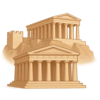
My ideas were too big to stay in one place. Like a traveler on a long journey, I moved from Mesopotamia and was welcomed by the pyramid-builders of ancient Egypt. But it was in ancient Greece, around the 4th century BCE, that I truly found a new home and transformed. The Greeks were thinkers who loved logic, mathematics, and philosophy. They took the Babylonians' observations and began to organize me into a more systematic structure. It was here that my focus shifted from the fate of kingdoms to the destiny of individuals. The Greeks developed the idea of the personal horoscope, what we now call a birth chart. This was a unique snapshot of the heavens, a map of where all the planets were at the precise moment a person was born. They believed this celestial blueprint could reveal a person's character, strengths, and challenges. My influence grew even more when I became part of the Roman Empire. In the 2nd century CE, a brilliant scholar named Claudius Ptolemy, living in the Egyptian city of Alexandria, wrote a book that would define me for centuries. It was called the 'Tetrabiblos', and it became my primary textbook for over 1,500 years, shaping how everyone from European kings to Middle Eastern scholars understood and practiced my art.
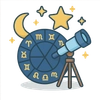
For most of history, I had a constant companion, a sibling you might say. My sibling’s name is Astronomy. For centuries, we were two sides of the same coin, and you couldn't study one without the other. To understand the messages of the stars, you first had to understand their movements. Great thinkers like Johannes Kepler, who in the 17th century figured out the laws of planetary motion, was a brilliant mathematician and astronomer, but he was also a practicing astrologer. We grew up together, hand in hand, looking at the same sky. But then came a period called the Age of Enlightenment, when the rules for knowing things began to change. People wanted proof they could measure and test with new instruments like the telescope. My sibling, Astronomy, grew up to become the science of 'how' the universe works, focusing on physics, gravity, and the physical properties of celestial bodies. I, Astrology, remained focused on the 'meaning' that humans find in the cosmos. We still look at the same stars, but we now tell two very different kinds of stories about them.
Today, you won’t find many world leaders consulting me before making a decision, and most people don't use me to predict the fate of nations. My role has changed once again. Now, I am seen as a tool for self-discovery and reflection. People look to me as a fun and imaginative way to think about their personalities, to understand their strengths, and to explore how they connect with the people around them. I have become a language for talking about ourselves, a source of inspiration, and a wonderful conversation starter. So the next time you are outside on a clear night, I encourage you to look up. Find a constellation, spot a wandering planet, and remember that you are part of a long and beautiful human tradition of finding stories, meaning, and a sense of wonder in the great, glittering cosmos.