English

Baby Animals and Their Parents
The biological and behavioral relationship between animal parents and their offspring…
Reads at Grades 3–5 Listens at Grades 1–5
Print & create
Answer keys·No prep·Free with an account
28 worksheets · answer keys · full story · quiz · Ages 8-10 · CEFR B1
Plus adds 244,000+ more stories in 27 languages, audio for every one, and printables for all of them.
Just want Baby Animals and Their Parents?
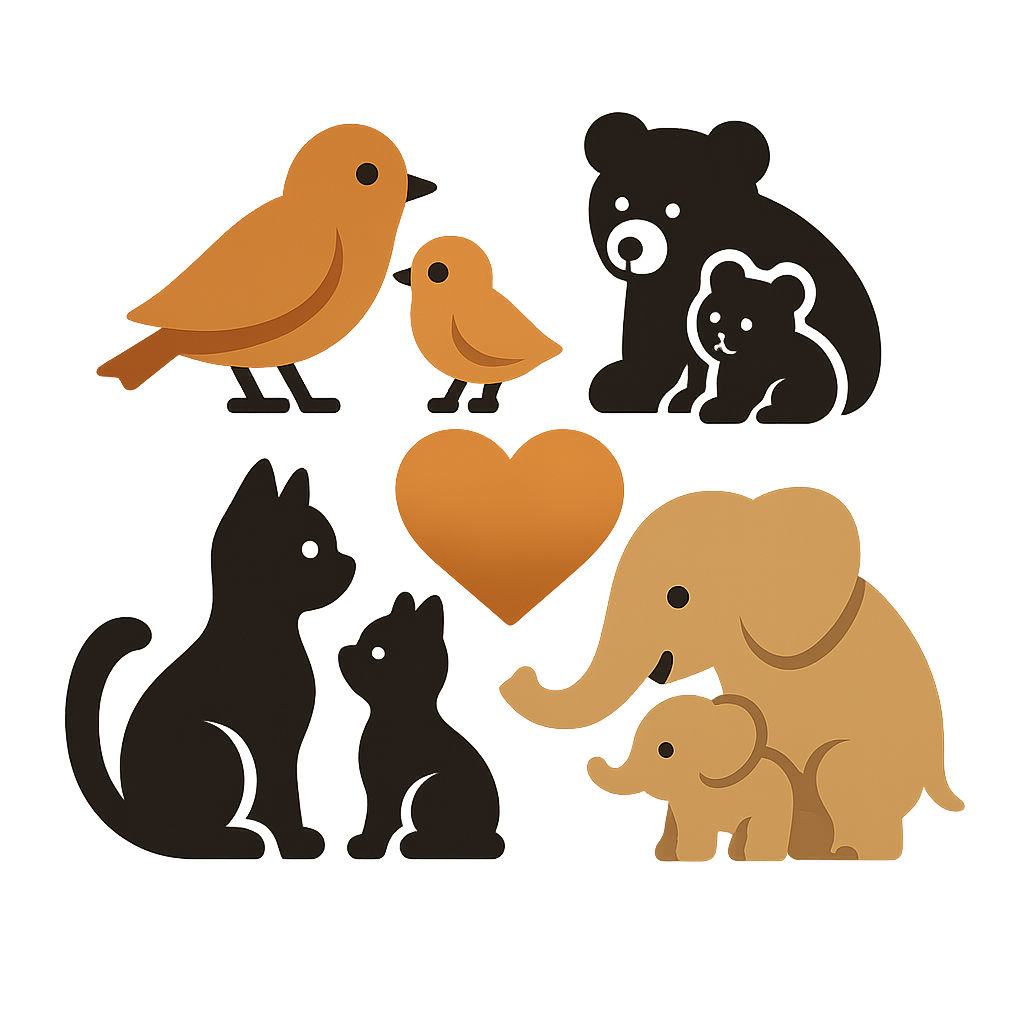
Have you ever felt a connection so warm and safe it feels like a fuzzy blanket wrapped around you. I am that feeling. I am the wiggle of a baby kangaroo peeking out from its mother’s pouch, feeling the gentle sway of her hops. I am the invisible string that keeps a line of fluffy ducklings paddling perfectly behind their mom, their tiny feet kicking in unison. I am the deep, comforting rumble a wolf pup feels when it nuzzles into its parent’s thick fur after a long day of play. You can’t see me, but you can feel me everywhere in the animal kingdom. It is a powerful, ancient pull that whispers, ‘You are safe, you are loved, you belong.’ Have you ever felt that powerful pull of family. It’s a wonderful feeling, isn’t it. I am the bond between Baby Animals and Their Parents.
For a very, very long time, humans have watched me work my magic. Can you imagine living thousands of years ago. Early humans saw me in the great herds of woolly mammoths, where giant mothers protected their calves with their enormous tusks. They saw me in the graceful deer, as fawns with wobbly legs learned to leap and run by their mother’s side. They knew I was special, so they recorded what they saw. On the cool, dark walls of caves in a place called Lascaux in France, around 17,000 BCE, they drew pictures of animal families. Thousands of years later, in Ancient Greece during the 4th century BCE, a very smart thinker named Aristotle didn't just watch. He wrote everything down in a big book called ‘History of Animals.’ He described how mother birds tirelessly brought worms to their chirping chicks and how dolphin mothers guided their calves through the wide-open sea. For centuries, people knew I was there, connecting families. But they were still figuring out my big secret: why I am so important.
The Whispers of the Wild
Have you ever felt a connection so warm and safe it feels like a fuzzy blanket wrapped around you. I am that feeling. I am the wiggle of a baby kangaroo peeking out from its mother’s pouch, feeling the gentle sway of her hops. I am the invisible string that keeps a line of fluffy ducklings paddling perfectly behind their mom, their tiny feet kicking in unison. I am the deep, comforting rumble a wolf pup feels when it nuzzles into its parent’s thick fur after a long day of play. You can’t see me, but you can feel me everywhere in the animal kingdom. It is a powerful, ancient pull that whispers, ‘You are safe, you are loved, you belong.’ Have you ever felt that powerful pull of family. It’s a wonderful feeling, isn’t it. I am the bond between Baby Animals and Their Parents.
For a very, very long time, humans have watched me work my magic. Can you imagine living thousands of years ago. Early humans saw me in the great herds of woolly mammoths, where giant mothers protected their calves with their enormous tusks. They saw me in the graceful deer, as fawns with wobbly legs learned to leap and run by their mother’s side. They knew I was special, so they recorded what they saw. On the cool, dark walls of caves in a place called Lascaux in France, around 17,000 BCE, they drew pictures of animal families. Thousands of years later, in Ancient Greece during the 4th century BCE, a very smart thinker named Aristotle didn't just watch. He wrote everything down in a big book called ‘History of Animals.’ He described how mother birds tirelessly brought worms to their chirping chicks and how dolphin mothers guided their calves through the wide-open sea. For centuries, people knew I was there, connecting families. But they were still figuring out my big secret: why I am so important.
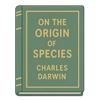
Then came a time when curious scientists started asking a new question: not just ‘what’ but ‘Why.’. On November 24th, 1859, a man named Charles Darwin wrote a famous book that explained I was nature’s super-plan for helping babies survive long enough to grow up. Soon, special scientists who study me, called ethologists, wanted to know more. In the 1930s, a scientist named Konrad Lorenz did a fascinating experiment. He was there when a group of goose eggs hatched, and since he was the first moving thing the baby geese saw, they followed him everywhere. They swam when he swam and walked when he walked, as if he were their mother. He called this ‘imprinting,’ and it showed how deep and instinctual I can be. Then, on July 14th, 1960, a kind and patient woman named Jane Goodall traveled to Africa to live with chimpanzees. She showed the world that I wasn't just about instinct. She watched chimpanzee mothers hug their babies, play with them, and even teach them how to use sticks as tools to get tasty termites. I was also about love and learning. For figuring out my secrets, scientists like Lorenz were even given a very important award called the Nobel Prize on October 11th, 1973.
Today, knowing my secrets helps the world in amazing ways. I help scientists and zookeepers who are working hard to save endangered species. By understanding how animal parents raise their young, they can create safe places for tigers, pandas, and condors to raise their own families and bring their species back from the brink of disappearing forever. I am a reminder to everyone that families, whether they have fur, feathers, or skin, are essential for learning, growing strong, and feeling secure. I am the reason a tiny cub can grow into a mighty lion and a clumsy fledgling can learn to soar through the sky. Every time you see a bird teaching its chick to fly, or a cat carefully grooming its kitten, you are seeing me at work. I am the story of love, protection, and the amazing lessons passed down through generations, connecting all life on Earth.
Wow facts
About
The biological and behavioral relationship between animal parents and their offspring, encompassing instinctual care, protection, and learned behaviors essential for survival.
Take a Quiz
Question 1 of 5
In the story, Konrad Lorenz discovered 'imprinting.' What does 'imprinting' mean in this context?
Explore next



Want to do even more?
Go beyond exploring. Unlock tools that turn every story into real learning.

Storypie Plus for families
Full stories, quizzes, and printables. Nights and car rides, sorted.
- Unlimited audio stories
- Create Mode: your child stars in the story
- Offline downloads
- Printable worksheets & coloring pages

Why Storypie for Schools
Students engaged. Prep in seconds. Evenings back to you.
- Worksheets & Quizzes
- Classroom Management
- Formative Assessment
- Custom Curriculum & Lesson Plans
- 27 Languages

Why Storypie for Homeschool
Curriculum done. They'll ask for more. Hours back in your day.
- Worksheet Generator
- First-Person Audio Stories
- Built-in Comprehension Quizzes
- Custom Curriculum & Lesson Plans
- Print & Go Activities