English

Bacteria
Bacteria are single-celled microorganisms that were among the first life forms on Earth.
Reads at Grades 3–5 Listens at Grades 1–5
Print & create
Answer keys·No prep·Free with an account
28 worksheets · answer keys · full story · quiz · Ages 8-10 · CEFR B1
Plus adds 164,000+ more stories in 27 languages, audio for every one, and printables for all of them.
Just want Bacteria?
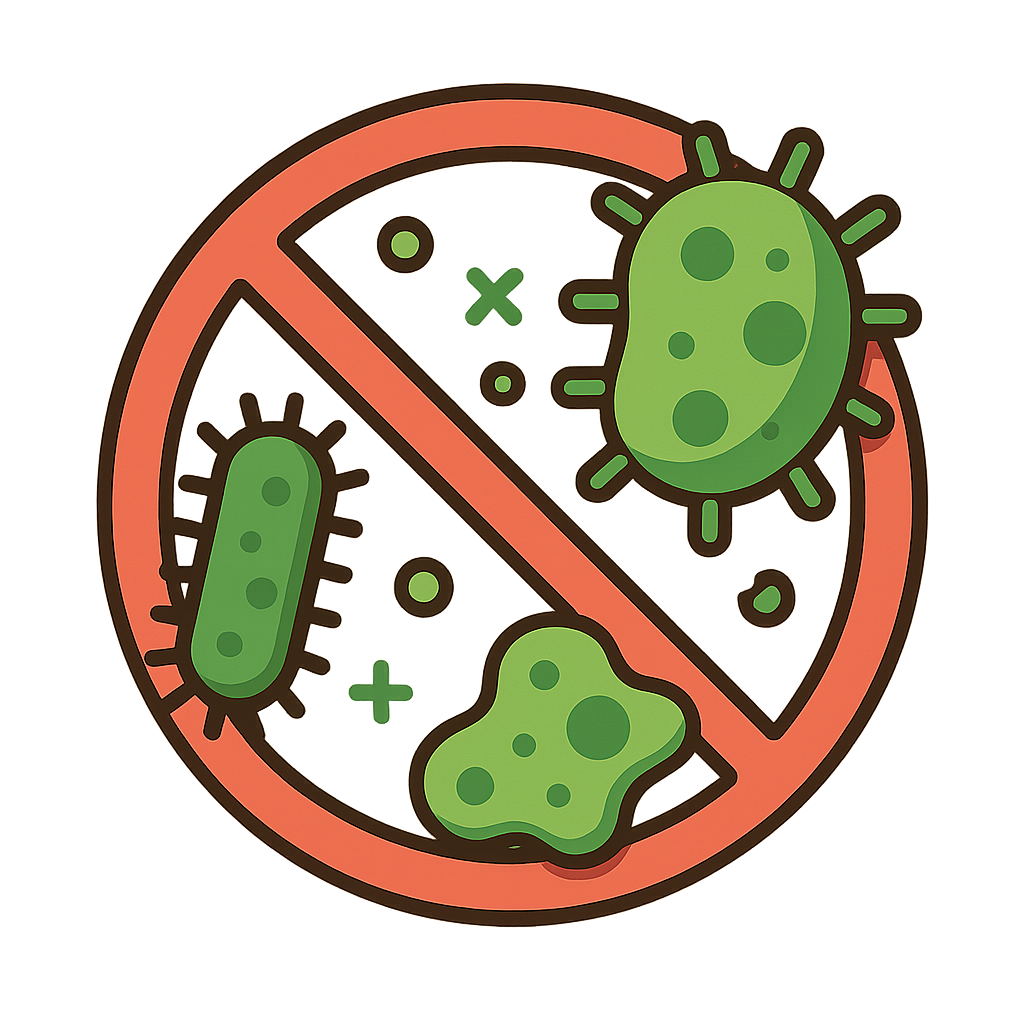
Can you imagine something so small you can’t see it, but so powerful it can change the entire world? That’s me. I am a tiny giant, living on your skin, deep in the soil, and floating in the oceans. I am everywhere. I’ve been on Earth for about 3.5 billion years, which means I saw the very first plants sprout and watched the dinosaurs come and go. I am a busy worker. When you eat a crunchy apple, I am one of the helpers in your tummy that breaks it down so you can get energy. When a leaf falls in the forest, I am there to turn it back into rich soil for new trees to grow. But I have a tricky side, too. Sometimes, a few of my wild cousins can cause trouble, giving you a scratchy throat or a tummy ache. For billions of years, humans knew about sickness and health, about fresh food and spoiled food, but they couldn't see the tiny architect behind it all. It was their planet's biggest secret, and I was hiding in every drop of water and every breath of air. I am Bacteria.
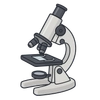
For most of human history, I was a ghost. People blamed mysterious forces, bad smells in the air, or even angry spirits for why they got sick. They watched in wonder as milk turned into cheese and grape juice bubbled into wine, never knowing I was the tiny chef behind the magic. Can you imagine a world full of secrets you can't see? That was the world before I was discovered. Then, one day, a pair of human eyes finally found me. This happened in a town called Delft in the Netherlands, where a very curious man named Antonie van Leeuwenhoek lived. He wasn't a trained scientist; he sold cloth for a living. But his real love was grinding tiny pieces of glass into powerful lenses to build amazing microscopes. He wanted to see the hidden world more clearly than anyone before him. On October 24th, 1676, he did something that would change history. He scooped up a drop of water from a lake, put it under his special microscope, and leaned in close. His jaw must have dropped. He saw me. Not just one of me, but thousands, zipping and twirling and swimming about. He was so surprised he called us 'animalcules,' which is a fancy word for 'little animals,' because we were so full of life. He wrote letters to the smartest people in England, describing us in great detail. For the first time, humanity knew that a bustling, invisible world existed. But for almost two hundred years after that day, my true purpose remained a mystery. People could see us, but they still didn't understand what we did.
The Tiniest Giant
Can you imagine something so small you can’t see it, but so powerful it can change the entire world? That’s me. I am a tiny giant, living on your skin, deep in the soil, and floating in the oceans. I am everywhere. I’ve been on Earth for about 3.5 billion years, which means I saw the very first plants sprout and watched the dinosaurs come and go. I am a busy worker. When you eat a crunchy apple, I am one of the helpers in your tummy that breaks it down so you can get energy. When a leaf falls in the forest, I am there to turn it back into rich soil for new trees to grow. But I have a tricky side, too. Sometimes, a few of my wild cousins can cause trouble, giving you a scratchy throat or a tummy ache. For billions of years, humans knew about sickness and health, about fresh food and spoiled food, but they couldn't see the tiny architect behind it all. It was their planet's biggest secret, and I was hiding in every drop of water and every breath of air. I am Bacteria.
For most of human history, I was a ghost. People blamed mysterious forces, bad smells in the air, or even angry spirits for why they got sick. They watched in wonder as milk turned into cheese and grape juice bubbled into wine, never knowing I was the tiny chef behind the magic. Can you imagine a world full of secrets you can't see? That was the world before I was discovered. Then, one day, a pair of human eyes finally found me. This happened in a town called Delft in the Netherlands, where a very curious man named Antonie van Leeuwenhoek lived. He wasn't a trained scientist; he sold cloth for a living. But his real love was grinding tiny pieces of glass into powerful lenses to build amazing microscopes. He wanted to see the hidden world more clearly than anyone before him. On October 24th, 1676, he did something that would change history. He scooped up a drop of water from a lake, put it under his special microscope, and leaned in close. His jaw must have dropped. He saw me. Not just one of me, but thousands, zipping and twirling and swimming about. He was so surprised he called us 'animalcules,' which is a fancy word for 'little animals,' because we were so full of life. He wrote letters to the smartest people in England, describing us in great detail. For the first time, humanity knew that a bustling, invisible world existed. But for almost two hundred years after that day, my true purpose remained a mystery. People could see us, but they still didn't understand what we did.
For almost two hundred years after Mr. van Leeuwenhoek first spotted me, I remained a puzzle. Scientists saw me squirming under their microscopes, but they couldn't agree on what I did. Did I just appear out of nowhere? Was I a result of decay, or the cause of it? The great mystery continued until the 1860s, when a few scientific detectives started to crack the case. The most famous of these was a brilliant French chemist named Louis Pasteur. He was hired to figure out why wine and beer were going sour. Through careful experiments, he showed that tiny, living things floating in the air—my cousins—were landing in the drinks and spoiling them. He proved that if you heated the liquid just enough, you could get rid of the troublemakers. This idea, called pasteurization, is why your milk is safe to drink today. His work led to an even bigger breakthrough: the 'Germ Theory of Disease.' It was the revolutionary idea that many illnesses are caused by invisible germs like me. This changed the world. Doctors finally understood why washing their hands was so important. At the same time in Germany, another scientist named Robert Koch became a master germ-hunter. He developed methods to grow me in his lab and proved that specific types of bacteria caused specific diseases, like anthrax and tuberculosis. The mystery was finally being solved.
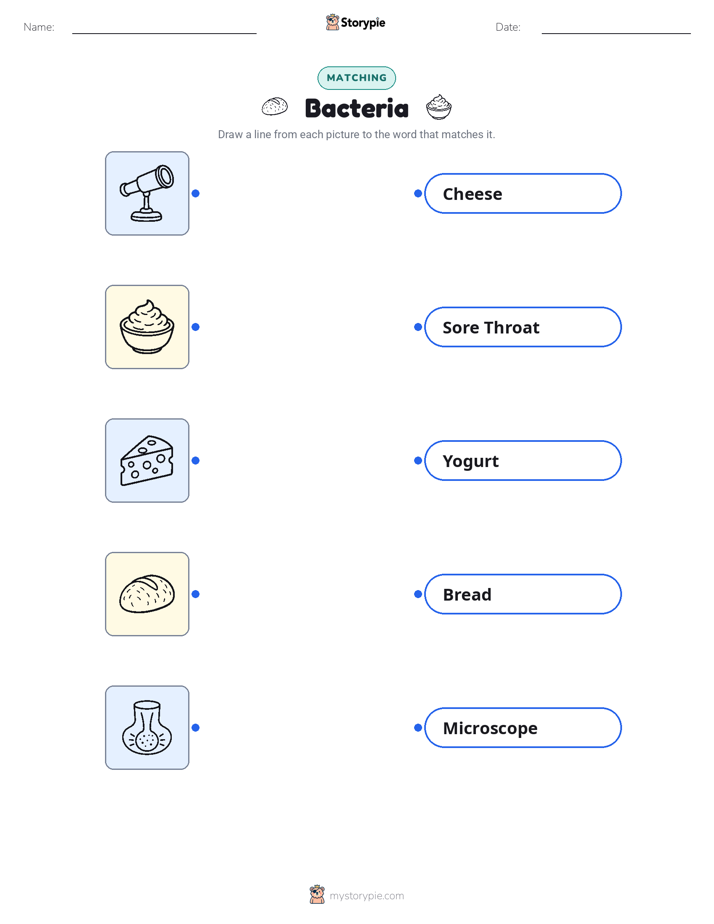
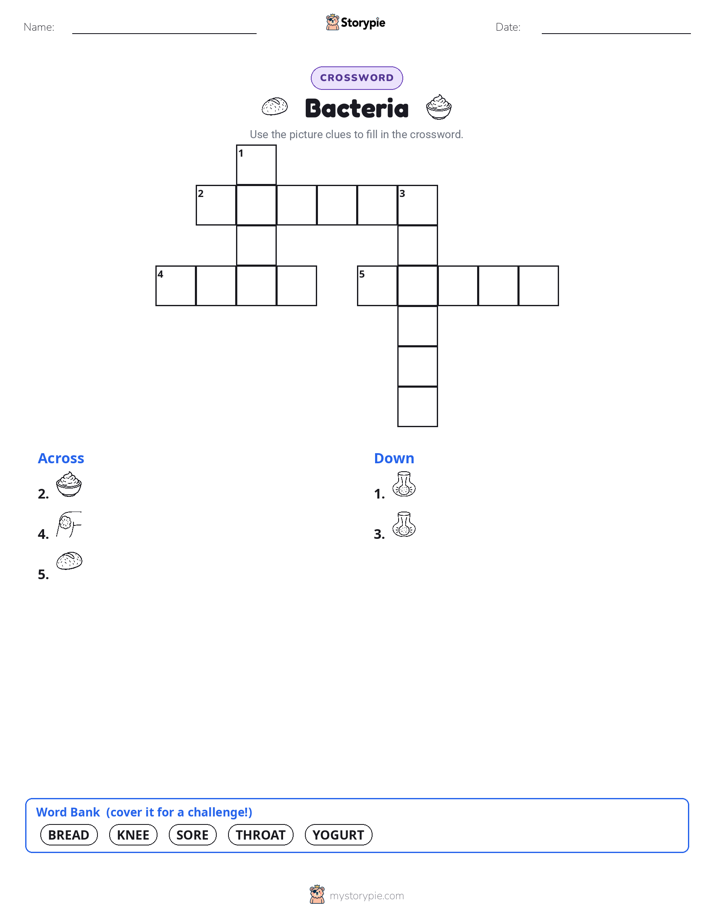
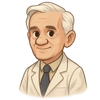
Hearing all about germs and disease might make me sound like a villain, but that's only a tiny part of my story. The truth is, the vast majority of my family members are helpers. In fact, you couldn't live without us. Trillions of my good relatives are in your tummy right now, helping you digest your lunch and making vitamins to keep you healthy. Do you like yogurt, cheese, or pickles? You can thank me for those tasty treats. I help make them possible. In 1928, a scientist named Alexander Fleming discovered that a type of mold made something called penicillin, which could stop some of my harmful cousins. This gave humans powerful medicines called antibiotics. So, while a few of us can cause trouble, most of us are busy working to keep the world, and you, healthy. I am a tiny reminder that even the smallest things in the universe can have the biggest impact.
Wow facts
About
Bacteria are single-celled microorganisms that were among the first life forms on Earth. They are found everywhere and can be both beneficial, aiding in digestion and decomposition, and harmful, causing diseases.
Take a Quiz
Question 1 of 5
In the story, Antonie van Leeuwenhoek called the bacteria he saw 'animalcules.' What does the word 'animalcules' mean?
Explore next




Want to do even more?
Go beyond exploring. Unlock tools that turn every story into real learning.

Storypie Plus for families
Full stories, quizzes, and printables. Nights and car rides, sorted.
- Unlimited audio stories
- Create Mode: your child stars in the story
- Offline downloads
- Printable worksheets & coloring pages

Why Storypie for Schools
Students engaged. Prep in seconds. Evenings back to you.
- Worksheets & Quizzes
- Classroom Management
- Formative Assessment
- Custom Curriculum & Lesson Plans
- 27 Languages

Why Storypie for Homeschool
Curriculum done. They'll ask for more. Hours back in your day.
- Worksheet Generator
- First-Person Audio Stories
- Built-in Comprehension Quizzes
- Custom Curriculum & Lesson Plans
- Print & Go Activities