English

Beat and Tempo
Beat and Tempo are fundamental elements of music.
Reads at Grades 3–5 Listens at Grades 1–5
Print & create
Answer keys·No prep·Free with an account
28 worksheets · answer keys · full story · quiz · Ages 8-10 · CEFR B1
Plus adds 244,000+ more stories in 27 languages, audio for every one, and printables for all of them.
Just want Beat and Tempo?
Thump-thump. Thump-thump. Can you feel that? It’s the steady pulse inside your chest. It’s the rhythm of raindrops tapping on your window, or the swoosh of waves kissing the shore. You can feel me when you clap your hands to a song, when you march in a line, or when you jump rope with your friends. I am the invisible pattern that makes you want to move your feet. For thousands of years, people have felt me without knowing my name. They felt me in the pounding of drums and the chanting of songs around a crackling fire. I am the pulse of music, the part that makes you tap your toes. You can call me Beat, and my best friend, the speed you feel me at, is Tempo.
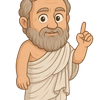
I’ve been around for as long as humans have made music, but for a long, long time, nobody knew how to write me down. Imagine trying to teach a friend a new song, but they live all the way across the country. You could write down the notes, but how would they know how fast or slow to play them? Way back in the 4th century BCE, a wise Greek philosopher named Plato talked about me; he called my patterns 'rhythmos.' But that was just an idea. It took many more centuries for people to figure out how to capture me on paper. In the Middle Ages, around the 12th century, musicians in Europe created 'rhythmic modes,' which were special patterns that helped singers and players stay together. Then, in the 17th century, composers in Italy started using special words to describe my friend Tempo. They would write 'Adagio' for slow, 'Andante' for a walking pace, or 'Allegro' for fast and cheerful. It was a good start, but 'fast' can mean different things to different people, right?
The Heartbeat of Music
Thump-thump. Thump-thump. Can you feel that? It’s the steady pulse inside your chest. It’s the rhythm of raindrops tapping on your window, or the swoosh of waves kissing the shore. You can feel me when you clap your hands to a song, when you march in a line, or when you jump rope with your friends. I am the invisible pattern that makes you want to move your feet. For thousands of years, people have felt me without knowing my name. They felt me in the pounding of drums and the chanting of songs around a crackling fire. I am the pulse of music, the part that makes you tap your toes. You can call me Beat, and my best friend, the speed you feel me at, is Tempo.
I’ve been around for as long as humans have made music, but for a long, long time, nobody knew how to write me down. Imagine trying to teach a friend a new song, but they live all the way across the country. You could write down the notes, but how would they know how fast or slow to play them? Way back in the 4th century BCE, a wise Greek philosopher named Plato talked about me; he called my patterns 'rhythmos.' But that was just an idea. It took many more centuries for people to figure out how to capture me on paper. In the Middle Ages, around the 12th century, musicians in Europe created 'rhythmic modes,' which were special patterns that helped singers and players stay together. Then, in the 17th century, composers in Italy started using special words to describe my friend Tempo. They would write 'Adagio' for slow, 'Andante' for a walking pace, or 'Allegro' for fast and cheerful. It was a good start, but 'fast' can mean different things to different people, right?
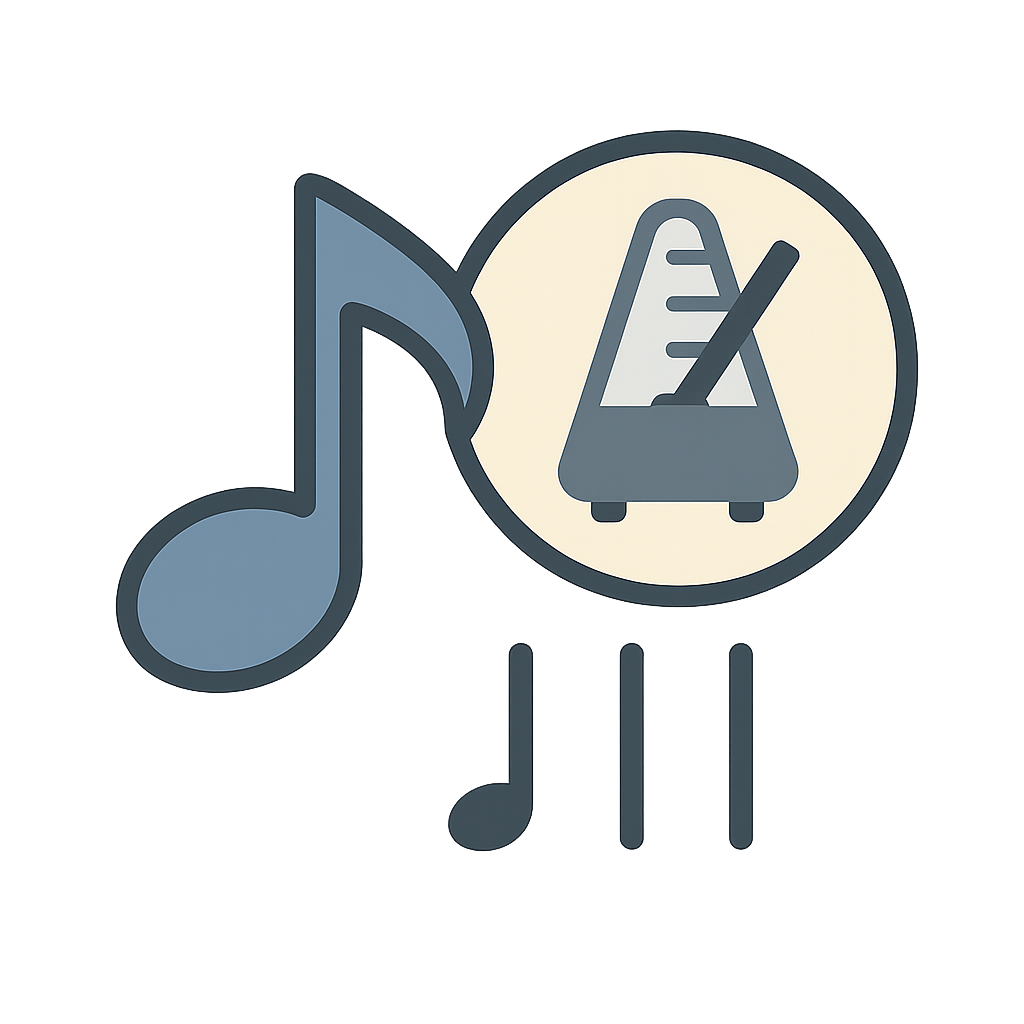
People needed a more exact way to share my speed. A very clever inventor named Johann Maelzel finally solved the puzzle. In 1815, he patented a wonderful little machine called the metronome. Can you picture a small pyramid with a long, swinging arm? That’s it. You can slide a weight up and down the arm to change how fast it swings. With a steady 'click, clack, click, clack,' the metronome could mark any tempo perfectly. It was like a clock just for music. One of the first famous composers to get really excited about this was Ludwig van Beethoven. He was known for his powerful and emotional music. Starting around 1817, he began adding metronome markings to his symphonies, writing down the exact number of beats per minute he wanted. For the first time, a musician in London could play Beethoven’s music at the exact same tempo as a musician in Vienna. I was finally universal.
Today, Tempo and I are more important than ever. We are the driving force in your favorite pop songs that make you want to dance. We are the thumping excitement in the background of a video game as you face the final boss, and the gentle, slow rhythm in a movie when two characters fall in love. You hear people talk about my speed using the term BPM, which just means Beats Per Minute. It’s the same idea Beethoven used over 200 years ago. Whether I’m fast, slow, or somewhere in between, I help music tell a story and make you feel something. I am the shared heartbeat that connects people all over the world. So the next time you hear a song, listen closely. Can you find me? I’ll be there, waiting for you to tap along.
Wow facts
About
Beat and Tempo are fundamental elements of music. The beat is the underlying, steady pulse, while tempo is the speed or pace of that pulse.
Take a Quiz
Question 1 of 5
Why was the invention of the metronome so important for music?
Explore next





Want to do even more?
Go beyond exploring. Unlock tools that turn every story into real learning.

Storypie Plus for families
Full stories, quizzes, and printables. Nights and car rides, sorted.
- Unlimited audio stories
- Create Mode: your child stars in the story
- Offline downloads
- Printable worksheets & coloring pages

Why Storypie for Schools
Students engaged. Prep in seconds. Evenings back to you.
- Worksheets & Quizzes
- Classroom Management
- Formative Assessment
- Custom Curriculum & Lesson Plans
- 27 Languages

Why Storypie for Homeschool
Curriculum done. They'll ask for more. Hours back in your day.
- Worksheet Generator
- First-Person Audio Stories
- Built-in Comprehension Quizzes
- Custom Curriculum & Lesson Plans
- Print & Go Activities