English

Beat and Tempo
Beat and Tempo are fundamental elements of music.
Reads at Grades 6–8 Listens at Grades 4–8
Print & create
Answer keys·No prep·Free with an account
28 worksheets · answer keys · full story · quiz · Ages 10-12 · CEFR B2
Plus adds 244,000+ more stories in 27 languages, audio for every one, and printables for all of them.
Just want Beat and Tempo?
Have you ever felt it. That steady thump-thump-thump of a basketball bouncing on the pavement, or the persistent drip-drip of a leaky faucet in a quiet room. Have you ever found your foot tapping along to a song you love without even thinking about it. That pulse, that invisible energy that organizes sound and makes you want to move, that’s me. I am inside you, in the constant rhythm of your own heartbeat and the gentle rise and fall of your breathing. I am in the way you walk and the way you talk. I am the pattern that gives the world its pulse. Hello. You can call me Beat, and this is my partner, Tempo. I am the steady pulse, the tick-tock that measures out the moments in a piece of music. Tempo is my speed, telling you how fast or slow those moments should go. Together, we are the engine of music, giving it life, energy, and feeling. Without us, sounds are just a jumble of notes, but with us, they become a story, a dance, a powerful wave of emotion that can travel across the world.
I have been with humans for as long as they have gathered together. I was there in the first clap of hands keeping time around a fire, and in the powerful pound of ancient drums that echoed across valleys. For thousands of years, I was passed from person to person through listening and memory. In places like ancient Greece, around the 4th century BCE, brilliant thinkers like Plato wrote about me. He understood that my patterns, my rhythms, could stir people’s souls and affect their emotions, making them feel brave or peaceful. But for all that time, I was a ghost. You could hear me and feel me, but you could not see me. This created a huge challenge. Imagine you are a composer who has just created the most wonderful, exciting new song. How could you share it with musicians in a city hundreds of miles away and be sure they played my rhythm correctly. It was nearly impossible. Then, everything began to change. Around the 12th century in Paris, clever musicians working at the famous Notre Dame school began to develop the first systems of rhythmic notation. They used different-looking symbols to show which notes should be held for a long time and which should be short. It was revolutionary. For the first time, I could be written down on paper. This system kept evolving, and by the 14th century, composers could write incredibly complex and thrilling rhythms, knowing that someone else could read them and bring me to life exactly as they had imagined.
The Invisible Heartbeat of the World
Have you ever felt it. That steady thump-thump-thump of a basketball bouncing on the pavement, or the persistent drip-drip of a leaky faucet in a quiet room. Have you ever found your foot tapping along to a song you love without even thinking about it. That pulse, that invisible energy that organizes sound and makes you want to move, that’s me. I am inside you, in the constant rhythm of your own heartbeat and the gentle rise and fall of your breathing. I am in the way you walk and the way you talk. I am the pattern that gives the world its pulse. Hello. You can call me Beat, and this is my partner, Tempo. I am the steady pulse, the tick-tock that measures out the moments in a piece of music. Tempo is my speed, telling you how fast or slow those moments should go. Together, we are the engine of music, giving it life, energy, and feeling. Without us, sounds are just a jumble of notes, but with us, they become a story, a dance, a powerful wave of emotion that can travel across the world.
I have been with humans for as long as they have gathered together. I was there in the first clap of hands keeping time around a fire, and in the powerful pound of ancient drums that echoed across valleys. For thousands of years, I was passed from person to person through listening and memory. In places like ancient Greece, around the 4th century BCE, brilliant thinkers like Plato wrote about me. He understood that my patterns, my rhythms, could stir people’s souls and affect their emotions, making them feel brave or peaceful. But for all that time, I was a ghost. You could hear me and feel me, but you could not see me. This created a huge challenge. Imagine you are a composer who has just created the most wonderful, exciting new song. How could you share it with musicians in a city hundreds of miles away and be sure they played my rhythm correctly. It was nearly impossible. Then, everything began to change. Around the 12th century in Paris, clever musicians working at the famous Notre Dame school began to develop the first systems of rhythmic notation. They used different-looking symbols to show which notes should be held for a long time and which should be short. It was revolutionary. For the first time, I could be written down on paper. This system kept evolving, and by the 14th century, composers could write incredibly complex and thrilling rhythms, knowing that someone else could read them and bring me to life exactly as they had imagined.
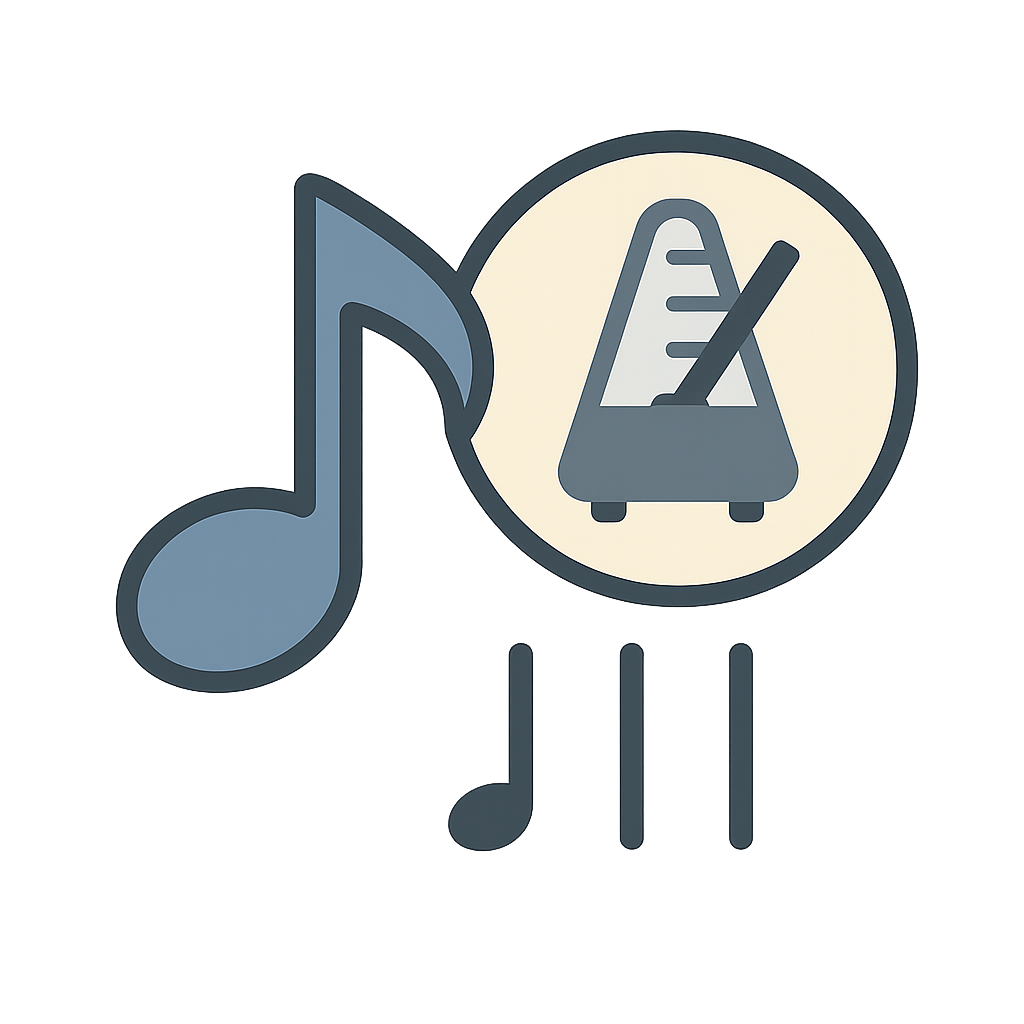
Now, even though I could be written down, my partner Tempo still had a problem. For centuries, my speed was described with beautiful Italian words that became common in the 17th century. A composer might write 'Allegro' at the top of the music, meaning fast and bright, or 'Adagio,' meaning to play slowly and gracefully. These words painted a wonderful picture, but they were not exact. One musician’s idea of 'fast' might be very different from another’s, leading to confusion and arguments. My true speed remained a matter of opinion. That is, until a brilliant inventor changed everything. His name was Johann Maelzel, and in 1815, he patented a wonderful device. It was a pyramid-shaped box with a swinging pendulum and a little weight you could slide up and down. It was called the metronome. This amazing gadget ticked back and forth, and you could set it to a specific number of beats per minute, or BPM. Finally, Tempo could be measured with perfect precision. One of the first people to fall in love with this new invention was the famous and fiery composer Ludwig van Beethoven. He was tired of people playing his powerful music at the wrong speed. Starting around 1817, he began adding my exact BPM markings to his magnificent symphonies. Now, there was no more guessing. Musicians everywhere would know precisely the powerful, rushing speed he had imagined in his mind.
From those ancient drums to Beethoven’s symphonies, my journey has brought me right here, into your world. I am everywhere now. I am in the thrilling soundtracks of the video games you play and the epic scores of the movies you watch. I am the driving force in rock music that makes you want to jump, the complex and surprising dance of jazz, and the powerful, steady pulse of electronic music that fills stadiums. But I am not just for music. Poets use my patterns in the rhythm of their words, making them flow like a song. Dancers feel me in every leap and spin, their bodies becoming a physical expression of my pulse. My story is a reminder that I am a universal language. It does not matter what country you are from or what language you speak; you can feel me. I connect us all through the shared, unspoken rhythm of life, from the quiet beating of our own hearts to the powerful songs that make the whole world get up and dance together.
Wow facts
About
Beat and Tempo are fundamental elements of music. The beat is the underlying, steady pulse, while tempo is the speed or pace of that pulse.
Take a Quiz
Question 1 of 5
Summarize the main challenge that led to the invention of rhythmic notation in the 12th century.
Explore next





Want to do even more?
Go beyond exploring. Unlock tools that turn every story into real learning.

Storypie Plus for families
Full stories, quizzes, and printables. Nights and car rides, sorted.
- Unlimited audio stories
- Create Mode: your child stars in the story
- Offline downloads
- Printable worksheets & coloring pages

Why Storypie for Schools
Students engaged. Prep in seconds. Evenings back to you.
- Worksheets & Quizzes
- Classroom Management
- Formative Assessment
- Custom Curriculum & Lesson Plans
- 27 Languages

Why Storypie for Homeschool
Curriculum done. They'll ask for more. Hours back in your day.
- Worksheet Generator
- First-Person Audio Stories
- Built-in Comprehension Quizzes
- Custom Curriculum & Lesson Plans
- Print & Go Activities