English

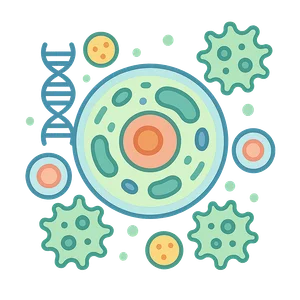
Cells
Cells are the basic structural, functional…
Reads at Grades 3–5 Listens at Grades 1–5
Print & create
Answer keys·No prep·Free with an account
28 worksheets · answer keys · full story · quiz · Ages 8-10 · CEFR B1
Plus adds 244,000+ more stories in 27 languages, audio for every one, and printables for all of them.
Just want Cells?
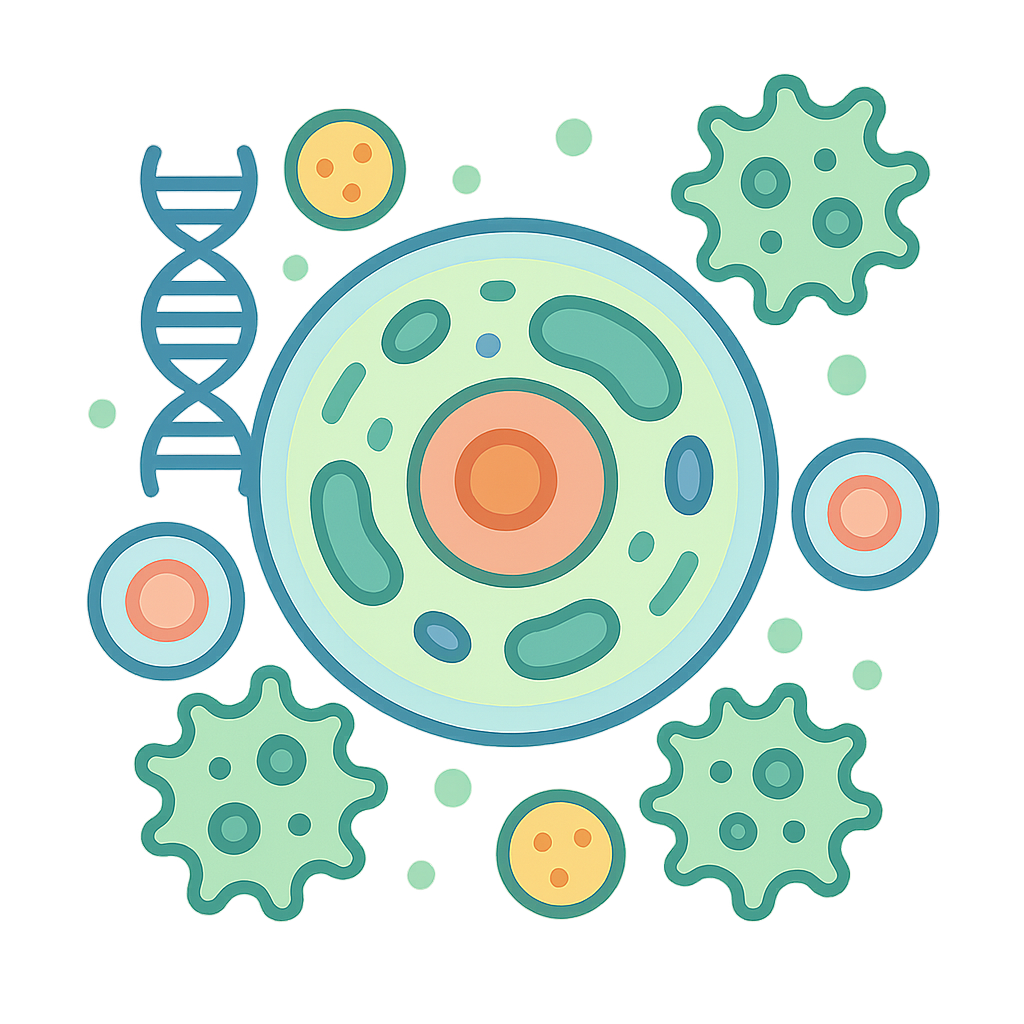
Hello there. You can’t see me, but I am everywhere. I am in the fuzz of a peach, the fin of a goldfish, and even in the tip of your nose. Can you imagine building the world’s biggest, grandest castle? It would be made of thousands and thousands of bricks, right? Well, I am like a living brick, but much more interesting. I am the building block for every plant, every animal, and every single person on Earth. For thousands of years, people had no idea I existed. They could see a whole tree with its strong trunk and green leaves, but they couldn't see the millions of tiny parts like me working together to make it grow tall and strong. They knew you were you, a person who can run and laugh, but they didn’t know you were actually a walking, talking community of trillions of tiny living things all working in perfect harmony. That's me. I am the Cell, the tiny, secret ingredient that makes life possible, and I have been waiting a very long time for you to discover my story.
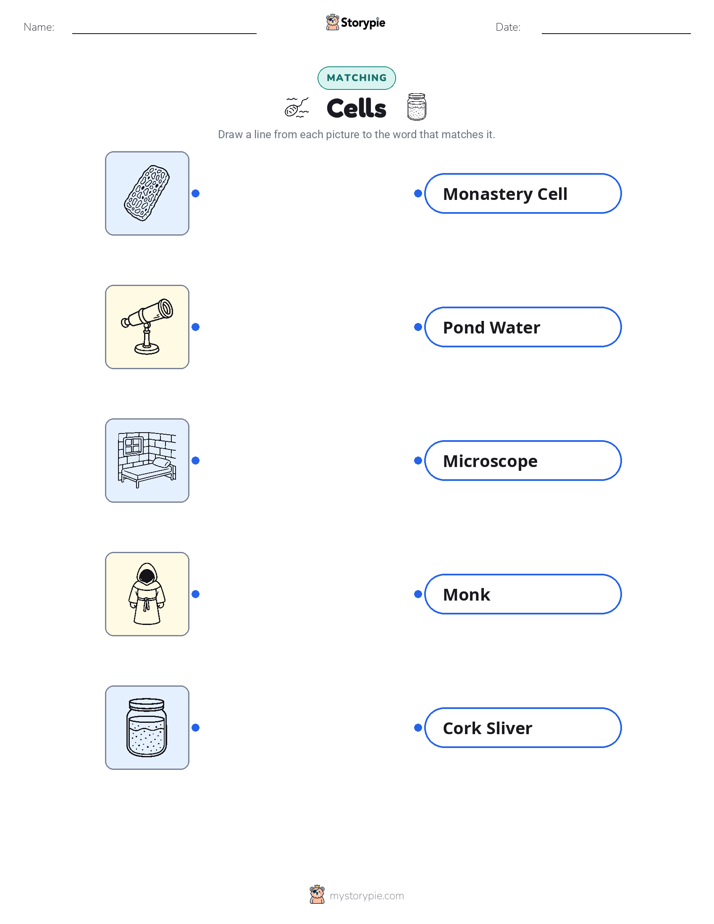
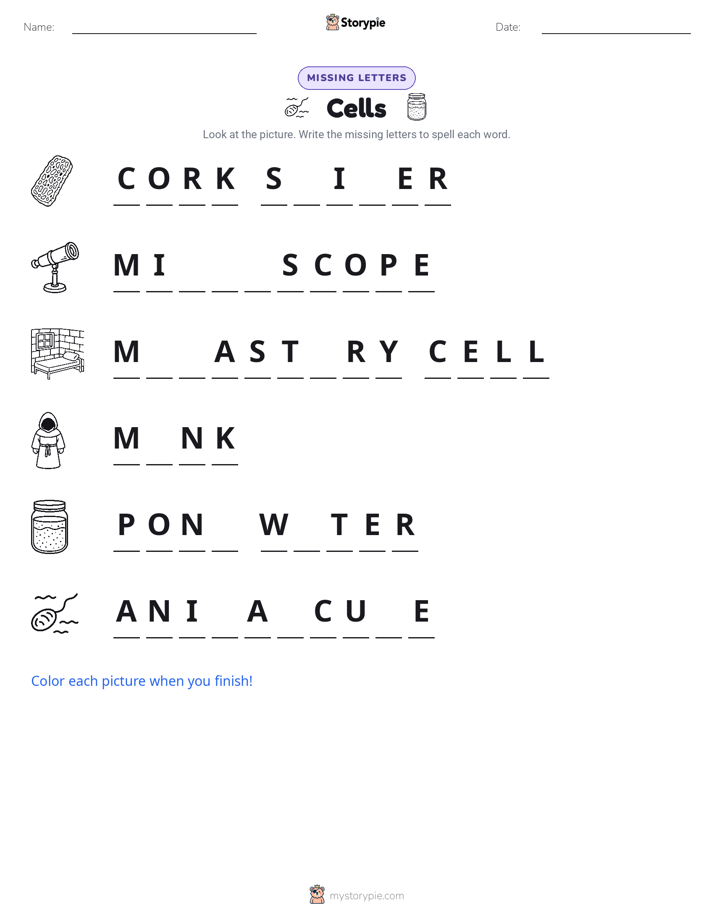
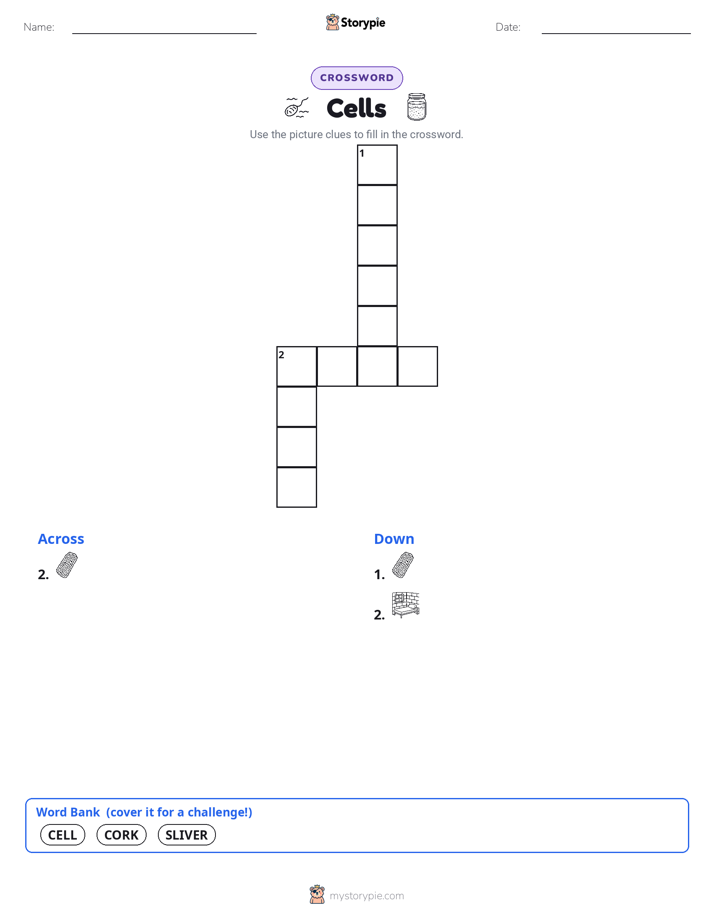
For a very long time, I was a complete mystery, an invisible world tucked away from human eyes. Then, in the 1600s, people started getting very clever and inventing amazing tools called microscopes that could make tiny things look big. In the year 1665, a curious English scientist named Robert Hooke decided to look at something ordinary in an extraordinary way. He sliced a super-thin piece of cork, the kind you might find in a bottle stopper, and put it under his microscope. What he saw amazed him. The cork wasn't solid at all; it was full of tiny, empty boxes, all packed together like a honeycomb. They reminded him of the small, simple rooms where monks lived in a monastery. He called those rooms 'cells,' so that's what he named me. He was the very first person to ever see my shape and give me a name. A few years later, in the 1670s, a Dutch shopkeeper named Antonie van Leeuwenhoek built even better, more powerful microscopes. He was fascinated by the world he couldn't see. He looked at a single drop of pond water and discovered a whole new universe of tiny creatures wiggling, spinning, and zipping around. He called them 'animalcules,' which means 'little animals.' He was one of the first people to see me alive and kicking. But the biggest idea about me was still to come. Much later, in 1838, a German scientist named Matthias Schleiden, who loved studying plants, announced that all plants were made of me. The very next year, in 1839, his friend and fellow scientist Theodor Schwann, who studied animals, declared that all animals were made of me, too. They put their brilliant ideas together to create the 'Cell Theory,' the amazing rule that says I am the basic unit of all life. Finally, in 1855, a doctor named Rudolf Virchow added the last, crucial piece of the puzzle: every new cell has to come from another cell that already exists. I don’t just appear from thin air; I divide and multiply to help you grow and heal when you get a scrape on your knee.
The Cell: The Secret of Life
Hello there. You can’t see me, but I am everywhere. I am in the fuzz of a peach, the fin of a goldfish, and even in the tip of your nose. Can you imagine building the world’s biggest, grandest castle? It would be made of thousands and thousands of bricks, right? Well, I am like a living brick, but much more interesting. I am the building block for every plant, every animal, and every single person on Earth. For thousands of years, people had no idea I existed. They could see a whole tree with its strong trunk and green leaves, but they couldn't see the millions of tiny parts like me working together to make it grow tall and strong. They knew you were you, a person who can run and laugh, but they didn’t know you were actually a walking, talking community of trillions of tiny living things all working in perfect harmony. That's me. I am the Cell, the tiny, secret ingredient that makes life possible, and I have been waiting a very long time for you to discover my story.
For a very long time, I was a complete mystery, an invisible world tucked away from human eyes. Then, in the 1600s, people started getting very clever and inventing amazing tools called microscopes that could make tiny things look big. In the year 1665, a curious English scientist named Robert Hooke decided to look at something ordinary in an extraordinary way. He sliced a super-thin piece of cork, the kind you might find in a bottle stopper, and put it under his microscope. What he saw amazed him. The cork wasn't solid at all; it was full of tiny, empty boxes, all packed together like a honeycomb. They reminded him of the small, simple rooms where monks lived in a monastery. He called those rooms 'cells,' so that's what he named me. He was the very first person to ever see my shape and give me a name. A few years later, in the 1670s, a Dutch shopkeeper named Antonie van Leeuwenhoek built even better, more powerful microscopes. He was fascinated by the world he couldn't see. He looked at a single drop of pond water and discovered a whole new universe of tiny creatures wiggling, spinning, and zipping around. He called them 'animalcules,' which means 'little animals.' He was one of the first people to see me alive and kicking. But the biggest idea about me was still to come. Much later, in 1838, a German scientist named Matthias Schleiden, who loved studying plants, announced that all plants were made of me. The very next year, in 1839, his friend and fellow scientist Theodor Schwann, who studied animals, declared that all animals were made of me, too. They put their brilliant ideas together to create the 'Cell Theory,' the amazing rule that says I am the basic unit of all life. Finally, in 1855, a doctor named Rudolf Virchow added the last, crucial piece of the puzzle: every new cell has to come from another cell that already exists. I don’t just appear from thin air; I divide and multiply to help you grow and heal when you get a scrape on your knee.
Today, you know that I am the starting point for all life, from the smallest ladybug to the biggest blue whale. But I’m not just one thing—I come in many different types, each with a special job to do. I can be a long, branching nerve cell in your brain, zapping electrical messages so you can think, remember your best friend's birthday, and dream of flying dragons. I can be a tough muscle cell, pulling together with millions of others so you can run, jump, and score the winning goal. I am the round, red blood cell that zooms through your body, carrying fresh oxygen to every single part of you. Scientists study me every day to understand how bodies work and to find cures for diseases. Every time they look through a powerful microscope, they learn more of my secrets. I am the tiny engine that powers all living things. Right now, trillions of me are working together as a team to make you, you. I am the beautiful, complex, and amazing story of life, and there are still so many more chapters for you and future scientists to discover.
Wow facts
About
Cells are the basic structural, functional, and biological units of all known living organisms and are often called the 'building blocks of life'.
Take a Quiz
Question 1 of 5
In the story, Antonie van Leeuwenhoek called the tiny creatures he saw 'animalcules.' What does the word 'animalcule' most likely mean?
Explore next


Want to do even more?
Go beyond exploring. Unlock tools that turn every story into real learning.

Storypie Plus for families
Full stories, quizzes, and printables. Nights and car rides, sorted.
- Unlimited audio stories
- Create Mode: your child stars in the story
- Offline downloads
- Printable worksheets & coloring pages

Why Storypie for Schools
Students engaged. Prep in seconds. Evenings back to you.
- Worksheets & Quizzes
- Classroom Management
- Formative Assessment
- Custom Curriculum & Lesson Plans
- 27 Languages

Why Storypie for Homeschool
Curriculum done. They'll ask for more. Hours back in your day.
- Worksheet Generator
- First-Person Audio Stories
- Built-in Comprehension Quizzes
- Custom Curriculum & Lesson Plans
- Print & Go Activities