English

Continental Drift
The theory that Earth's continents have moved over geologic time relative to each other…
Reads at Grades 6–8 Listens at Grades 4–8
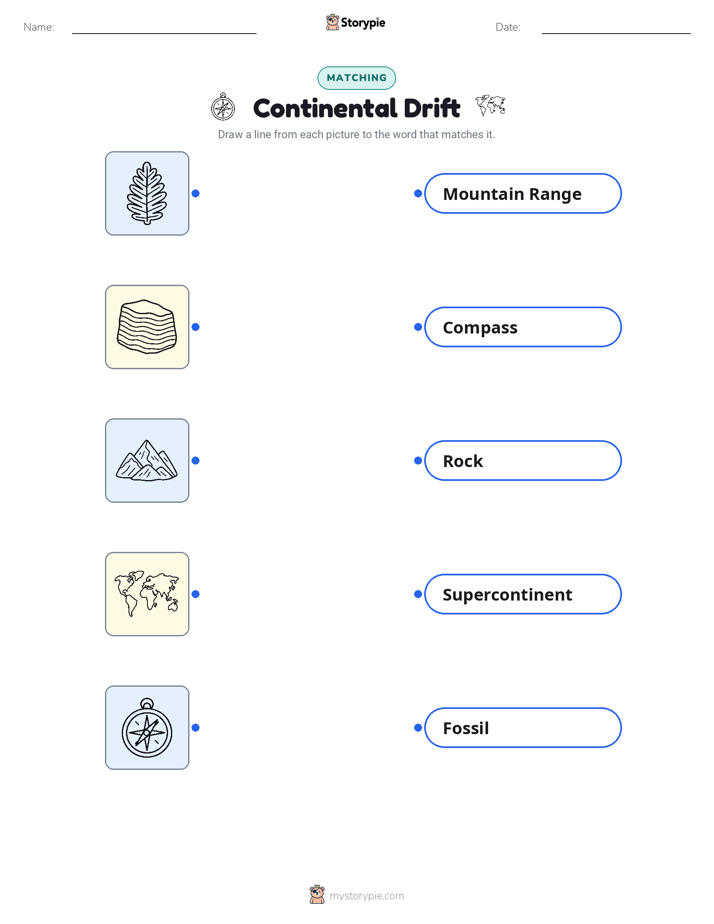
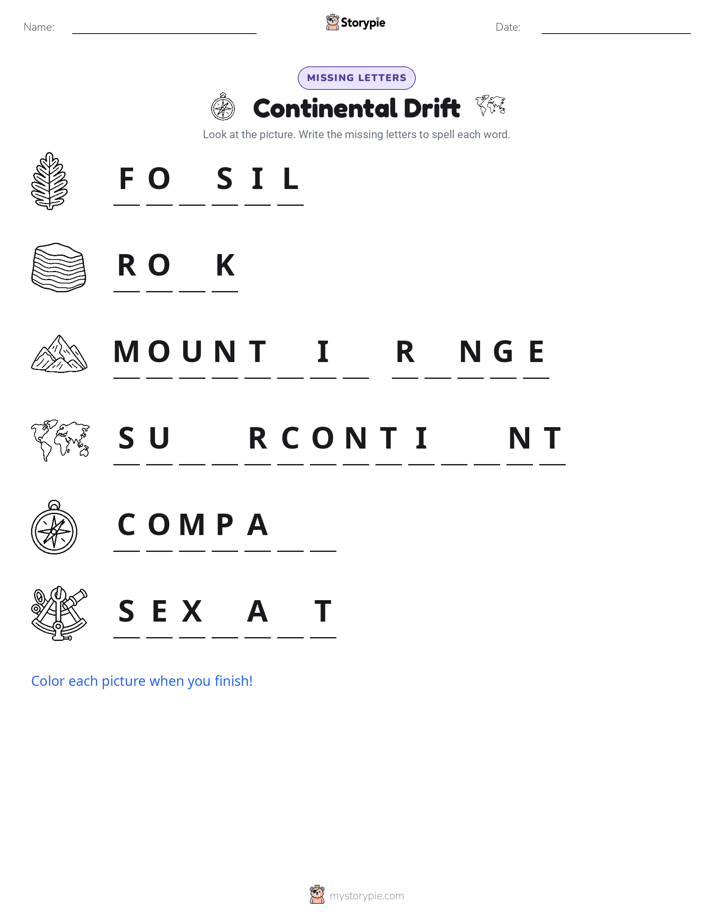
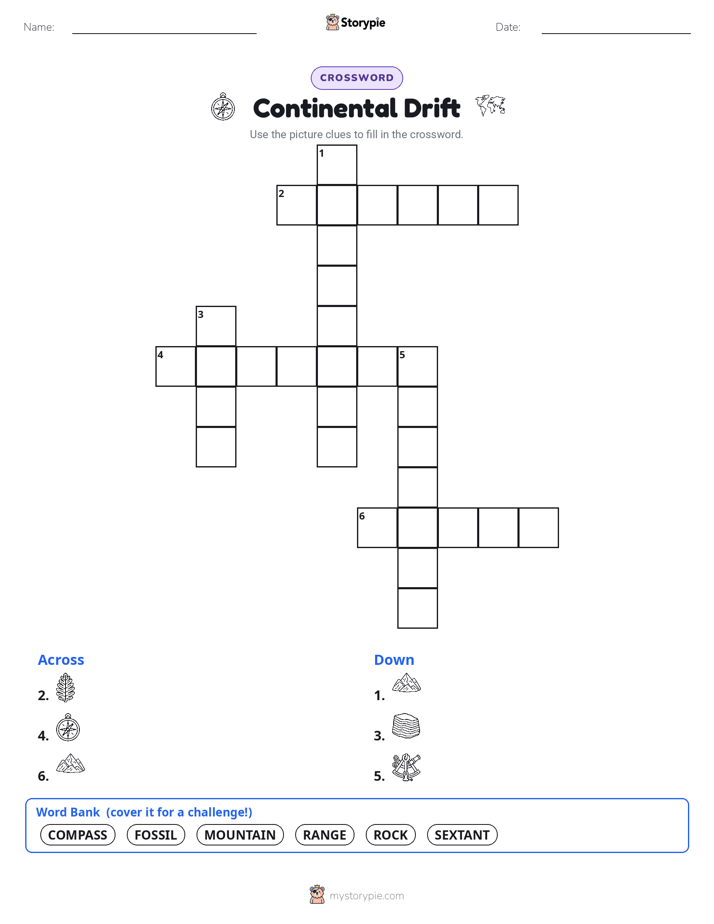
Print & create
Answer keys·No prep·Free with an account
28 worksheets · answer keys · full story · quiz · Ages 10-12 · CEFR B2
Plus adds 102,000+ more stories in 27 languages, audio for every one, and printables for all of them.
Just want Continental Drift?
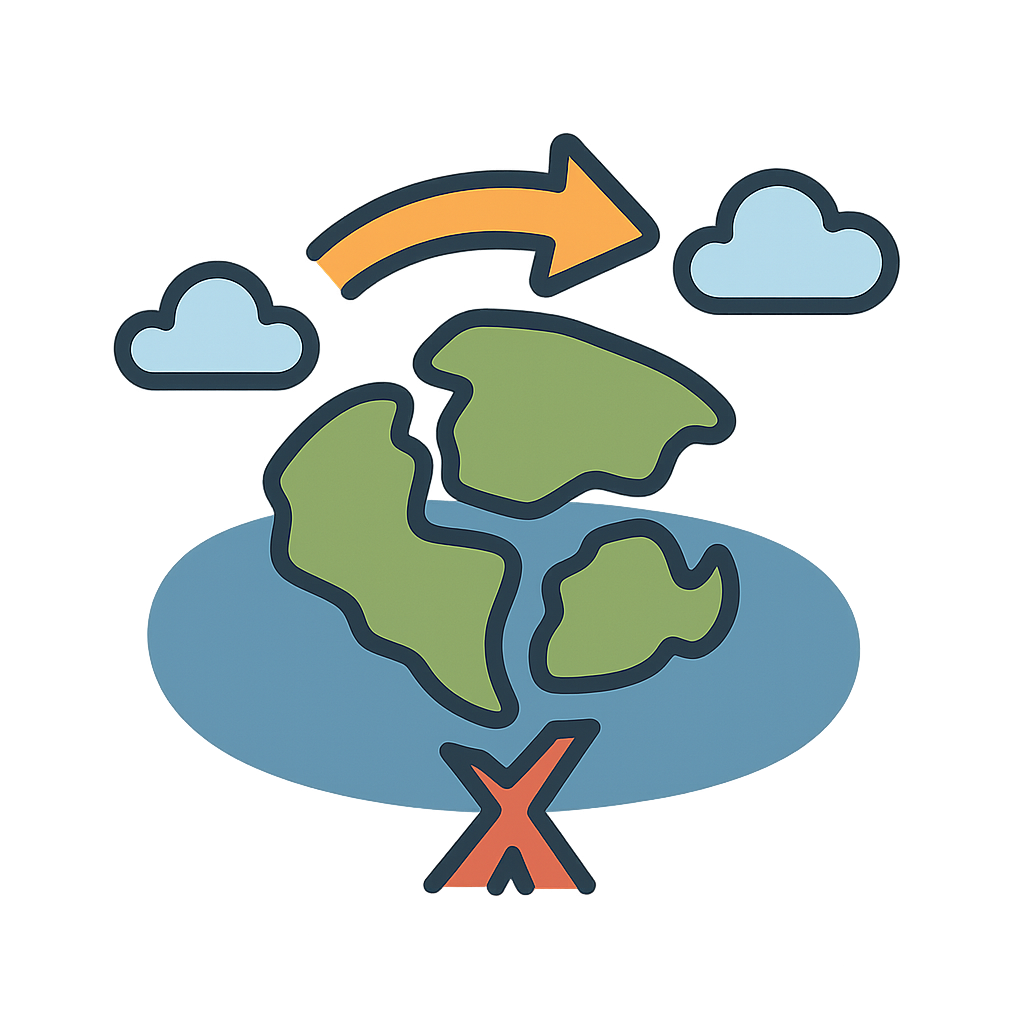
For billions of years, I have been working silently, a slow and powerful force reshaping the world. I move the very ground beneath your feet, shifting entire lands like giant, sleepy puzzle pieces across a vast blue table. Have you ever looked at a map and noticed something curious? Have you seen how the eastern coast of South America seems like it could fit perfectly against the western coast of Africa, as if they were once joined? You weren't the first to wonder about this. A very long time ago, in 1596, a brilliant mapmaker named Abraham Ortelius looked at his own detailed maps and had the same thought. He wrote in his notes that the coastlines seemed to match so well that he believed the Americas had been torn away from Europe and Africa. This was the first whisper of my existence, the first clue to a grand mystery: the world as you know it was not always arranged this way. For centuries, this idea remained just a curious observation, a riddle hidden in plain sight on every globe and map. People saw the pieces, but they couldn't imagine the force powerful enough to move them. I am that force. I am the big idea that the ground beneath your feet is on a very, very long journey. My name is Continental Drift.
It took a long time for someone to truly listen to my story and try to tell it to the world. That person was my champion, a brave German meteorologist and arctic explorer named Alfred Wegener. In the early 1900s, while others were content with the world map as it was, Alfred was a collector of clues. He was fascinated by the puzzle-piece fit of the continents, just like Ortelius had been, but he knew he needed more than just a good observation. So he looked for evidence, and he found it everywhere. He discovered identical fossils of ancient plants and small reptiles, like the Mesosaurus, on the coasts of both South America and Africa. How could a small freshwater reptile have swum across the massive, salty Atlantic Ocean? It couldn't have. The only logical answer was that these lands were once connected. He then looked at the rocks themselves. He found that great mountain ranges, like the Appalachians in the United States, lined up perfectly with the Caledonian mountains in Scotland and Scandinavia if you pushed the continents back together. They were the same type of rock and the same age, like two halves of a single, broken chain. His final piece of evidence came from ancient climates. He found deep scratches in the rocks of hot deserts, the kind of tracks left behind by enormous glaciers. He also found fossils of tropical plants in the frozen lands of the Arctic. This could only mean that these lands had once been in very different parts of the world. On January 6th, 1912, Alfred Wegener first presented all his evidence. He later published it in his 1915 book, 'The Origin of Continents and Oceans,' where he proposed that all the landmasses had once been joined in a single supercontinent he named Pangaea, which means 'all lands.' But sadly, the scientific world was not ready for me. They mocked him and called his idea impossible. They asked him one question he couldn't answer: What force could possibly be strong enough to push entire continents across the planet? Without that answer, I remained just an unbelievable story.
The Earth's Great Journey
For billions of years, I have been working silently, a slow and powerful force reshaping the world. I move the very ground beneath your feet, shifting entire lands like giant, sleepy puzzle pieces across a vast blue table. Have you ever looked at a map and noticed something curious? Have you seen how the eastern coast of South America seems like it could fit perfectly against the western coast of Africa, as if they were once joined? You weren't the first to wonder about this. A very long time ago, in 1596, a brilliant mapmaker named Abraham Ortelius looked at his own detailed maps and had the same thought. He wrote in his notes that the coastlines seemed to match so well that he believed the Americas had been torn away from Europe and Africa. This was the first whisper of my existence, the first clue to a grand mystery: the world as you know it was not always arranged this way. For centuries, this idea remained just a curious observation, a riddle hidden in plain sight on every globe and map. People saw the pieces, but they couldn't imagine the force powerful enough to move them. I am that force. I am the big idea that the ground beneath your feet is on a very, very long journey. My name is Continental Drift.
It took a long time for someone to truly listen to my story and try to tell it to the world. That person was my champion, a brave German meteorologist and arctic explorer named Alfred Wegener. In the early 1900s, while others were content with the world map as it was, Alfred was a collector of clues. He was fascinated by the puzzle-piece fit of the continents, just like Ortelius had been, but he knew he needed more than just a good observation. So he looked for evidence, and he found it everywhere. He discovered identical fossils of ancient plants and small reptiles, like the Mesosaurus, on the coasts of both South America and Africa. How could a small freshwater reptile have swum across the massive, salty Atlantic Ocean? It couldn't have. The only logical answer was that these lands were once connected. He then looked at the rocks themselves. He found that great mountain ranges, like the Appalachians in the United States, lined up perfectly with the Caledonian mountains in Scotland and Scandinavia if you pushed the continents back together. They were the same type of rock and the same age, like two halves of a single, broken chain. His final piece of evidence came from ancient climates. He found deep scratches in the rocks of hot deserts, the kind of tracks left behind by enormous glaciers. He also found fossils of tropical plants in the frozen lands of the Arctic. This could only mean that these lands had once been in very different parts of the world. On January 6th, 1912, Alfred Wegener first presented all his evidence. He later published it in his 1915 book, 'The Origin of Continents and Oceans,' where he proposed that all the landmasses had once been joined in a single supercontinent he named Pangaea, which means 'all lands.' But sadly, the scientific world was not ready for me. They mocked him and called his idea impossible. They asked him one question he couldn't answer: What force could possibly be strong enough to push entire continents across the planet? Without that answer, I remained just an unbelievable story.
For decades after Alfred Wegener’s death, I was mostly forgotten, a wild idea tucked away in old books. The world went on, fighting wars and inventing new technologies, and the ground seemed as solid and unmoving as ever. But some of those new technologies, developed during World War II, would become my unexpected saviors. Scientists now had tools like sonar, which uses sound waves to see in the dark depths of the ocean. For the first time, they began to map the ocean floor, and they were stunned by what they found. They had expected it to be a flat, boring, muddy plain. Instead, they discovered I wasn't just a land-based idea—the ocean floor held my biggest secret. Running down the middle of the Atlantic Ocean was an enormous underwater mountain range, a colossal seam on the Earth's crust they called the Mid-Atlantic Ridge. As they studied it more in the 1950s and 1960s, a scientist named Harry Hess put the puzzle together. He realized that this ridge was a place where hot, molten rock, or magma, was rising up from deep inside the Earth. This magma cooled and hardened, forming brand new ocean floor. This creation of new crust pushed the older floor, and the continents sitting on top of it, away from the ridge on both sides. He called his idea 'seafloor spreading.' Here it was. This was the engine. This was the powerful, undeniable force that Wegener had been searching for all those years ago. The proof was no longer just on the edges of the continents; it was coming from the very bottom of the sea. I was real, and the evidence was finally too strong to ignore.
With the discovery of seafloor spreading, my story changed. I grew from a good idea into a great, all-encompassing theory. In the late 1960s, scientists combined my original concept with this new understanding of the ocean floor and gave me a new name: Plate Tectonics. This grand theory explains that the Earth's entire outer shell is not one solid piece but is broken into many giant, rigid plates that are always moving, floating on the hotter, softer layer beneath them. I am the reason for so much of what you see and feel on Earth's surface. When these massive plates grind past each other, they cause earthquakes. When they collide with unstoppable force, they buckle and fold the land, pushing up towering mountain ranges like the Himalayas. When one plate slides beneath another, it can melt and create the fiery pressure that fuels volcanoes. I am not just a story from the past; I am happening right now, shaping the world in tiny, incremental movements every single day. My journey shows how our planet is a wonderfully dynamic and ever-changing place. It is a powerful reminder that even the things we think are most solid and permanent are in motion, and that the relentless curiosity of one person, like Alfred Wegener, can eventually change how everyone sees the world. So keep looking closely at the world around you, and never be afraid to ask big questions.
Wow facts
About
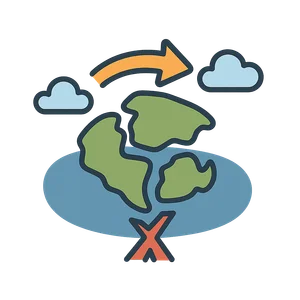
The theory that Earth's continents have moved over geologic time relative to each other, thus appearing to have 'drifted' across the ocean bed.
Take a Quiz
Question 1 of 5
What was the main reason most scientists in the early 20th century did not believe Alfred Wegener's theory of Continental Drift?
Explore next





Want to do even more?
Go beyond exploring. Unlock tools that turn every story into real learning.

Storypie Plus for families
Full stories, quizzes, and printables. Nights and car rides, sorted.
- Unlimited audio stories
- Create Mode: your child stars in the story
- Offline downloads
- Printable worksheets & coloring pages

Why Storypie for Schools
Students engaged. Prep in seconds. Evenings back to you.
- Worksheets & Quizzes
- Classroom Management
- Formative Assessment
- Custom Curriculum & Lesson Plans
- 27 Languages

Why Storypie for Homeschool
Curriculum done. They'll ask for more. Hours back in your day.
- Worksheet Generator
- First-Person Audio Stories
- Built-in Comprehension Quizzes
- Custom Curriculum & Lesson Plans
- Print & Go Activities