English

Continental Drift
The theory that Earth's continents have moved over geologic time relative to each other…
Reads at Grades K-2 Listens at K–3
Print & create
Answer keys·No prep·Free with an account
28 worksheets · answer keys · full story · quiz · Ages 6-8 · CEFR A2
Plus adds 102,000+ more stories in 27 languages, audio for every one, and printables for all of them.
Just want Continental Drift?
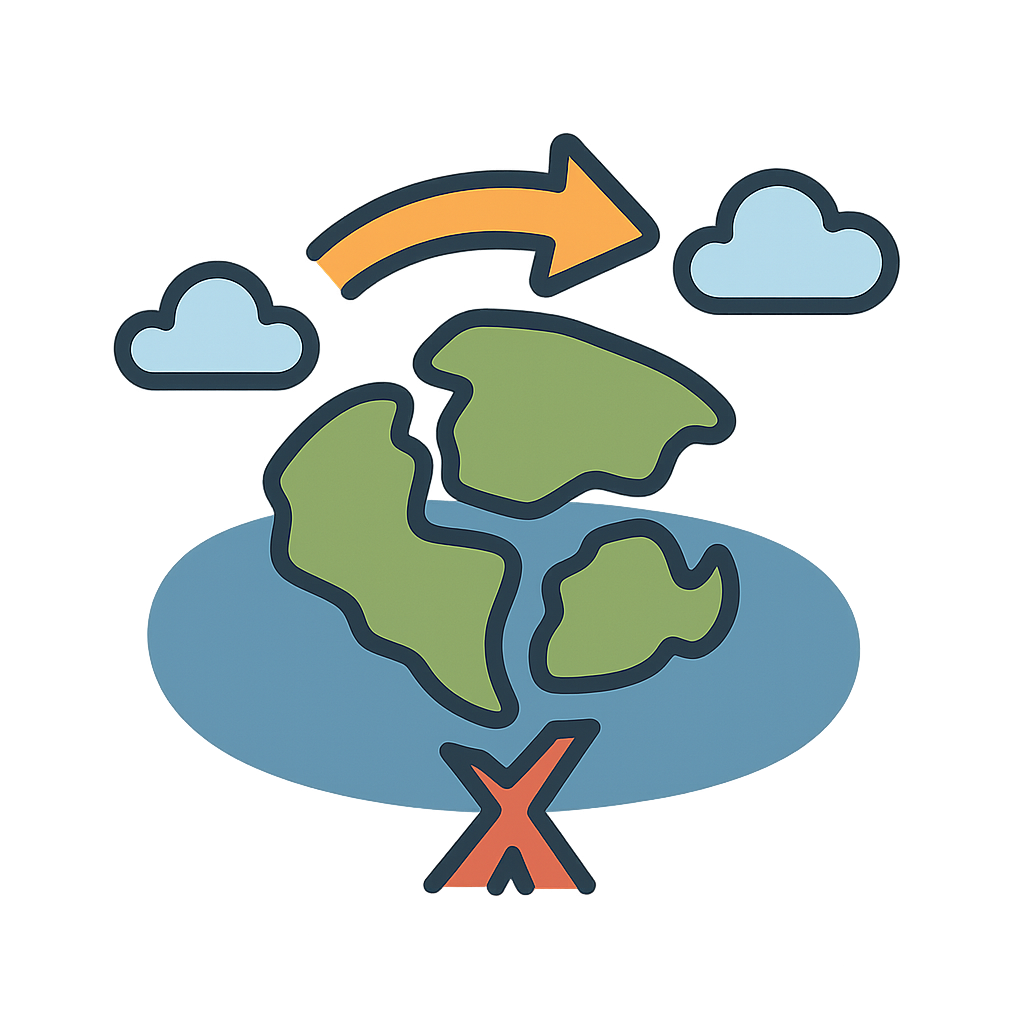
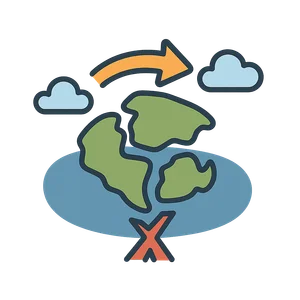
Have you ever looked at a map of the whole world. It’s a beautiful picture of blue oceans and green and brown land. But if you look very, very closely, you might notice something a little strange. See how the big piece of land called South America has a sticky-outy part. And see how Africa has a sticky-inny part. They look like they could snuggle together like two perfect puzzle pieces. For a very long time, this was a secret that the Earth kept. It was a secret about a super-slow, super-strong force that pushes and pulls the giant lands you live on, making them drift across the ocean. It’s a secret I have been keeping for millions of years. My name is Continental Drift, and I am the Earth’s big mover.
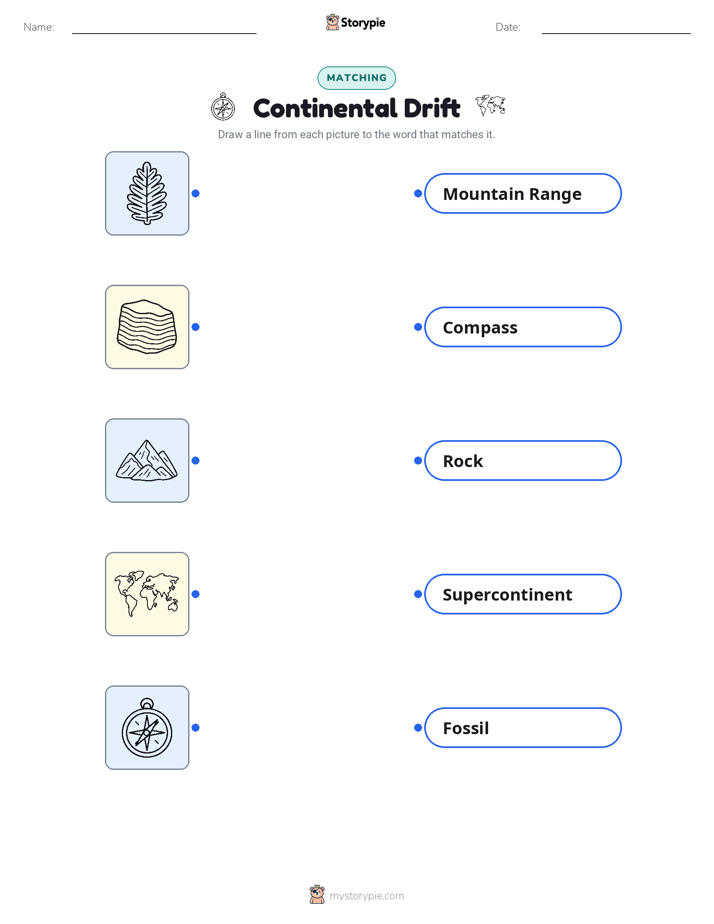
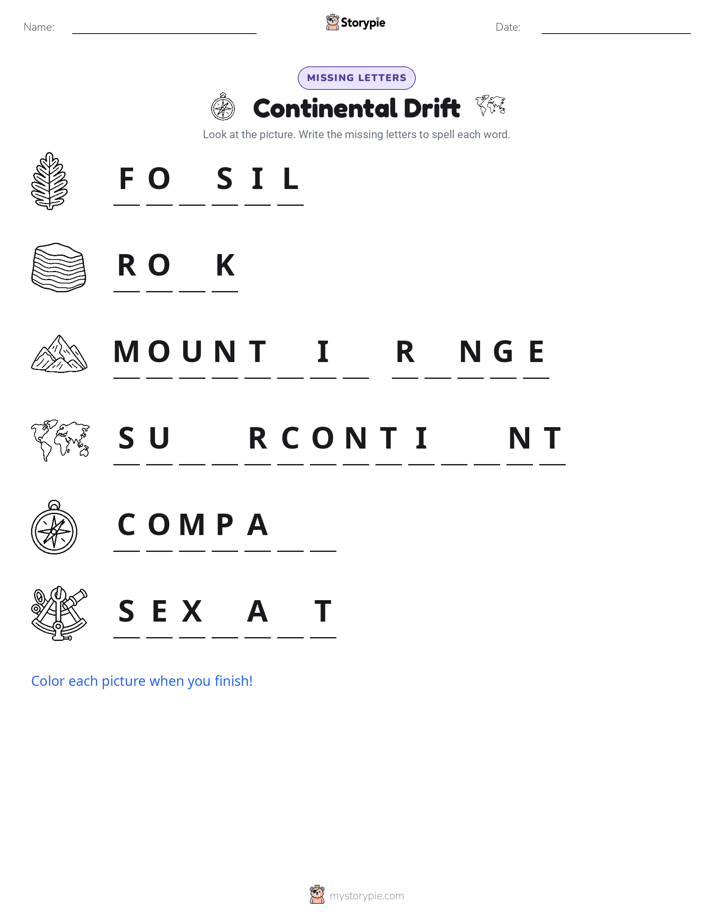
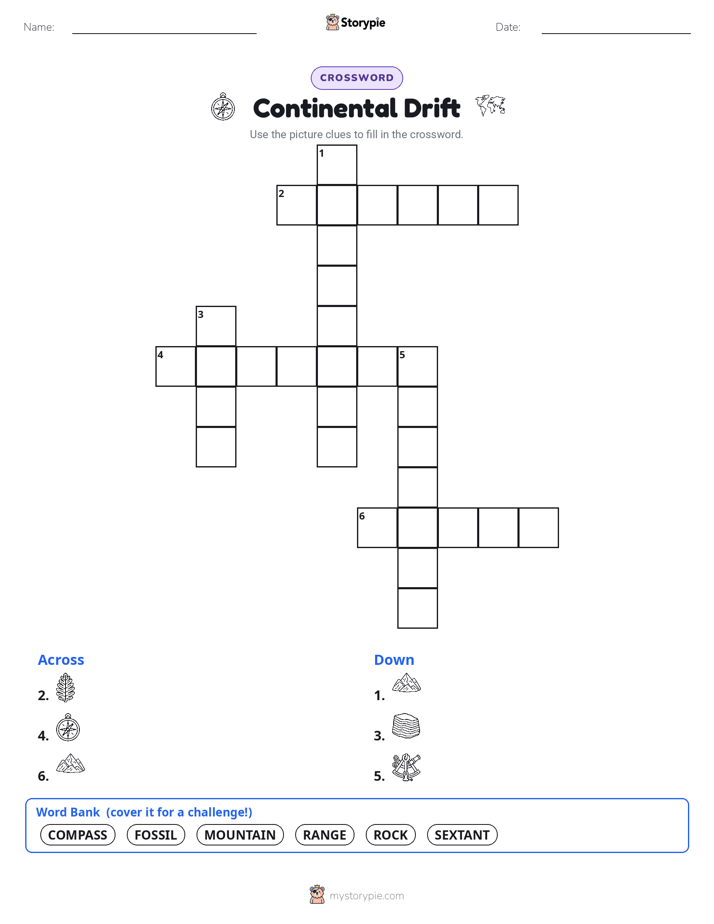
For hundreds of years, people would look at their maps and scratch their heads. Way back on August 12th, 1596, a clever mapmaker named Abraham Ortelius wrote that the continents looked like they were torn apart from each other. He was one of the first to see my puzzle. But the person who really became my champion was a brave scientist named Alfred Wegener. Around 1912, he had a big idea. He said, “What if all the continents were once connected in one giant piece of land.”. He collected clues like a detective. He found fossils, which are the shapes of ancient plants and animals left in stone, of the very same creature in both Africa and South America. How could a little animal cross a huge ocean. It couldn't. He also saw that mountains on one continent matched up perfectly with mountains across the sea, like a long, rocky path that had been broken in two. Alfred called the giant supercontinent “Pangaea,” which means “all lands.”. But when he told everyone my secret, many other scientists just laughed. They asked him, “How could a whole continent possibly move.”. Alfred didn’t know the answer to that part yet, but he knew his clues were telling the truth.
The Earth's Giant Puzzle
Have you ever looked at a map of the whole world. It’s a beautiful picture of blue oceans and green and brown land. But if you look very, very closely, you might notice something a little strange. See how the big piece of land called South America has a sticky-outy part. And see how Africa has a sticky-inny part. They look like they could snuggle together like two perfect puzzle pieces. For a very long time, this was a secret that the Earth kept. It was a secret about a super-slow, super-strong force that pushes and pulls the giant lands you live on, making them drift across the ocean. It’s a secret I have been keeping for millions of years. My name is Continental Drift, and I am the Earth’s big mover.
For hundreds of years, people would look at their maps and scratch their heads. Way back on August 12th, 1596, a clever mapmaker named Abraham Ortelius wrote that the continents looked like they were torn apart from each other. He was one of the first to see my puzzle. But the person who really became my champion was a brave scientist named Alfred Wegener. Around 1912, he had a big idea. He said, “What if all the continents were once connected in one giant piece of land.”. He collected clues like a detective. He found fossils, which are the shapes of ancient plants and animals left in stone, of the very same creature in both Africa and South America. How could a little animal cross a huge ocean. It couldn't. He also saw that mountains on one continent matched up perfectly with mountains across the sea, like a long, rocky path that had been broken in two. Alfred called the giant supercontinent “Pangaea,” which means “all lands.”. But when he told everyone my secret, many other scientists just laughed. They asked him, “How could a whole continent possibly move.”. Alfred didn’t know the answer to that part yet, but he knew his clues were telling the truth.
Alfred Wegener was right all along, but it took many more years for everyone else to believe him. In the 1950s and 1960s, scientists built special submarines and machines to explore the deep, dark ocean floor. Down there, they found the proof. They saw that the Earth’s outer shell is made of giant plates, and the continents are riding on top of them. I move these plates very, very slowly, about as fast as your fingernails grow. It’s so slow you could never feel it. Knowing about me helps people understand big things, like why earthquakes rumble and why volcanoes erupt. It’s because my giant plates are bumping and sliding past each other. It also reminds us that every country and every piece of land was once connected, long, long ago. We are all part of one amazing, changing planet that is always on the move.
Wow facts
About
The theory that Earth's continents have moved over geologic time relative to each other, thus appearing to have 'drifted' across the ocean bed.
Take a Quiz
Question 1 of 4
Why didn't many scientists believe Alfred Wegener's idea at first?
Explore next





Want to do even more?
Go beyond exploring. Unlock tools that turn every story into real learning.

Storypie Plus for families
Full stories, quizzes, and printables. Nights and car rides, sorted.
- Unlimited audio stories
- Create Mode: your child stars in the story
- Offline downloads
- Printable worksheets & coloring pages

Why Storypie for Schools
Students engaged. Prep in seconds. Evenings back to you.
- Worksheets & Quizzes
- Classroom Management
- Formative Assessment
- Custom Curriculum & Lesson Plans
- 27 Languages

Why Storypie for Homeschool
Curriculum done. They'll ask for more. Hours back in your day.
- Worksheet Generator
- First-Person Audio Stories
- Built-in Comprehension Quizzes
- Custom Curriculum & Lesson Plans
- Print & Go Activities