English

Continental Drift
The theory that Earth's continents have moved over geologic time relative to each other…
Reads at Pre-K Listens at Pre-K–1
Print & create
Answer keys·No prep·Free with an account
28 worksheets · answer keys · full story · quiz · Ages 3-5 · CEFR A1
Plus adds 102,000+ more stories in 27 languages, audio for every one, and printables for all of them.
Just want Continental Drift?
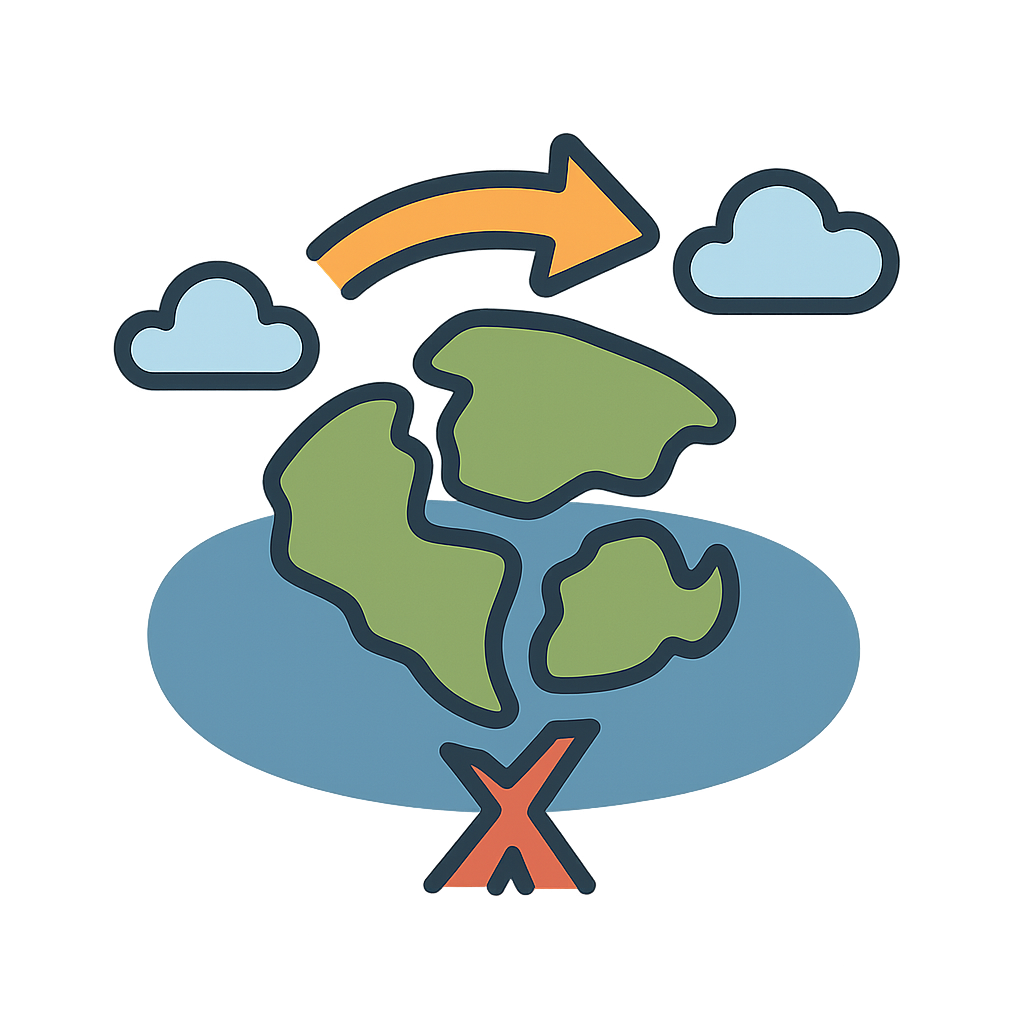
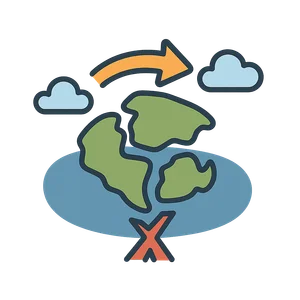
Hello. I am a secret, slow-motion wiggle that the whole world does. Have you ever looked at a map? If you look closely at the big pieces of land, called continents, they look like a giant jigsaw puzzle. The pointy part of one piece, South America, looks like it could snuggle right into the cozy corner of another piece, Africa. That's me. I am the reason they fit together. I am the Earth's big, slow dance.
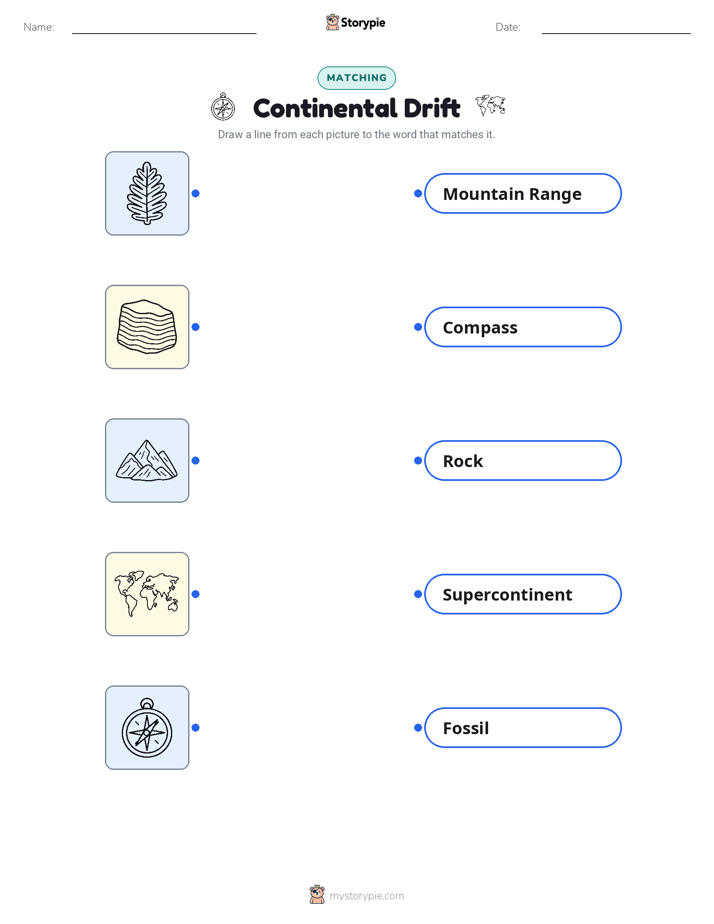
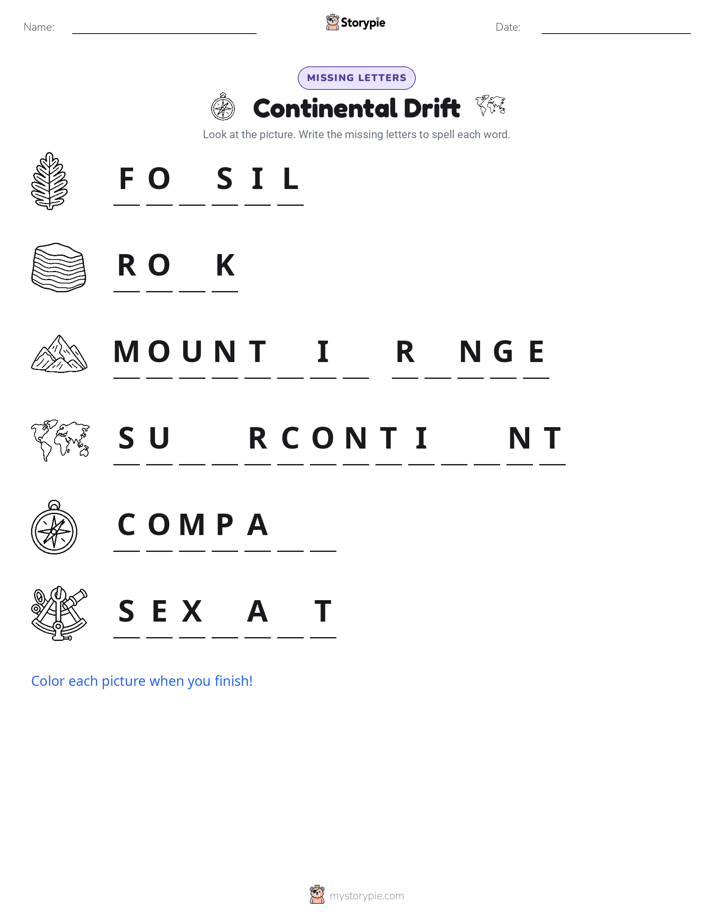
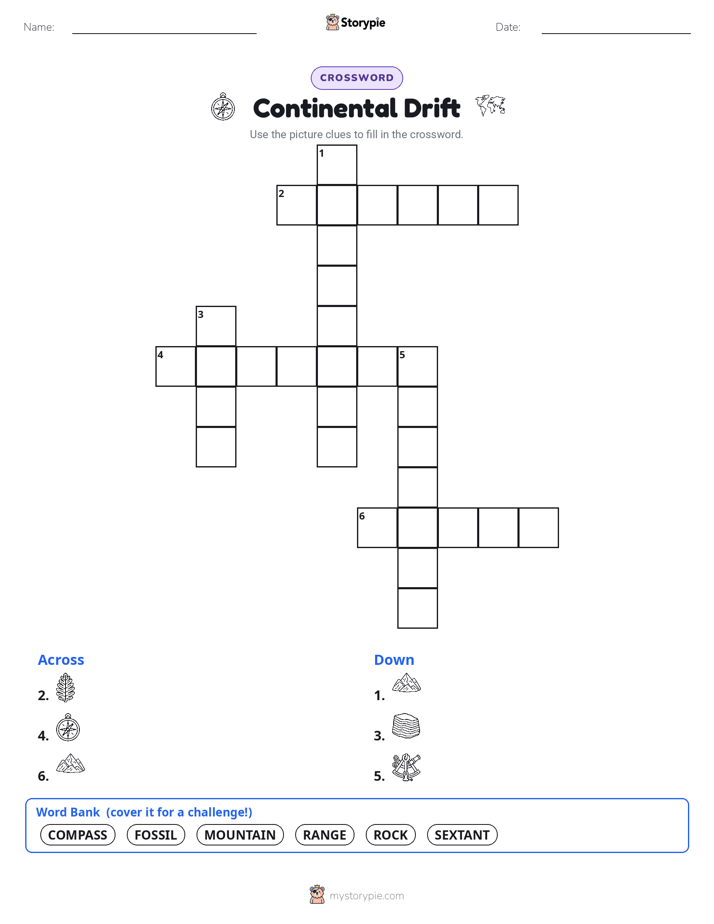
For a long, long time, nobody knew about my secret dance. Then, more than 100 years ago, around the year 1912, a man named Alfred Wegener looked at his maps and saw the puzzle, too. He wondered if all the land was once one big piece, like one giant cookie before it's broken apart. He was very curious, so he looked for clues. He found the same kinds of old rocks and sleepy animal fossils on different puzzle pieces, even though they were far apart with big oceans between them. It was like finding one half of a toy in your house and the other half in your friend's house across the street. He was so excited. He gave me my name: Continental Drift. At first, many people didn't believe him. They thought, 'How could a whole continent move?'. But Alfred knew he was onto something amazing.
It turns out, Alfred was right. The continents are still drifting today, moving just a tiny bit each year—about as fast as your fingernails grow. It's so slow you can't feel it, but I'm always at work, pushing and pulling the land. My slow dance makes mountains grow taller and oceans get wider over a very, very long time. I show everyone that our world is always changing and full of incredible surprises, reminding us that even the biggest things can move and make something new. I am the Earth's wonderful, wiggling secret.
The Earth's Secret Dance
Hello. I am a secret, slow-motion wiggle that the whole world does. Have you ever looked at a map? If you look closely at the big pieces of land, called continents, they look like a giant jigsaw puzzle. The pointy part of one piece, South America, looks like it could snuggle right into the cozy corner of another piece, Africa. That's me. I am the reason they fit together. I am the Earth's big, slow dance.
For a long, long time, nobody knew about my secret dance. Then, more than 100 years ago, around the year 1912, a man named Alfred Wegener looked at his maps and saw the puzzle, too. He wondered if all the land was once one big piece, like one giant cookie before it's broken apart. He was very curious, so he looked for clues. He found the same kinds of old rocks and sleepy animal fossils on different puzzle pieces, even though they were far apart with big oceans between them. It was like finding one half of a toy in your house and the other half in your friend's house across the street. He was so excited. He gave me my name: Continental Drift. At first, many people didn't believe him. They thought, 'How could a whole continent move?'. But Alfred knew he was onto something amazing.
It turns out, Alfred was right. The continents are still drifting today, moving just a tiny bit each year—about as fast as your fingernails grow. It's so slow you can't feel it, but I'm always at work, pushing and pulling the land. My slow dance makes mountains grow taller and oceans get wider over a very, very long time. I show everyone that our world is always changing and full of incredible surprises, reminding us that even the biggest things can move and make something new. I am the Earth's wonderful, wiggling secret.
Wow facts
About
The theory that Earth's continents have moved over geologic time relative to each other, thus appearing to have 'drifted' across the ocean bed.
Take a Quiz
Question 1 of 3
Who was the man in the story?
Explore next





Want to do even more?
Go beyond exploring. Unlock tools that turn every story into real learning.

Storypie Plus for families
Full stories, quizzes, and printables. Nights and car rides, sorted.
- Unlimited audio stories
- Create Mode: your child stars in the story
- Offline downloads
- Printable worksheets & coloring pages

Why Storypie for Schools
Students engaged. Prep in seconds. Evenings back to you.
- Worksheets & Quizzes
- Classroom Management
- Formative Assessment
- Custom Curriculum & Lesson Plans
- 27 Languages

Why Storypie for Homeschool
Curriculum done. They'll ask for more. Hours back in your day.
- Worksheet Generator
- First-Person Audio Stories
- Built-in Comprehension Quizzes
- Custom Curriculum & Lesson Plans
- Print & Go Activities