English

Data (What Is Data?)
Data is information, such as facts, numbers, or measurements, collected together for reference or analysis.
Reads at Grades 6–8 Listens at Grades 4–8
Print & create
Answer keys·No prep·Free with an account
28 worksheets · answer keys · full story · quiz · Ages 10-12 · CEFR B2
Plus adds 244,000+ more stories in 27 languages, audio for every one, and printables for all of them.
Just want Data (What Is Data?)?
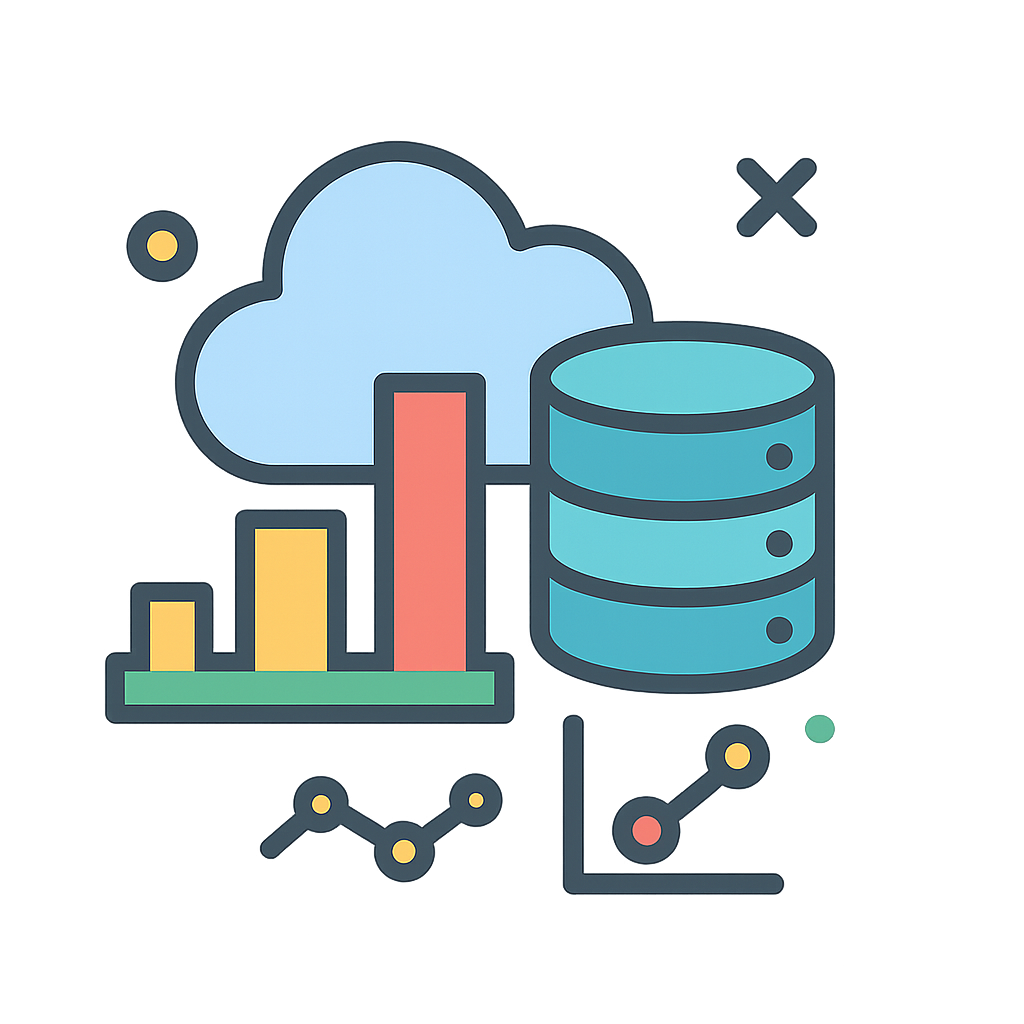
I am everywhere, a secret I share with everything. You can find me in the number of stars you see at night, the words in your favorite book, and the score of a video game. I am the quiet rhythm of the lines on a ruler, the steady beats in a song, and the precise measurements in a recipe for baking cookies. Long before you knew my name, you used me to make sense of your world, to count your toys, and to remember your friends' birthdays. I am the silent helper behind every question you ask and every discovery you make, the raw material from which knowledge is built. Hello, I am Data.
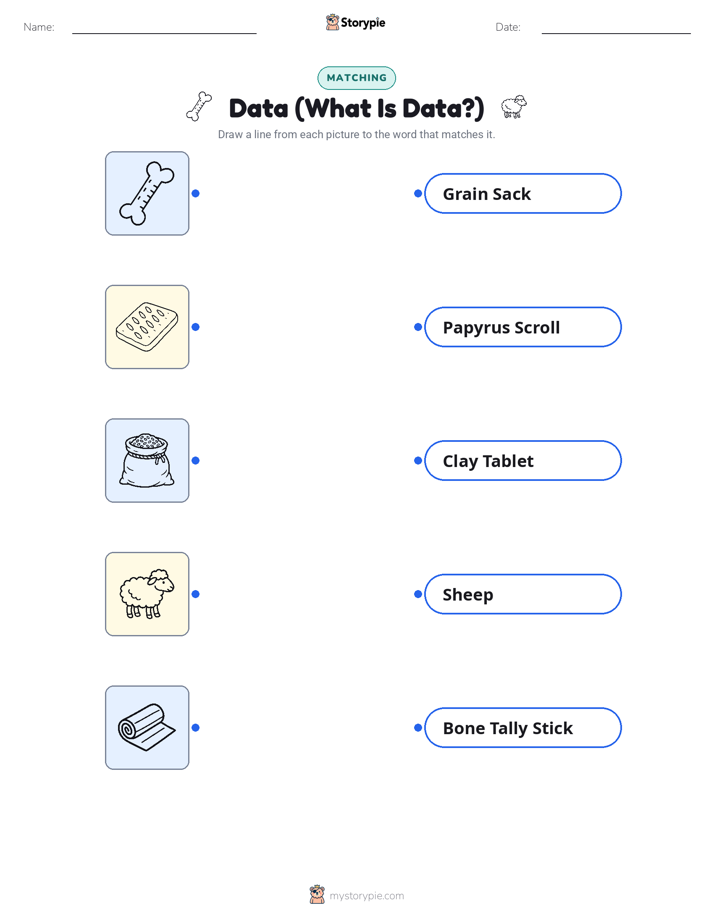
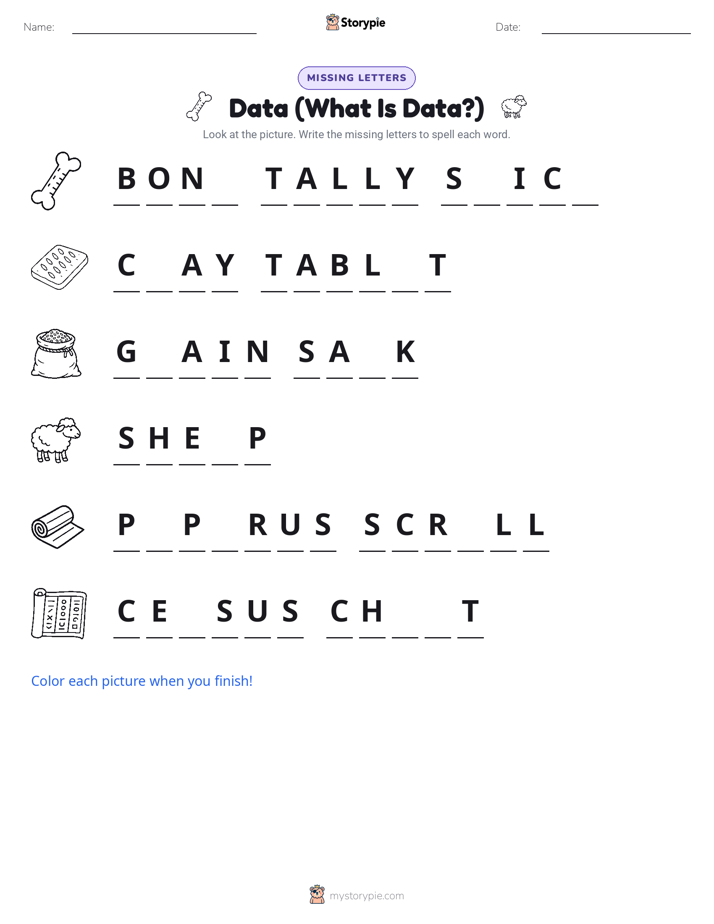
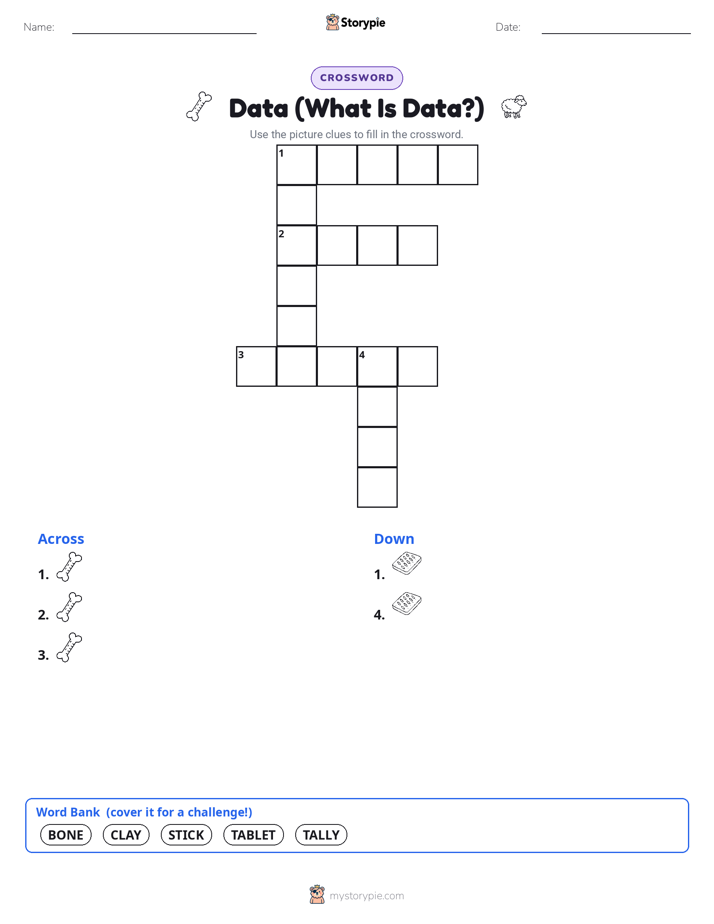
My story with humans began a very long time ago, even before the invention of writing. People would carve simple notches into bones or wood to count things, like the days between full moons or the number of animals in a herd. Around 3500 BCE, in a region called Sumer in ancient Mesopotamia, people began pressing wedge-shaped marks into soft clay tablets to keep track of grain, sheep, and taxes. These were some of my first organized collections. Millennia later, great empires like Egypt and Rome used me to conduct a census—a giant count of all their people. The Romans gathered this information around the 1st century BCE to help them build their cities, supply their massive armies, and manage their vast territories. I wasn't just a jumble of facts anymore; I was becoming a tool for building entire civilizations.
For centuries, people mostly just collected me. But then, they started asking me questions, and that’s when things got really interesting. In the 17th century, a London shopkeeper named John Graunt did something amazing. He gathered up the city's weekly death records, which were called the 'Bills of Mortality.' By carefully studying these lists, which I helped create, he published a book in 1662 that revealed incredible patterns. He could estimate the city's population and even noticed that certain diseases were more common during different seasons of the year. He had turned simple lists of names and numbers into life-saving clues. Two centuries later, a brilliant nurse named Florence Nightingale showed my true power. During the Crimean War in the 1850s, she meticulously recorded the causes of soldiers' deaths. She used me to create a special kind of chart, a polar area diagram, which clearly showed that far more soldiers were dying from diseases in dirty hospitals than from fighting on the battlefield. When she presented her charts to Queen Victoria, her data-driven argument was so convincing that it led to massive hospital reforms, saving countless lives.
I Am Data: A Story of Everything
I am everywhere, a secret I share with everything. You can find me in the number of stars you see at night, the words in your favorite book, and the score of a video game. I am the quiet rhythm of the lines on a ruler, the steady beats in a song, and the precise measurements in a recipe for baking cookies. Long before you knew my name, you used me to make sense of your world, to count your toys, and to remember your friends' birthdays. I am the silent helper behind every question you ask and every discovery you make, the raw material from which knowledge is built. Hello, I am Data.
My story with humans began a very long time ago, even before the invention of writing. People would carve simple notches into bones or wood to count things, like the days between full moons or the number of animals in a herd. Around 3500 BCE, in a region called Sumer in ancient Mesopotamia, people began pressing wedge-shaped marks into soft clay tablets to keep track of grain, sheep, and taxes. These were some of my first organized collections. Millennia later, great empires like Egypt and Rome used me to conduct a census—a giant count of all their people. The Romans gathered this information around the 1st century BCE to help them build their cities, supply their massive armies, and manage their vast territories. I wasn't just a jumble of facts anymore; I was becoming a tool for building entire civilizations.
For centuries, people mostly just collected me. But then, they started asking me questions, and that’s when things got really interesting. In the 17th century, a London shopkeeper named John Graunt did something amazing. He gathered up the city's weekly death records, which were called the 'Bills of Mortality.' By carefully studying these lists, which I helped create, he published a book in 1662 that revealed incredible patterns. He could estimate the city's population and even noticed that certain diseases were more common during different seasons of the year. He had turned simple lists of names and numbers into life-saving clues. Two centuries later, a brilliant nurse named Florence Nightingale showed my true power. During the Crimean War in the 1850s, she meticulously recorded the causes of soldiers' deaths. She used me to create a special kind of chart, a polar area diagram, which clearly showed that far more soldiers were dying from diseases in dirty hospitals than from fighting on the battlefield. When she presented her charts to Queen Victoria, her data-driven argument was so convincing that it led to massive hospital reforms, saving countless lives.
As the world grew more complex, collecting and sorting me by hand became far too slow. Imagine trying to count every single person in a huge country using only pen and paper. That was the enormous problem facing the United States Census Bureau. In 1890, an inventor named Herman Hollerith built an incredible machine that could read me from holes punched into paper cards. His electric tabulating machine counted the U.S. population in record time, turning a task that was expected to take a decade into a job of just a few years. This was a huge leap forward for me and for humanity. Hollerith's invention marked the beginning of automated data processing, and his company eventually became a part of a technology giant. It was the great-great-grandfather of the modern computer. Soon after, around 1946, people started using my name, 'data,' to specifically describe the electronic information that these new computing machines could store and process. I was no longer just marks on paper; I was becoming electric, fast, and powerful.
The invention of the modern computer in the mid-20th century gave me an entirely new home. I could live on long reels of magnetic tapes, then on spinning hard drives, and now inside microscopic circuits you can't even see. But the biggest change of all came on March 12th, 1989, when a computer scientist named Tim Berners-Lee invented the World Wide Web. Suddenly, I could travel across the entire globe in an instant. The internet connected the world, and I exploded. Every time you send an email, watch a video, search for information, or post a photo, you are creating more of me. Scientists use me to map the human genome and track climate change. Companies use me to figure out what movies you might like or what ads to show you. I am in the GPS that guides your family's car and the weather app on your phone that tells you to bring an umbrella. I have grown so vast that people now call me 'Big Data.' I am a universe of information, growing larger and more complex every single second.
From those ancient tally marks carved on bone to the giant, invisible cloud of information that surrounds you today, I have always been here to help you understand your world. I am not just a collection of numbers and text; I am the foundation for discovery, the evidence for new ideas, and the guide for smart decisions. Learning to read, question, and use me is like gaining a superpower. You can use me to win an argument with facts, build a better robot, or even help solve the world's biggest problems, like finding cures for diseases or protecting our planet. I am your tool for curiosity and creation. So go ahead, ask questions, collect information, and see what stories I can tell you. Together, we can build a smarter, kinder, and more amazing future.
Wow facts
About
Data is information, such as facts, numbers, or measurements, collected together for reference or analysis. Humans have utilized information for thousands of years, but the modern idea of 'data' in computers started in the mid-20th century to help us count, record, and understand the world.
Take a Quiz
Question 1 of 5
What was Florence Nightingale's main motivation for collecting data during the Crimean War?
Explore next





Want to do even more?
Go beyond exploring. Unlock tools that turn every story into real learning.

Storypie Plus for families
Full stories, quizzes, and printables. Nights and car rides, sorted.
- Unlimited audio stories
- Create Mode: your child stars in the story
- Offline downloads
- Printable worksheets & coloring pages

Why Storypie for Schools
Students engaged. Prep in seconds. Evenings back to you.
- Worksheets & Quizzes
- Classroom Management
- Formative Assessment
- Custom Curriculum & Lesson Plans
- 27 Languages

Why Storypie for Homeschool
Curriculum done. They'll ask for more. Hours back in your day.
- Worksheet Generator
- First-Person Audio Stories
- Built-in Comprehension Quizzes
- Custom Curriculum & Lesson Plans
- Print & Go Activities