English

Data (What Is Data?)
Data is information, such as facts, numbers, or measurements, collected together for reference or analysis.
Reads at Grades K-2 Listens at K–3
Print & create
Answer keys·No prep·Free with an account
28 worksheets · answer keys · full story · quiz · Ages 6-8 · CEFR A2
Plus adds 244,000+ more stories in 27 languages, audio for every one, and printables for all of them.
Just want Data (What Is Data?)?

Have you ever noticed the number of petals on a flower, or the stripes on a fuzzy bumblebee. That’s me. I am the score in your favorite video game and the list of ingredients you need to bake yummy chocolate chip cookies. I am in the weather report that tells your family if you need to wear a raincoat or sunglasses for a sunny day. When you look at a map to find your way to the playground, you are using my help to see the path. I am a collection of clues, like a secret message, that helps you understand everything around you. I am in almost everything you see, hear, and touch, helping you make smart choices and solve little puzzles every single day. Hello. I am Data.
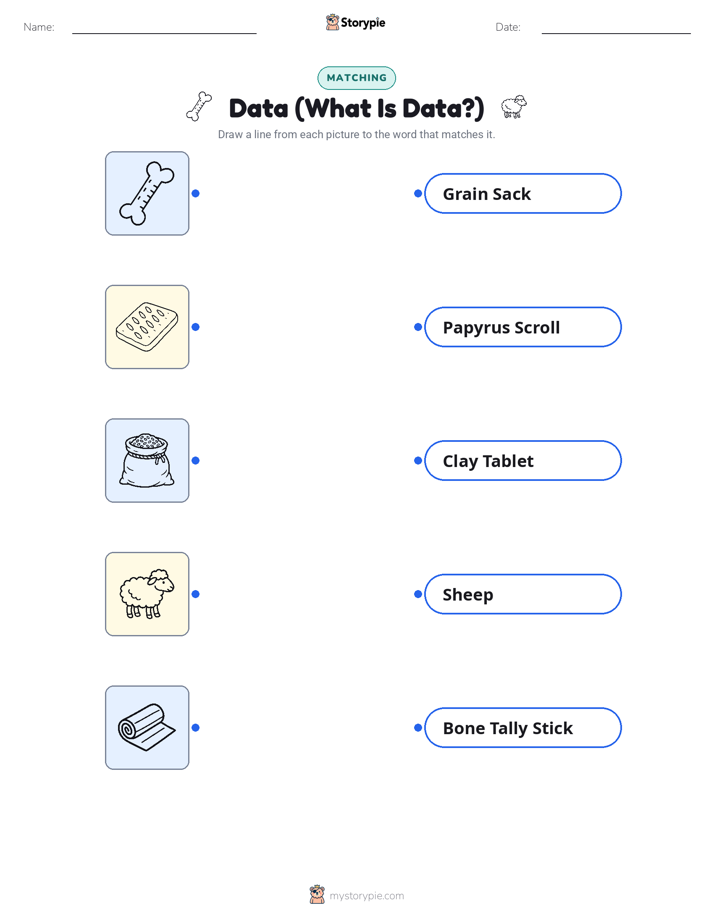
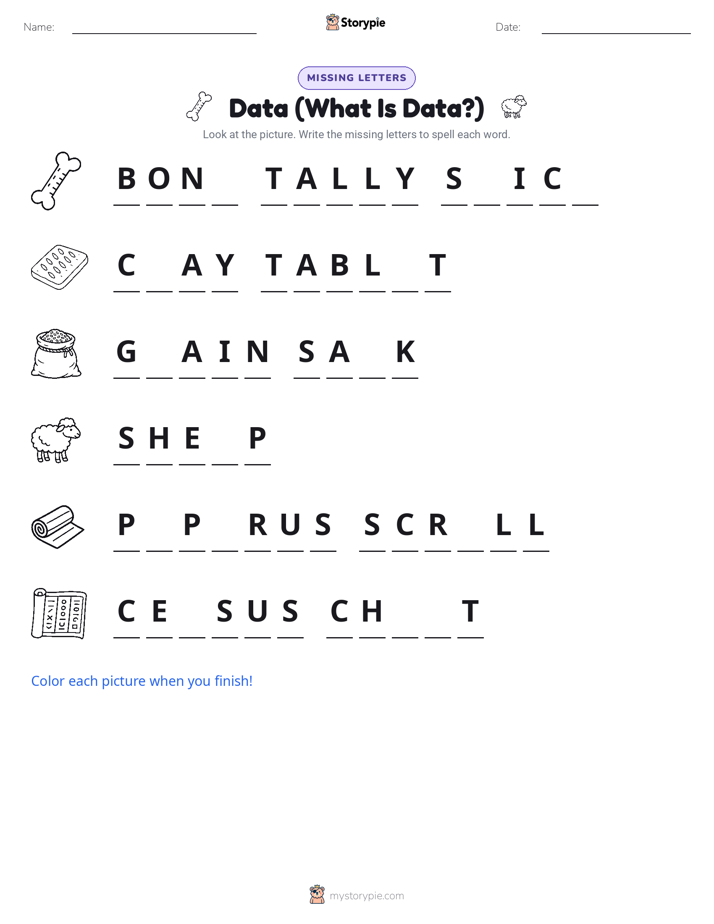
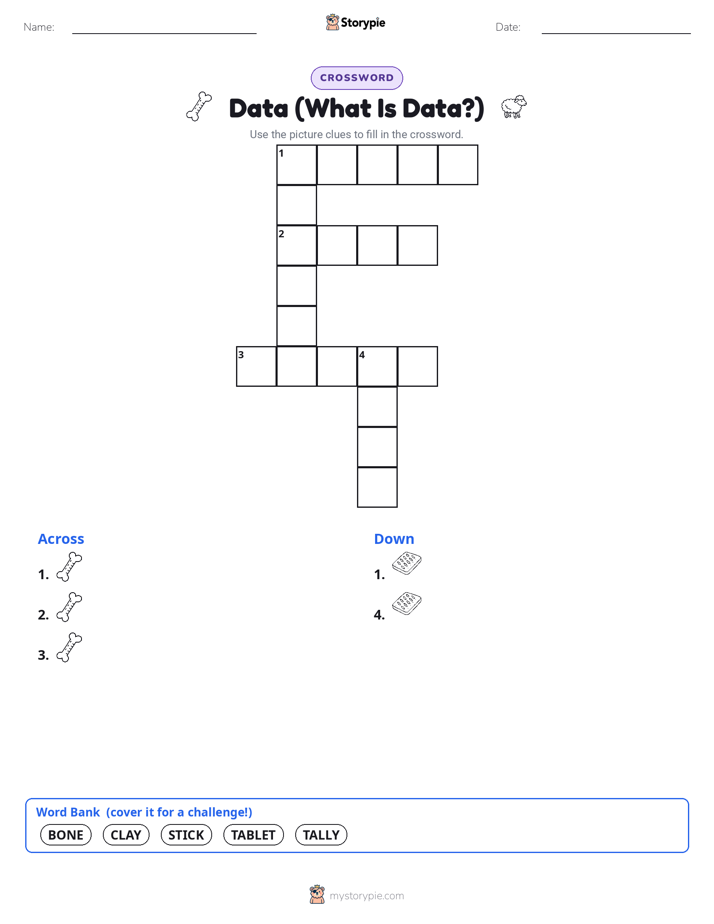
My journey began a very, very long time ago. People have always needed me, even before they knew my name. Way back, even before the year 30,000 BCE, early humans would carve little lines, or notches, into bones. Each notch was a piece of me. They used these notches to count important things, like how many days passed between each bright, full moon. This helped them keep track of time. Thousands and thousands of years went by, and around the year 3500 BCE, people called the Sumerians lived in a warm place named Mesopotamia. They were farmers, and they used me to keep track of their fluffy sheep and piles of grain. They wrote me down on flat pieces of clay called tablets. This helped them make sure every family had enough food to eat. I was very important for their whole village. Much later, in the year 1662, a clever man in London named John Graunt used me in a new way. He was like a city detective. He collected me from all over London to count how many babies were born and to understand how people lived. His work helped make the city a safer place. Then, things started to get really fast. In the year 1890 in the United States, a man named Herman Hollerith invented an amazing machine. It used special paper cards with little holes punched in them. Each hole was a piece of me. His machine could read the cards and count all the people in the entire country for something called a census. It was so much faster than counting by hand. That incredible machine was one of the first steps toward building the super-smart computers we use today.
The Story of Data
Have you ever noticed the number of petals on a flower, or the stripes on a fuzzy bumblebee. That’s me. I am the score in your favorite video game and the list of ingredients you need to bake yummy chocolate chip cookies. I am in the weather report that tells your family if you need to wear a raincoat or sunglasses for a sunny day. When you look at a map to find your way to the playground, you are using my help to see the path. I am a collection of clues, like a secret message, that helps you understand everything around you. I am in almost everything you see, hear, and touch, helping you make smart choices and solve little puzzles every single day. Hello. I am Data.
My journey began a very, very long time ago. People have always needed me, even before they knew my name. Way back, even before the year 30,000 BCE, early humans would carve little lines, or notches, into bones. Each notch was a piece of me. They used these notches to count important things, like how many days passed between each bright, full moon. This helped them keep track of time. Thousands and thousands of years went by, and around the year 3500 BCE, people called the Sumerians lived in a warm place named Mesopotamia. They were farmers, and they used me to keep track of their fluffy sheep and piles of grain. They wrote me down on flat pieces of clay called tablets. This helped them make sure every family had enough food to eat. I was very important for their whole village. Much later, in the year 1662, a clever man in London named John Graunt used me in a new way. He was like a city detective. He collected me from all over London to count how many babies were born and to understand how people lived. His work helped make the city a safer place. Then, things started to get really fast. In the year 1890 in the United States, a man named Herman Hollerith invented an amazing machine. It used special paper cards with little holes punched in them. Each hole was a piece of me. His machine could read the cards and count all the people in the entire country for something called a census. It was so much faster than counting by hand. That incredible machine was one of the first steps toward building the super-smart computers we use today.
Today, I live everywhere, and I move at the speed of light. I zip around inside your family’s computer, tablet, and phone as tiny, invisible bits of information. I am the helper behind the scenes for so many amazing things. I help scientists look for clues to discover new medicines that keep people healthy. I help farmers understand the weather and the soil so they can grow more yummy food for everyone. I even travel to outer space with astronauts, helping them explore distant planets and stars. You use me all the time, too. I am inside the apps that teach you how to say “hello” in a new language, and I am the magic that makes your favorite games work. Every time you ask a grown-up to search for something online, like “How tall is a giraffe.”, you are asking for my help to find the answer. I love helping you learn, create new things, and make smart choices. By collecting and understanding me, you can solve puzzles big and small. You can discover new ideas and help make the world a better, kinder, and more interesting place.
Wow facts
About
Data is information, such as facts, numbers, or measurements, collected together for reference or analysis. Humans have utilized information for thousands of years, but the modern idea of 'data' in computers started in the mid-20th century to help us count, record, and understand the world.
Take a Quiz
Question 1 of 4
Why did the Sumerians write on clay tablets?
Explore next





Want to do even more?
Go beyond exploring. Unlock tools that turn every story into real learning.

Storypie Plus for families
Full stories, quizzes, and printables. Nights and car rides, sorted.
- Unlimited audio stories
- Create Mode: your child stars in the story
- Offline downloads
- Printable worksheets & coloring pages

Why Storypie for Schools
Students engaged. Prep in seconds. Evenings back to you.
- Worksheets & Quizzes
- Classroom Management
- Formative Assessment
- Custom Curriculum & Lesson Plans
- 27 Languages

Why Storypie for Homeschool
Curriculum done. They'll ask for more. Hours back in your day.
- Worksheet Generator
- First-Person Audio Stories
- Built-in Comprehension Quizzes
- Custom Curriculum & Lesson Plans
- Print & Go Activities